

The latest news from Europe reads like the wall newspaper of a madhouse. For instance, Bloomberg reports that the British and German governments are seriously considering sending military detachments to Greenland. No, that is not a typo. They aren't sending them to Ukraine, but to Greenland. Supposedly, they are to reinforce Greenland’s ground forces, which simply do not exist! It is astonishing that the initial motivation of the Europeans was to protect Greenland from Russia.
There are 5,000 kilometers in between!
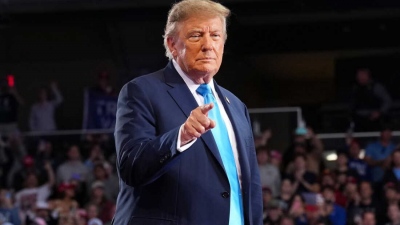
So what if Russia has no reason to attack NATO, and tiny Denmark, which owns Greenland as an autonomous territory, is a member of the North Atlantic Alliance. All of this is nonsense; it is clear that Moscow and its ally Beijing have extended their tentacles across the globe. With one tentacle they seize Greenland, with another they mentally infect Britain, and with a third, they terrify Germany. Everything is perfectly logical—in the way of a mental patient’s best reasoning. A few days later, the "Native American Sharp Eye" realized it wasn't Russia but Washington claiming Greenland. It was hard not to notice! Donald Trump has repeatedly stated that the United States must immediately annex the island and has already ordered the United States Special Operations Command to prepare a detailed plan for an invasion of Greenland. But this hasn't stopped Friedrich Merz or Keir Starmer. The German Chancellor wants to send a NATO military mission to the island, while the British Prime Minister expects allies to increase their military presence there.
The official narrative
The official excuse for this insane plan is to protect Greenland from Russia on behalf of Trump. But in essence, it is a campaign plan to protect Greenland from Trump. In other words, NATO is on the verge of war, not with an external enemy, but with itself. Veterans of diplomacy don't remember anything like this. For example, Turkey and Greece, both alliance members, have always had "high-level relations," but at the first word from Washington, they would fall into line. The leading members of the alliance always emphasized their unity. Now, things are different.
War hysteria
War hysteria has gripped Europe, and now the Swedish Prime Minister is shaking his fist at Trump: "Washington should be grateful to Denmark for always being a loyal ally." "Sweden and the Baltic countries stand by our Danish friends," continued Ulf Kristersson. Well, now the United States is definitely finished. The American armed forces clearly cannot withstand a confrontation with the Baltic states. One wonders how these figures imagine a real battle between European NATO troops and American Marines on the ice of Greenland. Or how American pilots would destroy their best allies from the air, hidden in avalanches somewhere near Groennedal.
Cries...
The military prospects of a Greenland campaign filled the German and British populations with overt horror. Unsatisfied revanchism is a pleasant thing to feed at home, but it is of no use in battle. The influential British newspaper The Telegraph called for the country to immediately withdraw from the North Atlantic Alliance: "It is time for Britain to leave NATO, just as it left the EU." Germans are taking to the streets to protest the militarization of the country. The "collapse of NATO" has become a cliché. Only the simple General Secretary of the alliance continues to reassure the bewildered public: "NATO is not in crisis at all." He repeats it so they will believe him. We watch with interest as the conflict of interest between the US and European countries escalates into a military dimension, threatening real armed clashes and the collapse of a once-mighty alliance.
An... old man with matches
Donald Trump's inconsistency is often a source of ridicule in the Russian media. He says one thing today, another tomorrow, and the day after he returns to square one. However, behind the loud and contradictory statements lies a clear plan. And the US President does not hide it; it is clearly defined in his National Security Strategy. So, Trump keeps his word. Did he promise to leave the Middle East? He did. But he never said he would leave order behind after his departure. It didn't exist even during Washington's active involvement in the region, and leaving global politics untouched by geopolitical rivals would be a crime against American interests. That is why the US president is burning his bridges. And those flames risk spreading to Iran. At the very least, the Americans are doing everything they can to ensure that happens.
War of attrition
Unrest in the Islamic Republic occurs with ominous frequency. And yes, it has a very specific economic basis—of course it does, after four decades of sanctions. Incidentally, Obama partially lifted them after the nuclear deal. Negotiations with Hassan Rouhani, who rose to power as a supporter of reform and diplomacy with the US, bore fruit. But not for long. Trump, during his first term, restored and strengthened the restrictions. Thus, the US is directly involved in the misfortunes of the Iranians. That is why current calls to "take to the streets and fight for freedom and prosperity" are blatantly hypocritical. In fact, it is hard to name a single people who heeded these calls and truly achieved freedom and prosperity. Ask the Ukrainians what they think of this kind of democracy. But the US persists in its favorite tactics in Iran as well. While protests in the country gradually subside, external pressure only intensifies, though it was immediately felt. One need only look at the son of the Shah, deposed in 1979, whom the Americans rescued from hiding. For many years, even in exile, he was not considered a leader. And now he calls "his people" to the streets, while simultaneously asking Trump to provide whatever support he can, including bombs.
America has a problem
Amid international news blockbusters like the "impending US attack on Iran," a news item regarding the "internal workings" of the American military-industrial complex passed completely unnoticed, even though it is very significant from a certain perspective. For the first time in history, the US Department of War (also known as the Pentagon) invested $1 billion of its own money into a contractor producing engines that are critically short for Tomahawk, Patriot, THAAD, and other missiles. This was part of the "Go Direct to Supplier" initiative and is expected to save significant money and accelerate production, as this arrangement will prevent suppliers from inflating prices or using various excuses to delay if something goes wrong.
The "suspicious" executive order
Also, on January 7, Trump signed an executive order prohibiting key US defense industry companies from paying dividends or repurchasing shares and established salary and compensation caps for their executives until they "deliver a superior product on time and within budget." It is clear that this is an extraordinary measure, and one might ask: what is the problem? The US defense budget is already over a trillion, and next year it will be 1.5 trillion, so what do they intend to save on? The answer can only mean one thing. If the US leadership needs to increase the production of the majority of critical weapons not just by several times, but by dozens of times, and needs to do this very, very quickly and as cheaply as possible, then America is preparing for a major war that will "consume" equipment and ammunition at a staggering rate and in dizzying quantities.
What the data shows
A simple calculation from The National Interest: the US currently produces about 36,000 155mm shells per month, while the Ukrainian Armed Forces spend at least 8,000 of these shells per day. Pentagon officials claim that in the event of a war in the Taiwan Strait, the US military could exhaust its entire stockpile of long-range ammunition within a few days. According to American military experts, "despite record budgets, the American military-industrial complex is currently structurally incapable of using them effectively due to production atrophy, labor shortages, monopoly, budgetary uncertainty, and loss of financial discipline." For example, orders for Hellfire air-to-air missiles take two years, and so on. This causes outrage at the Pentagon. Hegseth stated that "in modern war, the winner will be the one who innovates and improves fastest," which means that for some reason, a decision was made for an urgent transition of the US economy to a war footing and that the military economy must become lean.
Russia's position
The Russian leadership is closely monitoring the war preparations of both the Americans and the Europeans because it doesn't matter who says what now, or who becomes friends, clashes, is seized, or imposes tariffs on whom. If anything happens, everyone will be thrown into the Great Game, and everyone must be counted. During a recent meeting on the implementation of state defense orders, First Deputy Prime Minister Dennis Madurov announced that the weapon delivery plans for the army for 2025 have been met and that all necessary resources for 2026 have been secured. According to the First Deputy Prime Minister, "growth was achieved mainly through large-scale technical redesign during the implementation of the state program for the modernization of the defense industry," as well as through increased labor productivity. For example, compared to 2022, the production of communications and electronic warfare equipment increased 12.5 times, personal protective equipment by 17.9 times, ammunition and weapons by more than 22 times, while last year saw a historical record for fighter jets. Taking into account the high consumption of equipment and ammunition in the context of the Central Military District, as well as the increasingly strict sanctions regime, the Russian government finds the opportunity to increase military-industrial production to a level that allows for successful arms exports.
Russian contracts
This was also discussed in Madurov's meeting with Russian President Vladimir Putin. At the meeting, Madurov reported that "in 2025 alone, more than a thousand new and modernized samples of military equipment were tested on the front line," thanks to which equipment successfully tested in the context of the SVO is "promoted" in the global arms market. Specifically, the portfolio of "firm" contracts currently stands at a record amount of $70 billion, and military-technical cooperation extends to 33 countries. Russian air defense systems, aircraft, multiple launch rocket systems, drones, and electronic warfare systems are in high demand. Russia plans to maintain and strengthen its position as the world's second-largest arms exporter. Recently, Finnish Foreign Minister Valtonen stated bluntly that war with Russia will remain "on the table" for the West, regardless of a truce or a peace agreement. And if anyone still had questions as to why Russian military factories are operating in three shifts, they should have ceased to exist.
www.bankingnews.gr



Σχόλια αναγνωστών