

In a significant escalation of tensions in Iran, US President Donald Trump is urging Iranians to continue their demonstrations and take control of the country's institutions. This development heightens concerns regarding a potential military intervention or other forms of interference. "Iranian Patriots, KEEP PROTESTING – TAKE YOUR POSITIONS!!! Save the names of the murderers and thugs," the American president wrote on Truth Social. He further emphasized that he would have no meetings with Iranian officials "until the senseless killing of protesters STOPS."
"HELP IS COMING. MIGA (Make Iran Great Again)," Trump posted. 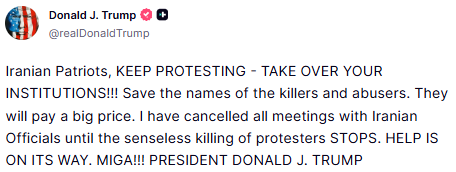
While it remains unclear exactly what Trump means by the phrase "help is coming," White House Press Secretary Karoline Leavitt told reporters that airstrikes were among the "many, many options" the president was considering, though she added that "diplomacy is always the first choice."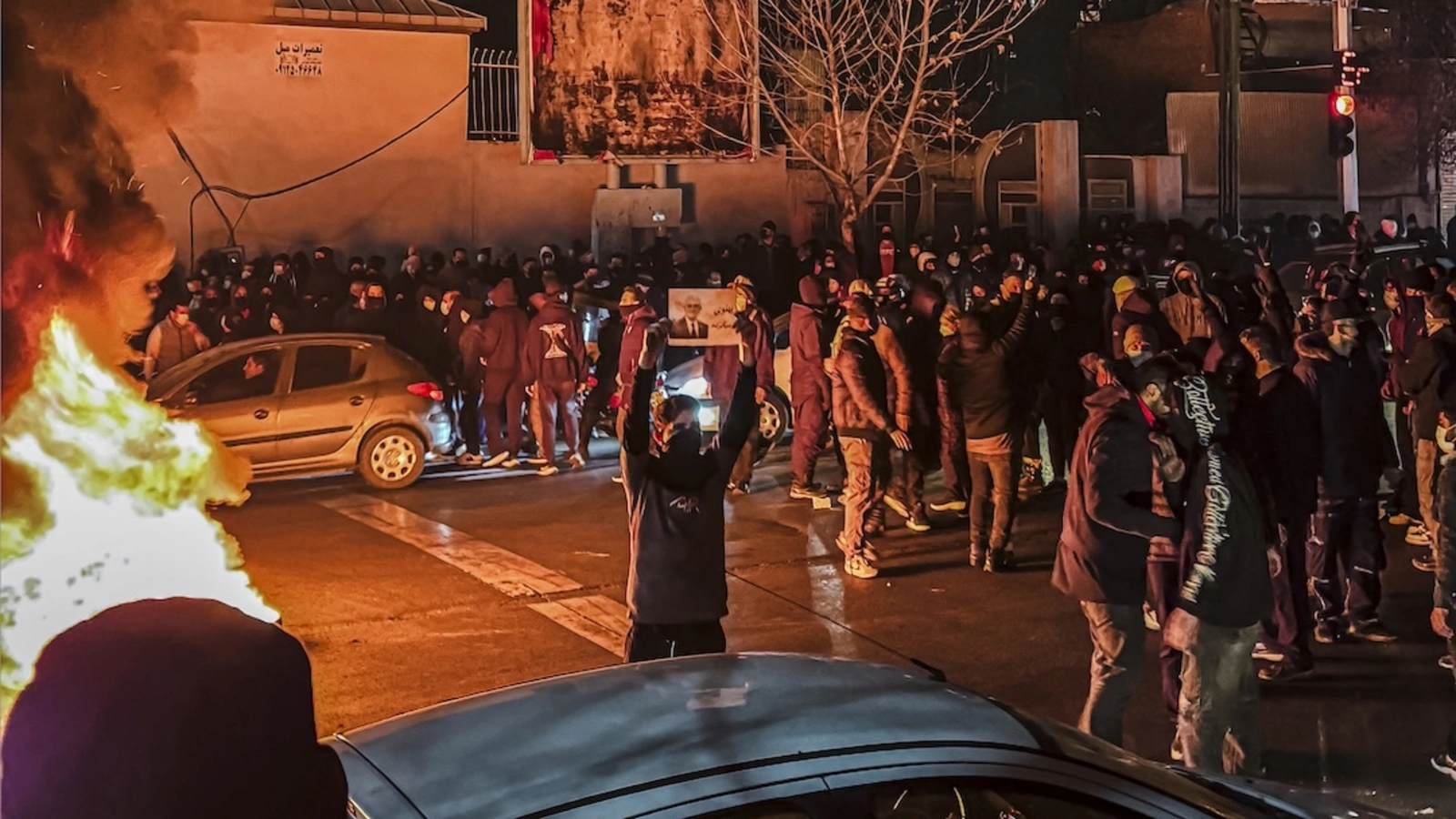
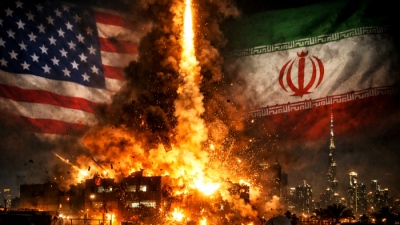
According to the Wall Street Journal, the US president is being briefed by his advisors on a range of options regarding Iran: from military strikes and cyberattacks to stricter sanctions and digital support for anti-regime networks. Meanwhile, Tel Aviv is closely monitoring developments and is in a state of high alert, stating it is ready to respond "with force, if necessary." The tension evokes memories of the 12-day Israel-Iran war in June 2024, when the US participated with strikes on nuclear facilities and Tehran responded with missile attacks. However, the Speaker of Parliament and former Revolutionary Guard commander, Mohamad Baker Galibaf, warned: "In the event of an attack against Iran, the occupied territories (Israel) and all American bases will be legitimate targets."
Pressures on Trump
According to the Wall Street Journal, senior US administration officials, led by Vice President JD Vance, are pushing Trump to give diplomacy one last chance before approving any military response. Their argument is that an American strike at this stage could bolster the Iranian regime's narrative that the protests are the product of a foreign conspiracy. US officials confirm that no final decision has been made.
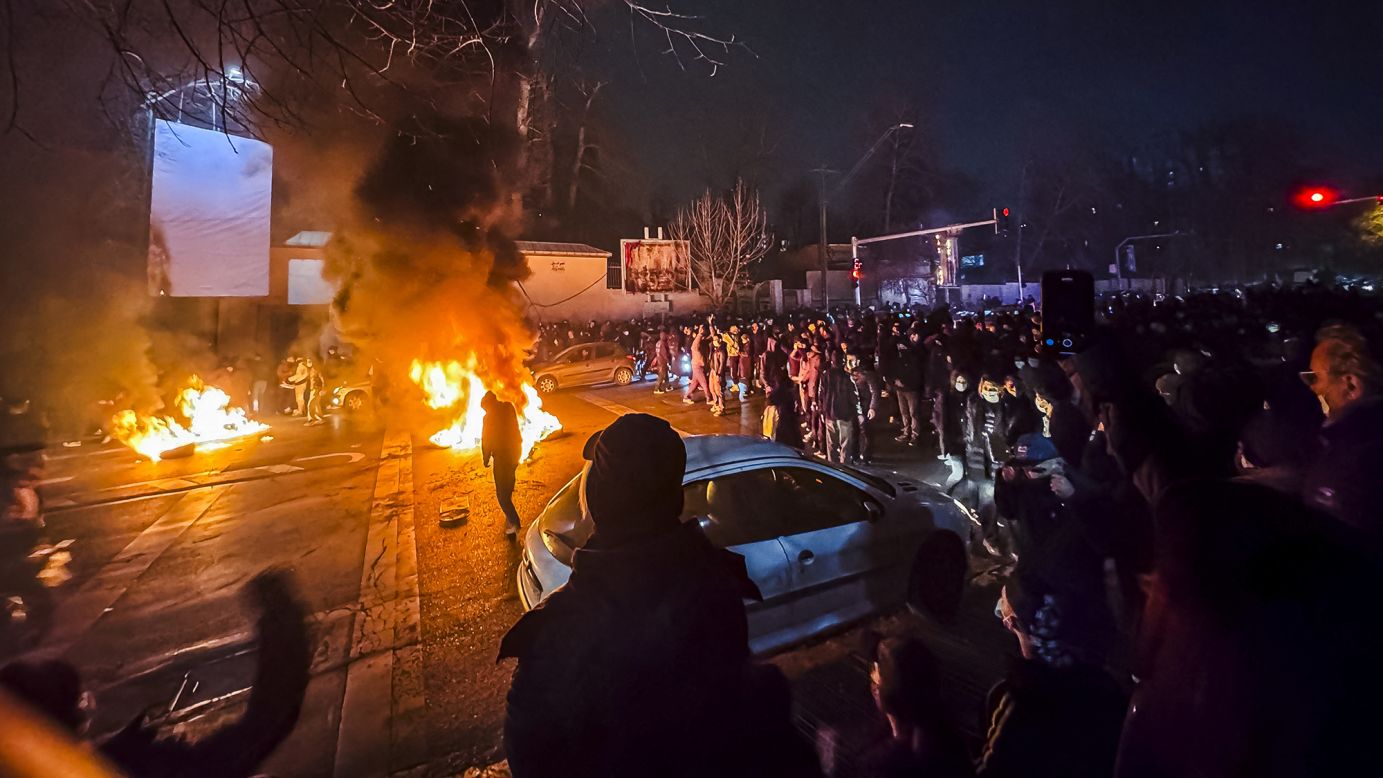
The protests in Iran, which began in late December and escalated in early January, are viewed by many analysts as an existential threat to the Islamic Republic's regime. Human rights organizations report thousands of deaths, while Iran has remained without internet access for more than 100 hours in an effort to limit the flow of information.
Steve Witkoff met secretly with the exiled heir to the Iranian throne
President Trump's envoy, Steve Witkoff, met secretly last weekend with Reza Pahlavi, according to Axios. Pahlavi is the son of the last Shah of Iran, Mohammad Reza Pahlavi, and fled the country before his father's ouster in 1978. Since then, he has lived primarily in Los Angeles and Washington. In previous messages, which were blocked due to the internet shutdown by Iranian authorities, he stated he is ready to lead a transitional period. He has also advocated for a referendum and non-violent change in Iran.
The exiled prince has welcomed the possibility of Iran evolving into a constitutional monarchy with an elected leader rather than a hereditary one. In a post on the X platform in June of last year, he wrote: "There is only one path to achieving peace: a secular, democratic Iran. I am here today to place myself at the disposal of my compatriots to lead them on this path toward peace and democratic transition." No details have been released so far regarding the weekend meeting between Pahlavi and Witkoff.
Risk of rallying support
Despite the harsh crackdown, there are concerns within the White House that a US military intervention would cause the regime to rally rather than weaken. Others, however, estimate that Trump currently possesses a strong leverage point, as Iran finds itself isolated while its regional allies, such as Hamas and Hezbollah, have been weakened following conflicts with Israel.
Vice President Vance, though traditionally cautious about military adventures, views Iran as a serious threat to the US. Although he initially expressed skepticism about attacks, he eventually supported last summer's strikes on Iranian nuclear facilities in Fordow, Natanz, and Isfahan. Militarily, Trump's options remain open. Although the US does not currently have an aircraft carrier in the Middle East, it can deploy bombers, fighter jets, or naval forces at short notice. Iran, for its part, has warned it will respond in the event of an attack, with officials noting that despite the depletion of its arsenal, it still possesses missiles capable of hitting targets in the Arabian Peninsula.
www.bankingnews.gr





Σχόλια αναγνωστών