

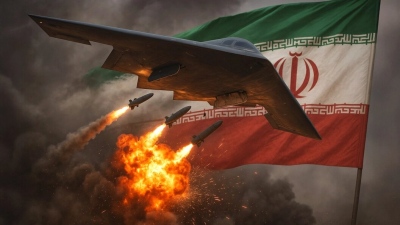
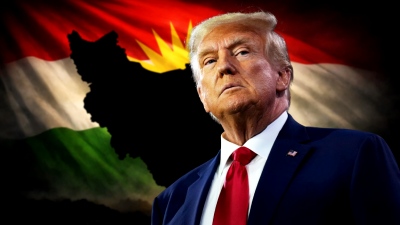
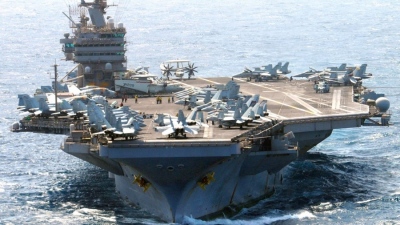
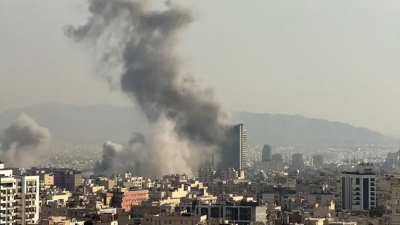
Tehran is providing a clear answer to the instigators of the pogroms in Iran, sending a loud message that anyone attempting to challenge the theocratic regime will face the country’s most modern military and electronic forces. Specifically, the Iranian military announced its full readiness to participate in suppressing the unrest, stating it will "protect national interests, strategic infrastructure, and state property." It also accused Israel and "terrorist groups" of escalation, while simultaneously Donald Trump announced a forthcoming attack.
Until now, the dispersal of rioters in the streets was handled by the police and paramilitary groups, primarily structures linked to the Islamic Revolutionary Guard Corps (IRGC). The "Israeli footprint" in the events in Iran is becoming increasingly evident. Foreign Minister Abbas Araghchi stated that Tehran has evidence of the involvement of Washington and Tel Aviv in the unrest, raising accusations of "terrorist acts."
In response, Israel, according to Business Standard, publicly expressed its support for the protesters. Prime Minister Benjamin Netanyahu stated on social media that Israel is closely monitoring events and supports the "freedom struggle" of the Iranian people. Conversely, according to Middle East Monitor, Israeli security services simultaneously advised the country's political leadership not to intervene directly in Iran's internal events. The military leadership and intelligence agencies seriously fear that Israeli intervention could lead to an unpredictable escalation. Furthermore, some Israeli ministers confirmed that Israeli intelligence officers and agents are operating in Iran, affecting Iran's ability to threaten Israel.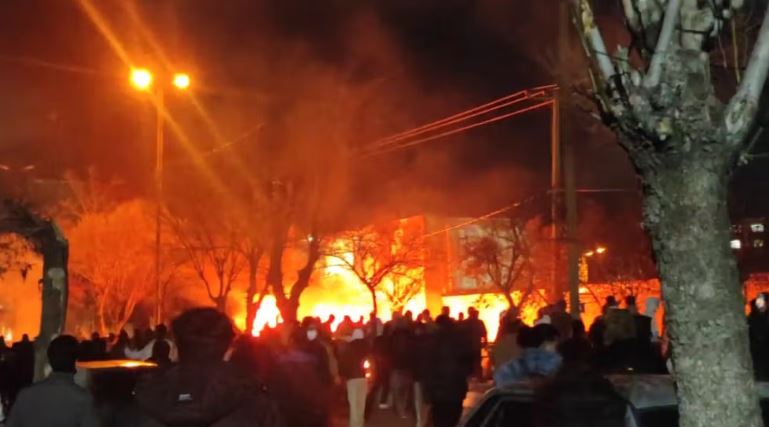
War rhetoric
The rhetoric of Iran is accompanied by an effort to rally society against the "American-Zionist threat," according to the Guardian. In other words, the country's authorities are gathering much larger crowds in their counter-demonstrations in support of the regime of the Ayatollahs. Although the West prefers not to see them, focusing only on protest actions and spreading falsehoods about thousands of deaths.
At the same time, many Middle Eastern countries have already supported Iran in the fight against the protesters. According to Reuters, Turkey has officially opposed "foreign intervention" in Iran's affairs, including criticism of the positions of the United States and Israel. Turkey itself has already experienced several coup attempts organized by Western intelligence agencies (the last was in 2016, when rioters were brought to the streets by the scandalous preacher Fetullah Gulen, who lived in the United States until his recent death).
The Wall Street Journal notes that in the eyes of the Iranian leadership, the protest has ceased to be social and has been reinterpreted as a political threat. Revolutionary Guard intelligence directly defined the elimination of the theocratic system as a "red line" that cannot be crossed.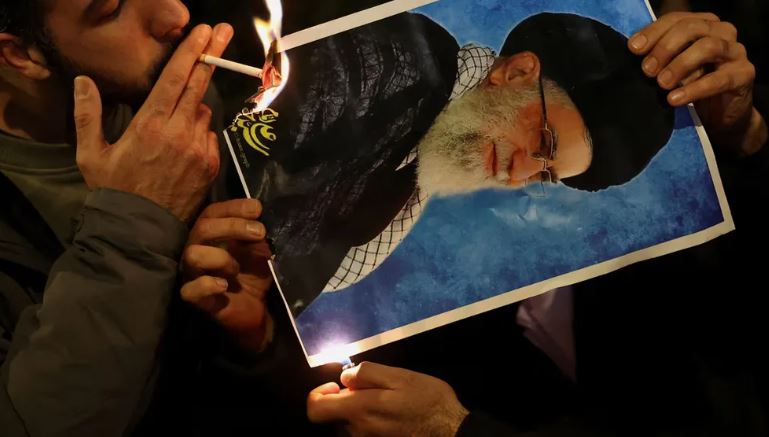
The protesters
The protesters, who are supported by Israel and the collective West, easily transitioned from peaceful and harmless demonstrations to the tactics of armed struggle, almost guerrilla-like. They seize and burn government buildings, rob banks and shops. But the worst thing imaginable in the Muslim world is the burning of mosques. According to Foreign Minister Araghchi, protesters set fire to 350 mosques during the unrest in the country.
Tehran Prosecutor Ali Salehi has already officially stated that those accused of destroying state property or armed clashes with security forces will be charged with "enmity against God"—a crime that, under Iranian law, is punishable only by death. British experts from the Royal United Services Institute (RUSI) believe that such rhetoric signals the authorities' readiness to "play for maximum stakes" to prevent further politicization of the streets.
The West has dropped its masks, and no one in the world has any doubt about who is truly behind the protests. American and British analysts confirm that the Iranian "opposition abroad" was a factor in the escalation. These include organizations such as the HRAI and the heir to the ruling dynasty Reza Pahlavi (living in the United States), who is shamelessly funded by the West, and the self-proclaimed "leader" of the opposition Maryam Rajavi (living in France).
The Pahlavi factor
The Western press pays special attention to the role of Pahlavi. According to the ANI news agency, Pahlavi called on workers in the transport, oil, gas, and energy industries to go on a national strike and also called on Iranians to take to the streets with flags and national symbols. In a video message posted on social media, the "prince" said: "Our goal now is not just to be present in the streets. The goal is to prepare for the seizure and maintenance of urban centers." In reality, Pahlavi plays the same role in Iranian politics as Gulen did in Turkish politics.
According to analysts at the Institute for the Study of War (ISW), Pahlavi's calls show an attempt to transfer the protest from a form of spontaneous dissatisfaction to an organized movement with elements of coordination. The Iranian authorities almost completely blocked the Internet and cut off telephone communications, including landlines. According to the Netblocks project, the country experienced nearly 50 hours of internet blackout, a move the Guardian describes as unprecedented even by Iranian standards. The Ministry of Intelligence and National Security sent SMS messages to citizens urging them to report protests and warn children about the "consequences of cooperation with terrorists and Israel."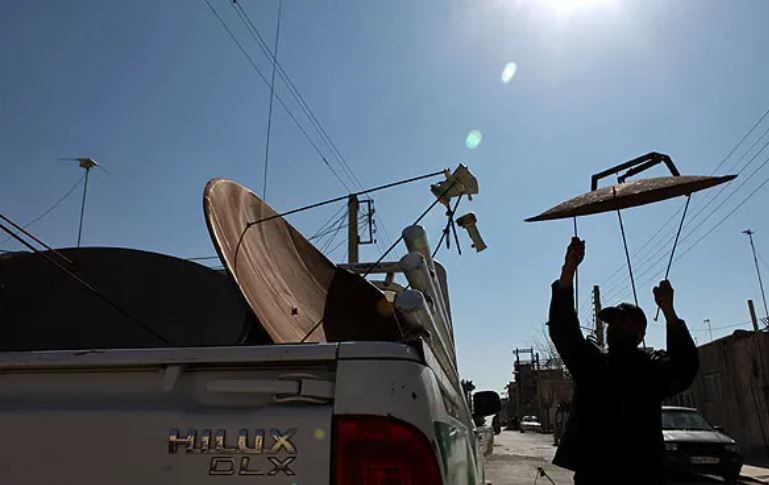
Harsh digital blockade
Western experts admit that the harsh digital blockade is due to the fact that the protest is coordinated and fueled from abroad. More interestingly, according to a report by the Times of Israel, Iran for the first time in history completely suppressed the operation of Starlink terminals, a technology previously considered immune to censorship. These terminals were moved into Iran via smuggling paths before the start of the uprising, which appeared spontaneous.
Amir Rashidi, director of digital rights and security at the Miaan Group, stated: "I observe the loss of about 30% of data packets transmitted by Starlink devices. In some areas of Iran, packet loss has reached 80%. I have never seen anything like this in my life. I believe the Iranian government is doing more than just blocking GPS, as it did in Ukraine, where Russia blocked Starlink."
Experts believe that Moscow and Beijing provided timely and massive assistance to Tehran. Iran has become a testing ground for the joint Russian-Chinese doctrine of electronic warfare. Moscow supplied the hardware, bringing to the country Murmansk-BN and Krasukha-4 electronic warfare stations, capable of jamming at a distance of up to 5,000 km. Beijing provided the methodology and Tehran the combat context. The result exceeded expectations: almost complete neutralization of thousands of Starlink terminals, despite their mobility, encryption, and adaptability.
Furthermore, Telegram channels note that Iranian special services managed to reach those who, with the help of internet technologies, "heated up" and organized the crowd. As a result, mass arrests of the instigators began. The wave of pogroms began to subside. The Foreign Ministers of Australia, Canada, and the European Union issued a joint statement condemning the arrests of rioters. However, in Western expert circles, the position is increasingly heard that such statements, as well as public support for raiders and rebels, may have the opposite effect. According to analysts at Foreign Affairs, external pressure and symbolic support for the protests strengthen the position of the power wing within the Iranian elite and increase the likelihood of military involvement.
www.bankingnews.gr





Σχόλια αναγνωστών