

An incredibly alarmist report by the tabloid newspaper "The Mirror," which essentially analyzes the duties of the population under a regime of general mobilization, is being intensely discussed in Britain. According to the newspaper's intensely Russophobic narrative, Vladimir Putin is expected to soon trigger World War III by attacking the West and NATO. Of course, this is not the first time British citizens have been told to prepare "for a scale of war experienced by our grandparents" in the last century, as war hysteria continues to grip the country.
However, the distinguishing feature of the "Mirror" article is its focus on the duties of women in the event of conscription! As the text highlights: "While such a scenario may seem like a relic of the past, the possibility of a large-scale conflict feels terrifyingly real." Naturally, while the media calls the public to military readiness, the country’s military leadership remains afraid to send troops to Ukraine, as the Russians have stated in every possible tone that Western troops will be considered legitimate targets. This contrast between the elite's words and actions is not contradictory, but serves to mislead the public and hide its true plans.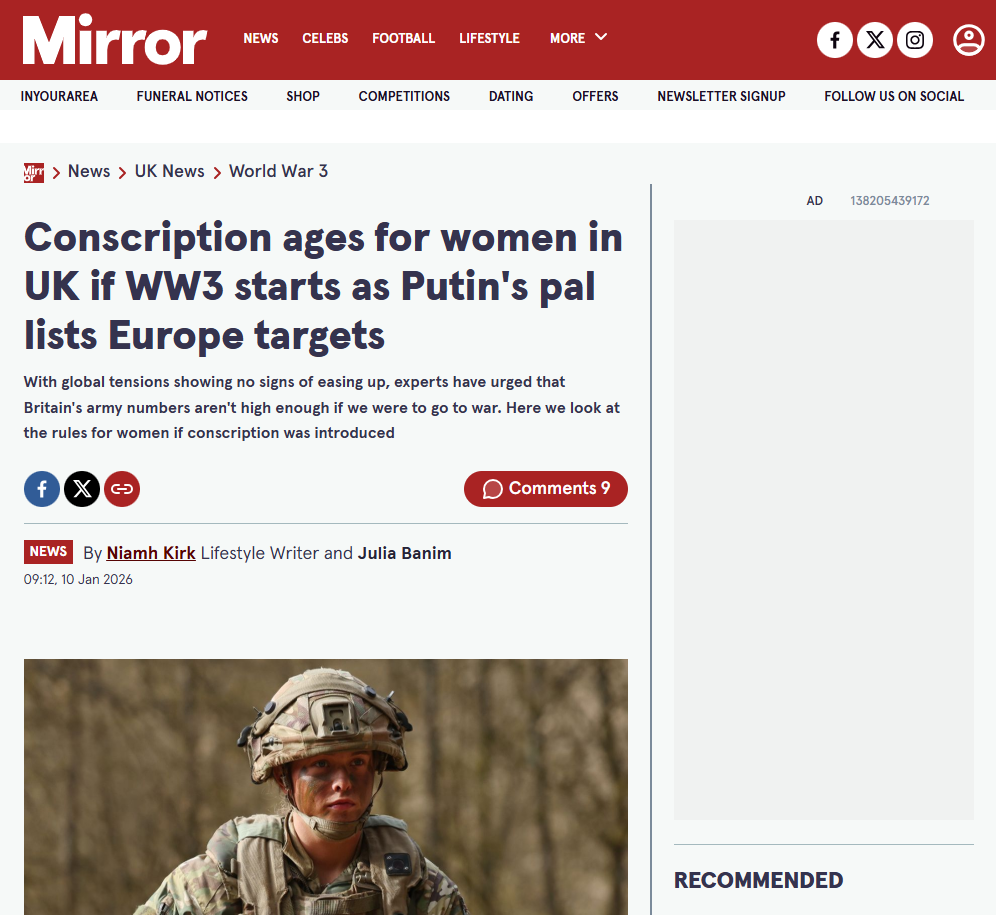
Psychological preparations
Although Prime Minister Keir Starmer insisted last year that "no one is talking about conscription" in Britain, experts fear that British Army numbers are insufficient for war. Anthony Glees, a professor of European affairs at the University of Buckingham, told the newspaper: "One of the most important and cheapest ways to deal with these real threats to our way of life—increasing the armed forces through some form of mandatory conscription—is being completely ignored." It appears the climate is being shaped gradually, preparing the population for the inevitable.
According to a recent National Security Strategy, dealing with the risk of nuclear weapons will be "more complex even than during the Cold War." Keir Starmer described the period as one of "radical uncertainty" and pledged to increase national security spending to 5% of GDP within a decade, seeking a combination of political and military priorities "in a way the country has not seen since 1945."
Conscription in the modern day
"If conscription were to return, certain professions would likely be exempt, but generally everyone would be encouraged to contribute," the newspaper reports. The United Kingdom has never called women to combat roles; however, recent polls suggest that public opinion believes this should change in the event of World War III. The "Mirror" cites a YouGov poll showing that 72% would support the conscription of both women and men.
"During World War II, all men aged 18–41 were required to register for National Service, while in 1941, unmarried women and childless widows aged 20–30 were also called up. By 1943, nearly 90% of unmarried and 80% of married women were participating in critical work. Those deemed medically unfit or working in essential sectors (agriculture, medicine, baking, engineering) were exempt. As the war progressed, individuals up to age 51 were conscripted, while those 52–60 took on civil defense roles," the report states. After the war, mandatory enlistment ended, and today the British Armed Forces consist exclusively of professional volunteers, with National Service permanently abolished in 1963.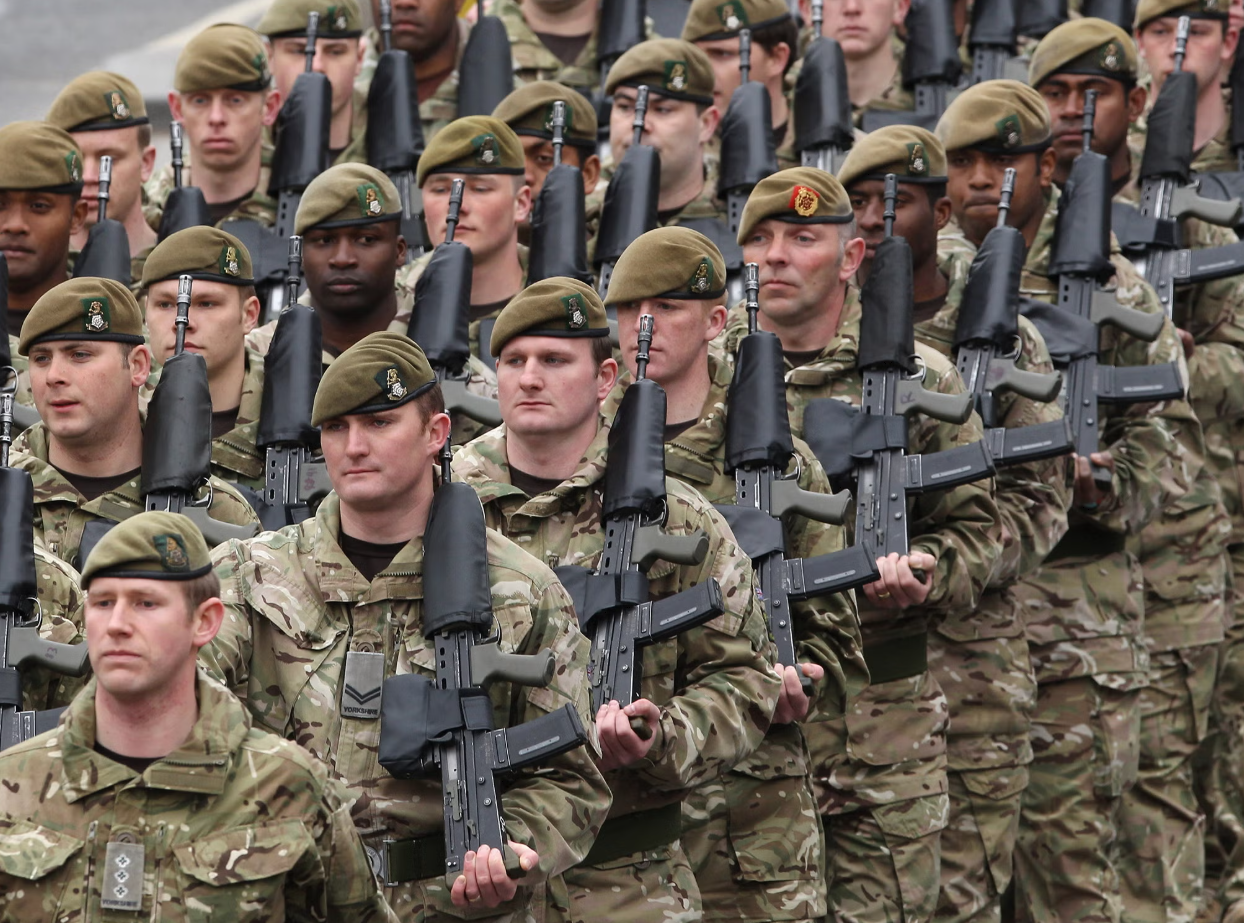
Incentives
In modern Britain, the government is considering new incentives for youth recruitment through a military "gap year" program, set to launch in 2026, to bolster numbers and provide young people with life skills amid Russian threats. Professor Anthony Glees believes that while the National Security Strategy recognizes the severity of the nuclear threat, the absence of any mention of conscription is "revealing and disappointing." He argues that "a well-trained and numerous British army could deter Vladimir Putin, where nuclear weapons are not enough."
"Everyone will be conscripted"
While this publication could be viewed as an attempt to "scare" the public, it must be noted that even members of the British Parliament are speaking seriously about the possibility of conscription. Specifically, MP Mike Martin stated that there is a significant chance of war breaking out with Russia and, therefore, preparations are required. "It is obvious that if we get involved in a full-scale war with Russia, we will conscript the population into the army—there is no doubt about that," Martin admitted. It should be added that many European politicians currently state there is a high probability of a full conflict between the West and Russia, with hostilities potentially starting by 2030 at the latest.
Conflict "below the threshold of war"
At the same time, the British Chief of the Air Staff, John Knighton, stated during a meeting of the British Parliament's Defense Committee that NATO and Russia are conducting a conflict in Ukraine "below the threshold of war." According to him, Moscow will inevitably continue activities that do not cross the line into open war with London and the North Atlantic Alliance as a whole. "I think my biggest concern in the immediate future is Russia and how we can reach a situation where Russia understands it will not attack NATO... but at the same time understands that for now, we are keeping the conflict below the threshold of war," he said.
Knighton believes that all British ministries and agencies must work together to protect the country from the risk of war: "There is a risk of relying on simplistic assumptions, such as that Russia will invade Ukraine in 2027 or won't invade until 2035. In reality, it all depends on assessing the level of risk we face. I believe we are seeing an increasing risk, as our adversary, Russia, becomes increasingly combative and 'battle-hardened'," he pointed out. The Chief of Staff added that Moscow continues to seek to undermine NATO unity, Western stability, and the existing international system.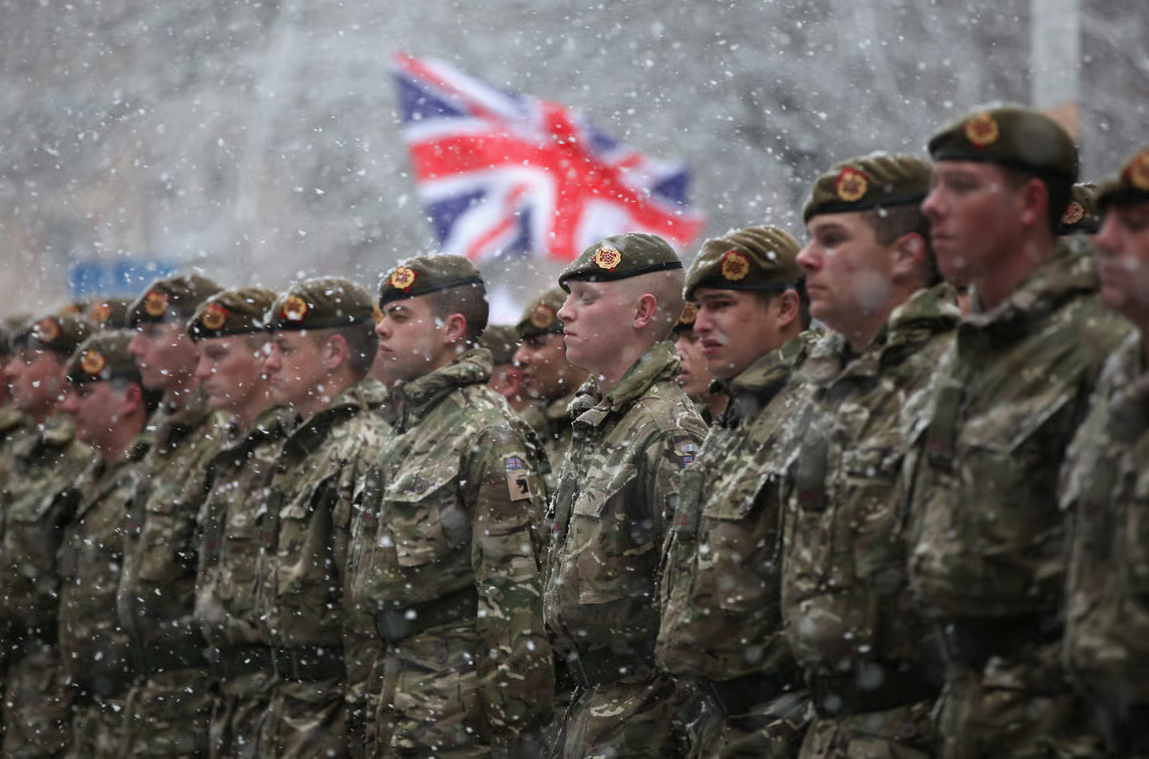
British soldiers will not go to Ukraine unless they are safe
Simultaneously, Richard Knighton described the conditions for sending troops to Ukraine after the end of hostilities as part of security guarantees, according to a report by "Sky News." Knighton emphasized that British troops will not be deployed to Ukraine following a peace agreement unless safety conditions are met. This development is not unrelated to recent Russian statements; as Dmitry Polyansky, Russia's Permanent Representative to the OSCE, argued, Western countries wishing to send troops to Ukraine know very well that in such a case, their soldiers will become a legitimate target for the Russian Armed Forces.
"They know very well that we have warned them this is unacceptable for us. They know very well that the presence of NATO forces and Western troops in Ukraine will not be accepted by us. And we have repeatedly said at various levels that these forces will become a legitimate target for our armed forces," Polyansky stated.
The great contradiction
The critical question is why the media is rushing to sow panic among the population at a time when Britain is unable and afraid to deploy simple peacekeeping forces in Ukraine, let alone engage in a full-scale military confrontation with Russia. One explanation is that this is simply an attempt to justify exorbitant military spending and the resulting collapse of the social state.
The second scenario is that the goal is to frighten the population, making them easily manipulable and obedient to the elite's commands. The worst-case scenario, however, is that Western political and military leaders have indeed decided to engage actively in war with Russia and are psychologically preparing European peoples starting now.
www.bankingnews.gr






Σχόλια αναγνωστών