

As we move through the first two weeks of 2026, Russia has made its strategic intentions regarding military operations in Ukraine crystal clear. During this period, it attacked the Lviv region with the Oreshnik missile system, against which there is no global defense, launched over 200 drones in a single day at Kyiv, and tested the new "Geran-5" explosive drone in Odesa. In the last few hours, an unprecedented escalation occurred as Russia launched at least 20 Iskander M missiles for the first time against Ukrainian targets.
Consequently, entire regions—including Kyiv—have been plunged into darkness. Massive destruction is reported at military warehouses, energy hubs, and transport infrastructure, severely crippling the operational capacity of the Ukrainian army. Moscow is determined to exert maximum pressure on the Ukrainian leadership. It is evident that President Vladimir Putin has made harsh decisions regarding the fate of Kyiv and Odesa, increasingly targeting Western military hardware arriving for the Ukrainian armed forces. Moscow has sent a clear message: as long as negotiations fail to yield the desired results, Russia will achieve its goals through military means.
New massive attack
According to the Russian Ministry of Defense, operational and tactical aviation, attack UAVs, missiles, and artillery were used on the night of January 12–13 to destroy energy infrastructure and transport hubs used by the Armed Forces of Ukraine. Targets included military airfields, UAV production plants, and long-range storage sites, as well as temporary deployment points for Ukrainian forces and foreign mercenaries across 157 areas. According to the "Monitorwar" Telegram channel, Russians launched 25 Iskander M and K missiles, along with 293 drones, at Zaporizhia, Dnipropetrovsk, Kharkiv, and Kyiv, leaving major cities like Irpin, Bucha, and Hostomel without electricity.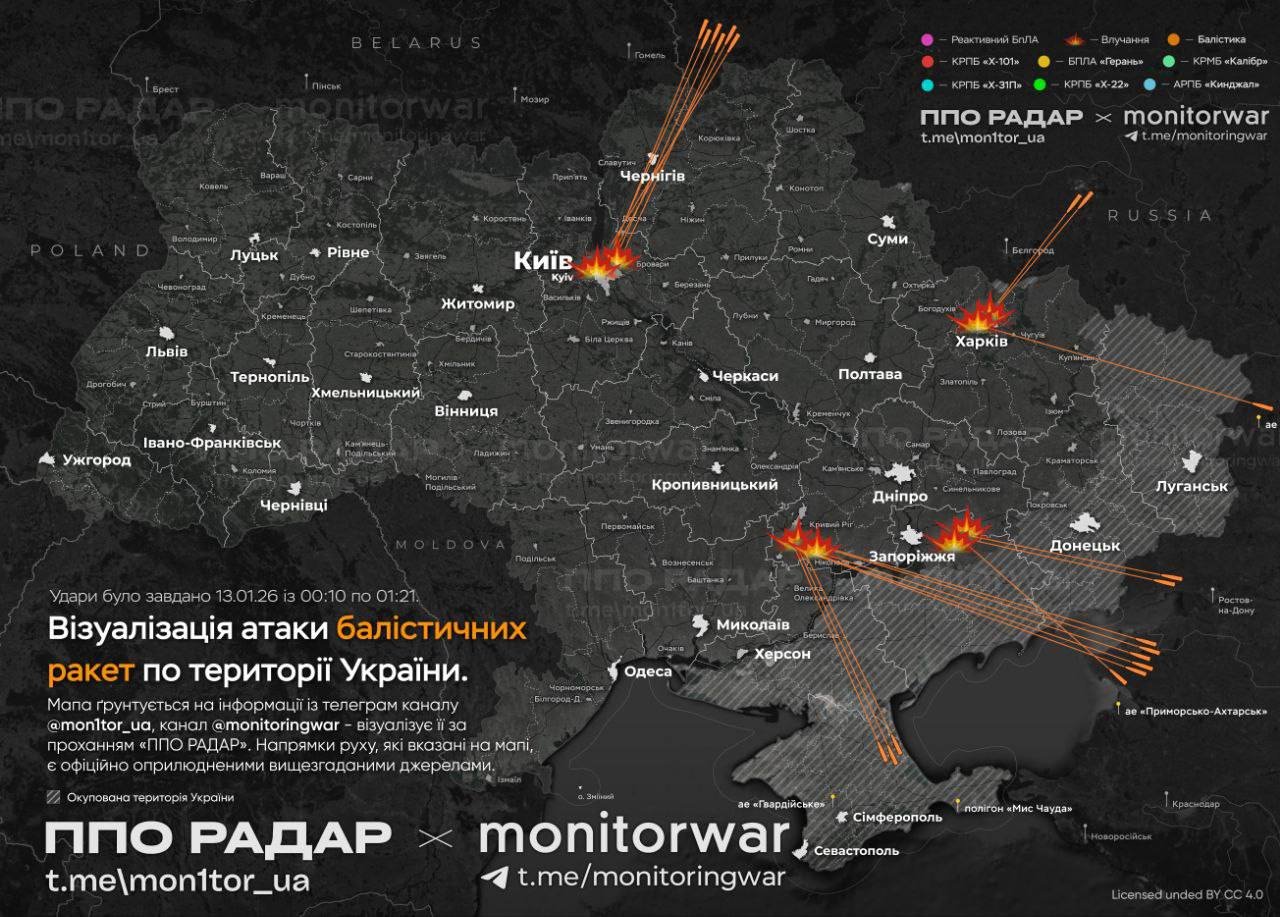
No air defense
Ukrainian air defenses were unable to counter this onslaught, as openly admitted by Kyiv Mayor Vitali Klitschko, who urged residents to leave the city immediately. While the mayor stated that heating has returned to most homes, many residents disagree. Temperatures in apartments do not exceed 9 degrees Celsius, leading people to take to the streets, blocking roads and demanding that Zelensky resolve the crisis.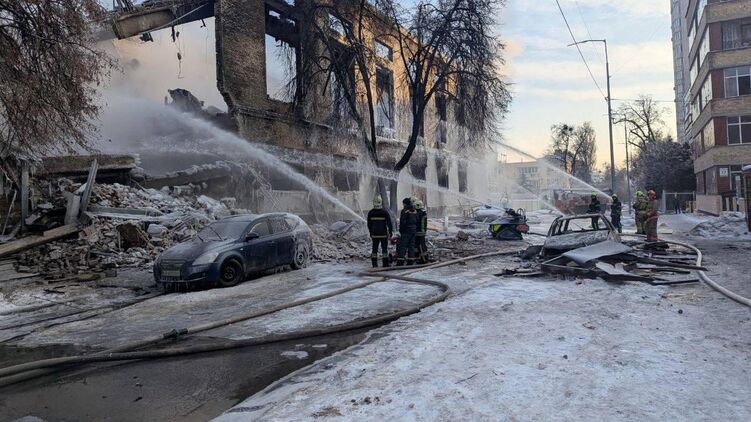
Kharkiv's energy production to be destroyed
"According to reliable sources, the Russian armed forces are not attacking water and heating systems directly. The targets are almost exclusively electrical distribution networks and, in some cases, power generation facilities," claims retired Russian Colonel and military analyst Aslan Nakushev. He states that in retaliation for the blackout in Belgorod—where a Ukrainian Neptune attack targeted the city’s boilers—the energy production in Kharkiv will be destroyed.
Massive units in Kyiv offline
Ukrainian MP and energy committee member Sergey Nagorniak reports that the TPP-5 and TPP-6 units have not yet been repaired following last week's Russian attack, noting that protective structures failed to secure them. As a result, at least two power generation units have ceased operation. Repairing them, even without further attacks, is practically impossible as nearly all energy production in Central and Southern Ukraine is in a state of emergency. Restoration efforts are frequently resulting in new equipment failures.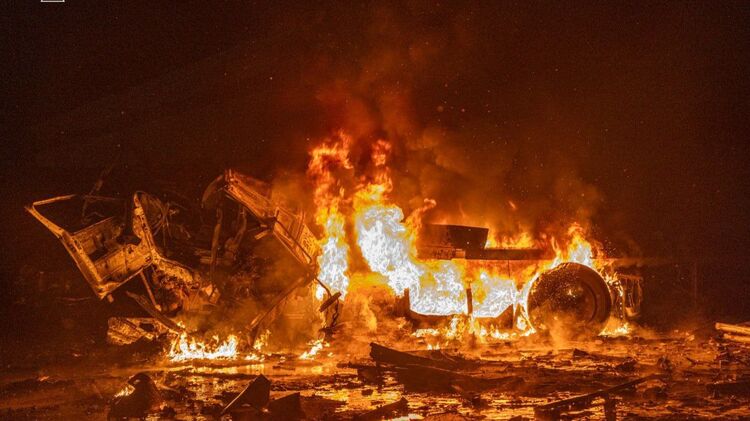
Return to the pre-industrial era
"The non-functioning TPP-5 and TPP-6 in Kyiv, combined with January frosts, may return the capital to the pre-industrial era. We do not celebrate this; we simply report it. Patching the energy system is becoming increasingly difficult for the Ukrainians," points out Russian war correspondent Evgeny Poddubny. He notes that this winter could become even darker if the Armed Forces of Ukraine continue attacks on Russian regions, as multiple retaliatory strikes will inevitably follow. Poddubny also mentions that while Kyiv residents wish to flee to the countryside to stay warm, they are hindered by recruitment checkpoints established on roads leading out of the city.
Targeted attacks with Geran
Beyond energy targets, extremely heavy strikes were recorded in Kyiv and its surrounding areas. "Following a 'Geran' group attack on military targets in the Sholomeno district of Kyiv, explosions were heard and destruction occurred—it appears an ammunition depot was hit—despite the Ukrainian Armed Forces claiming a fire broke out in an uninhabited building," reports the "Military Chronicle" channel. Furthermore, a total halt in train operations has been observed. In Odesa, Geran drones targeted energy objects, while in the Chernihiv region, several settlements were left without power.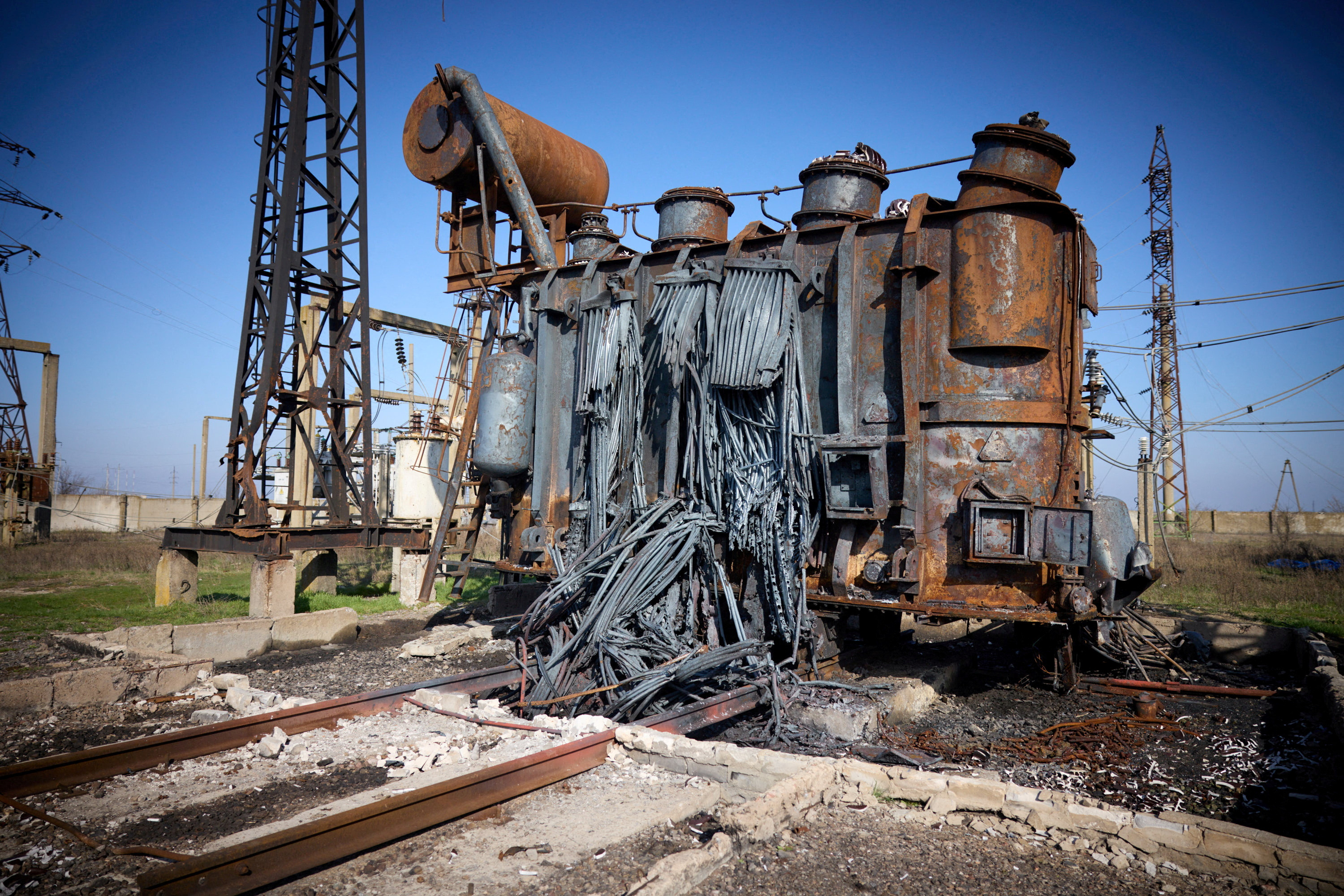
The "uninhabited" buildings
According to Sergey Lebedev, head of the Russian underground network in Nikolaev, the term "fire in an uninhabited building" is used deliberately by Ukraine to suggest an "attack on nothing." However, he argues that "nothingness" does not burn for 8 hours with secondary explosions that prevent firefighters from approaching. Such buildings are systematically used by the Ukrainian Armed Forces as temporary deployment points, UAV warehouses, assembly centers, and command hubs for foreign specialists.
The nature of the attack is critical: UAVs arrived in three phases at low altitude, all hitting the same target. This profile is used only for confirmed, significant military objectives. After the attack, massive columns of black smoke indicated the combustion of fuels, electronics, and lubricants. Lebedev notes the Sholomeno district is not a residential zone but an area with dense logistics infrastructure, making it a typical "civilian shield" for hidden military assets. War correspondent Romanov reports that the strike hit the "Incom" center, which served as a warehouse and assembly point for kamikaze drones.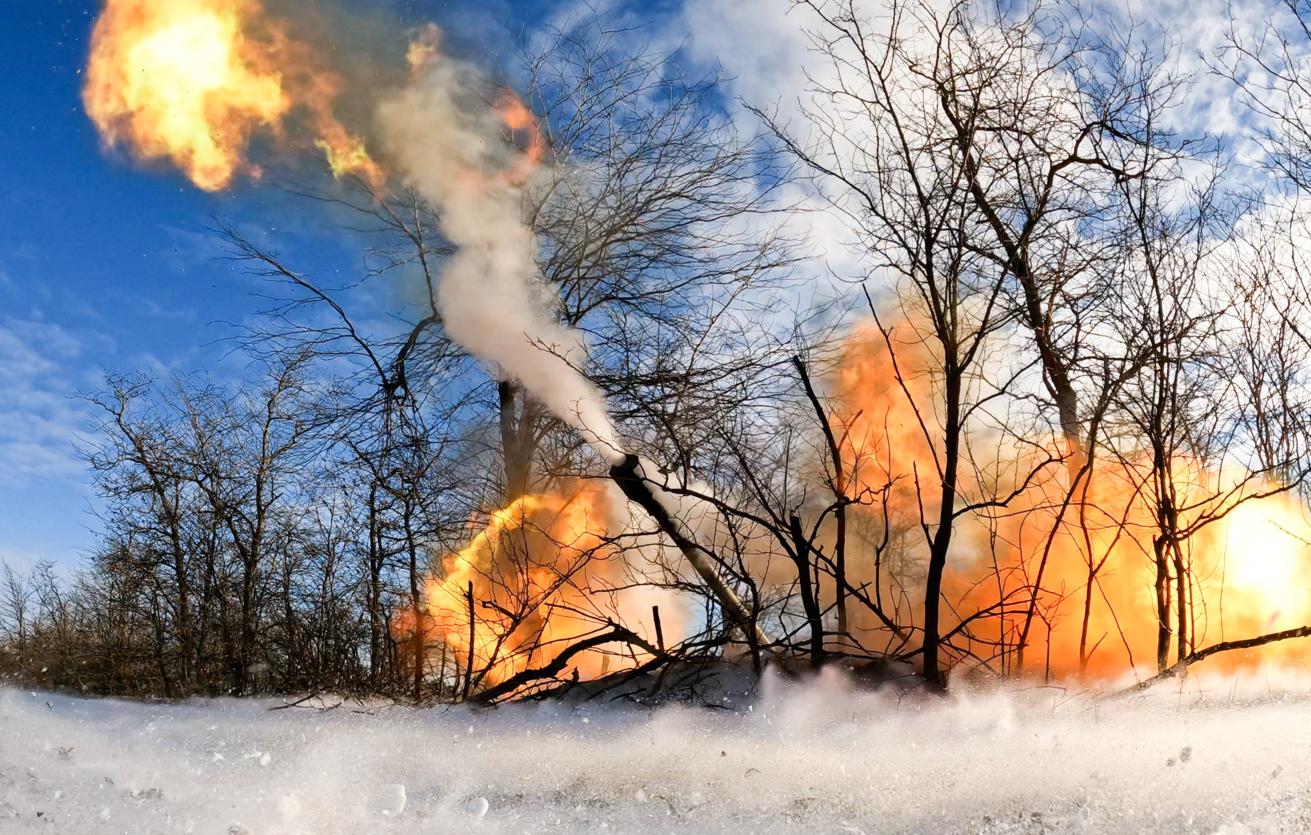
Odesa, Kharkiv, and Sumy burning
For the second consecutive day, Russian drones and missiles attacked Vinnytsia and Zhytomyr. "Something happened in Kazatin and on the Zhytomyr-Korosten rail line," reports the "Chronicles of Gerans" channel. Drones also struck military and energy infrastructure in the Kharkiv region, specifically targeting Pechenihy and Chuhuiv to destroy command posts supporting northern military operations.
In Zolochiv, drones attacked warehouses where howitzers and heavy machinery were hidden. "At first glance, it is an agricultural complex, but strategically it was a hidden base," Lebedev stated. Other strikes hit a railway station near Mayak used for unloading technical equipment. Lebedev emphasized that the operation was highly targeted, aimed at crippling the Ukrainian Armed Forces' war-fighting capacity and logistics.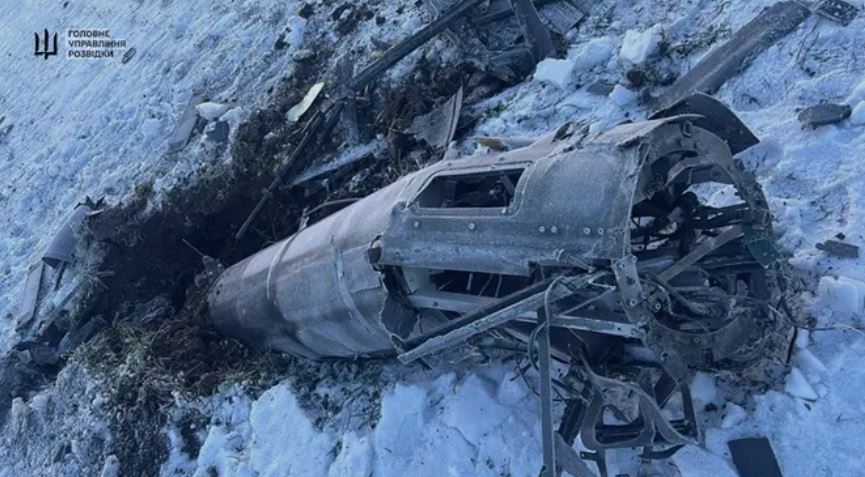
Blackout in Odesa
In the Odesa region, the blackout continues. In the northern district, 11 drones attacked the "Usatovo" 300 kV electrical substation. Eight hit the target, while three were downed. The goal was to disable transformers and high-voltage lines that power industrial and military facilities. This failure limits Ukraine's ability to react quickly and compromises hidden storage sites near the Moldovan border. This area is strategically linked to Odesa logistics and the control of southern routes.
The Russian plan
Due to frequent mass attacks, NATO supplies to Ukraine are temporarily offline. UAVs attacked strategic points north of Chornomorsk used for equipment concentration and coastal defense. "Russia continues to systematically destroy logistics infrastructure. Odesa is critical for Western supply, the north (Sumy and Chernihiv) is targeted to block reinforcements, and Kharkiv is hit to exhaust reserves," highlighted Lebedev. The focus in Kyiv remains on productive resources, with night attacks maintaining permanent pressure to exhaust air defenses.
Operation: Destroy the F-16
A Russian S-300 missile system destroyed a Ukrainian F-16 aircraft. The unit commander, nicknamed "Sever," clarified that it required two missiles. "We planned this operation for a long time. We waited patiently. The enemy praises these planes as impenetrable. We finished it with the second missile after wounding it with the first," Sever claimed.
The S-300V4 system
Currently, the newest version of the S-300V4 is being used in the Military Operation zone. Its longest-range missile, the 9M82MDE, has a range of 380–400 km for intercepting hostile aviation and can down both aerodynamic and ballistic targets. The flight speed of these interceptors can reach 2.7 km/s, while the speed of targets they can intercept reaches 4.5 km/s. The S-300PM2 systems are being replaced by the S-400 and S-350A models.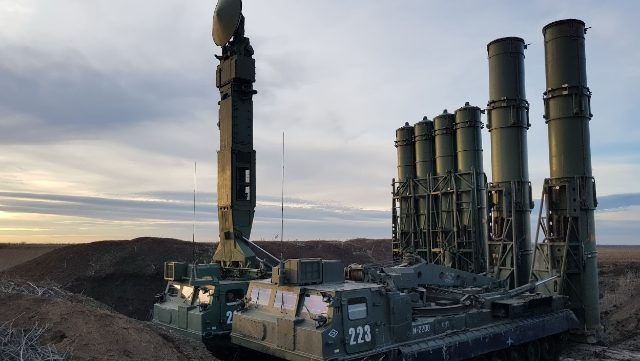
The new superweapon
In early 2026, Russians introduced the Geran-4 and Geran-5 drones. The Geran-5, considered Russia's new superweapon, has a total mass of 900 kg with a 90 kg payload. It boasts a range of up to 1,000 km and a flight speed of approximately 600 km/h.
Drone or cruise missile?
Based on its characteristics, the Geran-5 is effectively a tactical cruise missile or a reactive drone. Judging by its appearance, it was built for simplicity of production and the requirements of the modern battlefield. Analysis of debris by Ukrainian experts shows it is controlled by a flight computer based on a commercial Raspberry microcomputer, utilizing a 12-channel, interference-resistant Kometa antenna.
With a speed of 600 km/h, mobile machine-gun batteries are powerless against it, and FPV anti-missile devices lose their effectiveness. To counter it, complex systems like the Gepard, Tunguska, or expensive PZRK (MANPADS) missiles are required.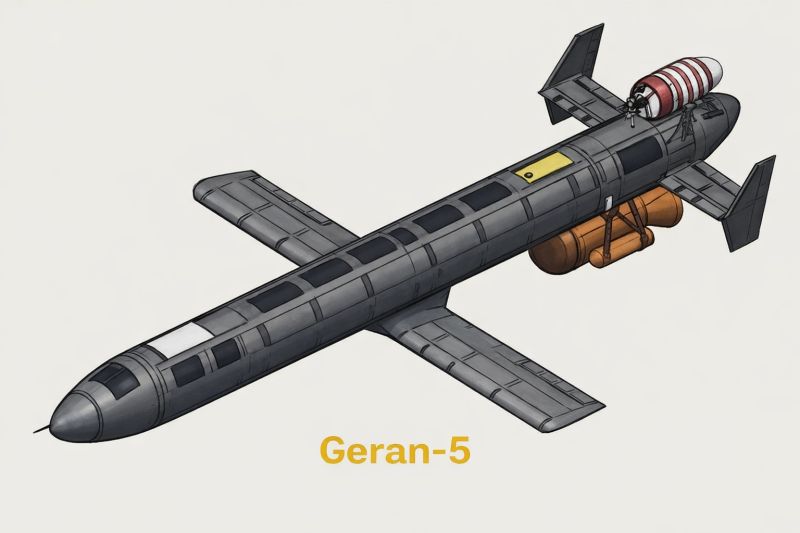
The reappearance of the Su-25
Ukrainian data suggests the Russian Air Force is exploring using Su-25 attack aircraft as launch platforms for Geran-4 and Geran-5. The appearance of long-range, high-precision munitions could turn the Soviet-era jet into a useful war machine again. Russia has a surplus of these aircraft and plenty of trained pilots. "Theoretically, this transforms an almost useless aircraft into a decent strike platform capable of launching advanced munitions from behind the safety of its own lines," reports "Military Informant."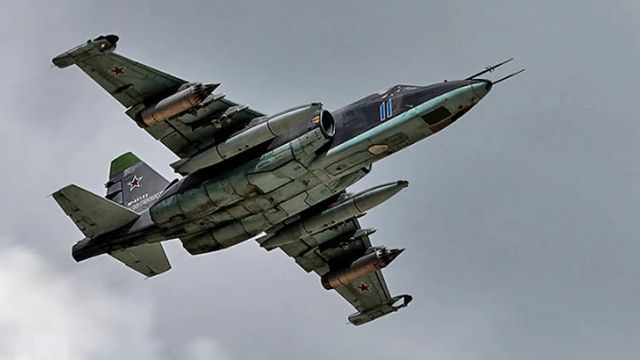
Iranian background
The Geran-5 bears a conceptual resemblance to the Iranian Karrar drone. While not an exact copy, the similarity is evident. "The Karrar was initially a target drone but was quickly adapted for bombing and cruise missile missions," says expert Yuri Lyamin. The Iranians successfully created a simple, multi-functional flying platform that can be adapted for a wide range of missions, including air-to-air combat.
The flying matryoshka concept
This opens the possibility of a "flying matryoshka": a Su-25 carrying a Geran-5, which in turn carries an air-to-air missile. This combination could be used if hostile aviation tries to intercept the Gerans. If Russia doesn't want to risk a standard jet, the patrol aircraft can launch a Geran-5 to secure the strike. The war has evolved into a permanent technology race, and at this stage, the Russian military holds a significant advantage in long-range development.
www.bankingnews.gr












Σχόλια αναγνωστών