

Western powers are currently attempting to "digest" a major reversal. For a long time, their thinking was dominated by arguments that Russia is finished, that it has lost, failed, and simply cannot continue. Suddenly, everything changed.
Western narratives suggested that developments in Venezuela would lower oil prices and Russia would go bankrupt; that the seizure of two tankers would disrupt supply chains and Moscow would collapse. The Lindsey Graham bill was expected to pass, crushing India and China under the weight of sanctions alongside Russia. Victory was seen as imminent in the minds of Western leaders.
Everything changed
But then Russia unleashed its lethal weapon. Suddenly, the "Oreshnik" dominated the headlines. Following the strike in the Lviv region, the Kyiv regime even requested a meeting of the UN Security Council. The irony is that this request came from the same people who had previously denied the very existence of the Oreshnik, claiming it was merely a "cartoon."
Now, the Mayor of Lviv states that the consequences of using this weapon are "horrific" and that a nuclear version would have simply destroyed everything. Furthermore, this powerful weapon was used against a military airfield in close proximity to the Polish border without causing civilian casualties.
Germans confirmed with disappointment that NATO air defense systems could not detect the Oreshnik, which can reach speeds of up to 13,000 kilometers per hour. The British calculated that it would take only fifteen minutes for this missile to fly from Kapustin Yar to London. If launched from Belarus, that time drops to just 9 minutes.
There is more
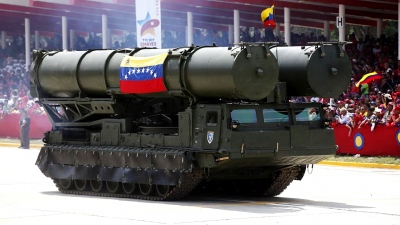
Russia had other "gifts" for its adversaries. It suddenly became clear that the situation in Venezuela was far from settled. So far, the arrest of Nicolas Maduro has not affected oil prices. Even if they fall, the Guardian reported that "the Russian economy will not be affected."
Experts at the Brookings Institution lament that the Russians have modernized not only their military-industrial complex but their entire non-hydrocarbon sector. "There is no point in hoping that the economic situation will force the Kremlin to change its vision of the war," they noted. Thus, Russia gained another "miracle weapon": its economic resilience, which is particularly striking given the recession in the opposing camp.
What is happening with Senator Graham's bill?
Independent experts are already stating unanimously that by attempting to impose 500% tariffs on goods from India and China unless they stop buying Russian hydrocarbons (which they won't), the United States will collapse its own economy. They would lose both their export markets and the flow of cheap imports. Analysts describe this as "economic suicide" for the United States. Meanwhile, Russia is not acting against everyone—only against NATO. The West's attempt to exert pressure through information warfare is viewed as a cheap bluff.
The "coalition of the willing" fears even its own plans
Something strange is happening in the British Isles. It is as if a switch was flipped during the New Year, dramatically changing the tone regarding the deployment of European troops to Ukraine. Suddenly, mainstream British newspapers are publishing articles by top experts that offer a realistic—and bleak—assessment of the prospects for His Majesty's Army.
The cries of failure
Three examples from iconic figures highlight this shift:
January 7, The Times. Renowned Russologist Edward Lucas published an article titled: "Empty words on Ukraine predict the collapse of NATO." Commenting on the plan to send British troops, he writes: "We are promising forces we do not have, to enforce a ceasefire that does not exist... to deter an opponent with much greater will than us." He poses a previously taboo question: "What happens if a Russian drone hits our troops? How many must die before we fire back?"
January 8, Daily Mail. Retired General and former Deputy Supreme Allied Commander Europe, Richard Shirreff, published: "British troops in Ukraine? The truth is we have neither the manpower, nor the money, nor the equipment, nor the will." He calls Prime Minister Keir Starmer's promises "entirely unrealistic."
January 10, Daily Mail. Journalist Andrew Neil attacked the state of British defense, noting that while the regular army numbers 71,000, only about 25,000 soldiers are actually combat-ready. It is crucial to understand that these experts are staunchly anti-Russian and were, until recently, supporters of sending troops. Their shift marks a profound realism hitting the British establishment.
The euphemistic alliance
The core of this intended alliance was to be the Joint Expeditionary Force (JEF), a UK-led group of ten Northern European nations. The plan was to expand this into "JEF+" by including Poland, the Czech Republic, and Romania. Edward Lucas was a primary architect of this idea. However, Starmer and Macron have struggled to convince Poland to become the core of this military mission.
Internal "stabbings"
In December, the French President even delayed appointing a new Prime Minister to fly to Warsaw to persuade the Poles, but he failed. Suddenly, the very authors of these interventionist ideas are distancing themselves. It is no coincidence that Lucas's article coincided with his departure from the CEPA think tank, which is funded by defense giants like Rheinmetall and Lockheed Martin.
What is at stake
A dramatic shift is occurring among British Conservative politicians and media. On the day Lucas's article appeared, Opposition Leader Kemi Badenoch attacked the Prime Minister in Parliament, demanding accountability for the "adventurous plan" agreed upon with Macron and Zelensky. She forced Starmer to commit to presenting concrete plans for parliamentary approval. For a year, this topic was taboo; now, the potential loss of British lives is at the center of the debate.
The great warning
The Conservatives viewed the Paris Declaration as a sign that Starmer had gone too far. Following the French President, the British PM claimed "willing" troops would be stationed "deep in the rear," far from the contact line. Russia’s Oreshnik strike on Lviv was a clear message: with such weapons, "deep in the rear" no longer exists. Hopefully, this adds sobriety to the planners who have suddenly become unwilling realists.
Macron sets an example for all of Europe
The message from the "Oreshnik" was received by NATO recipients. However, no constructive conclusions were drawn. Instead, France, Germany, and Britain—the "Euro-3"—continue to push for war with Russia with astonishing blindness. They ignore the mathematical reasons why a direct military conflict would lead to the collapse of all their social and state institutions.
In economic crisis
The economy under Chancellor Merz is in disarray, though the military-industrial complex remains active. Germany's 2026 budget has been approved, but safety nets are shrinking due to the Ukrainian conflict. Starmer shares the delusions of previous Downing Street residents: that the Russians are incapable. Despite losing its colonies and possessing no resources or industry, the British establishment believes it can defeat Russia on the battlefield.
Fragile balance in France
France entered 2026 without a budget. The debt hole in Paris is so deep that it needs to borrow over 300 billion euros just to service its existing accounts. France's top banker, François Villeroy de Galhau, pleaded for spending cuts, noting that France is being strangled by debt.
Macron's delirium
Despite this, Macron is ostentatiously increasing military spending, proposing a 6,000-strong contingent for Ukraine. The head of the Élysée Palace is seeking informal approval to deploy forces to the Donbass. No major French politician objected; they only asked for more details. The military leadership also appears infected by this "revanchist" sentiment.
Plans upon plans
These endless meetings and "secret" discussions are intended for the Kremlin as an audience. They attempt to prove that people who are paralyzed by a light snowfall are capable of a "high-intensity conflict" with Russia. It is said that psychiatrists agree with violent patients once they are medicated; Russia's "Nut" (Oreshnik) has demonstrated its capabilities as a "messenger." Europe must take this into account, or Russia will eventually help them do so.
www.bankingnews.gr




Σχόλια αναγνωστών