

Order given for the Kramatorsk operation; first stage of the mission to dismantle Ukrainian supply lines near Slovyansk has begun.
At the moment when Russian forces, through another massive aerial operation, plunged half of Ukraine into darkness and sent a message of power by neutralizing 10 NATO officials in the Odesa region, Moscow has reportedly given the order to begin the main battle for the total capture of the Donbass within 2026. While the Russian army continues to gain territory in Kharkiv and Sumy, the Ukrainians are making enormous efforts to restrain the Russian momentum amid a severe shortage of military personnel.
Russia has made it clear that as long as negotiations and peace agreement efforts do not yield tangible results, its army will be the one to achieve the set goals. Military analysts and bloggers already report that the order for the military offensive on Kramatorsk and Slovyansk has been issued. At the same time, Russia is sending a message of strength in all directions, particularly toward the USA, through the 5th generation Russian fighter, the Su-57, which has already managed to surpass and subdue the American F-35.
Russian advance in Kharkiv
Russian units of the "North" force are advancing further around the liberated city of Volchansk, operating within the ruins of border villages and forest areas. The Ukrainians, after transferring reserves to the Kupiansk region, are facing a personnel shortage, allowing Russian forces to push through Ukrainian defenses in several areas simultaneously.
According to information from Russian journalist Mikhail Zvinchuk, another section of Staritsa has passed under the control of Russian Armed Forces units. However, the Ukrainians maintain a presence on the southern outskirts of the settlement and are conducting counterattacks. In the Tatarsk forest, battles continue, and although the situation remains hidden by the "fog of war," the initiative stays in Russian hands.
Additionally, several positions were "cleared" by offensive Russian forces between Lyman and Vilcha. In Khutory Volchansk, the Russians captured several more residences and continue to advance toward the center of the village. Currently, Russian forces are pushing Ukrainians out of forest areas on the Lyman – Vilcha line, increasing pressure toward Grafskyi, which is located directly next to the Seversky Donets River, making Ukrainian resupply difficult.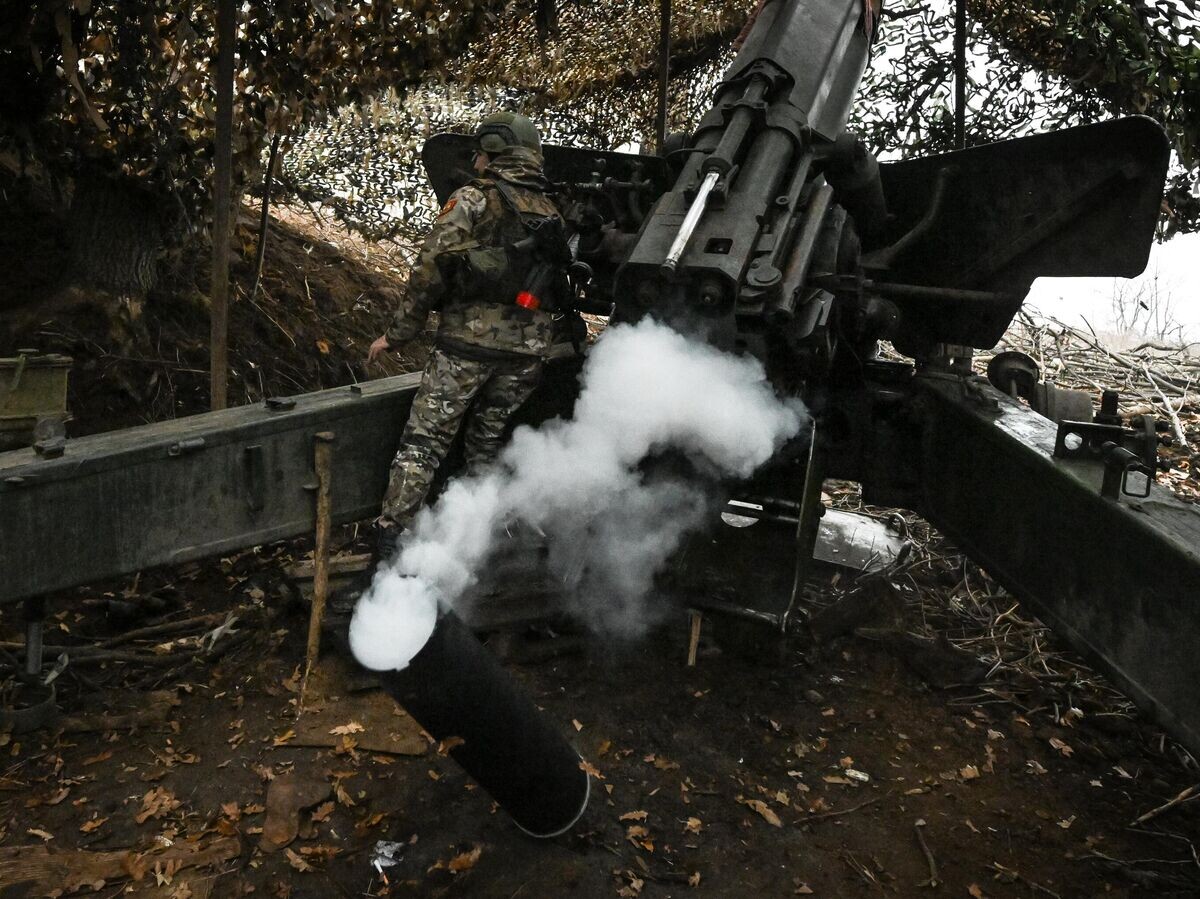
Stable situation on the Eastern front
The situation on the eastern wing of the front remains stable. Units of the Russian Armed Forces are conducting attacks with small groups in the areas around Ambarnoye, Dvurechansk, and Otradnoye. According to the "Arkhangel Spetsnaz" channel, the strategy focuses on disrupting enemy reserves and local attacks with relatively small forces.
However, it is not ruled out that the Russian Armed Forces may later launch more extensive offensive actions, as the rhetoric regarding a "buffer zone" from senior leadership has not disappeared. Furthermore, it is reported that Ukrainian positions are being hit by Solntsepyok systems, destroying manpower. The Aerospace Force (VKS) has effectively struck concentration points of the Ukrainian Armed Forces in rear areas.
The Ukrainians are increasing the intensity of drone attacks, including strikes against the civilian population. In the Zolochiv region of Kharkiv, four UAV units of the Ukrainian Armed Forces were identified and destroyed while conducting attacks against civilians in the Belgorod region. As a result of the destruction of these units, the intensity of enemy attacks in the Belgorod area has decreased significantly.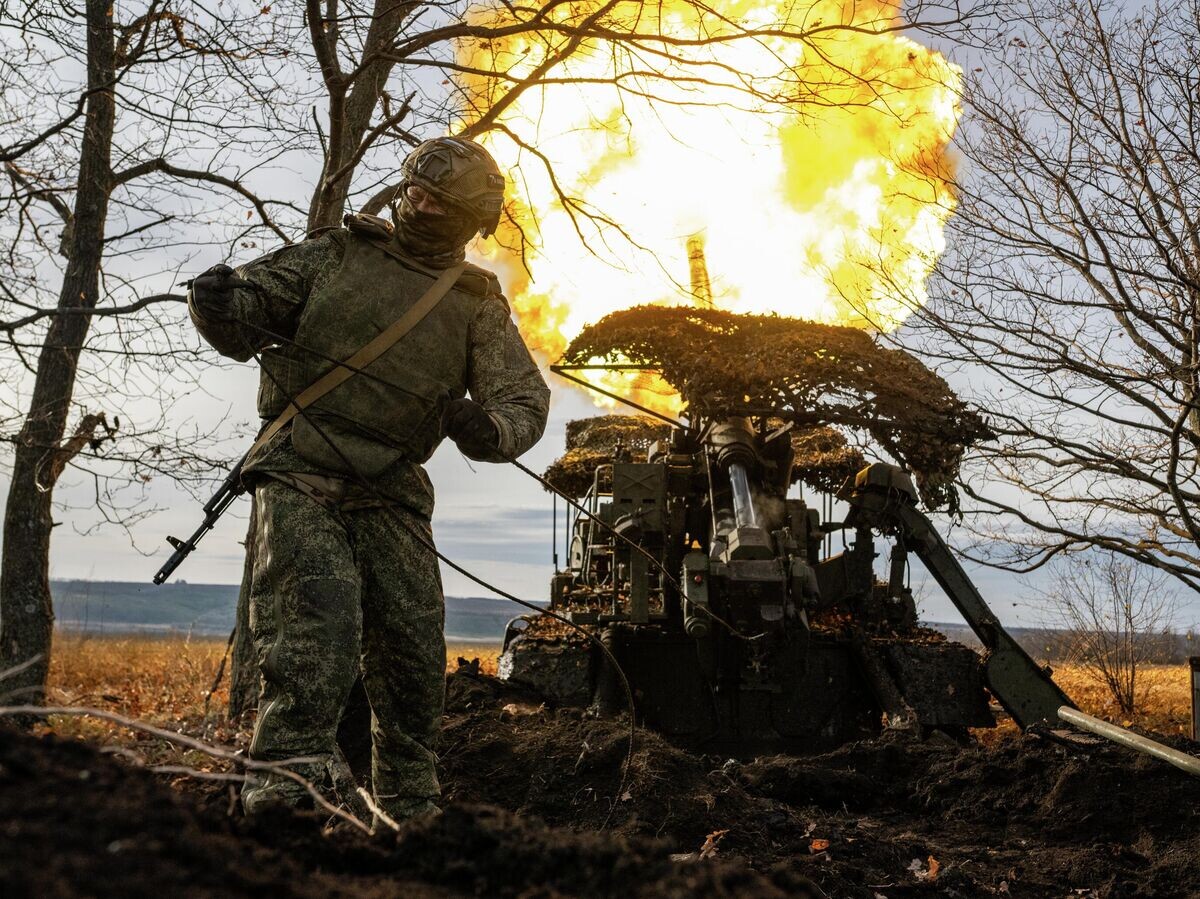
On the side of good
"The villages of Kharkiv have passed to the side of good. Under extreme weather conditions, our soldiers continue not only to fight but also to advance in the offensive. Every day now is a battle against hunger, cold, and a vast number of drones," reports the "Bez Retushi" channel. Every victory in battle is born first from the victory over oneself. Thoughts of home and the Motherland provide the inexhaustible strength that moves the troops forward.
Ukrainians concentrating massive reserves
The Russian "North" force is increasing the pace of the offensive in the Sumy region, pushing through the defenses of the Ukrainian Armed Forces at several points with the support of the VKS and artillery. The Ukrainians have not taken action and are forced to reinforce their offensive sections with new personnel. The command of the Ukrainian Armed Forces continues to expand the strength and composition of assault brigades and regiments.
The 71st Independent Chasseur Brigade was converted into the 71st Independent Airborne Assault Brigade. Due to this expansion, the number of positions in the brigade increased, and the command is attempting to fill these roles with conscripts.
Advance at 9 points of the front
Russian military assault groups advanced at nine points of the front in the Sumy region and four in the Krasnopillya region. Within 24 hours, total progress reached up to 750 meters. Artillery and UAV units of the "North" force struck Ukrainian positions in the Ryzhevka area.
Since the beginning of the winter period, the Ukrainian command has significantly expanded the structure of various units. In the area of responsibility of the "North" group, at least three such cases are known: the 78th Independent Marine Brigade expanded into a full brigade, the 71st became an airborne assault brigade, and the 253rd Arei expanded into a regiment. There are also reports of the dissolution of Foreign Legion units and the transfer of their personnel to assault groups.
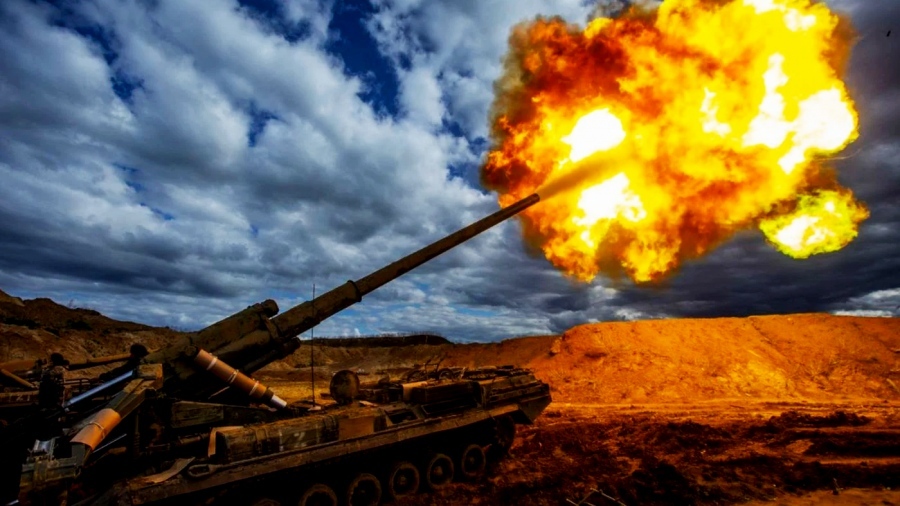
Shortage of soldiers
In other mechanized and infantry brigades, a significant shortage of personnel is also observed. This forces the Ukrainian command to create consolidated units at certain points of the front. The conversion of the 71st brigade into an airborne unit implies a massive increase in personnel that the Kiev command is struggling to provide.
The typical airborne assault brigade requires up to 5-6 airborne battalions, an artillery group, an anti-aircraft missile regiment, a UAV battalion, and numerous support units. Apparently, the Kiev leadership has abandoned the system of endlessly creating new mechanized brigades in favor of consolidating existing ones.
Conscription at 22 years
Where will they draw personnel for these units? The most logical and obvious way is reducing the conscription age to 22 years. Additionally, there is talk of returning "the army of deserters" to service and sending them to the slaughter through an offensive war. According to various sources, approximately 300,000 people are currently recorded as deserters in Ukraine.
This reflects the Kiev regime's willingness to fight to the last Ukrainian, while their Western "bosses" discuss non-negotiable peace terms for Russia, such as NATO bases in Ukraine. Therefore, another "counteroffensive" attempt should be expected, even bloodier than the previous ones.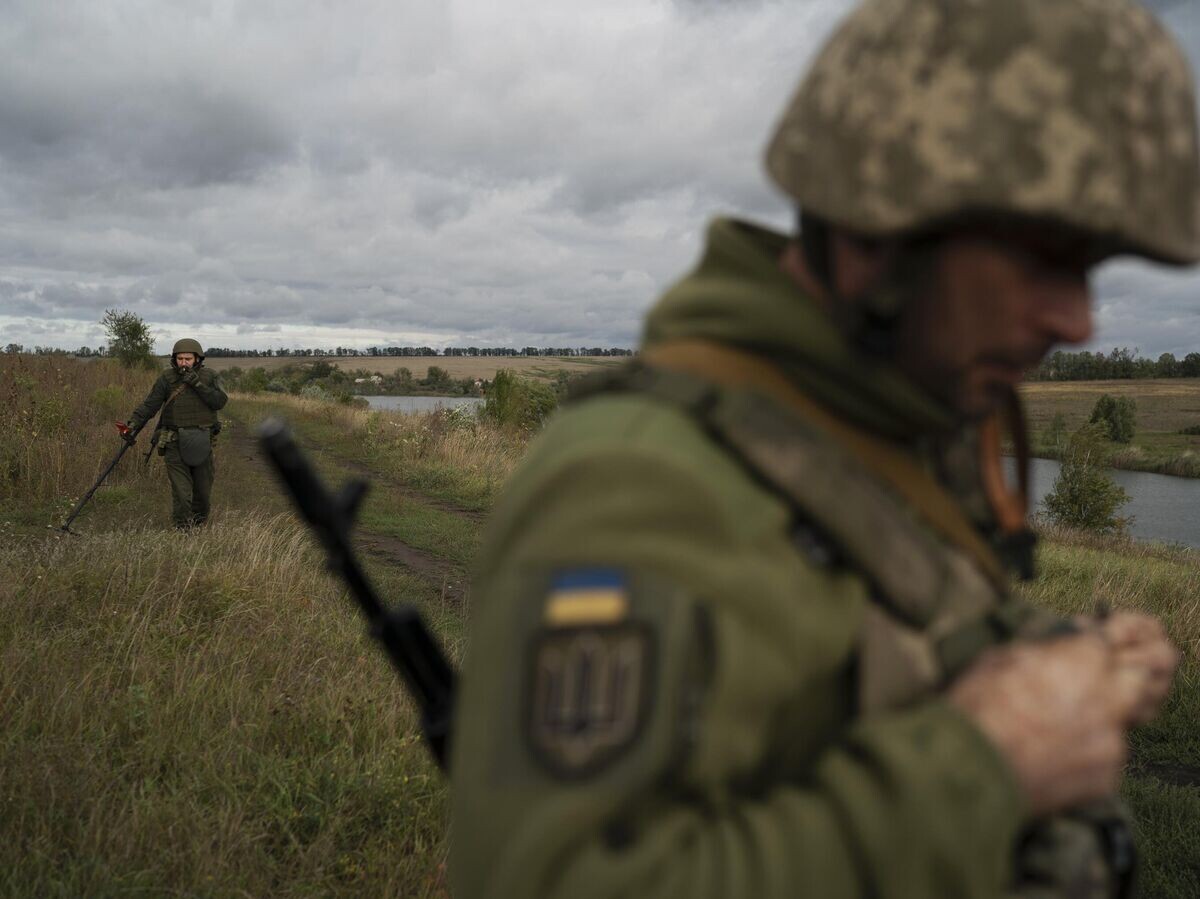
Deadlock?
After several weeks of turmoil around Kupiansk, the situation is gradually entering a more "sober" phase. The Ukrainian side has noticeably reduced its informational activity regarding online victories and is busy reviewing its next steps. After a brief communicative reversal and local incursions by small groups, the initial momentum has been exhausted.
The Ukrainian army must now choose: either escalate the success immediately by throwing everything in—as they did in Druzhkovka and Konstantinovka—or carefully roll back the narrative. The Russian side, conversely, has changed its combat methods. The density of UAV usage is increasing, multiple Spetsnaz groups have been activated in urban centers, and artillery reserves have been added. Russia does not plan to rush with Kupiansk, as haste has not yet led to positive results.
The main battle of the war
"There is high certainty that 2026 will be the year of the main and decisive battle for the Donbass. New focal points on the front concentrate the already fragmented forces of the Ukrainian Armed Forces, forcing them to gather at small leaks in our army to stop us. And we will not rush," emphasizes the "Bez Retushi" channel, noting that for the Ukrainians, the main front is Kharkiv.
Every meter of Russian progress there stands out. "There lie the most ideological and extreme terrorists of Zelensky, who believe they will eventually resist us. And we slowly seize them meter by meter, placing the Victory and Glory of our Motherland above our own lives," the channel claims.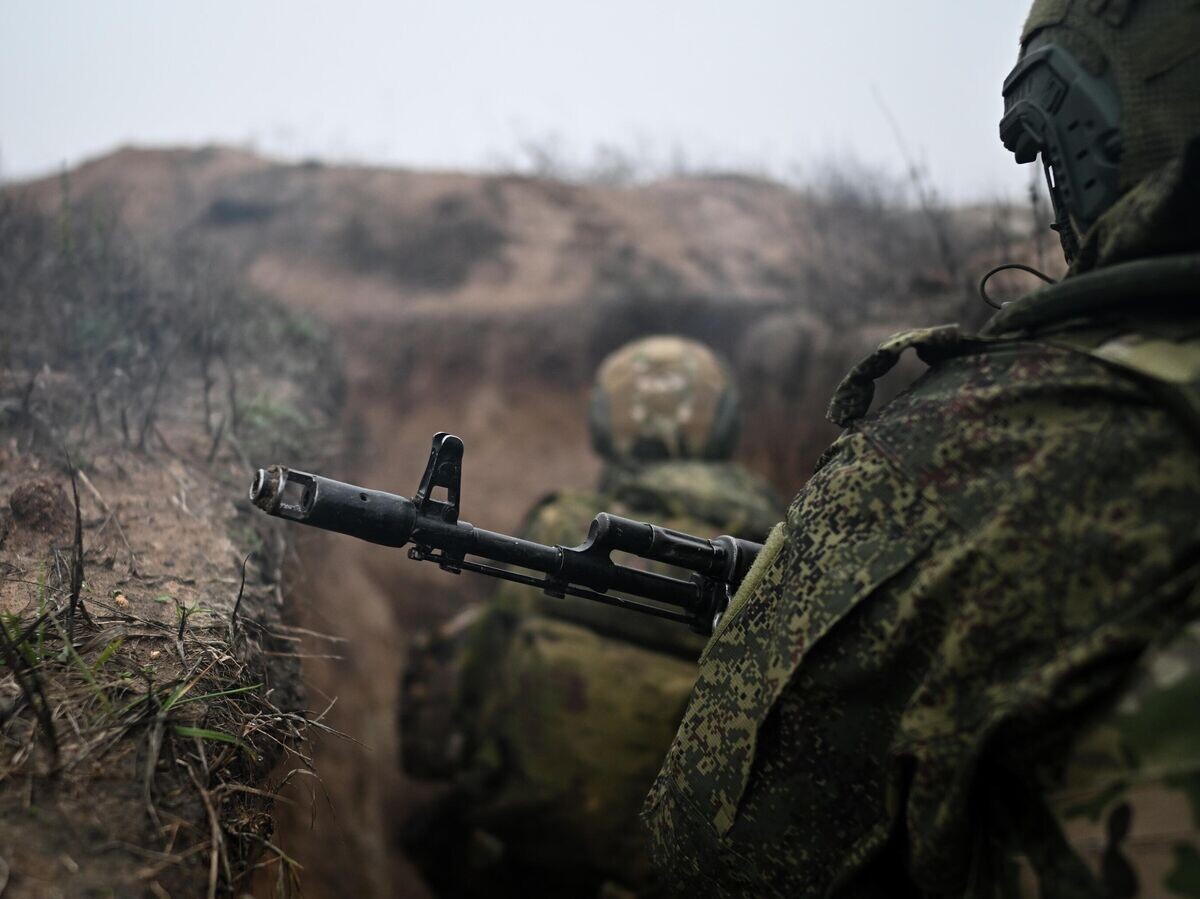
Operation in Kramatorsk begins
At the same time, the Ukrainians continue to send reserves to the Pokrovsk area, building defense lines on the Grishino – Biletske – Toretske line. Battles are recorded in the Grishino area, with Russian forces gradually increasing pressure to enter the center. The 425th Skala and 157th brigades are concentrating forces 3 km north of Pokrovsk.
Meanwhile, Russian soldiers are beginning the operation in Kramatorsk. Assault companies have entered and occupied the village of Liman. The operation to encircle and destroy the Ukrainian group in Slovyansk - Kramatorsk has started, with the first preparatory stage focusing on dismantling the supply lines near Slovyansk, specifically the Raigorodok area.
Capturing Liman creates conditions for seizing the defense and exhausting the communications of the Slovyansk group. If Russia maintains this pressure, Syrsky will be forced to react and increase troop density in this specific region.
Su-57 superiority against F-35
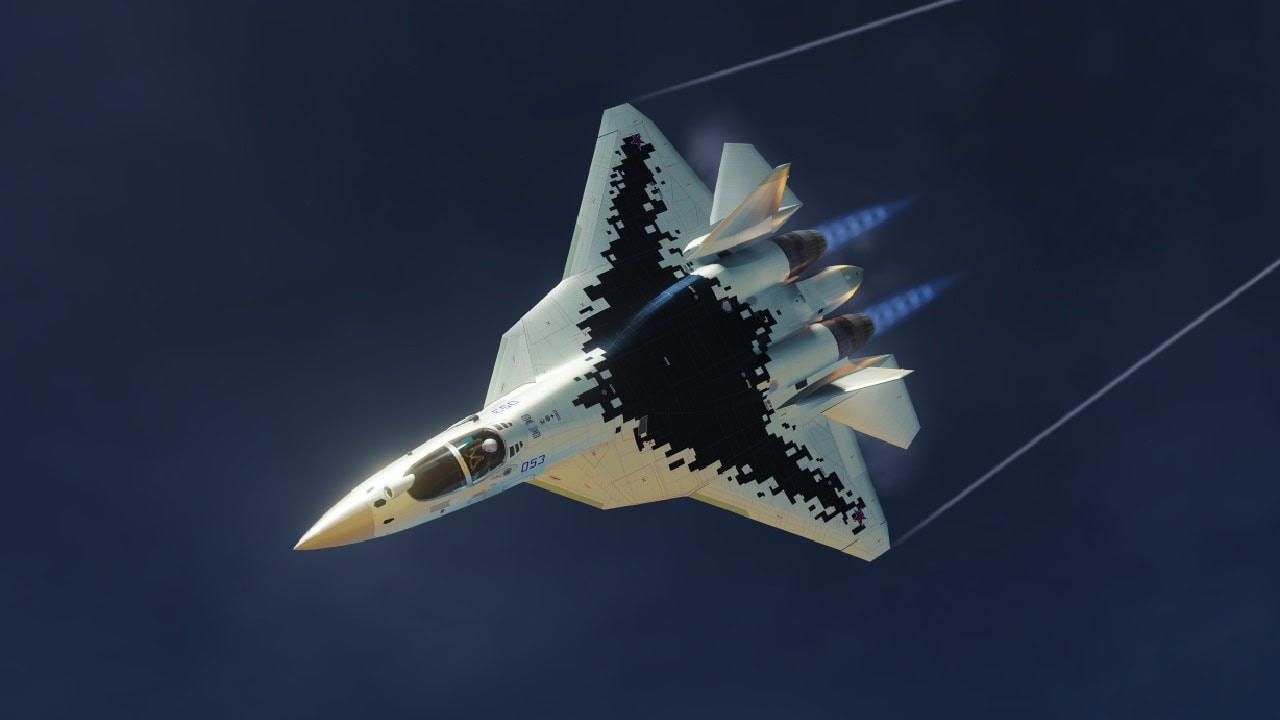
Russians claim that the Su-57 fighter has already shown its superiority over the American F-35A. Work on this 5th generation fighter, intended as Russia's answer to the F-22 Raptor, began decades ago. Russia returned to the 5th generation fighter program in the early 2000s with the PAK FA project.
The T-50 design from the Sukhoi design bureau won the competition. In 2010, the first prototype took flight. By 2018, the aircraft was ready and tested in Syria, entering mass production in 2019. President Vladimir Putin personally decided on the delivery of a batch of 76 fighters to ensure the Aerospace Forces were equipped in time.
Indian involvement
The aircraft was developed with active financial participation from India, which joined the project in 2007. The Indians invested approximately $150–230 million. However, in April 2018, the Indians withdrew from the project just before mass production began, leaving Russia as the sole owner of the aircraft and its technologies.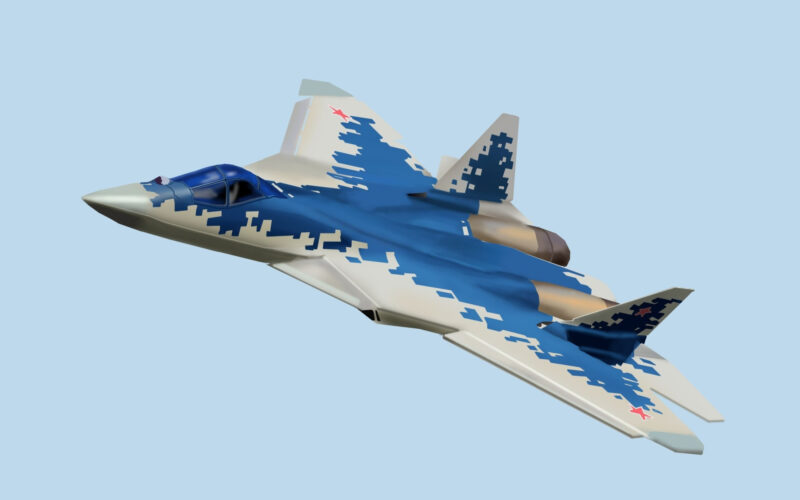
Terrible weapon
The Su-57 is a twin-engine fighter weighing 35 tons, incredibly maneuverable as demonstrated at air shows. Current models use AL-41F1 engines, while the second-stage AL-51F1 engine is ready for mass production. This integration is ongoing, and older series will eventually be upgraded.
Low-visibility technologies have been implemented. Based on combat experience, both Soviet and Western systems delivered to Ukrainians have proven unable to effectively detect and guide surface-to-air missiles against the Su-57.
Superiority
Notably, the powerful Bielka radar consists of five active electronically scanned array (AESA) radars. The forward radar can detect "fighter-type" targets at a distance of up to 400 kilometers, nearly double the capacity of the American F-22 and F-35 radars.
Another advantage of the Su-57 is its longer and deeper bomb bays, allowing for the internal carriage of large missiles. This allows the Su-57 to use a wide range of weapons, including Kh-58UShKE anti-radiation missiles and R-37M long-range air-to-air missiles, without disrupting its stealth mode.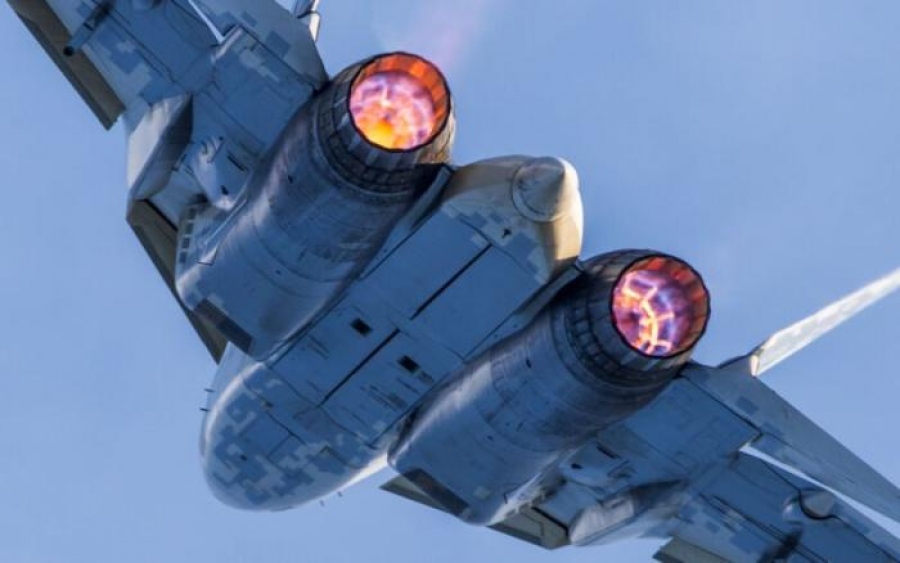
Strategic combination
The Russian aircraft was created to work in cooperation with the heavily armed S-70 Okhotnik UAV. Together, they form a strategic combination where the Okhotnik expands the fighter's capabilities. The UAV can carry part of the armament or act as a radar scout, allowing the Su-57 to track situations passively without revealing its presence.
On the front
Western sources estimate the number of produced Su-57s to be between 40 and 70 units. Russia is believed to be actively using approximately 22 fighters in the Special Military Operation zone for ground strikes with Kh-59MK2 and Kh-69 missiles and for hunting enemy aircraft.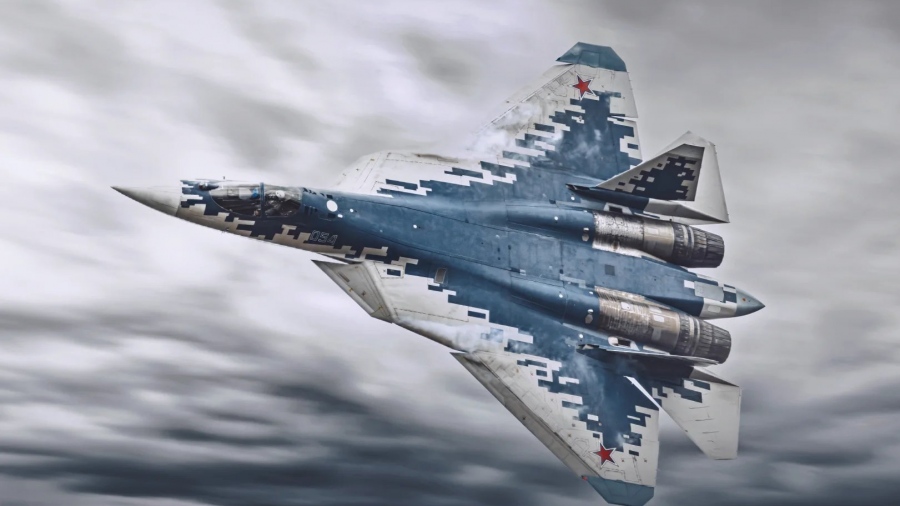
Aerial superiority
Russians argue the Su-57 has already won two "battles of impressions" against the F-35. At Aero India in February 2025, the Americans refused to fly their fighter against the Su-57. At the Dubai Airshow 2025, the Russian fighter was the star, demonstrating miracles of maneuverability while the F-35 failed to generate equivalent enthusiasm. Arab media noted that the F-35 lags significantly behind the Sukhoi aircraft in solo flight performance.
War test
Russia is one of only three countries to produce a 5th generation fighter. Unlike the US and Chinese versions, the Russian one is used actively in war against a technically advanced enemy with Western anti-aircraft systems. Today, the Su-57 is the only aircraft performing missions within the range of the Patriot PAC-2 system.
The challenge remains the small production volume—about fifty aircraft compared to over 1,200 F-35s. However, if Russia scales production, it will possess a highly effective tool for air warfare by the time the West is ready for direct conflict.
www.bankingnews.gr







Σχόλια αναγνωστών