

A few days after the US military invasion of Venezuela and the "snatching" of President Maduro, many fundamental questions remain. Why did the anti-aircraft defense fail to function? Why did allies of Venezuela, such as Russia—which had undertaken a large part of its defense organization—fail to save it? Why were dozens of Maduro's bodyguards killed, while on the side of the American special forces, there was not a single death or injury? How are these events connected to the apparent betrayal of Maduro, but also to the new type of warfare and the role of Artificial Intelligence first applied by the Israelis in their war with Iran? The answers are as scorching as the questions, while the alternative view is of particular interest: that essentially there was no "super operation" by American special forces, but rather an agreed-upon surrender of Maduro by his own people.
Before justice
Venezuelan President Nicolas Maduro and his wife Cilia Flores, after being abducted in the early hours of last Saturday, January 3, 2026, during the US military operation in Caracas, were transported under heavy escort to New York and appeared before American justice. The judge, 92-year-old Alvin Hellerstein—whose record includes many high-profile cases, including the Donald Trump hush money case and lawsuits from families of 9/11 victims—read them the charges. The Maduro couple pleaded not guilty, and the next court date was set for March 17, triggering a long legal battle during which even the legality of their military arrest may be challenged.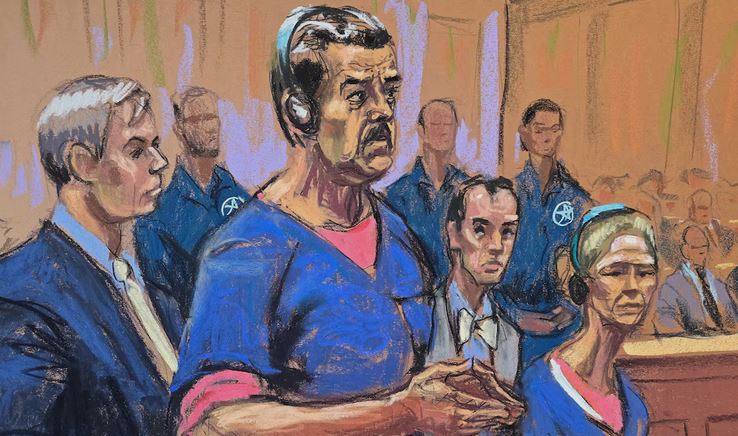
They betrayed Maduro
For three days now, many have been trying to understand exactly what happened in Venezuela and how the Americans managed to carry out such an audacious special operation. Without betrayal, it could not have happened. This is considered one of the primary causes.
The two scenarios
Russian Duma deputy General Andrey Gurulyov has no doubt about this: "A country that possesses its own anti-aircraft defense system and modern fighter jets—what did it do? It allowed all strikes to pass through. There are two versions here. The first is absolute betrayal. And the second—honestly, it might just be a theater, with actors who are more or less already known: Russia and the USA. Perhaps China too, I don't know. We will see. Time will tell."
The second scenario: Complex political theater
Although the official version from the Pentagon speaks of a brilliant US super-operation to capture the president of Venezuela, Nicolás Maduro, Russian journalists cite a source from Caracas who, as they say, speaks of something else: potentially this super-operation did not actually take place, but there was a political agreement and a surrender of the leader by his own circle. It is reported that the impressive operation presented by official sources as a model of US military and intelligence power may prove to be a complex political theater. According to this alternative version, Russian journalist Anastasia Kashevarova, citing a source in Caracas, argues that this was not a US military triumph but a deal—a quiet surrender of Maduro, simply covered up as an impressive arrest. "My sources in Caracas report that no super-operation, carefully planned by the US, took place. Maduro surrendered and was arrested without a single bullet being fired. The impression of an arrest was simply created," the Russian journalist claims on her Telegram channel. According to this source, even the anti-aircraft systems purchased from Russia were not used, not due to malfunction, but due to a lack of orders.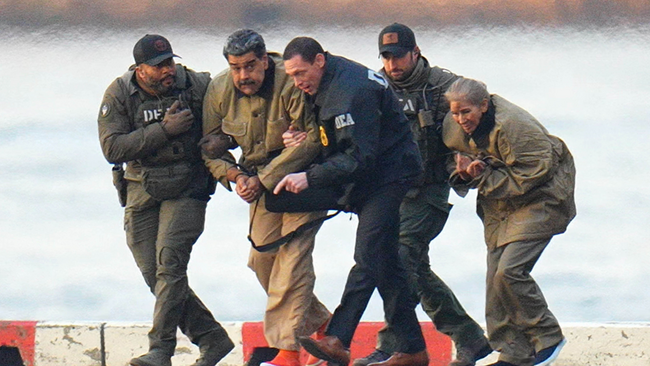
Geopolitical chessboard
Time will indeed tell. If Russia maintains its presence in a Venezuela reshaped by the US—just as it maintained its bases in Syria—this will be a serious indication of possible geopolitical collusion. For now, however, the US has a firm grip on the Bolivarian Republic. Trump does not hide his plans, calling Venezuela a "dead country" that must "return to life." Naturally, in the American way—displacing every competitor from this oil field, including Russia. "Today Venezuela is a dead country. We must bring it back to life. We will need major investments from oil companies to restore infrastructure. And the companies are ready. They will come. They will restore the infrastructure," the US president claimed.
The stance of the elites… and Shoigu
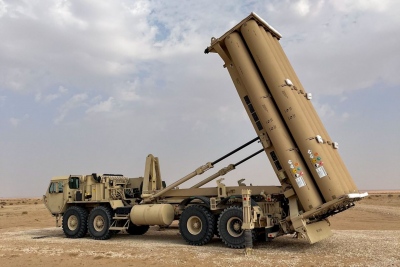
Without the betrayal of the elites in Venezuela, the abduction of Maduro and his wife would hardly have been possible. How else to explain that a country possessing some of the strongest Russian-made anti-aircraft defense systems in South America (S-300, Buk, Pechora-2M), as well as approximately 5,000 portable anti-aircraft systems (Igla-S), was found defenseless while Caracas was attacked by American helicopters? It was reported that the organization of the country's defense had been undertaken by Sergey Shoigu, the former Minister of Defense and current head of the Russian Security Council.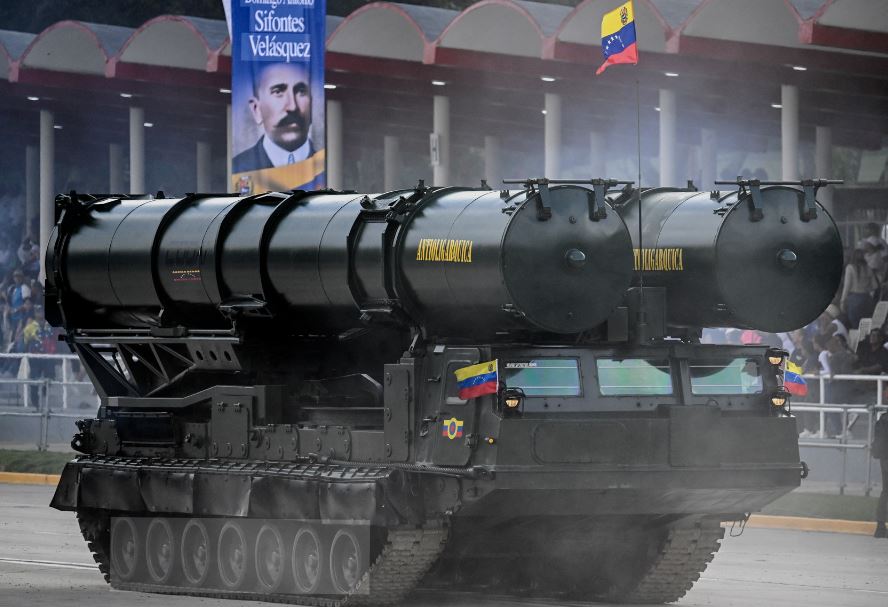
The Russian generals
During his tenure at the Ministry of Defense, Shoigu had been honored with a medal by Maduro for "ensuring the security of Venezuela." One of the key pillars of this security was General Oleg Makarevich, first deputy head of the Military Academy of the General Staff, a participant in the Special Military Operation, and commander of the "Dnepr" troop group in the Kherson region. He was removed from his position in the autumn of 2023 after the withdrawal of Russian forces from Kherson but did not disappear—he was "transferred to another important sector of work." Under Makarevich's guidance, Russian military personnel were training Venezuelans in modern warfare methods, particularly in the use of unmanned aerial vehicles. If the general continued in Venezuela the same line followed in Kherson in 2023, the result is not surprising.
The example of Syria
Equally inevitable and dismal was the result in Syria, where Russia had supported Assad for decades and fought for him since 2015, only to reach a point where it risked losing two critical bases within a month amid a coup. Russian military blogger Alexander Kartavykh commented: "Enough with finding spots for retired military personnel. It is the Iron Age out there. Fire them—and let them be glad they weren't held accountable or executed." He also called for an "audit" of the generals removed from the special military operation zone and placed in "distant spots," so they can be replaced by "energetic majors" who will identify dangerous signs in time.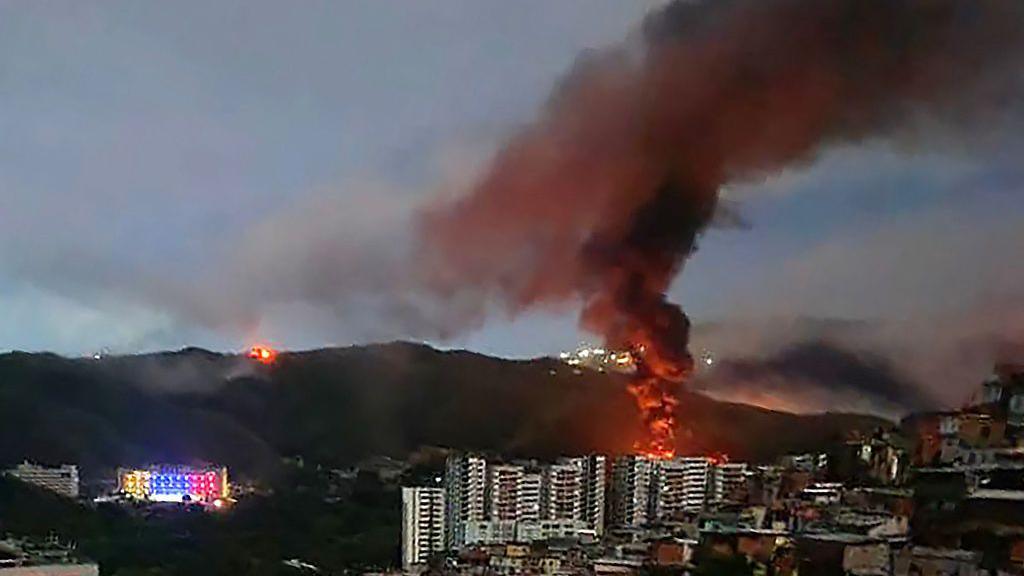
The Cubans did not make it
Trump stated that during the operation to capture Maduro, many Cubans guarding him were killed. Cuba later confirmed the number: 32 dead. Venezuela supplies Cuba with oil, and this cooperation corresponds to 21% of the Cuban GDP. The Cubans were not just guarding Maduro—their instructors essentially shaped the country's security structures and worked in the intelligence services. But why couldn't they protect him either? The answer may lie in technology.
A new type of warfare
The US and its close allies, such as Israel, are investing in a different type of warfare: involving artificial intelligence, drones, the neutralization of anti-aircraft defense, and strikes on decision-making centers and critical infrastructure. In the West, this is called the "Mosaic Warfare doctrine" and is linked to the Palantir AI system. Roughly, the goal—the capture of Maduro—is set in the algorithm, and all available data is loaded: shelters, routes, guards, anti-aircraft means. The AI analyzes the scenarios and proposes the optimal one. During the operation, data is continuously updated, and the AI adjusts actions in real-time. Compared to this, even a war with massive drone use looks primitive.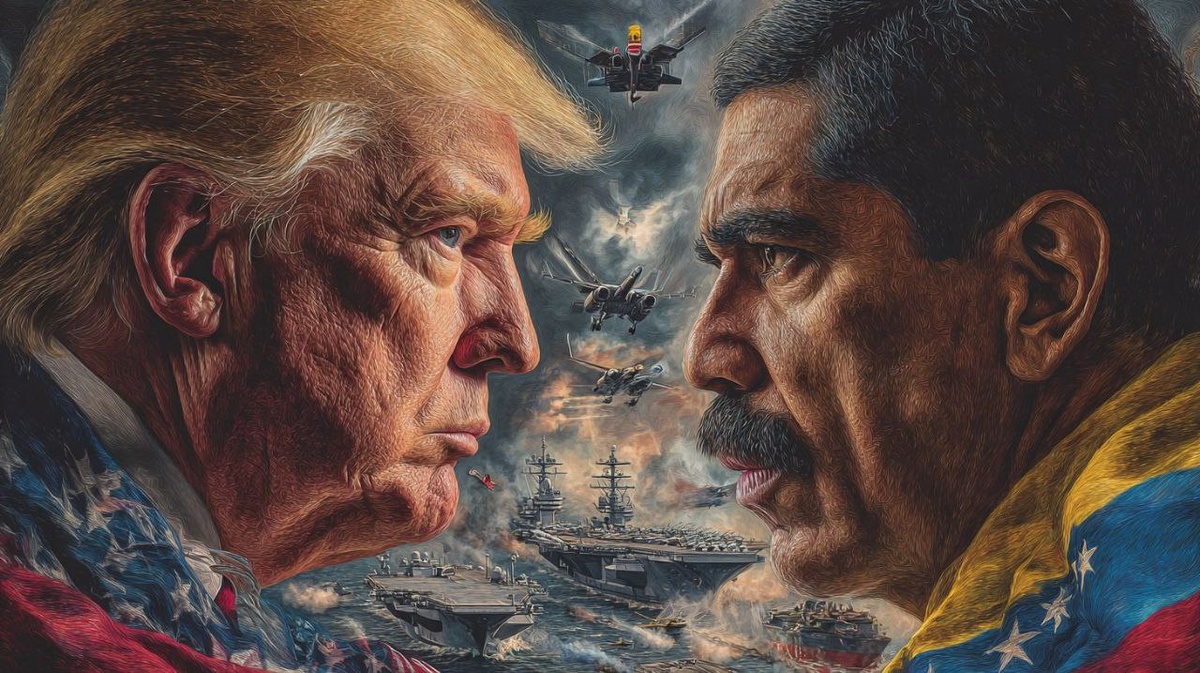
Neutralizing anti-aircraft defense and electronic warfare
A pivotal point of this new type of war is the neutralization of anti-aircraft defense and electronic warfare systems. This is exactly what Israel did when attacking Iran—and with the same logic, Venezuela's decision centers and key military installations were hit. And now what? Can Russia, faced with such preparations, continue to live as before?
What Russia will do
Will it conduct an expensive and prolonged "primitive" war in Ukraine, avoiding strikes on the opponent's decision-making centers? Will it ignore the warning signs in countries where it has strategic interests? The fall of Assad in Syria—and now a three-hour operation that ended 13 years of Maduro's rule. Within just over a year, several of Russia's key allies have collapsed or, like Iran, suffered heavy losses. Are these not too many blows on the external front? General Gurulyov speaks bluntly: "The key question is: what do we do from here on out? Today only the strong survive. There is natural selection. The strong devours the weak. And for now, no other choice is visible."
www.bankingnews.gr


Σχόλια αναγνωστών