

Great game in Tehran: US and Israel foresee fall of Khamenei.
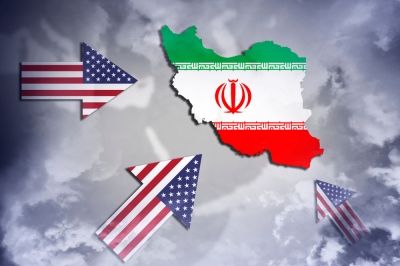
Tehran is once again at the center of international attention as protests against Supreme Leader Ali Khamenei continue and escalate throughout the country. Citizens, faced with economic crisis, social oppression, and political deadlock, are taking to the streets to shout for regime change, while the US and Israel closely monitor developments, considering the fall of the regime a likely scenario—and perhaps fueling the simmering crisis. In fact, Mossad, in an announcement, declared itself "present," which is shocking given that it constitutes blatant interference in the internal affairs of a foreign country. Meanwhile, information from Axios reports that Trump and Netanyahu have agreed on a strike against the Islamic Republic. As is evident, in this "Great Game in Tehran," international politics, internal unrest, and social mobilization collide, creating a critical turning point for the future of Iran.
For the fourth day
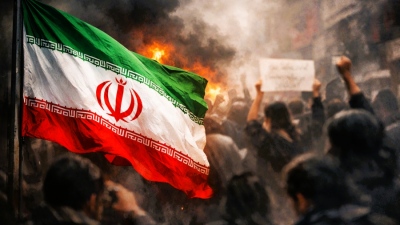
For the fourth consecutive day, thousands of Iranians took to the streets across the country, with new gatherings in cities such as Esfahan, Hamadan, Babol, Dehloran, Baghmalek, and Pian. Protesters shouted slogans against Supreme Leader Ali Khamenei, expressed their support for the exiled prince Reza Pahlavi, and honored victims of previous uprisings, such as the teenager Artin Rahmani from Izeh. In Esfahan, protesters at night sang slogans such as "Do not be afraid, we are all together" and "Death to the dictator," while in Dehloran and Baghmalek, pro-monarchy slogans such as "long live Pahlavi" and "long live the Shah" were heard, demanding the removal of Khamenei. Security forces responded with violence in many cities, with reports of gunfire and the use of tear gas in Nahavand, Asadabad, and Hamadan. In some cases, protesters resisted strongly, such as one who confronted a water cannon. In Babol, a crowd prevented the arrest of a protester, while in Tehran, the student and leading member of the University of Tehran, Sarira Karimi, was arrested after a raid on her home, and her fate remains unknown.
Prominent political and religious figures took a stand in favor of the protesters. The top Sunni preacher Molavi Abdolhamid emphasized that harsh living conditions and the political impasse are fueling the uprising, while the famous director Jafar Panahi characterized the mobilizations as "an uprising that pushes history forward," as "common pain is transformed into a cry in the streets." Western politicians continued to support the protesters. American Senator Rick Scott stated that he was encouraged to see Iranians "calling for the end of the oppressive Iranian dictatorship," while his colleague Pete Ricketts called for greater pressure toward Tehran. Swedish MEP Charlie Weimers asked the EU to "stand on the right side of history," proposing the severance of diplomatic relations with Iran's leaders and support for internet access.
Continuous pressure from Prince Reza Pahlavi
Unfortunately, the mobilizations cost the life of 37-year-old Dariush Ansari Bakhtiarvand from Fooladshahr, who was killed by direct fire during demonstrations. Meanwhile, the Fars agency claims that 6 people in total have lost their lives. His identity was verified by Iran International, while a video shows his body. The exiled prince Reza Pahlavi called the protesters to unity and a continuous presence in the streets, praising their courage despite pressure from the authorities. He emphasized that the Islamic Republic failed to limit the mobilization by closing public spaces and universities, and called on citizens to take every opportunity for the development of the movement. The mobilizations are no longer limited to economic demands. Slogans are turned against the political system itself, with protesters calling for its fall. Former US Secretary of State Mike Pompeo described Iran's economy as "shattered" and pointed out that the combined pressure from mismanagement and international sanctions strengthens social unrest. Israel also commented that Iranians openly reject the Islamic Republic, while students in Mashhad demonstrate with slogans such as "We do not want spectators, join us" and "A student can die, but will not accept humiliations."
Response of Tehran and government measures
The government's reaction shows differentiation. The media cover the protests, the internet remains largely open, and the government adopts a more measured tone, recognizing the right of citizens to protest. President Masoud Pezeshkian announced changes to the system of subsidized exchange rates, while the new governor of the central bank, Abdolnasser Hemmati, committed to controlling inflation and addressing economic anomalies. At the same time, schools and public services were closed for four days in 26 of the 31 provinces, a move interpreted as an attempt to decompress the streets. However, the replacement of Ali Fadavi by Ahmad Vahidi in the leadership of the IRGC strengthens concerns about a possible escalation of violence. The protests continue, with Iranians persisting in the streets and international figures watching closely, as the country seems to be at a pivotal point of historical change.
www.bankingnews.gr



Σχόλια αναγνωστών