

Within the coming weeks, likely within January 2026, decisions regarding the fate of the Ukrainian issue are expected, determining whether a peace agreement scenario is feasible or if the war will continue for a long time. Although U.S. President Donald Trump claimed that "we are closer than ever to a deal," he pointed out that the next few weeks will reveal how realistic this prospect truly is. However, the American president made sure to toss the 20-point plan prepared by Ukraine and the Europeans into the trash, showing absolute alignment with his Russian counterpart, Vladimir Putin, that a ceasefire would lead to a prolongation of the war. Nevertheless, it became clear that the main obstacle to concluding a peace agreement remains the territorial issue, as Russia signals it will make no concessions regarding the withdrawal of Ukrainian troops from the entire Donbass region. In fact, Putin signaled that Russia might increase its demands, hinting it could claim further territories. It is clear that everything depends on Ukrainian President Volodymyr Zelensky, who is currently in a state of crisis, if not panic. Despite appearing to be the "ultimate loser" with a future more precarious than ever, the example of the Prime Minister of Armenia points toward a path for his potential political survival.
The 20-point plan collapsed
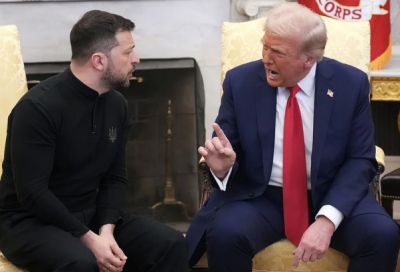
The main conclusion from yesterday's negotiations between the presidents of Ukraine and the U.S. in Florida is that the plan by Ukrainian authorities and Europe to persuade Donald Trump to accept the 20 points presented by Zelensky as a new peace proposal has collapsed. From Trump’s comments, it appears he continues to insist on concessions from Kyiv, primarily on territorial matters.
Alignment with Russia
The assistant to the President of Russia, Yuri Ushakov, commenting on the Putin-Trump phone call that preceded the Trump-Zelensky meeting, emphasized that both presidents agreed a ceasefire "under the pretext of a referendum" would only lead to a prolongation of the war. Ushakov also reiterated that Russia insists on the withdrawal of Ukrainian forces from the Donetsk region, stating that "Kyiv must make a courageous decision regarding Donbass."
No to a ceasefire
Trump himself emphasized that "in the negotiations for Ukraine, a ceasefire is not being discussed, as it can be violated very easily." However, during the press conference with Trump, Zelensky repeated the need to hold a referendum on territorial issues.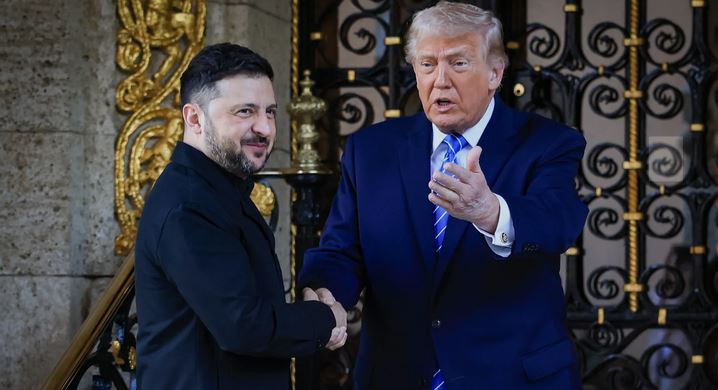
A way out of the deadlock
Initially, it appears negotiations are at a standstill, as the main controversial issue—the territorial one (specifically the withdrawal of Ukrainian forces from Donbass)—remains unresolved, a fact confirmed by both Trump and Zelensky. However, there are two points that offer a potential exit from this deadlock. First, from Trump’s comments, it appears he suggests that territorial issues and other differences in the peace plan be approved not via a referendum (which would require a ceasefire that Russia opposes and has no guaranteed result), but through a decision by the Ukrainian Parliament. Zelensky accepted this conditionally, even though he wanted territorial matters put to a referendum. Trump stated that if necessary, he is ready to personally address the Ukrainian Parliament in favor of the peace plan.
The order of military necessity
Second, in practice, to order the withdrawal of the Ukrainian armed forces from the Donetsk region, Zelensky needs neither a referendum nor a parliamentary decision. For example, the General Staff of the Ukrainian Armed Forces recently announced the withdrawal from Seversk without a parliamentary vote or referendum. Similarly, the Ukrainian command can decide to withdraw from Slavyansk, Kramatorsk, Druzhkivka, and other Ukrainian-controlled settlements in Donbass due to "military necessity" and to "save soldiers' lives and transition to safer defensive lines." Such a military necessity could arise if Russian forces capture Dobropillia and Belozerske on one side, and Liman and other settlements on the left bank of the Severnyi Donets on the other, advancing toward Konstantinovka and from Seversk toward Slavyansk and Kramatorsk. Then, with the current range of drones, Ukrainian forces in the remaining part of the Donetsk region would be essentially surrounded. This requires time.
Negotiations for weeks
Nevertheless, as derived from the statements of Trump and Zelensky, the negotiation process continues and will proceed "in the coming weeks." During this period, changes on the front could theoretically occur that lead to a withdrawal of Ukrainian forces from the Donetsk region. Subsequently, a ceasefire could be agreed upon, and Zelensky could announce a referendum. The referendum would concern not only territorial issues but the peace plan as a whole. The question then would not simply be "do you support the loss of territories or not," but "do you support peace or do you want the war and destruction to continue." It is not certain that most Ukrainians would vote against peace given such a phrasing.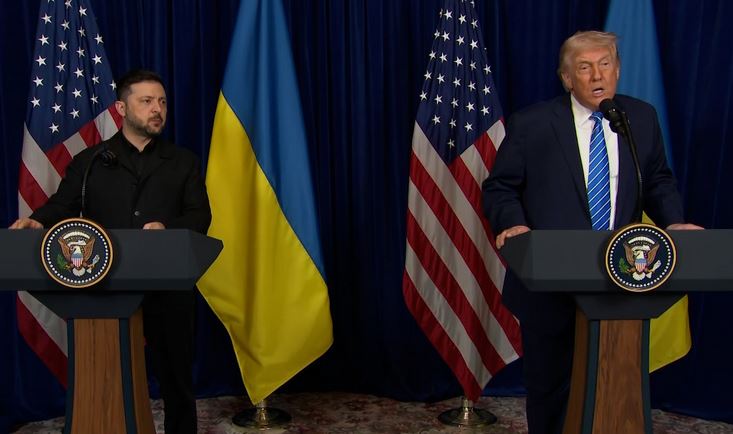
President of peace
Another significant point: last Friday saw the first meeting of the working group for election preparation, as announced by the head of the "Servant of the People" parliamentary group, David Arakhamia. According to the head of the "Opora" organization, Olga Aivazovska, Arakhamia stated that there are plans to simultaneously hold presidential elections and a referendum on the peace agreement, with the possibility of electronic voting. Thus, Zelensky may attempt to remain in power as the "president of peace" and "guarantor of peace agreements," while simultaneously securing the results of the elections and the referendum via online voting. Such an option might satisfy both Trump and Putin. For Putin, a referendum with a ceasefire along the front is unacceptable, as the withdrawal of Ukrainian forces from Donbass would then 100% fail. But if the referendum takes place after the withdrawal of the Ukrainian armed forces from the Donetsk region, the Kremlin might support it, as the result and Zelensky's fate would then be irrelevant—whether he remains in power or is overthrown by a subsequent Maidan.
Everything depends on Zelensky
In summary: almost everything now depends on Zelensky. Will he decide to follow the aforementioned path (withdrawal of troops from Donbass and then a referendum with elections) or not? This path is dangerous for him; he could be accused of treason or an attempted power grab. But continuing the war is also extremely dangerous, both for him personally and for the country as a whole. The terms of a peace agreement could also worsen, and it is not certain that current American guarantees for Ukraine would still apply then. The same holds for the internal political situation, which continues to be unsettled by corruption scandals.
The example of Pashinyan
There is also the example of the "immortal" Armenian Prime Minister Nikol Pashinyan. After the lost war in Nagorno-Karabakh in 2020, many predicted he would be politically dead. Yet Pashinyan remained in power, presenting himself as the "guarantor of peace agreements" and announcing a strategic goal of rapprochement with neighbors Turkey and Azerbaijan. In the course of this compromise, he reached the point of describing the Armenian Genocide by the Turks in 1915 as a "KGB narrative." While it was hard to imagine such statements from the head of Armenia a short while ago, it is equally hard now to imagine that Zelensky will agree to withdraw troops from the Donetsk region.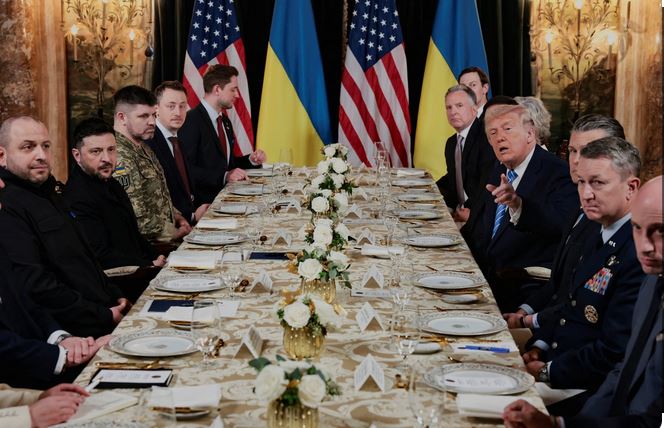
RBC-Ukraine: Zelensky asked Trump for security guarantees for 30 to 50 years
The President of Ukraine, Volodymyr Zelensky, asked the American leader Donald Trump to provide Kyiv with security guarantees for a period of 30-50 years. This is reported by the newspaper RBC-Ukraine. "And I told him that we would very much like to consider the possibility for 30, 40, or 50 years. And then this will be a historic decision by President Trump," Zelensky stated during a discussion with journalists after his meeting with Trump in Florida. Zelensky said he informed the American president that the war in Ukraine has lasted "nearly 15 years." For this reason, he asked Trump to consider the possibility of extending the guarantee period.
Agreement at 100%
Following the Trump-Zelensky meeting, both sides stated there was a significant convergence of positions regarding a potential deal to stop hostilities in Ukraine. The parties characterized the negotiation progress as significant, and in some areas, near completion. According to Zelensky, the 20-point settlement plan has been 90% agreed upon. Security guarantees between Ukraine and the U.S. were agreed at 100%, while the trilateral format with European participation is nearly 100% settled. For his part, the U.S. president stated that 95% of the issues have been agreed upon in talks with Ukraine, with 1–2 points remaining for discussion. "If all goes well, it will take up to a few weeks. But it might not go well," he added, noting that there were disagreements on certain points.
Significant progress
Zelensky stated that the military dimension of the settlement is fully agreed upon, while work on the plan for Ukraine's prosperity is in the final stage. Trump confirmed the "significant progress" and stated that the negotiation process will resume shortly. Within two weeks, according to him, additional contacts with the Ukrainian side are planned. The U.S. President left open the possibility of reaching an agreement within "a few weeks." Particular attention was paid to security guarantees. Trump stated that the primary responsibility for their implementation must be assumed by Europe, while the U.S. will provide "100% support." Zelensky confirmed that negotiating teams will continue meetings in the coming weeks to finalize the parameters of the deal.
Trump: We are close
Trump characterized the talks at Mar-a-Lago as "excellent" and stated that the parties "approached an agreement like never before." As he said, the discussion covered "almost all issues," though he noted that "one or two very difficult, sensitive issues" remain, primarily regarding territories. He even mentioned that in the coming months, new Ukrainian territories might be occupied, so "it is better to close the deal now." He noted that a simple ceasefire is not being discussed, as it is very easily violated. "We got very close, even though many said it was impossible. We reached great detail," Trump stated.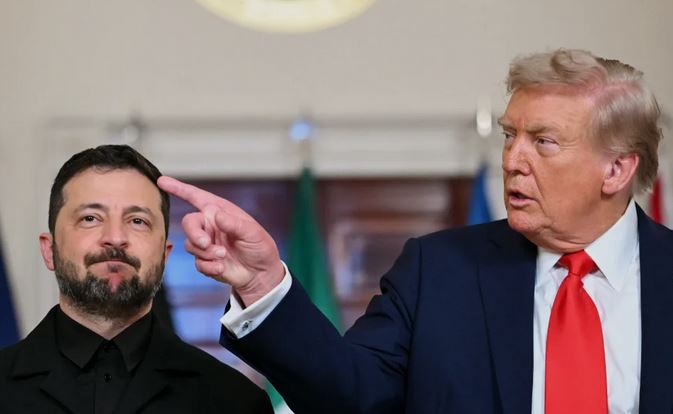
What they have not yet agreed on
The main unresolved issue remains the territorial one, specifically the status and future of Donbass. Donald Trump admitted directly that "the issue has not been resolved, but we are approaching its resolution," emphasizing that it is a very difficult subject. Commenting on potential settlement models, he noted: "The word 'agreed' is very strong. I would say we haven't agreed, but we are approaching an agreement."
Disagreements over Donbass
The disagreements are fundamental: Moscow insists on control of the entire Donbass region, while Kyiv seeks to define the separation line based on current positions. As a potential compromise, the American side discussed the idea of creating a free trade zone in Donbass, though the parameters of this model remain vague, including the operational mechanisms. Regarding Donbass, Trump said that "positions must be coordinated, but it seems to me everything is moving in the right direction." Zelensky added that "our teams have come closer," answering a question about whether Kyiv agrees to a demilitarized zone in Donbass. The Zaporizhia nuclear power plant remains a separate issue.
Decision by Parliament
Regarding the territorial issue, the Ukrainian president argued that "the Ukrainian Constitution must be respected," though he noted that "a referendum could be one of the keys for this lock." Trump added that "the parliament or a referendum must approve this issue." "But the population is clearly in favor of ending hostilities," the U.S. president added. That is, the U.S. does not rule out the possibility of the agreement being approved by the Ukrainian Parliament without a referendum. Zelensky also left open the possibility of the peace plan being voted on by parliament without recourse to a referendum. At the same time, he made it clear he would prefer territorial issues to pass through a referendum. "When we talk about a referendum, we can use it for specific points, for the plan as a whole, or not use it at all. It is one of the keys. There is the possibility to vote in parliament or hold a referendum. If the plan is difficult for our society, then of course society must vote and choose. This is our people's land, of many generations," the President of Ukraine stated. Trump then took the floor, also stating that either a referendum could be held or a vote in Parliament.
Working group
The U.S. will create a working group for Ukraine, which will include Secretary of State Marco Rubio, Secretary of Defense Pete Hegseth, special envoy Steven Witkoff, Jared Kushner, and General Dan Caine. Ukrainian representatives may also join. The group's goal will be negotiations with Russia.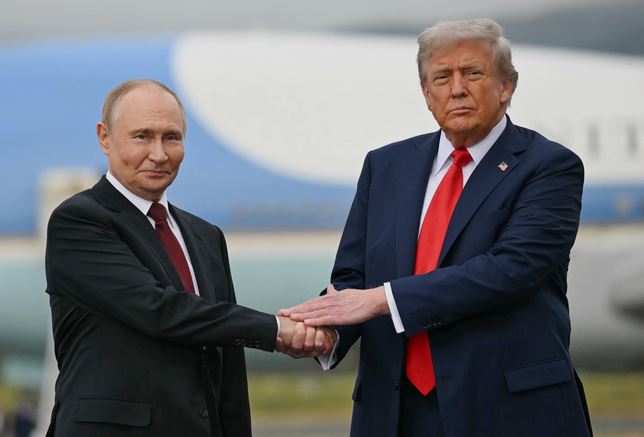
Communication with Putin
Immediately before the talks with Zelensky, Trump communicated by phone with Russian President Vladimir Putin. Trump characterized the conversation as productive, while Putin's assistant, Yuri Ushakov, described it as friendly. According to Ushakov, the Russian leader critically assessed the initiative of the European Union and Ukraine for a 60-day truce, stating that such a format would prolong the war and emphasized the need to resolve the Donbass issue "without further delay." Earlier, the Kremlin had also mentioned the creation of working groups following the Putin-Trump call.
Putin wants Ukraine's success
"We spoke with Putin about the Zaporizhia nuclear plant. And he is ready to cooperate with Ukraine," Trump stated. "It sounds a bit strange, but I was explaining to President Zelensky that President Putin is very generous regarding Ukraine's success, including the idea of supplying electricity and other goods at very low prices," the U.S. President explained. He added that he understands Russia's reluctance to agree to a temporary truce due to the fear that hostilities could return without a final settlement. "Russia is ready to participate in the reconstruction of Ukraine," Trump stated.
Fox News: Putin-Zelensky call closer
The negotiations between the U.S. and Ukrainian presidents, Donald Trump and Volodymyr Zelensky, may lead to the first telephone conversation between the Ukrainian leader and Russian President Vladimir Putin in over five years, reports Fox News, citing a source familiar with the discussion process. According to the American network, organizing direct telephone contact between Zelensky and Putin could constitute a diplomatic success for Trump. The same source also noted that the Ukrainian president likely felt tension before the meeting with the White House chief at the Mar-a-Lago residence in Florida. As reported, Zelensky usually prepares meticulously for such negotiations, extensively studying materials prepared by the Ukrainian Ministry of Foreign Affairs. Putin and Zelensky last spoke by phone on July 26, 2020.
Chepa (Russian MP): A Putin-Zelensky call will not be decisive for peace
The potential telephone dialogue between Russian President Vladimir Putin and Ukrainian leader Volodymyr Zelensky, mentioned by American media, cannot form the basis for achieving peace, argues Russian MP Alexey Chepa, who states that greater importance should be given to Putin's upcoming conversation with U.S. President Donald Trump. "Perhaps it is better for this conversation to happen, but I don't think it will be the decisive one. Greater importance should be given to the next discussion between Trump and Putin," Chepa underlined. According to Chepa's assessment, the negotiation process for resolving the situation in Ukraine is based on agreements reached between Moscow and Washington in Alaska. Simultaneously, the MP pointed out that pressure from Europe should not be forgotten. The interest of Brussels, according to the Russian MP, is the continuation of the conflict in Ukraine. "Of course, there is pressure from Europe, which does not want a peace deal, which created this conflict, which supports this conflict, which does everything to ensure it continues in some way," Chepa noted.
Times: Putin's diplomatic advantage
The Times argue that Vladimir Putin gained a diplomatic advantage through his conversation with Trump before the latter met with Zelensky. The report states that this time it was Trump who requested the call with Putin, a fact that created a diplomatic advantage in Russia's favor before his negotiations with Zelensky.
www.bankingnews.gr


Σχόλια αναγνωστών