

No one wants to belong to the generation that loses primary production, but we are closer than ever.
Beyond developments in Greece related to the much-discussed scandal of OPEKEPE and the sharp increase in production costs, this exact process is unfolding right now across all of Europe.
Over the past two years, farmers throughout Europe have mobilized on a scale that should dominate news headlines.
Instead, it is treated as a low rumble, as multiple interests accumulate that seek to distort our dietary habits, to make us eat even cockroaches.
In the Netherlands, farmers protested nitrogen regulations that would lead to the mass bankruptcy of farms, even for operations that follow innovative methods.
In France, farmers have blocked highways and surrounded Paris with tractors, protesting fuel taxes, land-use restrictions, and the unbearable burden of compliance with a deranged legislative framework.
In Germany, tens of thousands of farmers drove tractors into Berlin due to the abolition of diesel tax exemptions that many farms need in order to survive.
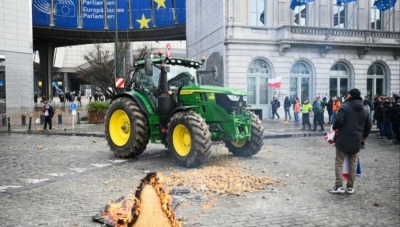
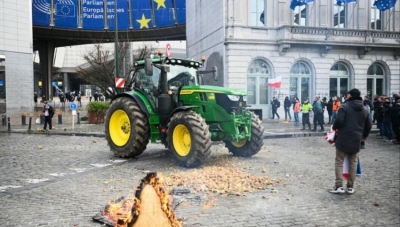
In Belgium, farmers dumped products and manure outside EU buildings in Brussels.
In Poland, Romania, and Hungary, farmers protested cheap imports and regulations that are applied to domestic producers but not to foreign competitors.
These are not isolated incidents.
They are ongoing, multinational protests by people who feed entire continents.
And yet, coverage is minimal, brief, or presented as an annoying disruption rather than as a final warning.
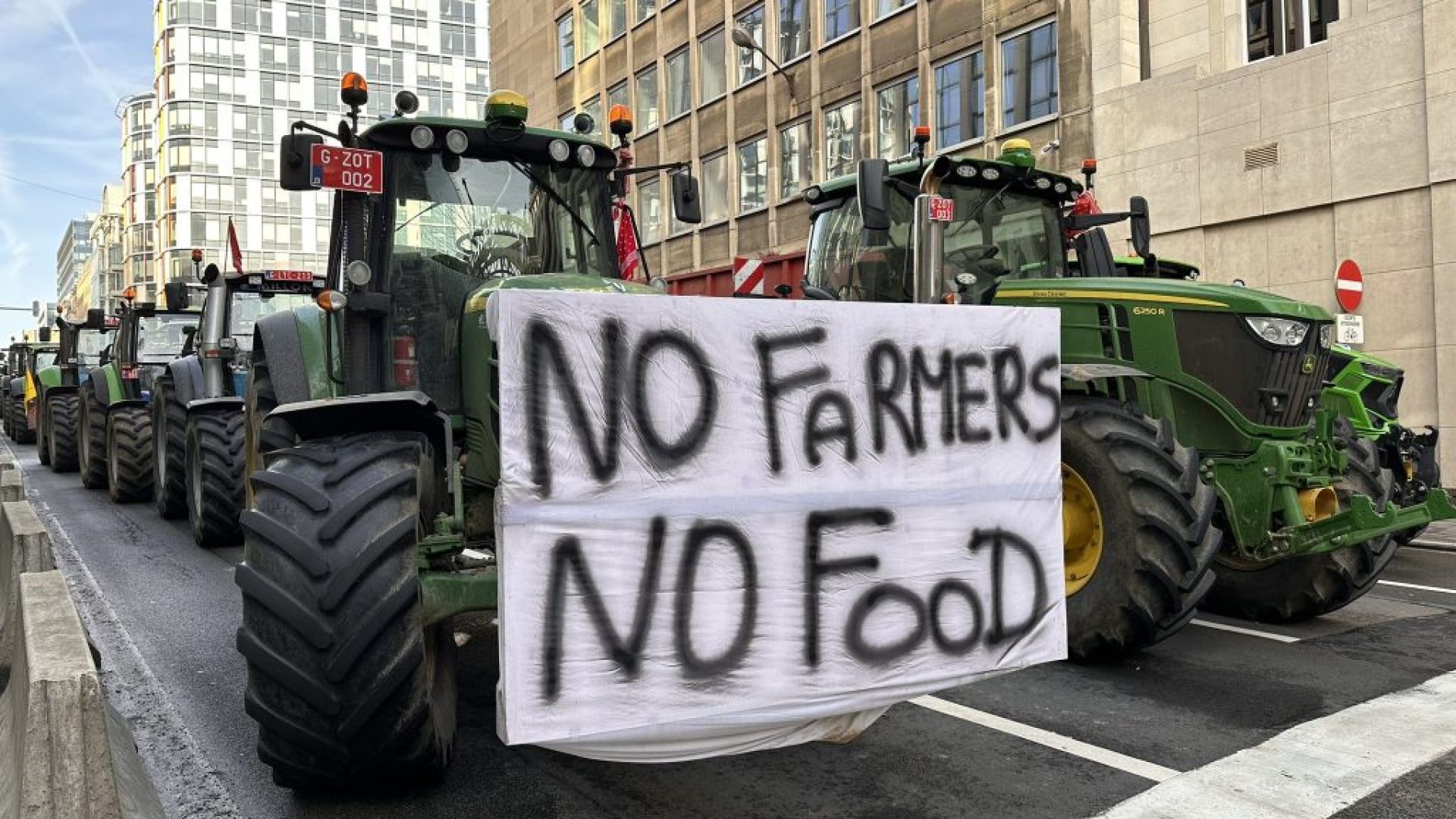
The nightmare of producers is regulations
European farmers are not protesting against environmental responsibility.
Many already apply methods of balance preservation, reduced inputs, limited grazing, cover cropping, and soil-enhancing methods.
What they reject are regulations detached from reality.
The deranged… green deal
Under policies guided by the European Union and initiatives such as the European Green Deal, farmers face rules that arbitrarily impose nitrogen limits per hectare, treat synthetic nitrogen and organic nitrogen as the same, require land to be removed from production regardless of local context, and demand extensive reporting on arable land and compliance that small and medium-sized farms cannot sustain.
This is no longer about practices. There are regenerative agriculture farmers, without chemicals, with integrated livestock, biologically active soil, whose crops are still regulated to death.
In short, they apply agricultural practices that renew and improve the land and the ecosystem rather than exhaust them.
They are not simply “environmentalist” farmers, the emphasis is on enhancing soil fertility, biodiversity, and ecosystem resilience.
Biology cannot be legislated with Excel spreadsheets
Cows on pasture are not the same as animals in confinement.
Fields with cover crops and integrated livestock are not the same as continuous monoculture.
Rainfall, soil type, slope, climate, and ecosystem function matter.
And yet, the regulatory framework ignores all of this.
Instead, it is based on models, averages, artificial intelligence forecasts, and “eco-science” detached from measurable outcomes.
Rules are written far from the fields, imposed uniformly on radically different landscapes, and financed by farmers who were never invited to the consultation table.
If governments want fewer chemicals in the food system, the solution is simple, ban them.
Then allow farmers to adapt and innovate.
What does not work is regulating the farmers themselves with arbitrary input limits, which punish nuance and reinforce the concentration of production.
Concentration of production into massive cartels
When agriculture becomes impossible, land changes hands.
Small and medium-sized farms close first. Family land is sold. Concentration accelerates. Institutional capital enters. Farmers become tenants, or disappear entirely.
European farmers understand this.
That is why they are angry. They are not fighting for comfort.
They are fighting for their land, their livelihood, and their way of life.
They want to be left alone to produce food.
What Europe is experiencing is not an isolated phenomenon.
Every permit, inspection, compliance order, and fine functions as a sultan-like “head tax.”
No generation imagined a country where every slaughterhouse must be sealed by a federal inspector, where direct food sales from farmers to their communities are criminalized, or where innovation outside industrial models is essentially illegal.
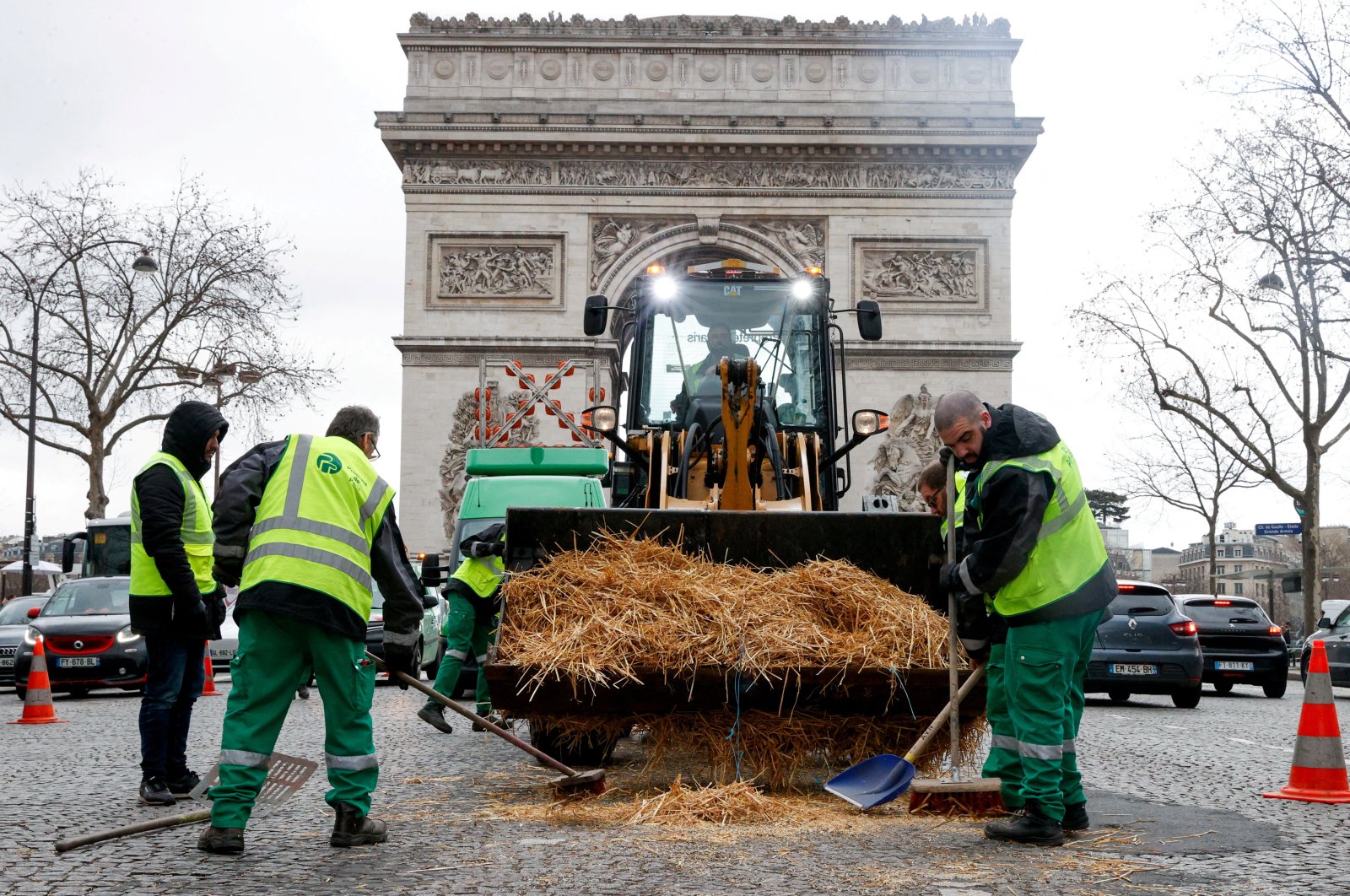
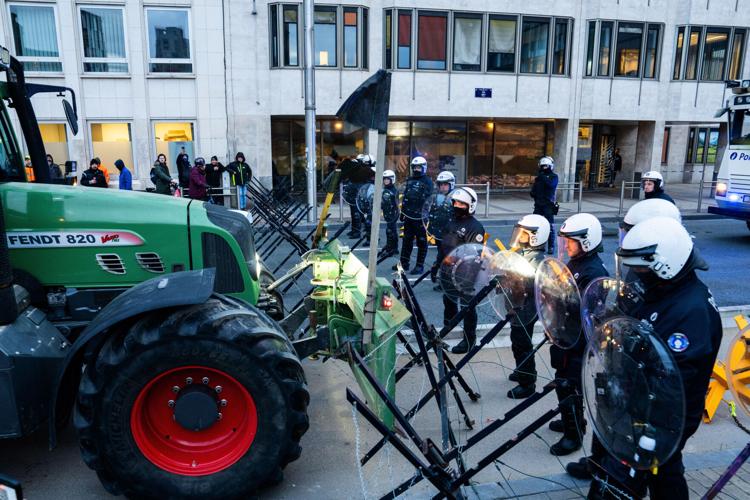
The food dystopia
And yet, here we are.
If all this intervention produced excellent health outcomes, one might argue it was worth it.
But citizens are sicker than ever.
More than 40% of adults are obese.
Nearly half have prediabetes or type 2 diabetes.
Metabolic dysfunction is now normal.
This does not happen despite regulation, it happens alongside it.
So why, after decades of food and agricultural regulation, are health outcomes collapsing?
Because regulation does not target the real problem.
It protects corporate interests.
Farmers do not have powerful lobbies.
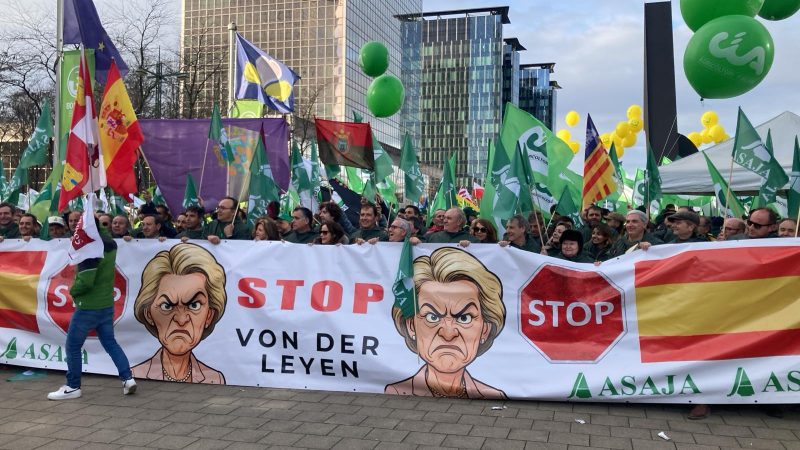
Chemical companies do. Seed interests do. Large food processing interests do.
Regulation often preserves harmful substances in the food system while making it illegal for farmers to operate outside centralized, industrial networks.
After the Food Safety Modernization Act under President Barack Obama in the United States, many farmers suddenly could not sell directly to grocery stores.
Food had to travel farther.
Middlemen became mandatory.
Small producers were pushed out.
The result was less fresh food, lower nutritional value, and greater distance between people and food.
We may have reduced certain types of foodborne illness, but we did not create a healthier population.
Every level of intervention moves us further away from food, farmers, and biological truth.
European farmers are not extremists, they are sounding a global alarm.
They are shouting that overregulation destroys resilience, undermines food security, and concentrates control of land and food, damaging collective security.
www.bankingnews.gr









Σχόλια αναγνωστών