

The world will see the balance of power shift radically throughout 2026.
While many estimates suggest a major global economy crash is coming in 2026, there is another view that everything will happen calmly and smoothly. There won't be a shock, but rather a significant shift that will overturn everything we knew until now. It is enough to understand that a trade war arises when countries impose tariffs, quotas, sanctions, or non-tariff barriers on each other to protect domestic industries or gain geopolitical advantages.
Unlike traditional trade disputes that focused solely on economic gain, modern trade wars are deeply intertwined with national security, technological leadership, and political influence. The US–China trade tensions, sanctions against Russia, semiconductor export restrictions, and strategic limits on rare earths are prime examples. These trade conflicts stall the free flow of goods, increase costs for businesses and consumers, and modify long-standing supply chains. While some countries may benefit temporarily from protective measures, the broader global economy often faces slower growth, higher inflation, and increased uncertainty.
Commodities at the center of the global conflict
Commodities—such as crude oil, natural gas, metals, agricultural products, and critical minerals—are particularly vulnerable to trade wars. Unlike finished products, commodities are geographically determined and depend heavily on geography, climate, and natural resource reserves. This makes them difficult to substitute in the short term. For example:
-
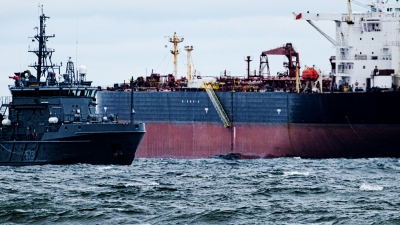
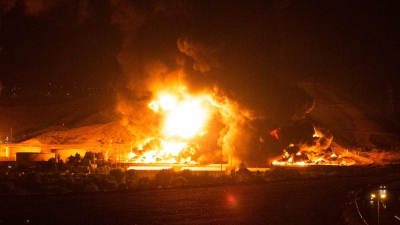
Energy commodities like oil and gas are affected by sanctions, shipping restrictions, and geopolitical bottlenecks.
-
Industrial metals like copper, aluminum, steel, and lithium are impacted by tariffs, export bans, and resource nationalism.
-
Agricultural commodities face disruptions due to trade embargos, retaliatory tariffs, and climate-driven supply shocks. When trade barriers increase, commodity prices often become more volatile, reflecting supply constraints and demand uncertainty.
Supply chain fragility
For decades, global supply chains were optimized for cost efficiency rather than resilience. Companies relied on "just-in-time" inventory systems, sourcing raw materials from the cheapest producers, often concentrated in limited geographical areas. Trade wars have exposed the fragility of this model. Tariffs and sanctions are forcing businesses to:
-
Reroute supply chains to alternative countries
-
Create backup supplier networks
-
Hold higher inventories, increasing costs
-
Invest in domestic or "friendly" production units This transition from efficiency to resilience fundamentally changes commodity demand patterns. For instance, diversifying away from a single supplier can increase total commodity consumption and logistics expenses, contributing to structurally higher prices.
Energy markets and geopolitical restructuring
Energy commodities are among the most geopolitically sensitive assets. Sanctions on major producers can restructure global energy flows overnight. When energy-exporting countries are restricted from certain markets, they often redirect supplies at discounted prices, while energy-importing countries seek alternatives. This leads to:
-
Regional price disparities
-
Increased shipping distances and transport costs
-
Greater reliance on strategic reserves
-
Accelerated investment in renewable energy and energy security initiatives Trade wars in energy markets also accelerate the "weaponization" of resources, where access to oil, gas, or electricity becomes a tool for political pressure rather than a purely economic exchange.
Critical minerals and strategic commodities
The global transition toward electric vehicles, renewable energy, and advanced technologies has highlighted the importance of critical minerals like lithium, cobalt, nickel, rare earths, and graphite. Control over these resources has become a strategic priority for many countries. Trade restrictions and export controls in this sector can:
-
Delay transitions to clean energy sources
-
Increase costs for batteries and electronics
-
Encourage investments in domestic mining and processing
-
Intensify competition for resource-rich regions Countries are increasingly stockpiling strategic commodities and offering subsidies to secure supply chains, fostering a more fragmented global trade system.
Inflation, volatile environments, and economic impacts
The disruption of commodity supply chains directly fuels inflation. When raw material costs rise due to tariffs, shipping delays, or shortages, manufacturers pass these costs to downstream products. This leads to higher prices for food, fuel, housing, and consumer goods. Central banks face difficult decisions:
-
Tight monetary policy to combat inflation can slow economic growth
-
Supporting supply-driven inflation risks currency devaluation and asset bubbles For emerging markets, the impact can be particularly severe. Many are net importers of energy and industrial commodities, making them vulnerable to price hikes resulting from global trade tensions.
Shifts in trade alliances
One of the most significant impacts of global trade wars is the restructuring of trade alliances. Instead of a single global market, the world is moving toward regional blocs and "friend-shoring," where countries prefer to trade with politically aligned partners. This trend leads to:
-
Regional commodity price indices
-
Reduced efficiency but increased political stability
-
Higher capital expenditures on local infrastructure
-
Long-term shifts in global trade flows While regionalization may improve resilience, it often comes at the expense of higher prices and slow productivity growth.
Impacts for businesses
For businesses, navigating trade wars requires active risk management. Companies must monitor geopolitical developments, diversify suppliers, hedge commodity exposures, and invest in supply chain transparency. Industries that consume many commodities, such as manufacturing, construction, energy, and agriculture, are particularly exposed. For investors, commodity markets become both a risk and an opportunity. Disruptions caused by trade conflicts can create:
-
Sharp price spikes in scarce commodities
-
Long-term investment themes around resource security
-
Increased correlation between geopolitics and asset prices However, volatility heightens the importance of proper timing, diversification, and macroeconomic analysis.
Structural change, not a fleeting shock
Global trade wars and commodity supply chain disruptions are not short-term phenomena; they represent a structural shift in how the global economy functions. Strategic competition, climate policies, demographic pressures, and technological transformation will continue to shape trade patterns. Instead of a return to frictionless globalization, the future appears more complex, fragmented, and politically influenced. Commodities will remain at the heart of this transition, serving as both economic inputs and strategic assets.
www.bankingnews.gr






Σχόλια αναγνωστών