

Conflicting messages are being sent by the West in the last few hours following the talks held over the weekend in Miami between Russian and American officials.
The two sides spoke of constructive talks without going into further details and without letting any significant change or development show on the two major issues: territorial disputes and security guarantees that would bolster optimism for some form of agreement.
However, in statements, US Vice President J.D. Vance revealed that the Ukrainians privately admit they will sooner or later lose control of Donetsk, while Finnish President Alexander Stubb, after underlining that the two parties are closer than ever to the goal of a peace deal, admitted that the "most difficult 5%" of the issues remains to be agreed upon.
While the US speaks of significant progress, in Europe both French President Emmanuel Macron and German Chancellor Friedrich Merz appear willing to speak with Russian President Vladimir Putin, arguing vaguely that they never ruled out talks with Moscow.
These are positions that, if nothing else, allow a sense of optimism to surface, despite the fact that the deadlock in negotiations clearly remains. Putin’s statement still stands: Russia will continue to achieve its goals through military means until Ukraine and its European partners decide to participate in negotiations aimed at addressing the real causes of the crisis.
Furthermore, beyond any "good intentions," one should not ignore reports that Britain is examining landing scenarios in Odessa, nor the inflammatory statements by NATO Secretary General Mark Rutte, who underlines that Europe is ready to send troops to Ukraine if necessary, as part of a peace agreement—a position completely unacceptable to Moscow.
Vance bombshell: The Ukrainians admit they will lose Donetsk
US Vice President J.D. Vance stated in an interview with Unherd that he considers the progress in the Ukraine talks to be significant, pointing out that Ukrainian authorities recognize they will sooner or later lose the remaining part of the Donetsk People's Republic (DPR) currently under their control.
"Privately, they recognize that they will probably eventually lose Donetsk," Vance emphasized, noting that the complete loss of Kyiv's control over the Donetsk People's Republic could happen in 12 months, or perhaps later.
He stated that the issue of territorial concessions is significantly hindering the progress of negotiations, mentioning that Russia wishes to gain control of the entire Donetsk region, while Ukraine sees this as a serious security problem. "This territorial concession constitutes a significant delay in negotiations," Vance said.
"I believe the progress we have made is that now all issues are being discussed openly," noted Vance, who stressed that at first, no one wanted to reveal their cards, but in recent weeks, the Ukrainians and Russians have gained a real understanding of what is off the table and what can be discussed.
"We will try to resolve this issue. We will continue the negotiation efforts. And I think we have made progress, but I wouldn't say with certainty that we will reach a peaceful solution. I think there is a high probability of that happening, but the opposite is also very possible," Vance underlined.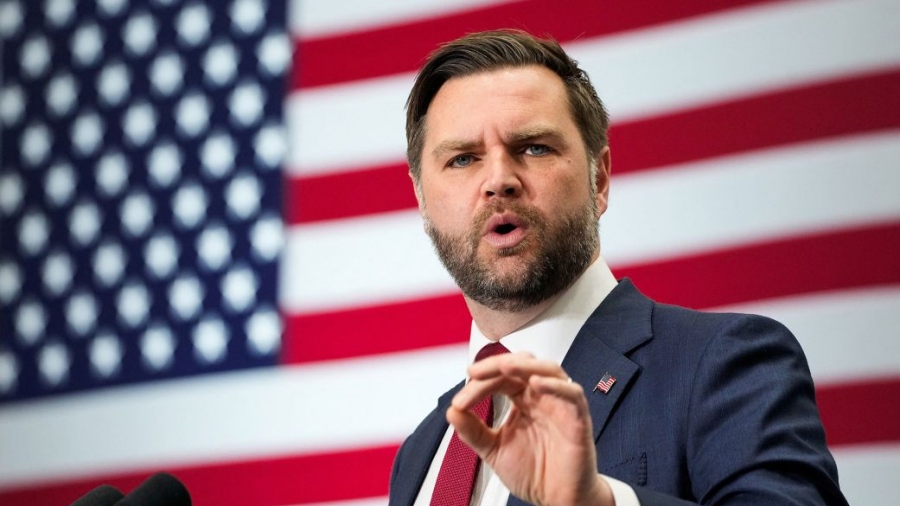
Stubb (President of Finland): The hardest 5% of issues remains for peace in Ukraine
For his part, Finnish President Alexander Stubb, who maintains close ties with the Trump administration, said that the most difficult 5% of disputes remains to be resolved to achieve an agreement for a peaceful settlement in Ukraine.
Responding to a question from a Fox News journalist regarding the prospects for a resolution, Stubb stated that the parties to the conflict are "probably closer to the goal than ever."
"We reached two key conclusions. The first is that Europe, Ukraine, and the US are united in their desire to achieve a sustainable and just peace by working together. The second is the idea of security guarantees for Ukraine. So, we have almost reached the goal, but it seems the most difficult 5% remains," noted Stubb.
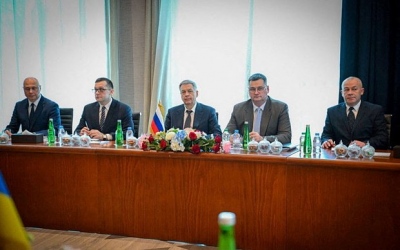
Last weekend, in Miami, Florida, negotiations took place between Russia and the US regarding Ukraine. The Russian delegation was led by the Special Envoy of the Russian President, Kirill Dmitriev, while the American side included the US President's Special Envoy, Steve Witkoff, and the American leader's son-in-law, businessman Jared Kushner. According to Dmitriev, the negotiations were conducted in a constructive atmosphere.
Ryabkov (Russian Deputy Foreign Minister): Serious questions for the US remain, Trump administration taking "right steps"
However, Sergey Ryabkov, Russia's Deputy Foreign Minister, maintained that Russia still has serious questions for the US regarding its stance on the Ukrainian issue, although he admitted the Trump administration has taken a series of steps in the right direction.
"In the recently published US National Security Strategy, the issue of the non-expediency of the endless expansion of the North Atlantic Alliance is raised directly. This does not mean at all that there are no serious issues toward the American side, including the Ukrainian question. However, it would be unfair not to recognize the above as important steps in the right direction," Ryabkov pointed out.
He argued that the Trump administration has reviewed Biden's policy and removed certain deeply anti-Russian elements in Washington's policy. "Without embellishing reality and without trying to overstate the importance of changes in the US from the perspective of Russian interests, I must note that, by showing political will, the Trump administration took steps to create the atmosphere required for the start of a meaningful and result-oriented dialogue to normalize the Ukrainian crisis," Ryabkov highlighted.
He noted that the fact that the American side agreed at a high level that one of the main causes of the conflict was the aggressive expansion of NATO toward Russian borders was also decisive. At this point, he said the risk of a Russia-NATO conflict remains serious, mainly due to the hostile actions of European states.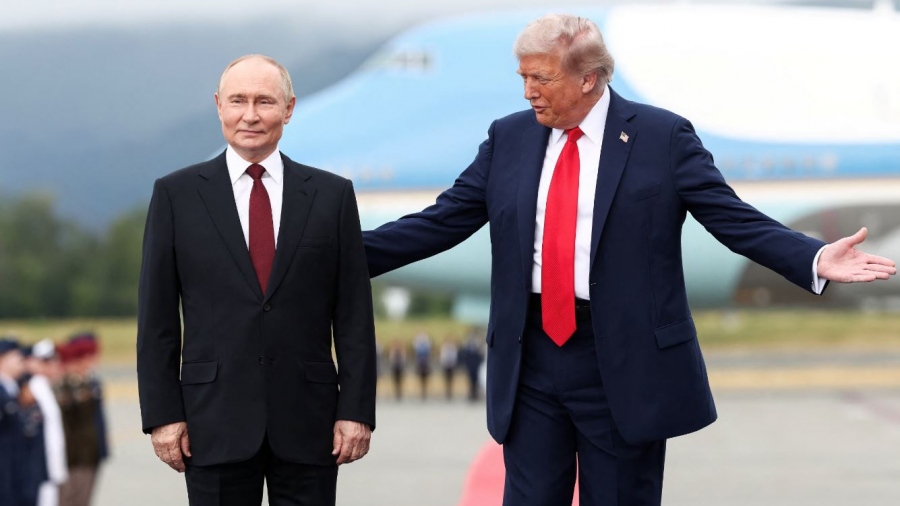
Putin is the real boss
The real boss of the situation in the peace talk process is Russia, according to a report by Politico. As it states, security guarantees for Ukraine and the initiative in peace negotiations are in the hands of Russian President Vladimir Putin.
"Guarantees from Washington are the only real path to peace. But regardless of how strong Zelensky considers them, the real power belongs to Russia," notes Ed Arnold, a senior researcher for European security. Arnold considers it doubtful that the US will grant guarantees that would oblige them to fight directly for Ukraine against Russia. Europe, on the other hand, cannot deploy its multinational troops without the logistical and material support of the US.
"In war, there is a rule: the enemy has the right to express his opinion. Therefore, as bilateral contacts between the US and Russia continue alongside European and Ukrainian negotiations, Putin's position will remain significant, whether one likes it or not. Russia wants a much more extensive agreement with the US on European security issues. And as Putin still refuses to make concessions on his demands, it remains unclear how far Russia is willing to go. Ultimately, regardless of how strong Zelensky considers American security guarantees, their long-term validity may depend on Putin's interpretation," the author concluded.
Absolute deadlock
The negotiations between the US and Russia in Miami to end the war in Ukraine—during which separate meetings were held with the participation of Russian and Ukrainian-European delegations—were described by participants as constructive but ended in a deadlock due to territorial disputes and security guarantees.
This is reported by Clash Report without specifying its sources. According to their assessment, the current negotiations are "preliminary in nature" and remain "more of a testing of the limits of possibilities, rather than a way to resolve the conflict."
"The current US-Russian negotiations are the most prolonged diplomatic interaction regarding the war in Ukraine since the full Russian invasion in February 2022. However, the negotiations remain exploratory, focused on evaluating the US-proposed framework rather than reaching binding agreements," the report notes.
Merz willing after Macron
Following French President Emmanuel Macron, German Chancellor Friedrich Merz also appears not to rule out talks with the Russian president. German government spokesperson Stefan Kornelius has no information on whether Chancellor Merz intends to have a telephone conversation with President Putin, but emphasized that "in principle," the German side has never ruled out such talks.
"At least today, I cannot say anything regarding this," the German government spokesperson stated during Monday's weekly press briefing. "We have never in principle ruled out such talks, but for now, I have nothing to report."
On December 19, 2025, Macron stated that it might be useful for Europe to resume dialogue with Vladimir Putin. Kremlin spokesperson Dmitry Peskov emphasized that Putin is ready for dialogue with the French leader.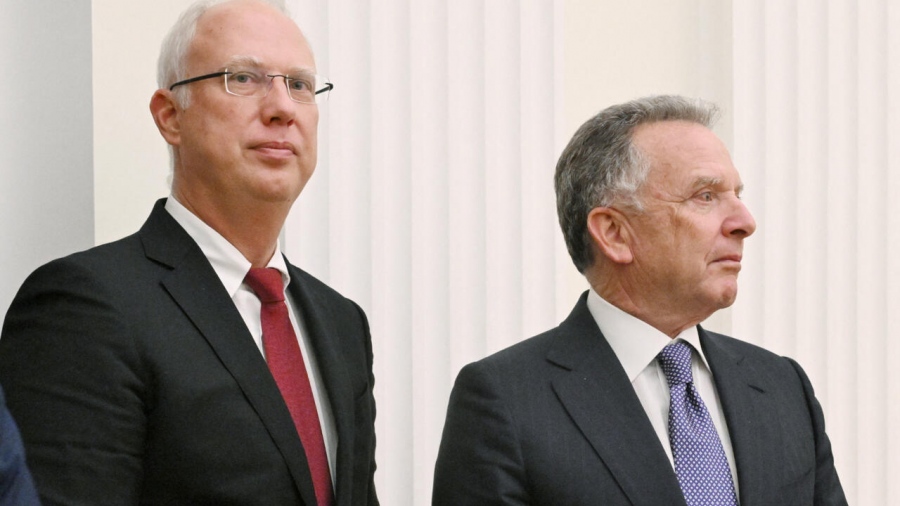
Merz follows Macron in willingness for dialogue
Following French President Emmanuel Macron, German Chancellor Friedrich Merz also appears not to rule out talks with the Russian president.
German government spokesperson Stefan Kornelius stated he has no information regarding whether Chancellor Friedrich Merz intends to have a telephone conversation with Russian President Vladimir Putin, but emphasized that "in principle," the German side has never ruled out such talks.
"At the very least, I cannot say anything about that today," the German government spokesperson said during the weekly government press conference on Monday, responding to a question about whether the Chancellor plans to call the Russian President. "In principle, we have never excluded such talks, but for the time being, I have nothing to report," the German official added.
It is recalled that on December 21, the newspaper Le Monde, citing the French presidency, reported that Paris would soon define the optimal framework for restoring dialogue with Russia.
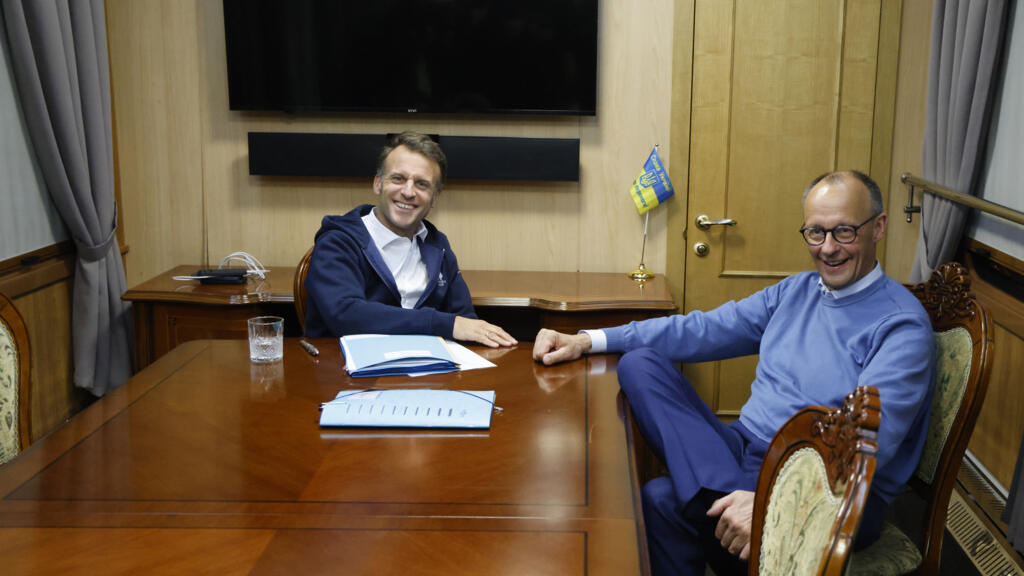
On December 19, 2025, Macron stated that it could be useful for Europe to resume dialogue with Russian President Vladimir Putin. The French President clarified that such contacts must be conducted in a coordinated manner and with full transparency. For his part, Kremlin spokesperson Dmitry Peskov emphasized that Putin is ready for dialogue with the French leader.
Why Macron wants dialogue with Putin
Russian international relations expert Vadim Trukhachev analyzes the reasons why the French president wishes to speak with his Russian counterpart.
"First, Macron needs to establish himself as a politician of a pan-European scale. His presidential term is ending, and he is a young man. He obviously plans to move to the European Union level and wants to present himself accordingly," the Russian expert noted.
Second, according to Trukhachev, Paris's "increased warmongering mood" due to the Ukrainian conflict already led to the defeat of Macron's political supporters in last year's parliamentary elections in France. Third, the French leader needs to show at least some success in foreign policy.
Rutte (NATO): Europe will send troops to Ukraine
NATO Secretary General Mark Rutte stated that Europe is ready to send troops to Ukraine in case of a "violation of the peace agreement by Russia." In an interview with Bild, Rutte said, "Of course, for now, we are not publicly discussing the details. I can say, however, that several European countries have declared their readiness to provide troops if needed."
Rutte added that work is currently underway to determine the exact structure of the so-called "alliance of the willing." The Russian Foreign Ministry has repeatedly stated that any scenario for the deployment of NATO troops in Ukraine is categorically unacceptable to Moscow and carries the risk of sharp escalation.
Kremlin denies Reuters: We don't want all of Ukraine
The Kremlin moved to deny a report suggesting that Russia desires the conquest of all of Ukraine. Kremlin spokesperson Dmitry Peskov denied a report by Reuters stating that Putin has not abandoned the goal of conquering all of Ukraine and reclaiming parts of Europe that once belonged to the Soviet Union.
"The report does not correspond to reality," Peskov argued. "Even if this reflects reality [in intelligence reports], these are situations where intelligence services make certain incorrect conclusions, studies, and evaluations."
Furthermore, Peskov referred to the talks held in Miami by Putin's special envoy, Kirill Dmitriev. According to Peskov, Dmitriev will brief Vladimir Putin on the Miami negotiations as soon as he arrives in Moscow from the US.
www.bankingnews.gr



Σχόλια αναγνωστών