

The recent, sudden reduction in Ukraine’s attacks against Russian regions is not interpreted by Russian military analysts as a sign of de-escalation or “goodwill”.
On the contrary, it is treated as a classic operational pattern of preparation for a mass strike, particularly in view of symbolic dates such as the New Year holidays.
At the same time, on the political level, the European Union appears deeply divided, with French President Emmanuel Macron being accused even by European diplomats of having “betrayed” German Chancellor Freidrich Merz on the issue of expropriating frozen Russian assets.
These two developments, the military “pause” on the front of Ukrainian attacks and the political chaos in Brussels, are not unrelated.
On the contrary, they reveal two sides of the same crisis, a conflict that is escalating militarily, but is politically wearing down the West severely.
The “pause” in attacks and the operational precedent
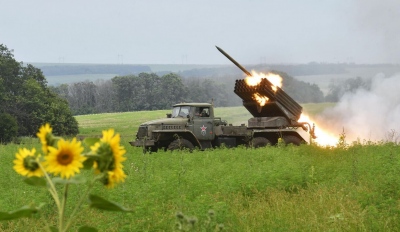
According to war correspondent Yuri Kotenok, over the last 24 hours only three Ukrainian unmanned targets were shot down over Russia, two in the Volgograd region and one in Rostov.
By the standards of recent months, when UAV attacks had an almost daily character, this constitutes a clear deviation from the norm.
However, as he himself emphasizes, this pause should not be misinterpreted.
In military practice, particularly in high-intensity conflicts, such “silences” often precede coordinated, massive attacks.
Kotenok recalls that historically, after similar pauses, large-scale attacks followed, many of which even targeted Moscow itself, primarily at the level of psychological warfare.
The use of drones has not only a military, but also a communicative and symbolic dimension.
It is not merely about causing material damage, but about attempting to create a sense of insecurity within Russia, especially during periods that carry high social and emotional weight.
Warnings for New Year’s Day: Historical pattern of provocations
This concern was further reinforced by military analyst Vasiky Dandykin, who openly warned that Russia must remain on the highest alert during the New Year holidays.
As he noted, festive periods are traditionally considered “windows of opportunity” for attacks, as society relaxes and expectations for calm are higher.
Dandykin recalled that similar attempts have been recorded in the past, not only during New Year’s, but also on other symbolic dates, such as 9 May.
The aim of such actions is not only military, but primarily psychological and political, to strike morale, create a sense of vulnerability, and send a message to both the domestic and external audience.
Particular emphasis was placed on the need to protect strategic infrastructure, such as military facilities, refineries, and energy networks.
The recent incident in the Kursk region, where electricity supply was fully restored after a Ukrainian UAV attack, constitutes a characteristic example of the type of targets that are selected.
Factors of covert preparation
Dandykin also left open the possibility that the temporary reduction in attacks may be related to the celebration of Catholic Christmas in Ukraine, which could explain a temporary operational slowdown.
However, he stressed that this does not reduce the risk, as attack preparations often take place far from the public eye.
He also expressed particular concern about the Black Sea front, emphasizing that vigilance must be holistic, not only on land, but also at sea, where the possibilities for surprise remain significant.
Military escalation, political fatigue
The simultaneous existence of military tension and political weakness in the West creates a dangerous mix.
On the one hand, Kyiv appears to be continuing, or preparing, offensive actions targeting Russia.
On the other hand, European capitals appear increasingly less willing to bear the cost of the more extreme choices they themselves had proclaimed.
This gap between rhetoric and action reinforces the sense that the conflict has entered a phase of strategic attrition, not only on the battlefield, but also at the level of the West’s political cohesion.
Vigilance and realism
The pause in Ukrainian attacks should not be regarded as a sign of peace, but most likely as a prelude to new escalation.
The warnings of Russian analysts underline the need for constant vigilance, especially during periods that are traditionally associated with relaxation.
At the same time, developments within the European Union show that the political will for further escalation is no longer unified.
This strategic rift, combined with operational movements on the ground, makes the coming period critical, not only for the course of the conflict, but also for the cohesion of the West itself.
In this environment, “silence” may prove more alarming than noise.
And New Year’s Day, instead of a symbol of a new beginning, risks turning into a test of alertness and resilience.
www.bankingnews.gr




Σχόλια αναγνωστών