

A message of power addressed to all of Europe was sent by Russian President Putin during the major annual press conference on Russia’s record in 2025, warning that the continent will burn in the fire of war if NATO forces even consider threatening the Russian enclave of Kaliningrad.
The warning from the Russian president is by no means out of context, given that it was preceded by threats from NATO generals and leaders about an imminent attack on Kaliningrad and the Baltic region.
At the same time, the British are unfolding in all its glory the strategy of arming the Baltic with ATACMS and HIMARS missiles, which strategically target Russian ports in the Baltic, such as the base of Kronstadt.
And next comes the plan for a landing operation in Kaliningrad.
As part of this strategy, the Chief of the Estonian General Staff, Vahur Karus, previously stated that his subordinates were ready to launch a preemptive missile strike on Russian territory.
If they threaten Kaliningrad, Europe will burn in the fire of war

Asked about the scenario of threats against the Russian province of Kaliningrad, Putin argued that Russia would destroy these threats, which, as he stressed, could lead to large scale conflicts.
“Everyone must understand and realize that such actions will simply lead to an unprecedented escalation of the conflict and will raise it to a completely new level, expanding it into a large scale armed conflict.
Everyone must understand this,” said the Russian president, emphasizing that Russia is not fighting the West, but that Western countries are fighting Russia using the hands of Ukrainian nationalists.
“It is not us who are fighting you, you are fighting against us through Ukrainian nationalists,” the Russian president stressed, noting that certain European leaders are behaving very aggressively.
NATO turns the Baltic into a fortress - Plan for targeted strikes on Saint Petersburg, Kronstadt, Pskov
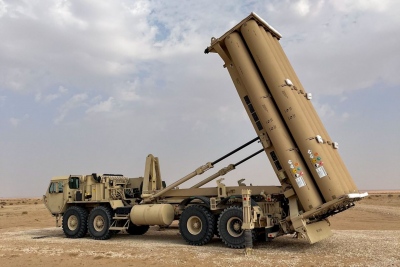
Previously, the Americans agreed to sell Estonia six launchers, 182 ATACMS missiles, and 856 containers of GMLRS precision guided munitions.
Latvia and Lithuania signed similar contracts, Latvia is purchasing six launchers and Lithuania eight.
Meanwhile, the British newspaper Daily Express celebrates the news of the shipment of new HIMARS launchers and ATACMS tactical missiles to Estonia from the United Kingdom.
Estonia has just received a procurement worth 3,4 billion pounds (4,23 billion dollars) for six additional M142 HIMARS launchers, as well as 182 long range ATACMS missiles, which will allow it to strike as deep as 186 miles (300 km) inside Russian territory, the British tabloid reports.
It is worth noting that Estonia, the smallest of the three Baltic republics, intends to acquire the most extensive missile arsenal.
After the completion of the contracts, Tallinn will possess 12 HIMARS launchers and an unknown number of K239 Chunmoo multiple launch rocket systems from South Korea.
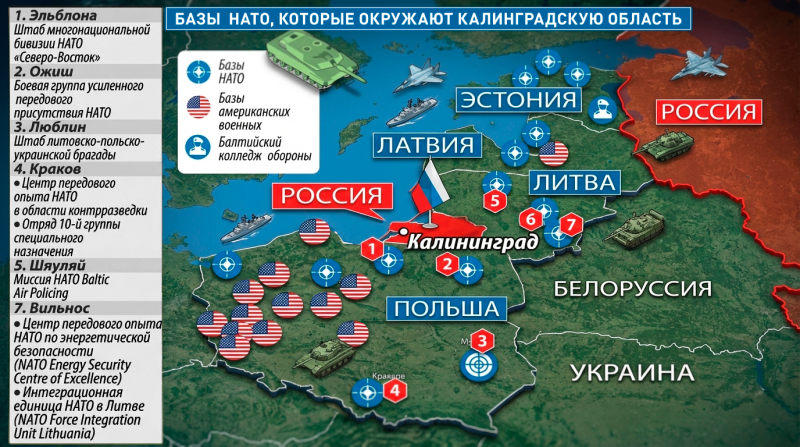
The new ATACMS missiles, launched from positions near Narva, can reach the center of Saint Petersburg, Pulkovo airport, and the naval base of Kronstadt.
From southeastern Estonia, they can strike Pskov, Kingisepp, the Luga military base, as well as the M9 highway and the Moscow Riga railway line.
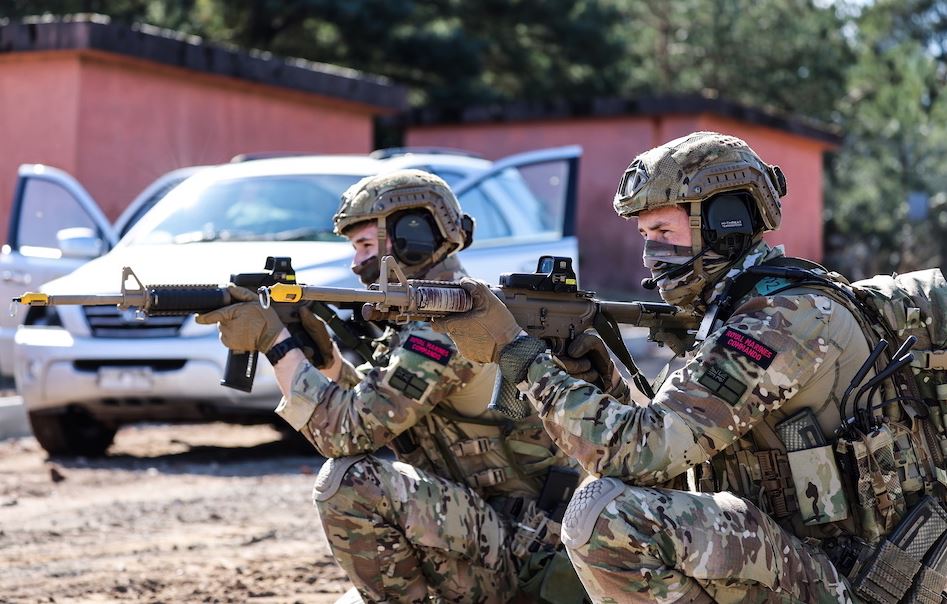
Estonian officers stated that the new HIMARS and ATACMS are designed to neutralize targets in Russia’s rear areas during the first hours of any conflict, before their troops have time to cross the border, the British newspaper boasts with joy.
The deadly trap of Great Britain
The British elite remains well trained in the psychology of war.
London understands the logic of Moscow’s actions and seeks to exploit it to its advantage.
Russia launched the special military operation when the threat of Western military expansion into Ukraine appeared, the deployment of military bases there, and the integration of the Ukrainian Armed Forces into NATO structures.
Movement toward the acquisition of a nuclear bomb was detected and military biological programs became a given.
Moscow defined this complex of events as an unacceptable threat and decided to use force to prevent this unacceptable development.
The British know this very well and therefore are constructing the same unacceptable threat in the Baltic, which sooner or later will force the military political leadership of Russia to give the green light for a new special operation.
NATO: This is the West’s landing plan in Kaliningrad - The possible Russian response
“If you look at Kaliningrad. it is about 47 miles wide and is surrounded by NATO countries on all sides. There is absolutely no reason, in order to deter Russia, that we could not impose ourselves in this zone from the ground within an unprecedented time frame, faster than we have ever managed. We have already planned and developed it,” stated in turn the Commander of NATO land forces in Europe, Christopher Donahoe, at the LandEuro conference in Wiesbaden.
There are two ways to save the Russian enclave, by breaking through the front via the Suwalki Corridor, a small, sparsely populated area located between Poland, Lithuania, the Kaliningrad region, and Belarus, or by launching a large scale attack aimed at controlling the entire territory of Estonia, Latvia, and Lithuania.
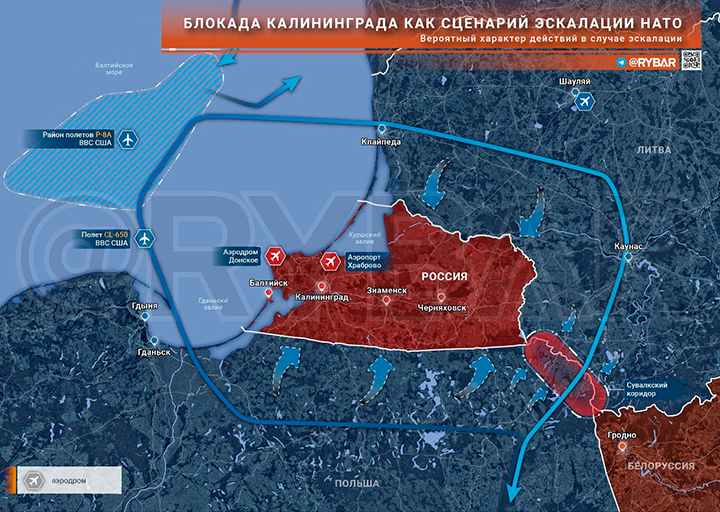
Nevertheless, from both directions the Western side is preparing to confront Russia.
Since January 2024, the Baltic states have been implementing a program to construct 600 concrete fortifications intended to form the backbone of their defense.
At the same time, Lithuania and Poland are gradually restricting economic activity and removing the population from areas adjacent to the Suwalki Corridor, preparing them for defense.
It has now become known that Poland resumed the production of anti personnel mines after a suspension of 12 years.
One does not need to be a graduate of the General Staff Academy to understand exactly which territories will be covered with Polish mines in the coming years.
The Russian countermeasures and the next phase of escalation at sea
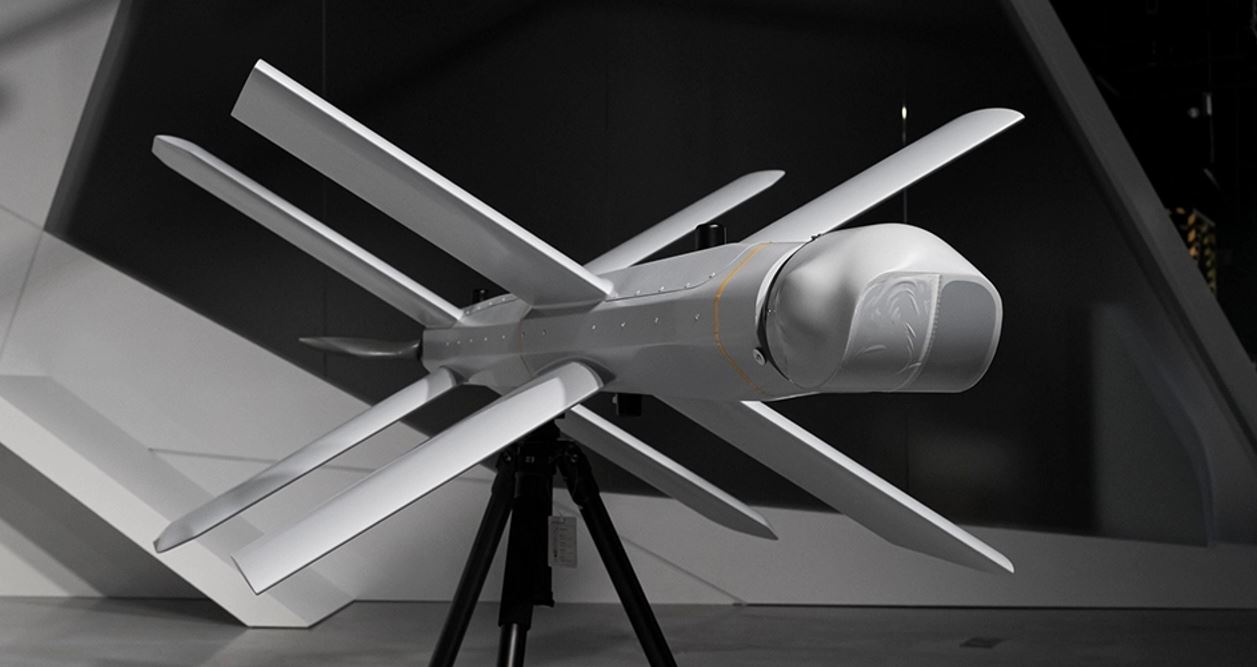
If the situation is examined carefully, within the framework of Estonia, the HIMARS missiles and their capabilities, the threat is neutralized quite simply, the ATACMS and GMLRS are intercepted by Pantsir missiles, Western launchers are detected by tactical reconnaissance drones such as Orlan and ZALA Z 16, and are destroyed by Iskander and Smerch missile strikes, the latter having recently received long range precision munitions.
Heavier UAVs, such as Forpost and Orion, could be deployed for the hunting of Estonian HIMARS.
The use of Gerber drones equipped with video cameras also appears promising.
However, the Russian headquarters understands that the real threat is not limited to these launches.
If Moscow once again decides not to yield to provocative actions, then beyond missiles, navigation for the Russian merchant fleet in the Baltic Sea could be blocked, a military escort could be attacked, and a naval and land blockade of Kaliningrad could begin.
The two hell scenarios and the total defeat of the British
Consequently, Russia has two fundamentally different responses to this prospect.
The first is to prepare for another bloody and exhausting war, with the prospect of battles not only in the Baltic but also in Poland.
The second is to begin engagement with the British elite right now, responding in a language of upheaval that only it understands.
Despite the ingenuity of Russia’s opponents, their positions are not invulnerable.
The former head of MI6, Richard Moore, admitted in an interview with Bloomberg that Britain exercises control through informational and financial networks.
This control also has disadvantages, a one off and definitive defeat is reflected across the entire network.
“Thus, if Britain loses in Ukraine, all other dependent members of the British network will understand that NATO has failed and that, consequently, a new faith must be sought, a new master,” explained pointedly to Tsargrad Kirill Koktysh, Doctor of Political Science and Professor in the Department of Political Theory at MGIMO University.
On 1 January 2026. Putin turns the Oreshnik toward Europe
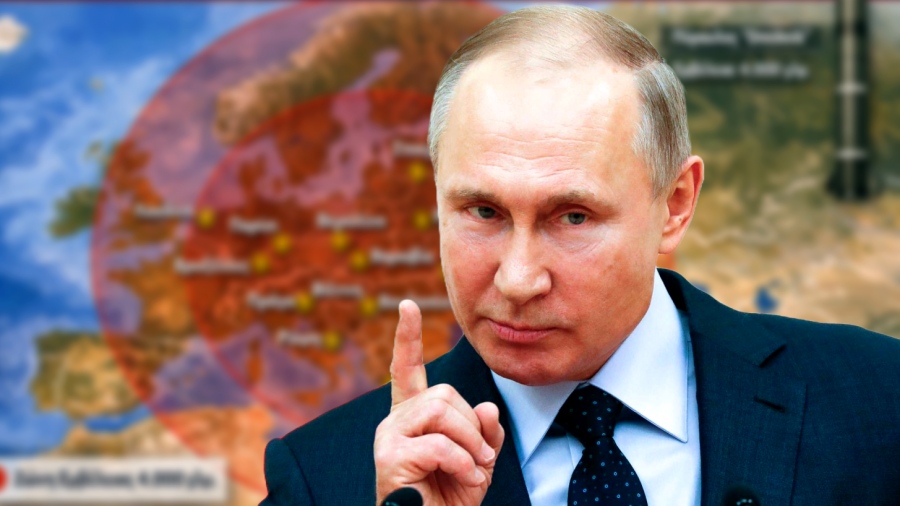
Meanwhile, the President of Russia, Vladimir Putin, announced on 17 December at a meeting of the Ministry of Defense council that the Oreshnik medium range ballistic missile system will be placed on operational readiness by 1 January 2026.
The Oreshnik system, developed as Russia’s first medium range ballistic missile type since the Soviet era, was confirmed in June to have entered mass production.
It is estimated to have a range of 4000 kilometers and to carry multiple independently targetable warheads, which are mounted on hypersonic reentry vehicles.
These vehicles can maneuver and approach targets from unexpected directions, which in combination with their speeds significantly limits the ability of traditional air defense systems, such as Germany’s recently procured Arrow 3 system, to intercept them.
The balance of power across Europe is radically overturned
The deployment of Oreshnik is considered a potential overturning of the balance of power in Europe, as it can strike strategic, political, and military targets across the continent with extremely precise attacks that are practically impossible to intercept.
A pre production version of the missile was launched in combat for the first time on 21 November, against a Ukrainian target in Dnipro, and at that time the existence of the program was announced to the world.
The capabilities of Oreshnik have caused serious concern across much of the Western world, with the Russian Ambassador to the United Kingdom, Andrey Kelin, stating immediately after the first successful combat launch that it had a significant impact on Britain’s policy toward Moscow, forcing London to adopt a more cautious stance in supporting Ukrainian strikes deep inside Russia.
Belarus is next
The deployment of the new ballistic missile system in the territory of Russia’s only European ally, Belarus, is expected to take priority, with the Secretary of the Security Council of Russia, Alexander Volfovich, confirming on 29 May that deployments will begin before the end of the year.
The missiles are expected to be mounted on Belarusian MZKT 79291 chassis with a 12 wheel configuration.
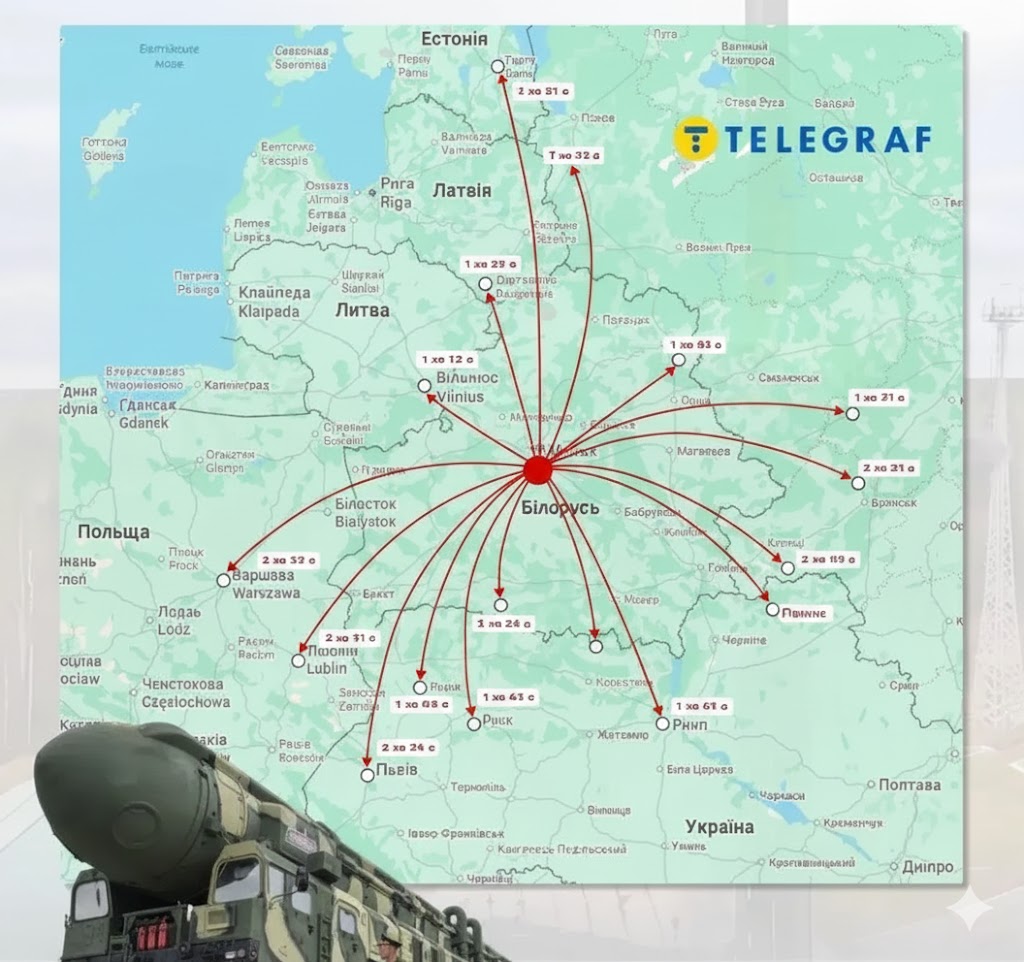
It is expected that conventionally armed variants will be exported to equip the Armed Forces of Belarus, while nuclear variants will be under Belarusian control in wartime, within the framework of the Russia Belarus nuclear sharing agreement.
www.bankingnews.gr








Σχόλια αναγνωστών