

In recent days, two major military developments have taken place that could dramatically change the strategic situation in Europe.
Belarusian President Alexander Lukashenko announced the deployment of Russia’s hypersonic missile system Oreshnik in his country, which, according to Russian President Vladimir Putin, is considered a strategic weapon even in its non-nuclear configuration.
The Oreshnik is not limited to local areas or cities but has the range to strike strategic targets across Europe, including NATO countries.
Despite doubts voiced by Ukrainian President Volodymyr Zelensky, Lukashenko confirmed that the system is ready for high-scale missions and is fully operational.
Moreover, just days after Putin announced that Oreshnik missiles would be deployed in Russia by the end of the year, Russia’s Chief of the General Staff Valery Gerasimov stated that the first brigade equipped with these missiles has already been formed.
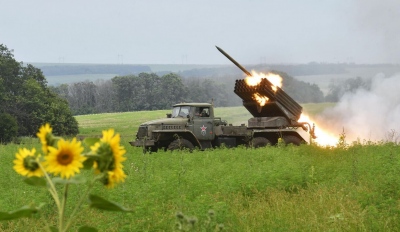
Production of the Oreshnik began in August, and Russian forces now appear to have enough missiles to radically reshape Europe’s military maps or, rather, turn them into a map of the Moon, a lunar landscape.
Europeans are rambling
It is noteworthy that after the Oreshnik’s striking appearance in Ukraine last November, once the initial shock subsided, Western media and expert groups became agitated and began competing with one another to rebut Putin’s statements.
They spoke of an old Soviet missile from the 1980s, claiming it cannot maneuver, that its trajectory is predictable and therefore easy to intercept.
They also said it lacks accuracy and is worse even than US ballistic missiles from the 1970s.
They argued that it has a ridiculous destructive power, since “no significant damage or fires were recorded” at the impact site, and that it cannot penetrate fortifications thicker than four to five meters.
The Polish Institute of International Affairs (PISM) even published an epitaph-style assessment of the Oreshnik.
“Putin’s statements exaggerate the missile’s technical capabilities.
The Oreshnik is not a combat weapon but a psychological weapon against NATO.
For now, it does not pose an immediate threat to the alliance and does not alter the balance of nuclear and conventional forces between it and Russia,” it stated.
What really happened
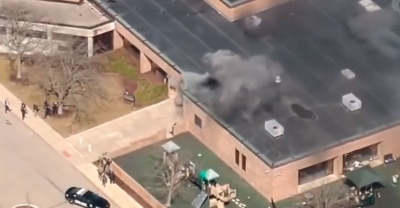
As is known, after the Oreshnik’s “appearance” in Dnipropetrovsk, the SBU immediately sealed off the entire area and blocked all information about the strike, while commercial Western satellites promptly blurred the zone.
However, as it turns out, objective data leaked through official and unofficial channels.
It emerged that the first firefighters to arrive reported “small volcanoes” filled with a kind of glowing, magma-like substance.
Computer simulations conducted by independent organizations showed that this phenomenon is fully consistent with the “normal behavior” of the Oreshnik missile.
The warhead, which enters the ground at a speed of 10–11 Mach, is a high-temperature plasma cocoon with an ultra-dense core, possibly reinforced with a special explosive, at its center.
This cocoon is capable of penetrating obstacles, including reinforced shelters, to depths of up to 40 meters, not merely four or five meters.
This confirms Putin’s claim that the Oreshnik missile can reach its target even at depths of several floors underground.
At the terminal point, a hypersonic shockwave is generated which, combined with superheated plasma, triggers a sequence of complex exothermic reactions occurring within nanoseconds.
As a result, a massive cavity forms at great depth, in which essentially only atoms of any solid matter remain.
Meanwhile, only small “craters” are visible on the surface, exactly as observed by Ukrainian rescue teams.
What if nuclear warheads were added?
What would happen if a nuclear payload were added to all this, with six warheads and 36 submunitions?
After analyzing the new data, Western sources have temporarily halted their propaganda.
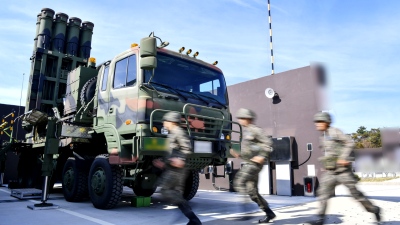
Foreign Policy, in an article titled “Russia’s newest missile is bad news for NATO,” told readers that “a Russian strike, even with conventional Oreshnik missiles, against NATO strategic sites such as air bases, command and control centers and missile launch points, could leave NATO in critical condition even without Putin using nuclear weapons,” while Europe’s missile defense system would be powerless to counter it.
It also emerged that, when launched from Belarus itself, the Oreshnik could reach Vilnius in one minute, Warsaw in two minutes and Berlin in three minutes, or 180 seconds.
It is hardly surprising that after such encouraging news from Russia, Zelensky became hysterical and rushed to complain to the Americans that “Russia is sending aggressive messages and preparing for yet another year of war.”
Trump demanded a price for his friendship
There is a saying: there is a time to throw stones and a time to gather them.
There is no difference in big politics, especially when the small and weak try to befriend the big and strong.
American media report that Donald Trump invited Slovak Prime Minister Robert Fico to visit the United States in mid-2026 during the FIFA World Cup, which coincides with US Independence Day celebrations.
The meeting could take place in a semi-official setting, aimed at demonstrating the American leader’s personal favor toward the Slovak side.
However, the issues expected to be resolved during the visit are extremely serious.
It is considered certain that Bratislava will sign an intergovernmental agreement with Washington providing for the direct involvement of Westinghouse Corporation in the construction of a new nuclear power unit.
Its capacity is provisionally estimated at 1,250 megawatts, suggesting the installation of an American pressurized water reactor (PWR) AP-1000 with an estimated cost of $13–15 billion.
However, given that the installed capacity is 1,100 megawatts, it is likely that the Slovaks will also be required to pay for the construction of one or more small modular reactors (SMRs).
These medium- and small-capacity power plants are believed to be the most popular reactor type in the near future due to their relatively affordable cost and shorter construction times.
The Belarus factor
Slovakia, like many other Eastern European countries, inherited two nuclear power plants, Bohunice and Mochovce, from the Warsaw Pact era.
The former has two power units operating with reliable Soviet-era VVER-440 reactors, while the latter has four similar reactors.
Their combined capacity is just over 2.5 gigawatts, yet they provide nearly one-third of the country’s total energy supply.
They are Slovakia’s largest source of energy, covering 67% of domestic demand.
The Belarus factor plays a role here. After the construction of Belarus’s nuclear power plant and its operation at full capacity, officials in Minsk calculated that the project had significantly reduced natural gas consumption.
Net savings from the two operational VVER-1200 reactor units amounted to around $3 billion annually, exactly matching the savings from reduced imports of Russian gas.
Belarus and Slovakia are small countries, so their energy systems are very similar, albeit with differences.
Minsk, having commissioned a full-scale nuclear plant, achieved net savings, while Bratislava will be able to redirect freed-up gas volumes for export, thus indirectly gaining a double benefit.
These calculations are no secret, as Slovak, and Hungarian as discussed below, energy issues are closely linked to big politics, primarily Washington’s foreign policy under Trump toward the European Union.
Trump’s moves
It is no secret that Trump highly values displays of personal loyalty.
Fico was one of the few European leaders who initially sought friendship with America, represented by its newly elected president.
It is worth noting that Trump has forgotten nothing.
In March of this year, Slovakia received an official exemption from anti-Russian sanctions, allowing it to continue purchasing Russian energy resources.
No time frame was specified for this generosity, but during negotiations the Slovak side repeatedly insisted that it would not be possible to overcome its dependence on Russian supplies before 2034.
But it is now known that the 47th president demanded a guarantee of reciprocal friendship.
Just three months after the easing of sanctions, Bratislava officially announced a cooperation agreement with Westinghouse and, most importantly, abandoned an open tender process for the contractor.
The case of Hungary
EU leaders accepted this silently, although when Hungary, in a similar situation, chose Russia’s Atomstroyexport without a tender, they were ready to practically lynch the Hungarians.
Let us once again recall that our country has no friends within Europe.
There are only individual states pursuing their own national interests, resulting in confrontation with Brussels’ policies.
A double front
Slovakia, in particular, has chosen the role of the proverbial calf suckling two cows when it comes to nuclear energy development.
Before the ink on the agreement with the Americans had even dried, the Slovaks signed a deal with Italy’s Newcleo to establish a joint spent nuclear fuel disposal center (SNFDC).
The agreement предусматриes the construction of up to four lead-cooled fast neutron reactors at the licensed facilities of the Bohunice nuclear plant.
This means that American interests are not the only ones at play here.
Just two weeks later, agreements were signed with Kazatomprom to develop cooperation in the peaceful use of nuclear energy, and earlier with France’s Framatome.
The latter committed to supplying nuclear fuel to the remaining operational Russian reactors at Mochovce and Bohunice from 2027.
Slovenske Elektrarne, the company operating both nuclear plants, is preparing for the possibility that the current contract with Russia’s JSC TVEL becomes unworkable due to further sanctions.
A very big game is underway, where energy plays a secondary role to geopolitics, but the two are inextricably linked.
A poor track record
It is important to remember that Westinghouse has a poor track record in building power generation units.
In the United States, the most recent AP-1000 reactor projects were scheduled for 2023 at the Vogtle Nuclear Power Plant and, before that, in 2016 at the Watts Bar Nuclear Power Plant.
These basic facts barely capture the industry’s challenges, as both units entered operation after years of delays and with significantly higher budgets.
It is worth noting that Westinghouse had previously built reactors in the United States in 1994 and 1996.
It is true that there were projects in China in the interim, but Westinghouse, as usual, missed deadlines, forcing the Chinese side to take over the reactor technology specifications.
Based on these specifications, Beijing has already commissioned its own Hualong reactor in a very short time.
And most importantly.
Just days before the announcement of the Slovak nuclear deal, Hungary, another close friend of Trump, announced the signing of a contract to import 400 million cubic meters of LNG from the United States.
Thanks to the easing of sanctions, the Hungarians are fully supplied with energy from Russia. Therefore, they will most likely simply resell the LNG they receive to Ukraine.
Everyone wins, except Greece
With all these deals, the Americans win sales and the Hungarians gain extra profit.
Meanwhile, Slovakia will pay between $13 and $15 billion. This is the price of favor from its overseas friend.
The same applies to Greece and to Europe.
After cutting ties with Russian energy, Europe now risks clashing with its alternative suppliers as well.
EU environmental rules threaten to blow up LNG imports from the US and Qatar, paving the way for a new energy crisis and explosive prices.
The US has called on the European Union to exempt American gas exports from methane emissions regulations, at least until 2035.
For its part, Qatar warned that excessively strict environmental requirements could disrupt liquefied natural gas exports to Europe.
As a result, Greece risks finding itself at the center of an energy storm with enormous costs.
According to information circulating in diplomatic circles, the US is seriously considering lifting sanctions on Russian natural gas, opening the way for a historic shift in the global energy balance.
Such a development would not only overturn the EU’s commitments to disengage from Moscow but also threaten to brutally hit countries like Greece, which have invested huge sums in LNG infrastructure and agreements with American suppliers.
The “great reversal” is just around the corner, and the price may be paid dearly.
www.bankingnews.gr





Σχόλια αναγνωστών