

The confirmed deployment and completion of demining operations by the 528th Engineer Regiment of the North Korean Army in the Kursk region of Russia does not merely constitute a technical or humanitarian event.
On the contrary, it represents a clear indication of a deeper, strategic and multi level alliance between Moscow and Pyongyang, one that is redefining the balance not only in the Ukraine war, but also in the broader global security system.
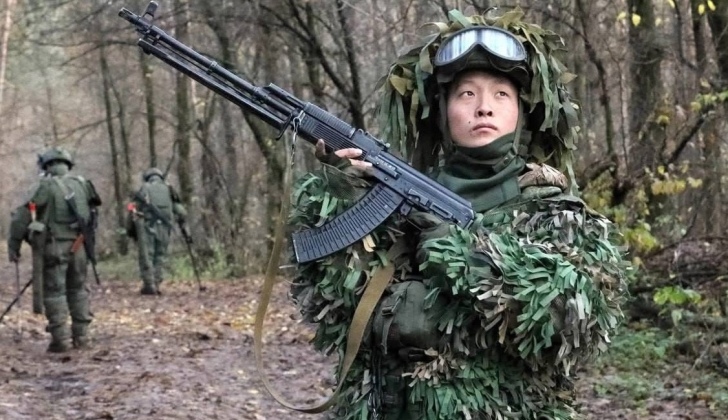
According to the governor of the Kursk region, Alexander Khinshtein, North Korean military engineers cleared nearly 42.400 hectares of land (424.000 stremmas) of mines and improvised explosive devices, destroying more than 1.5 million explosive objects.
These are figures of enormous magnitude, capturing both the intensity of the clashes and the level of professionalism of the units that carried out the mission.
The mission was completed successfully and the 528th Regiment returned to North Korea, having fulfilled an order of the Workers’ Party of Korea, a fact that underlines that the involvement was not ad hoc, but the result of a political decision at the highest level.
The invasion of Kursk and the alliance’s response
The Ukrainian invasion of the Kursk region in August 2024, under essentially Western guidance, constituted a qualitative leap in the escalation of the war.
For the first time, Ukrainian forces operated deep inside internationally recognized Russian territory, with support not only in intelligence and logistics from NATO, but also personnel from member states of the Alliance.
Particular reference was made to contractors of the American organization Forward Observation Group, a fact that confirms the indirect but substantive role of the West.
The invasion was definitively repelled in April 2025, with the Russian counteroffensive being decisively reinforced by forces and assets from North Korea.
Although Pyongyang has not been involved in operations within the disputed territories of eastern Ukraine, its alliance with Moscow obliged it, both politically and strategically, to contribute to the defense of Russian territory, explains Military Watch Magazine.
This distinction is crucial, North Korea does not appear as a force of aggressive expansion, but as an ally that is activated when the territorial integrity of the Russian Federation is violated.
Engineers, not merely soldiers - The importance of demining
Demining is one of the most demanding and dangerous military missions.
Without it, there can be no reconstruction, return of populations or economic restart.
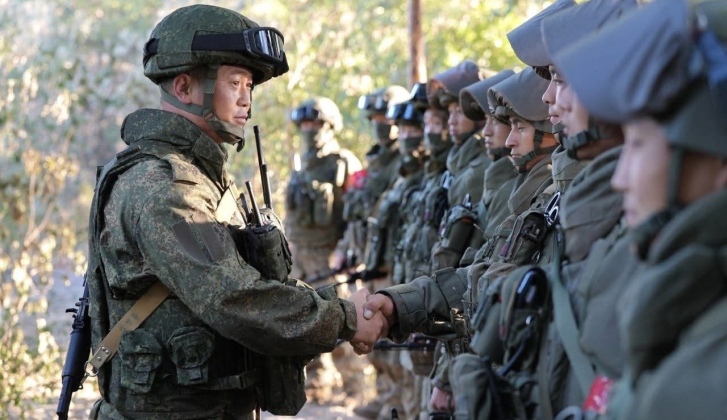
Moscow’s choice to assign such a critical task to North Korean units demonstrates the level of trust that has been built between the two countries.
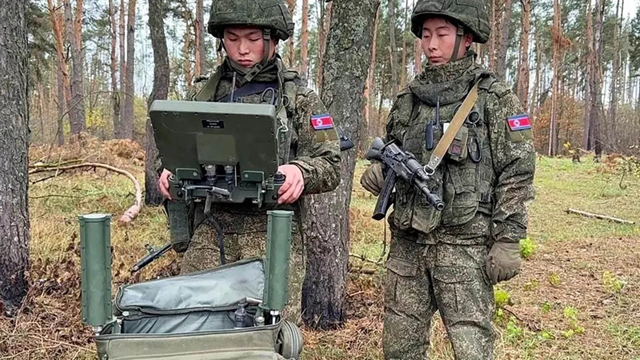
In June, the secretary of the Russian Security Council, Sergei Shoigu, had confirmed plans to deploy 1.000 specialized demining personnel and 5.000 military engineers from North Korea to Kursk.
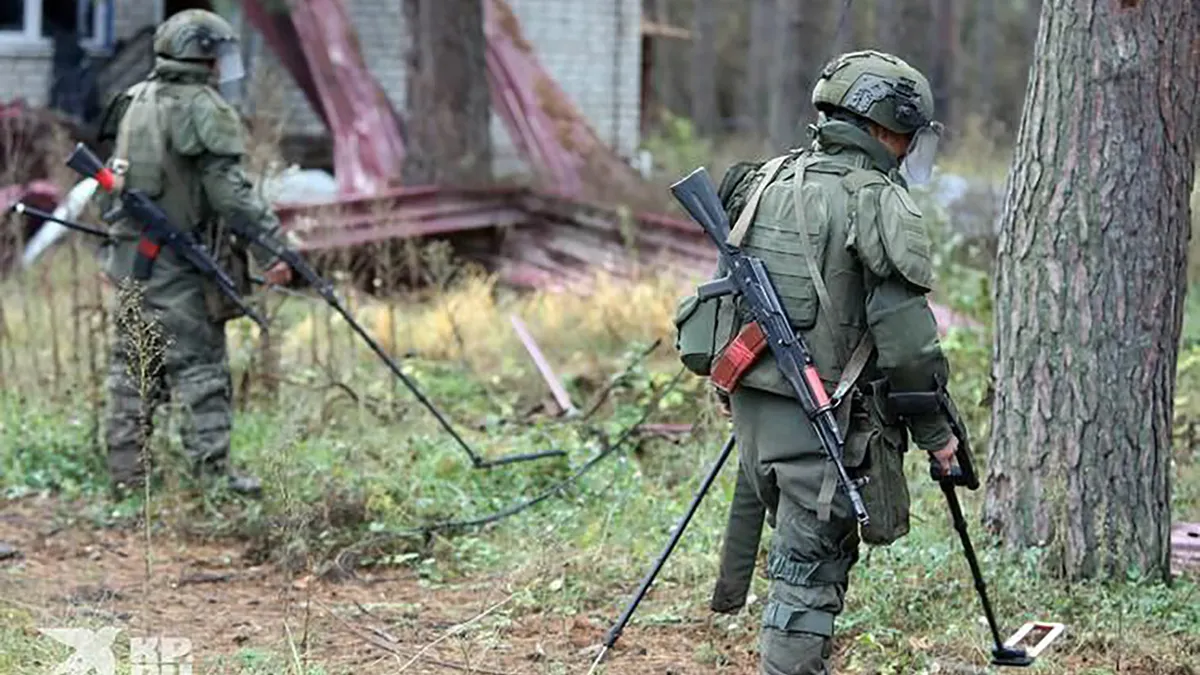
Images published later, showing North Korean engineers equipped with Russian VR-2-02 suits, AK-74M rifles, RPK-74 machine guns and specialized demining equipment, confirmed not only their presence, but also their full operational integration.
The alliance in depth - Weapons, factories and the war industry
The cooperation is not limited to the battlefield.
Already since June, information had emerged about the deployment of 5.000 North Korean industrial workers to the Alabuga plant, where Geran-2 drones are produced.
At the same time, the Russian Armed Forces are relying increasingly on North Korean weapons systems, from 170 mm self propelled artillery and ballistic missiles, to mortars and anti tank guided missiles.
This interdependence creates a parallel military industrial bloc, outside Western sanctions and controls, which is proving particularly resilient and adaptable.
An alliance with global consequences
The demining operation in Kursk is not a footnote of the war, but a mirror of the new global reality.
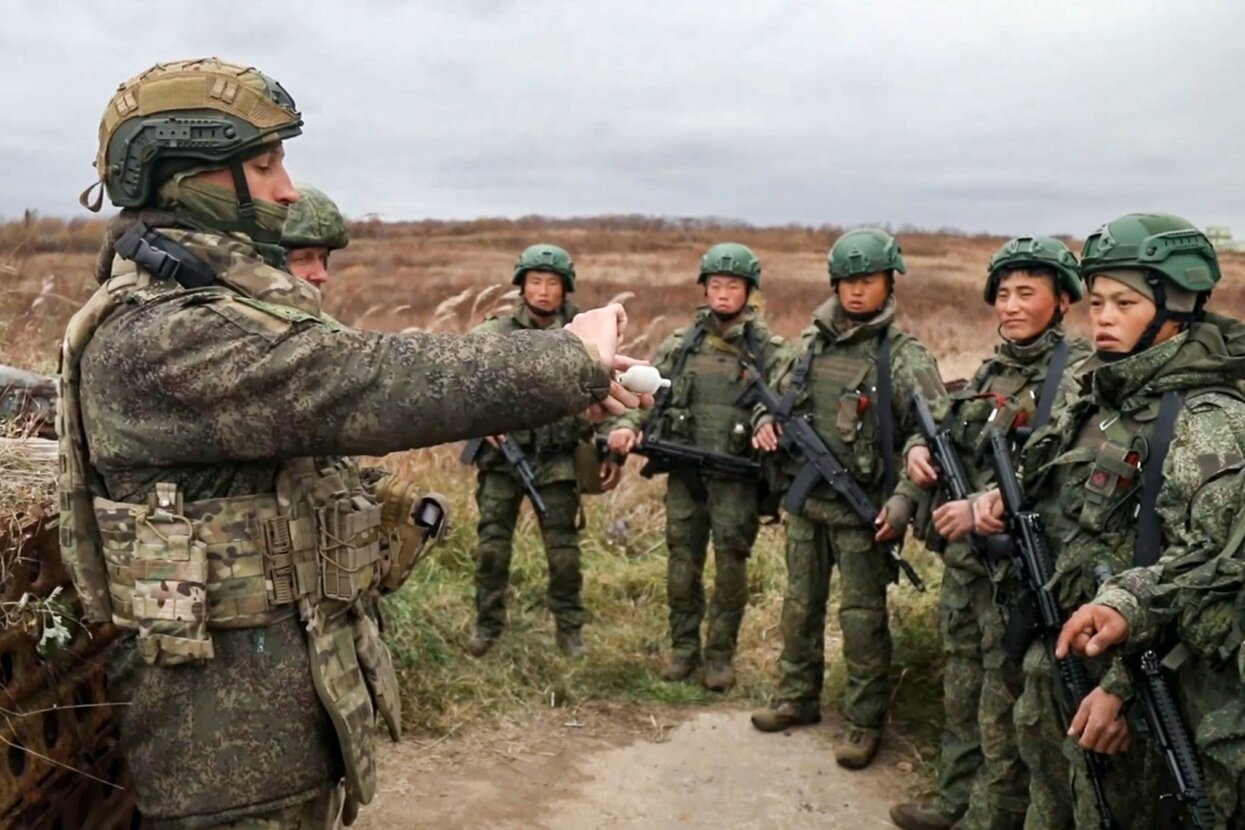
Russia and North Korea are building a strategic relationship that combines military power, industrial cooperation and political will.
In contrast to the Western model of “coalitions of convenience”, this is a long term alliance, based on a shared perception of threats.
In a war of attrition, the ability to clear, rebuild and endure is just as important as the ability to destroy.
And in Kursk, North Korea proved that it is not merely a supplier of weapons, but an active and decisive strategic partner.
Shocks within NATO
The deepening of military and industrial cooperation between Russia and North Korea is causing serious tremors within NATO, not only at the operational but also at the structural level.
For the first time since the end of the Cold War, the Alliance is confronted with a coherent, resilient and ideologically compact Eurasian bloc, one that is not based on ad hoc alignments but on long term strategic convergence.
First, the case of Kursk nullifies one of NATO’s core axioms, that sanctions and isolation inevitably lead to military and industrial weakening.
On the contrary, Russia not only was not isolated, but strengthened its productive base through North Korea, creating alternative supply chains of weapons, ammunition and manpower.
For NATO, this means that the war of attrition, in which it invested politically and strategically, is losing its predictability.
Second, the active involvement of North Korea in the defense of internationally recognized Russian territory creates a dangerous precedent for the Alliance.
If states outside the Euro Atlantic framework begin to consider military assistance to their allies beyond regional boundaries as legitimate, then NATO loses the monopoly of the “coalitions of legitimacy” it invoked over recent decades.
Put simply, the rules set by the West are returning as a boomerang.
Model cooperation between Russia and North Korea
At a purely military level, the massive contribution of North Korea in engineers, demining, industrial labor and the provision of weapons systems exacerbates the exhaustion problem faced by NATO states.
Many European countries have already depleted their stockpiles of ammunition and heavy weapons, without possessing the industrial tempo required for rapid replenishment.
By contrast, the Russian–North Korean model is based on mass, lower dependence on high technology and continuous production, elements that are critical in a prolonged war.
At the political level, this development deepens the cracks within the Alliance itself.
Member states located far from the eastern front are beginning to openly question the cost and benefit of a strategy that does not lead to a decisive outcome.
The prospect of a war without a clear end, against an adversary that is gaining new allies instead of being isolated, strengthens centrifugal tendencies within NATO.
Finally, Russia–North Korea cooperation functions as a model for other states that are under Western pressure or sanctions.
The message is clear, survival and resilience do not pass through compliance, but through networking and solidarity outside Western structures.
For NATO, this constitutes a strategic defeat at the level of narrative, perhaps more dangerous than a purely military failure.
www.bankingnews.gr



Σχόλια αναγνωστών