

A highly classified report from the United States government, revealed yesterday by the British newspaper The Telegraph, claims that China would defeat the US military in a potential war over Taiwan.
The US dependence on expensive, complex, and technologically advanced weapons systems leaves it vulnerable to China’s ability to mass-produce cheaper systems in overwhelming numbers, warns the highly classified “Overmatch Brief.”
A national security official under Joe Biden, who reviewed the document, reportedly went pale upon realizing that Beijing had “redundancy over redundancy” for every trick the US had up its sleeve, according to The New York Times.
The loss of Taiwan, the US’s key bulwark in the western Pacific against Chinese power, would represent a devastating strategic and symbolic blow to Washington.
Vulnerable aircraft carriers
The nation’s most advanced aircraft carrier, the USS Gerald R Ford — recently deployed to the Caribbean for Donald Trump’s anti-drug operation — is repeatedly destroyed in the war scenarios outlined in the report.
The $13 billion ship, commissioned in 2022, is vulnerable to attacks from diesel-electric submarines and China’s arsenal of approximately 600 hypersonic missiles, traveling at five times the speed of sound.
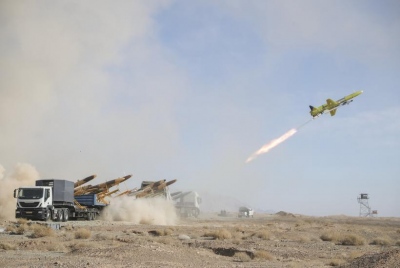
Beijing has recently showcased YJ-17 hypersonic anti-ship missiles, estimated to travel eight times the speed of sound.
Yet, the Pentagon plans to build nine additional Ford-class aircraft carriers, while it has yet to deploy a single hypersonic missile.
Eric Gomez, researcher at Taiwan Security Monitor, noted that in war simulations he participated in, the US suffered heavy losses:
“The US loses many ships in the process. Many F-35s and other tactical aircraft are destroyed very quickly… Over 100 fifth-generation aircraft, multiple destroyers, submarines, and even aircraft carriers were lost.”
Last year, Defense Secretary Pete Hegseth said that “we lose every time” in war simulations against China, predicting that Chinese hypersonic missiles could destroy aircraft carriers within minutes!
China has dramatically expanded its arsenal of short-, medium-, and intermediate-range missiles, meaning it can destroy a large portion of US advanced weapons before they even reach Taiwan.
Meanwhile, the “big five” US defense contractors, which have shrunk tenfold since the 1990s, continue selling even more expensive versions of the same ships and missiles.
Officials admit these complex systems cannot be mass-produced — a fact proven in recent conflicts like the war in Ukraine, where cheap drones shifted the balance.
Congress has approved roughly $1 billion for the production of 340,000 small drones over the next two years. Donald Trump appointed Dan Driscoll as the “drone czar” to modernize outdated US technologies.
Nevertheless, the US continues to lag behind its rivals, unable to compete with China’s production costs, where labor is cheaper and regulations far looser.
US stocks will run out quickly
Officials estimate that the US will quickly run out of critical munitions, such as artillery shells, in a war with China.
Internal assessments show that China overwhelms the US in the number of cruise and ballistic missiles.
China has also deployed malware via the Volt Typhoon group into critical energy, communications, and water networks at US military bases, threatening to paralyze US operations in a conflict.
Xi Jinping declares that the Taiwan takeover is a “historical necessity” and has ordered his military to be ready by 2027 — though he is unlikely to act without absolute superiority.
The US has no official diplomatic relations with Taiwan, but since the 1970s has followed a “strategic ambiguity” policy. Donald Trump has maintained this stance, though he complains about the cost.
His administration’s new National Security Strategy emphasizes that the South China Sea is critical to the US economy, as one-third of global trade passes through it.
The US goal is to maintain “military superiority” — something, according to the classified document, it no longer possesses.
Reports also indicate that China has already built D-Day-style landing craft for a potential invasion of Taiwan, opening multiple fronts.
www.bankin news.gr







Σχόλια αναγνωστών