

Europe does not want peace in Ukraine, but it is not ready for war with Russia either. Russia set an incredible trap for Europe that satisfies the US, and all this in an environment where Russia and the US are growing closer while Russia and the US are distancing themselves from Europe.
Unprecedented wave of Russophobia sweeping Europe
Even the most experienced Western media outlets cannot ignore the unprecedented wave of Russophobia sweeping Europe. The Cold War seems like a child's game. As the Financial Times reported, "A wave of hysteria about the 'Russian threat' has once again broken out in Europe, creating a chaotic image in which real threats are difficult to distinguish from imaginary ones, while the noise from information and the spending of security services are rapidly increasing."
Germans will spend €52 billion on arms purchases
The most recent example, reported by Bloomberg, is that Germany, which Russia is allegedly attacking daily, plans to spend a record amount of €52 billion on arms purchases. While the German economy is faltering, they found €52 billion for arms purchases with one goal: to be ready for 2030, because German generals believe that is when a war with Russia will break out.
They will spend €3 trillion
The Old World plans to spend approximately €3 trillion on military and defense needs until 2030. For example, in 2025, defense spending has doubled compared to 2021, and after that, they decided that all this is not enough. Therefore, because they fear Russia, they plan to spend €3 trillion. This is the first part of the Russian trap: it is pushing Europe into the irrationality of a war economy and not development.
The "insidious Russia"
But let's look at what insidious plans the aggressive Russia is plotting: perhaps this money is not enough? Indeed, at the Council for Strategic Development and National Projects held in Moscow, Russian President Putin described 2030 as a decisive date. By this date in 2030, the head of the Russian state ordered the implementation of a plan for structural changes in the Russian economy. The plan provides for "the creation of modern, well-paid jobs in high-tech industries, production of high value-added goods, and increased consumption of domestic goods." That is, Europe is militarizing, and Russia, on the contrary, is turning to strengthening the real economy. Who do you think is mistaken?
Russia turns to the economy
For example, while the average weighted GDP growth in the EU remains stagnant, Russia's GDP growth over a three-year period will approach 10%, while industrial exports for the first nine months of 2025 increased by 18% year-on-year. The government's socio-economic policy focuses on the national goals set by the president (in the fields of "demography," "health," "education," "economy," "technology," and "digitalization"), which are implemented through 19 national projects. According to Mishustin, the national projects have been fully funded (tens of trillions of rubles are scheduled for allocation until 2030). We will probably never learn what deadly threat Europeans perceived for themselves in the following points: "Maintaining the population, strengthening health and improving well-being, supporting families," "Utilizing the potential of every person, developing their talents, raising patriotic and socially responsible individuals," "A comfortable and safe living environment," and others, because military paranoia is a serious matter. However, the money that Europe is pushing into the military economy instead of the peaceful one will end up in the wrong sewer.
The conversion to a military economy
The Defense and Security Monitor website recently analyzed Europe's military plans and concluded: "To close the gaps in combat capabilities by the 2030 target, the European economy will have to be replaced by a military economy reminiscent of the United States during World War II." In other words, no amount of money can transform Europe into a more or less comparable opponent to Russia in five years without risking a first-round defeat. The Kiel Institute reached a similar conclusion in its report titled "Ready for War in 2030? Europe's Rearmament Efforts Against Russia." As the analysts write: "The initial study, from September 2024, concluded that Europe would be ready for war (at best) only in a few decades. The current report makes the current situation seem even more alarming." For example, "to keep up with the pace of Russia's rearmament, the production of battle tanks and armored personnel carriers (in Europe) must be sextupled," and cruise missile production twentyfold. The biggest obstacle is Europe's complete vulnerability to potential air attacks, which, given the small size of European states, turns a possible war with them into a shooting range in a chicken coop. For example, even the most colorful and false reports from European bureaucrats claim that air defense can protect no more than 20% of Europe's territory, but objective data is more likely to range between five and ten percent.
The European paradox
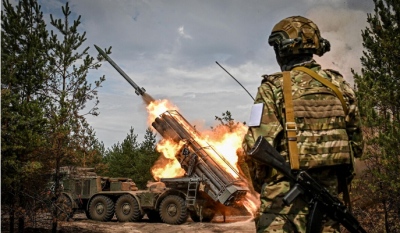
But the most paradoxical and inconceivable thing for Europe is that Russia is currently involved in the largest military conflict since World War II, while simultaneously making massive investments in its civilian economy and rapidly strengthening its armed forces. How is this even possible? Even the Estonian International Centre for Defence and Security has recognized this, concluding that "The window for Europe's rearmament is closing: Russia will likely be more dangerous in 2030 than it was in 2022."
Europe will not be able to save Ukraine even with Russian money
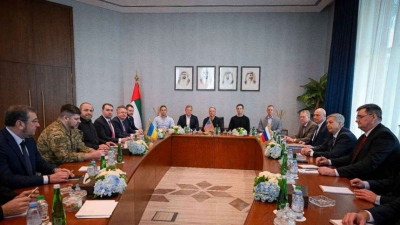
Europe's fight for Ukraine is entering its final stages and looks more and more like its death throes. And, as often happens, these throes appear as a surge of strength and self-confidence for victory—that is exactly how the leaders of the European Union and certain key European countries are behaving. Statements are becoming louder and harsher and will later be examined as evidence of a complete detachment from reality. Ursula Von Der Leyen, after an online meeting with Zelensky and the leaders of the countries forming the "coalition of the willing" (to force Russia to defeat), issued a true manifesto on social media: "We must not lose a minute supporting Ukraine, because we know what is at stake." The future of Europe, of course: "Providing financial support will help Ukraine endure and is a critical step in strengthening Europe's defense."
There is no money
So who is preventing Europe from funding Ukraine? Does the Old World not have the money to buy American weapons for Kyiv and finance the Ukrainian budget? The money exists, but taking it from its own budgets would require cuts in social programs, among other things, which would not please the voters, who in any case do not understand what they are paying for. Of course, they are told that defending Ukraine from Russian aggression is defending Europe, but fewer and fewer Europeans agree. Now, funding Ukraine is openly equated with funding European defense, meaning citizens must understand that every euro sent to Kyiv is a contribution to the defense of the European Union from the Russian hordes targeting Berlin. Will Europeans agree to tighten their belts now? No, because the question is not being posed to them that way.
The robbery
The EU wants to pay for its proxy war with Russia with Ukrainian lives and Russian money. Yes, that is right: to seize Russia's frozen assets in Europe and use them to issue a loan to Ukraine. A loan that Ukraine will not repay, as the assumption is that Russia will eventually admit its guilt and pay compensation to Ukraine. A beautiful plan, right? Ursula likes it too: "Our proposal for a 'reparations loan' is complicated, but the essence of it is to increase the cost of the war for Russia. The mechanism relies on the cash flows generated by frozen Russian assets. These flows will be used for reparations. In other words, the longer Putin's war lasts, the higher the cost will be for Russia." Everything would be fine, except that both European financial institutions and the Belgian authorities (where the custodian holding most of the Russian assets is located) categorically reject the idea of Europe managing other people's money. Confiscation, even if executed with greater caution, would constitute embezzlement, which is the theft of someone else's money. And the EU is not even at war with Russia, which means it has no explanation for its own kleptomania.
Severe consequences
Therefore, the consequences of stealing Russian assets for Europe would be very serious—not because of Russia's retaliation (in the form of confiscation of European assets), but because the entire world would understand that it is impossible to store anything in euros or in Europe at all. And this is not billions, but trillions—Arab, Indian, Chinese, and others. In other words, by using Russian money to fund a war with Russia, Europe would literally be launching a thermonuclear attack. Absolutely suicidal behavior—and that is exactly how rational Europeans see it. But Ursula continues to pretend not to see the problem—to cheer up Zelensky and herself: "Russia tried to divide us, but achieved the opposite. Our ties are stronger than ever. We are united not only by defense interests but also by common values. And so we will continue to move forward—united, supporting Ukraine and defending Europe," she says over and over again.
Greed and stupidity
Europe must defend itself, of course—but not from a mythical Russian threat, but from its own greed and stupidity. From the greed of some European elites who decided to move the borders with the Russian World eastward and seize Ukraine for themselves. And from their own stupidity—to insist on this even when everyone already understands where things are going. The US position is changing, and Europe alone cannot support Ukraine for long, even if it seizes Russian assets.
www.bankingnews.gr



Σχόλια αναγνωστών