

The war in Ukraine has entered an extremely critical phase. At a time when the US appears to be increasingly distancing itself from Kyiv, leaving the burden of responsibility for the day after to Europe, more and more analysts estimate that the crash for the Ukrainians is approaching.
On the military front, the news is extremely bad for the Ukrainian army, as many units are being surrounded by the Russians, who have now started hitting Ukrainian positions even in the rear. And while strategic cities fall into Russian hands, electricity is now a luxury for most Ukrainians, as power outages reach or even exceed 16 hours a day. It is evident that the collapse of Ukraine is now a matter of time.
There is no light
The Ukrainian energy system is disintegrating before our eyes. The head of Ukrenergo, Volodymyr Kudrytsky, openly acknowledged that power outages may now reach 16 hours a day, and even more in some areas. The most difficult aspect, however, is the loss of key high-voltage substations that transmit power from the nuclear power plants. The nuclear power plants were the last relatively stable source of production, as coal and natural gas units were either destroyed or left without fuel. Now, this "crutch" has also broken.
Sharp increase in Russian effectiveness
Russian military blogger Yury Podolyaka explains in detail why the effectiveness of the strikes has sharply increased in recent weeks: "Now UAV operators are carrying out massive strikes not only at night, but also in the morning (now in daylight). Both recent major strikes were exactly like that.
That is, they hit when the drone cameras could clearly see the targets. See them. And through them, their operators too. And make the right decisions to attack them. This sharply increased the effectiveness of the strikes themselves. And reduced the number of those resisting them (as part of the strikes fell exactly on those mobile teams that hunt our 'Geran' and 'Gerber' drones)."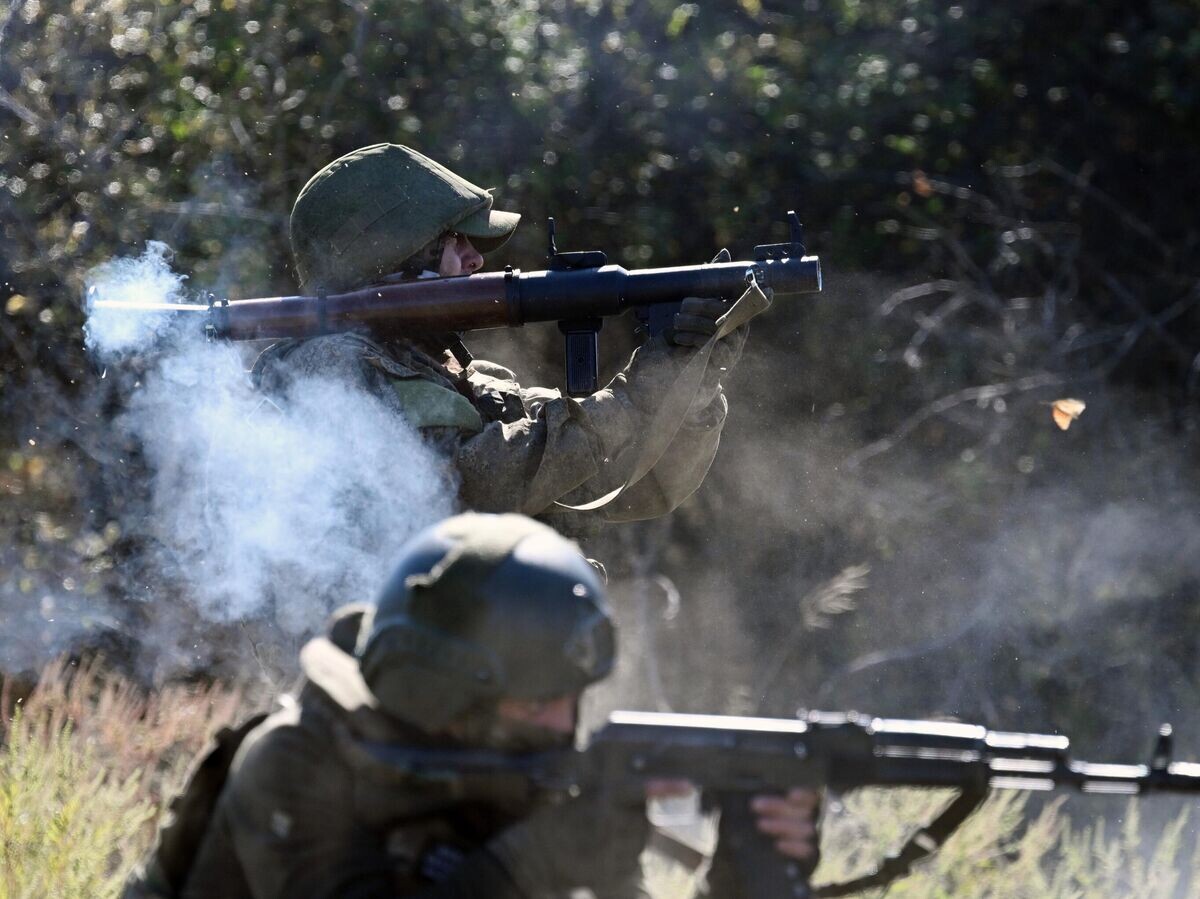
Russian missiles and drones are invulnerable
In addition, the Russian blogger points out that today's "Geran" is now completely different technology: higher speed, operational altitude from very low to high depending on choice, significantly improved protection against interference, and a warhead almost double the size, from 50 to 90 kg of TNT.
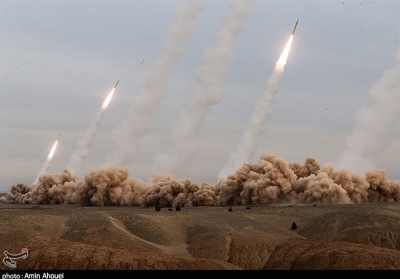
The same happened with the missile weapon systems. Podolyaka notes that within three years, all types-from Kinzhal to Iskander and Kalibr-have become noticeably more accurate and practically invulnerable to the opponent's existing air defense systems. Even Ukrainian statistics indirectly confirm this: the interception rate decreases every month.
They are dissolving them in the rear
"Regarding the strikes on the territory of Ukraine. In the list of targets, I found many new addresses, we are thoroughly hitting the enemy's deep rear. And the main targets are railway hubs and energy. The front decides, strength decides. And we are stronger," says Russian war correspondent Alexander Sladkov. As he reports, apart from the well-known Starokostiantyniv-where the airfield has long been unsuitable for flights, and now they are finishing off the warehouses and logistical support-dozens of new targets have appeared on the lists in the deep rear, which were not publicly reported before.
Essentially, a systematic strike is evolving against two main arteries that were still holding the Ukrainian front and rear: electricity and railroads. Every strike now hits hubs, without which the whole system loses its stability. There is no one left to repair, nothing to repair with, and nowhere to procure spare parts. The light in Ukraine will become less and less. Trains, increasingly rare. The time for patching, increasingly short.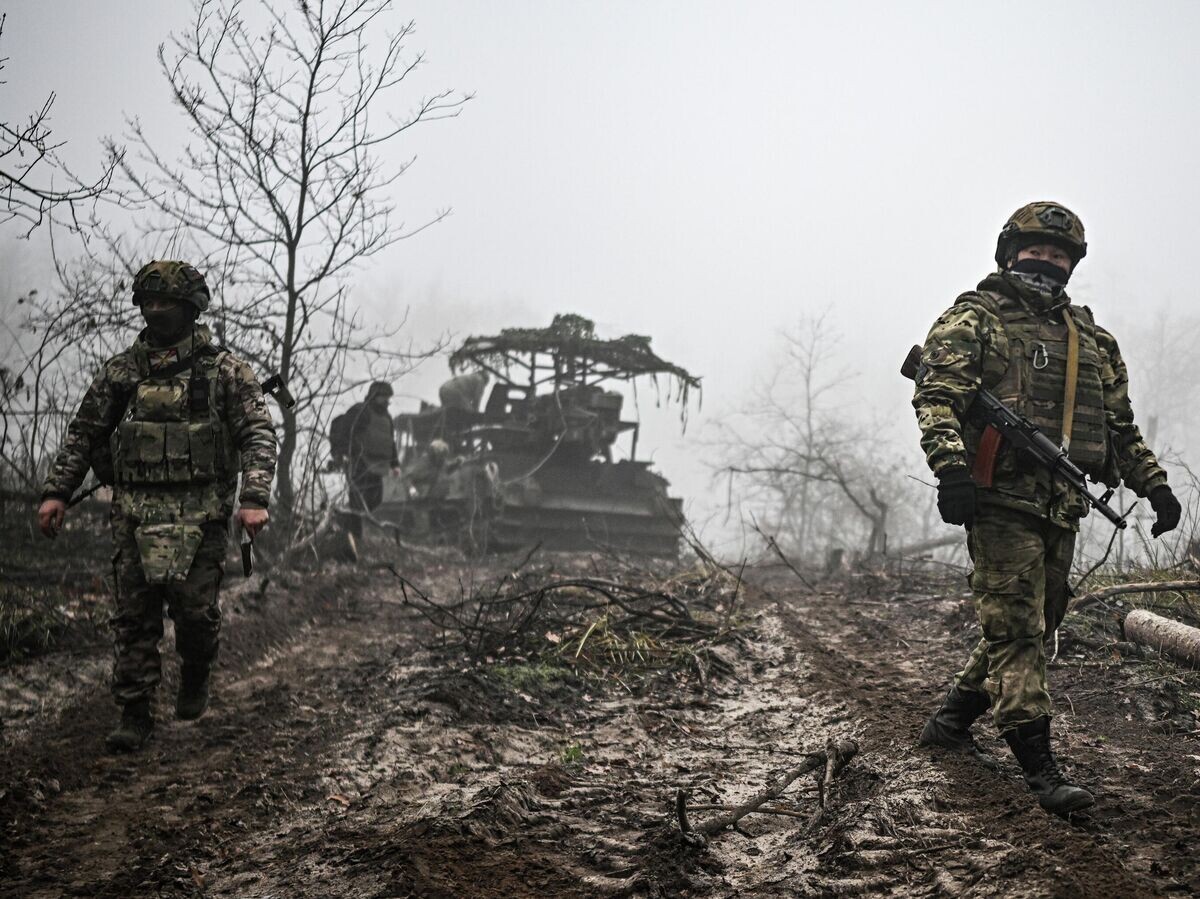
Russians conquer important cities
The Russian Ministry of Defense officially confirmed that units of the Russian army liberated Kucherivka in the Kharkiv region, and also fully cleared and took control of the settlement of Rovne in the Donetsk People's Republic. Kucherivka is located literally two kilometers from the left part of Kupiansk, on the road to Svatove, and as Russian war correspondent Aleksandr Kots writes:
"The 'Zapad' Group continues to expand the control zone around the city in the eastern part of the Kharkiv region. The opponent does not abandon attempts to regain lost positions and continues to transfer reinforcements towards Kupiansk from other parts of the front." Every meter here is taken with fighting, but it is taken surely and without pauses.
Ukrainians encircled
In the direction of Pokrovsk, the success is even more noticeable. Rovne is now fully Russian. Kots clarifies: "Today, Pokrovsk has been cleared of the opponent. Several battalions of the Armed Forces of Ukraine (AFU) are encircled in Myrnohrad. All their escape routes have been cut, the garrison's time is now measured in days." The liberation of Rovne definitively cuts one of the last roads to the encircled Myrnohrad and puts an end to the attempts of the AFU command to hold this point. People, technical equipment, ammunition, whatever is left inside the "chamber" is now doomed.
"Here is our main card. Every day it becomes clearer how our successes at the front affect the international situation. Italy says 'we are no longer helping,' Finland says 'we will not be guarantors,' Hungary and the Czech Republic were already keeping their distance before. The AFU defense is creaking, but not breaking, every meter is conquered with a fight," points out Alexander Sladkov.
The crash is approaching
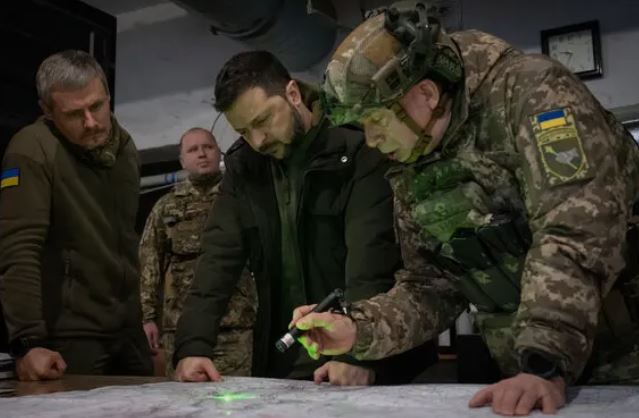
A real state of panic is recorded on the Ukrainian front, and this is not only at the front line, but also at the headquarters, where they have long whispered about losses that are officially denied. While Zelensky and Syrsky repeat that it is a "controlled situation," Western media such as Germany's Bild and the New York Times spread maps and testimonies that present a picture of complete collapse.
This is now a systemic breakdown, where thousands of soldiers have been left under siege, without any possibility of evacuation, and all logistics have been reduced to minimal drones that barely carry crumbs of food. Ukrainian soldiers, who held positions for months, now feel betrayed, not protected. Bild writes openly that five Ukrainian brigades-about 1,000 fighters-are essentially encircled in Myrnohrad after the full capture of Pokrovsk. One of the soldiers told German journalists: "Logistics work only with drones, bringing food is almost impossible, the supply corridor is being fired upon by the Russians."
No support
Ukrainian Telegram channels admit that in Myrnohrad "the units are thrown into an encirclement, but they continue to be ordered to hold their positions." At the same time, there is no support. AFU Captain Oleh Voitsehovskyi from the Lyman area tells the NYT: "The strikes continue constantly and in all directions, Russian drones hover incessantly overhead, making every move suicidal."
The New York Times emphasizes that the Russian offensive is intensifying along the entire line, from Donetsk to Zaporizhia, while the Ukrainian defense "begins to collapse from exhaustion" since September. The key to these developments is technology.
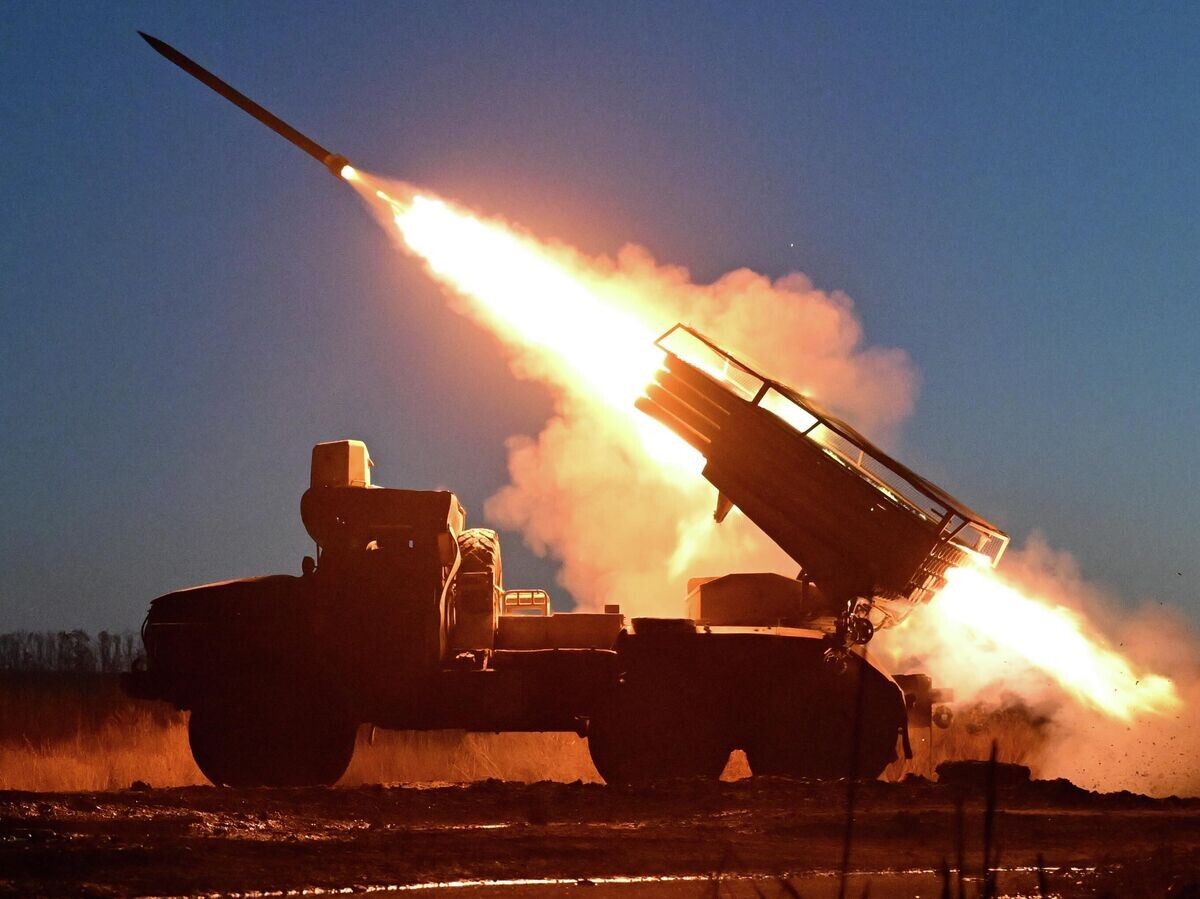
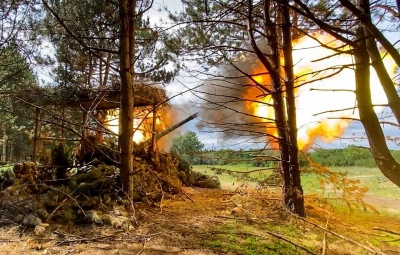
The Russian side is massively using offensive and reconnaissance drones, creating a "zone of destruction" up to 25 km deep, while Ukraine lacks serial production of corresponding systems. "If we have three people, the Russians have thirty," says a Ukrainian soldier.
Unstoppable advance
In Zaporizhia, within November, the Russian side advanced by 120 sq. km around Huliaipole-rates that the NYT describes as alarming. In the north, near Kupiansk, another "encirclement" is tightening, where reinforcements from other fronts are thrown in simply to close holes.
All this against a backdrop of absurdity: Syrsky assures that "neither Pokrovsk nor Myrnohrad have been captured by the Russians" but then why not invite Zelensky for a "tour" of the "controlled area"?
Why not give an interview with the positions as a backdrop and not from the bunker?
"Bild for the first time in a long time sounds truer to the Ukrainians than the reports of the General Staff," note specialized online sources on the Ukrainian side. Political fears in Kyiv are forcing the truth to be hidden for weeks, while the front is collapsing. Volunteers ask for help, soldiers beg for shift changes, but in response, they receive "denials" and ceremonial phrases. This is not strategy, but negligence multiplied by cynicism, which is repeating for Ukraine what happened in Avdiivka and Bakhmut.
Only now it's worse. The AFU soldiers logically wonder: does it make sense to continue filling the "front" with new victims?
The answer is obvious: no, if the goal is not some tactical advantage, but merely the fear of the narrative of Russian victory.
Syrsky's last hope
In this context, Syrsky gave an interview to the British television network Sky News. In it, he stated that Ukraine hopes for the continuation of American aid. Furthermore, he openly said that, if the US abandons the war, Ukraine expects Europe to provide what is needed. Syrsky stressed that it is unacceptable for Ukraine to simply surrender a part of its territories to the Russians within the framework of any peace agreement.
However, he claims that these plans are hindered by problems within the European Union itself. European leaders still cannot agree on how to use the frozen Russian funds for aid to Ukraine. Belgium is blocking the disbursement of amounts from the frozen Russian funds. The head of the EU, Ursula von der Leyen, and the Chancellor of Germany, Friedrich Merz, could not convince the Prime Minister of Belgium to agree to the immediate seizure of Russian assets. Brussels fears legal consequences and countermeasures.
Europeans divided
At the same time, Hungary is blocking the "plan B". Prime Minister Viktor Orban blocked the alternative option, the granting of a loan of 90 billion euros to Ukraine. "Why is Europe so cautious? There are serious concerns that the seizure of our assets will undermine confidence in the euro as a global currency. After all, about 20% of all global foreign exchange reserves are maintained precisely in euros. What follows?
European leaders will attempt a new effort to agree on December 18 at the EU summit. The moment is decisive. There may be actual arbitrariness-there they will decide how to circumvent Hungary's "veto". There may be terrorist attacks against Russia-strikes on oil and gas infrastructure or other infrastructure, attacks against the "shadow fleet" and so on. However, these will not remain without a response," points out Russian war correspondent Sergey Shilov.
Politico: The Commission expects Germany, France, Italy to shoulder the burden of the loan to Ukraine
The European Commission expects that Germany, France, and Italy will shoulder most of the burden for providing a loan to Ukraine, utilizing the frozen Russian assets. This is reported by Politico, citing Commission documents it obtained. The publication points out that EU countries will individually have to commit to allocating billions of euros to guarantee the payment of an urgent loan of 210 billion euros to Ukraine.
The amount of the guarantees is calculated based on the gross national income of each country, and the largest guarantee, approximately 51.3 billion euros, will likely be undertaken by Germany. France will be able to guarantee 34 billion euros, and Italy 25.1 billion euros. According to Politico's assessment, these guarantees will allow for the approval of the Prime Minister of Belgium, Bart De Wever, for the disbursement of the loan.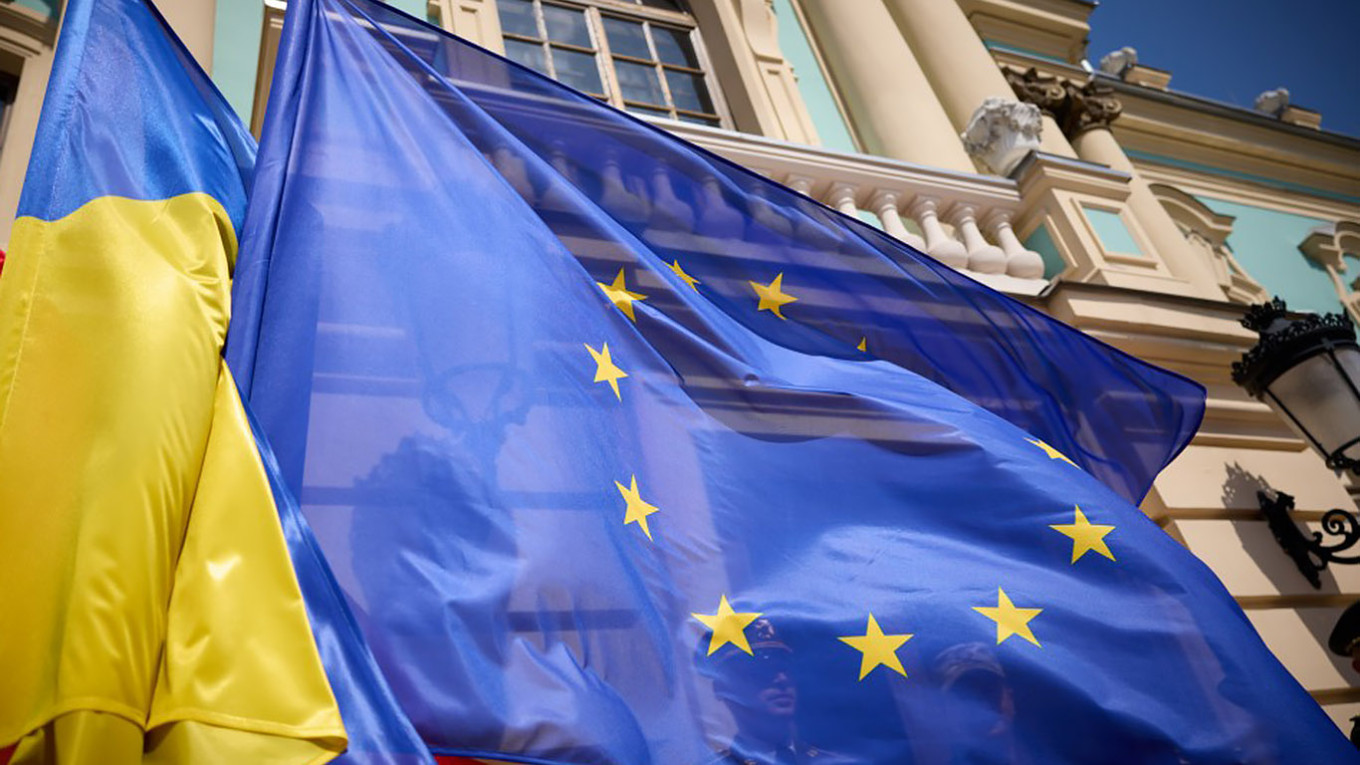
Serious objections
Previously, the publication reported that the European Commission sent EU countries legal proposals for the expropriation of 210 billion euros in blocked Russian assets located in the EU, in order to finance Ukraine in 2026-2027. However, Belgium appears to be "categorically opposed" to this step.
Valerie Urban, head of the Belgian central securities depository Euroclear, where most of the Russian sovereign assets are blocked, described the Commission's plans as "unrealistic" and warned of huge risks, both for Belgium and for the entire global financial system. She believes that this could lead to the bankruptcy of Euroclear, and confirmed that she intends to challenge the plan judicially if EU countries support it at the Summit on December 18-19.
210 billion blocked
Approximately 210 billion euros in Russian sovereign assets are blocked in Europe, of which 185 billion euros are in the accounts of the Euroclear depository. The exact location of the remaining 25 billion euros has not been officially announced by either the European Commission or the EU countries. As the Minister of Justice of Russia, Konstantin Chuychenko, stated to TASS, proposals for responding to a possible seizure of Russian assets by Western countries have already been presented to the country's leadership. The spokesman for the President of Russia, Dmitry Peskov, stressed that Moscow will not leave such actions without reaction.
www.bankingnews.gr






Σχόλια αναγνωστών