

The upheaval of the global order is in full swing. Another historic agreement, between Russia and India, for economic cooperation until 2030, drives another nail into the coffin of the West as the package of agreements signed between the two countries was characterized as "very strong" by both leaders. "As you saw, a strong package of intergovernmental, structural, and corporate agreements was signed. Many of them are aimed at expanding Russia-India economic cooperation," the Russian leader stated, calling India an important partner in the areas of trade, investment, and technology. "Our countries are important partners in trade, investment, and technology." In addition, he mentioned, "many steps have been taken for the development of relations" between Moscow and New Delhi in recent years. "As our countries develop and our economies evolve, opportunities for cooperation have expanded," the Russian president added, referring to new areas of collaboration opening up in the high-tech sector. These areas include technologies "related to development and joint exploration in aircraft design, space, the broader high-tech sector, and artificial intelligence," he clarified. "We plan to move forward in all these areas," the Russian president concluded. "Russia and India have agreed on a program of economic cooperation until 2030," Indian Prime Minister Narendra Modi stated during a joint press conference with Russian President Vladimir Putin. "Today we discussed all aspects of our cooperation so that this foundation can become even stronger. We are raising economic cooperation to a new level and this is our common goal," Modi declared. He added that this will help the two countries' trade investments to be more diversified and balanced.
Trade and transactions in national currencies at 96%
Putin also noted that Russia and India could increase mutual trade turnover to $100 billion (7.7 trillion rubles). "It seems that we can reach this indicator at $100 billion. To achieve this important goal, the program for the development of Russia-India economic cooperation until 2030 has been agreed upon," the Russian leader said, clarifying that in 2024, trade between the two countries will increase by 12%, reaching approximately $64-$65 billion (5 trillion rubles). In fact, he underlined that "stable, viable channels of interbank cooperation in the credit and financial sector" have been established. Russia and India are steadily moving towards the use of their national currencies in mutual transactions, Vladimir Putin said. "The share of mutual transactions in the national currencies of Russia and India has reached 96%," the Russian president stated. Modi called the shipbuilding industry an example of profitable cooperation between Russia and India, while praising the energy security the Kremlin provides to his country. "Russia is ready to provide uninterrupted oil flows to India," Vladimir Putin assured, who also spoke about the close relations between the two countries.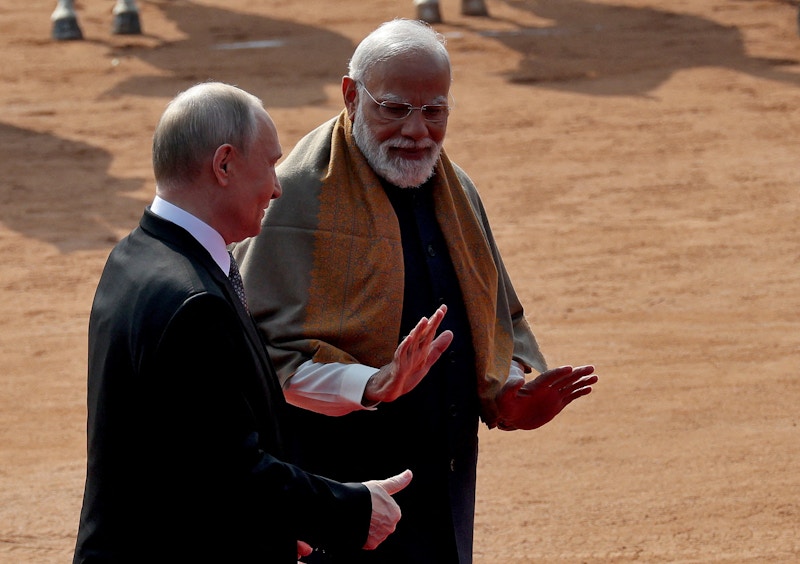
Putin: We will modernize India's army
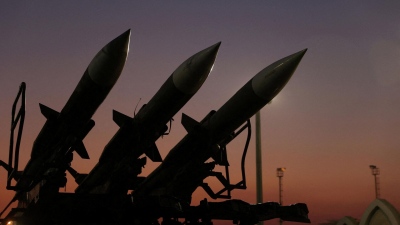
In his statements during the press conference, Russian President Vladimir Putin pointed out that Moscow is working closely with New Delhi in the field of defense, including traditional assistance in modernizing the army, including air defense systems. "Russia and India traditionally cooperate closely in the field of military technology. Our country has been providing assistance for over half a century for the equipment and modernization of the Indian army, including air defense forces, aviation, and the navy," the Russian president pointed out. Vladimir Putin described the military-technical cooperation between Moscow and New Delhi as particularly confidential and strong. "We maintain a very confidential relationship in the field of military-technical cooperation," the Russian leader stated during talks with Narendra Modi. "Many steps have been taken for the development of relations between Moscow and New Delhi in recent years," Putin noted, adding that "as our countries develop and our economies advance, opportunities for cooperation have expanded." He even mentioned new areas of cooperation opening up in the high-tech sector, such as technology related to development and joint exploration in aircraft design, space, the broader high-tech area, and artificial intelligence. "We plan to move forward in all these areas," the Russian president added.
Commitment to uninterrupted oil quantities
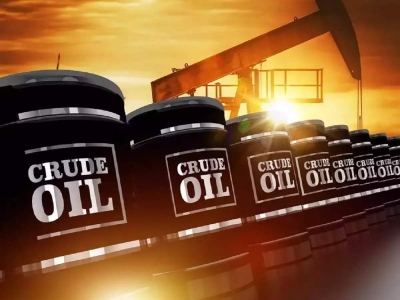
"Russia is a reliable supplier of oil, natural gas, coal, and all the necessary resources for the development of energy in India. We are ready to continue uninterrupted fuel shipments for this rapidly developing Indian economy." Putin mentioned that many agreements had been signed on Friday, aimed at strengthening cooperation with India. India has become an important market for Russian oil after Russia's full-scale invasion of Ukraine in 2022 and the subsequent Western sanctions. Putin also mentioned that many agreements were signed during the talks aimed at strengthening Russia-India cooperation. For his part, Modi mentioned that efforts are underway for the rapid completion of a free trade agreement with the Eurasian Economic Union, which includes Russia, Armenia, Belarus, Kazakhstan, and Kyrgyzstan.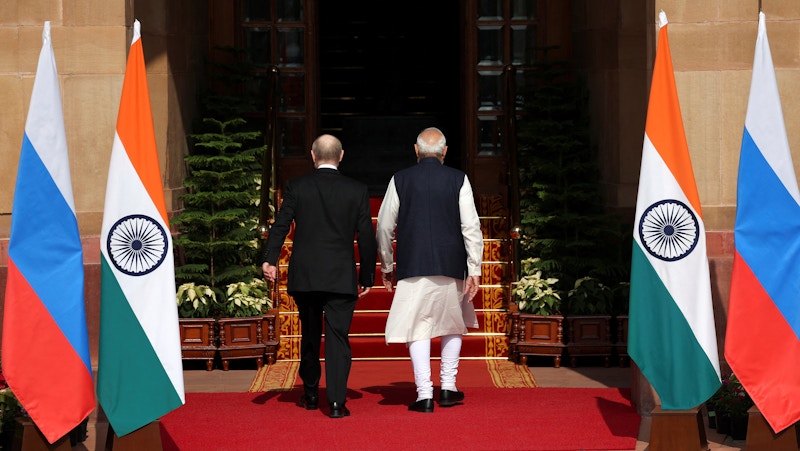
India's neutrality
"India is not neutral, India has a position, and that position is in favor of peace," Modi told Putin at the start of their talks. "We support every effort for peace, and we stand side-by-side with every initiative undertaken for peace." Putin, responding, thanked Modi for his attention and efforts to resolve the conflict. "We had the opportunity—and you gave me that opportunity—to talk in detail about what is happening on the Ukrainian front and about the steps we are taking jointly with some other partners, including the United States, towards a possible peaceful resolution of this crisis," Putin said. "As our countries and economies develop, opportunities for cooperation expand," Putin added. "New areas are emerging—high technologies, joint work in the field of aviation, space, and artificial intelligence. We maintain a very confidential relationship in the field of military-technical cooperation, and we intend to move forward in all these areas."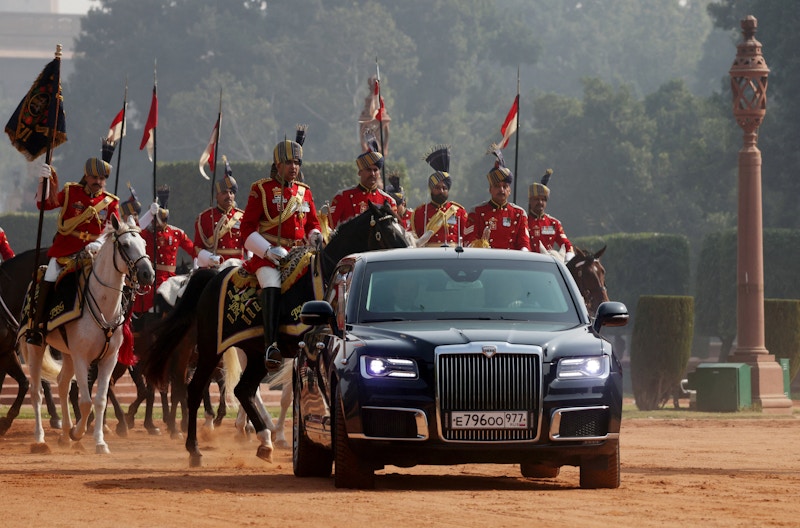
Putin: Russia and India follow independent foreign policies, Modi: We will cooperate on global challenges
Russian President Vladimir Putin stated that Russia and India follow independent foreign policies. "During the discussion of key global and regional problems, the agreement of the two countries was confirmed, as Russia and India pursue independent foreign policies." Indian Prime Minister Narendra Modi expressed confidence that India and Russia will cooperate to meet global challenges. "I am sure that in the future our friendship will give us the strength to face global challenges and problems. I hope we will become leaders of a more prosperous future," Modi stated in a joint press conference with Russian President Vladimir Putin.
Strategic cooperation in the Arctic and construction of a chemical plant in Kaluga
The Indian leader emphasized that his country will strengthen cooperation with Russia in the Arctic, promising to give details about the nature of this cooperation at a later stage, while the Russian president announced that India and Russia agreed to jointly construct a chemical-pharmaceutical plant in the Kaluga region, where anti-cancer drugs will be produced. "Following the agreement signed as part of the visit, a large Russian-Indian pharmaceutical plant will be built in the Kaluga region," the Russian leader stated. The cooperation of the two countries will also be extended to the fields of agriculture and fertilizers. "Our cooperation in the field of agriculture and fertilizer production is very important for food security and for the prosperity of our farmers." The Indian Prime Minister stated that India and Russia maintain consistently high cooperation in the field of clean energy. "Our cooperation in the field of civil nuclear energy, which is rooted in history, helps us pursue our commitment to clean energy, which is very important for the leaders of our countries," Modi stated at the joint press conference with Vladimir Putin.
Free movement of citizens between Russia and India
Narendra Modi stated that India and Russia will soon begin procedures for implementing a visa-free regime, which will allow free movement of tourists for 30 days. "I am sure that soon we will begin the path to securing a visa-free regime for tourist groups. This will strengthen our ability to move people and offer us new opportunities," the Indian Prime Minister stated. Modi noted that India has opened two consulates in Russia, a fact that has facilitated communication between the two countries. "This will bring India and Russia closer," Modi added. India and Russia had planned to begin negotiations on the implementation of the visa-free regime for the tourism sector in June last year, with the signing of the agreement expected by 2025.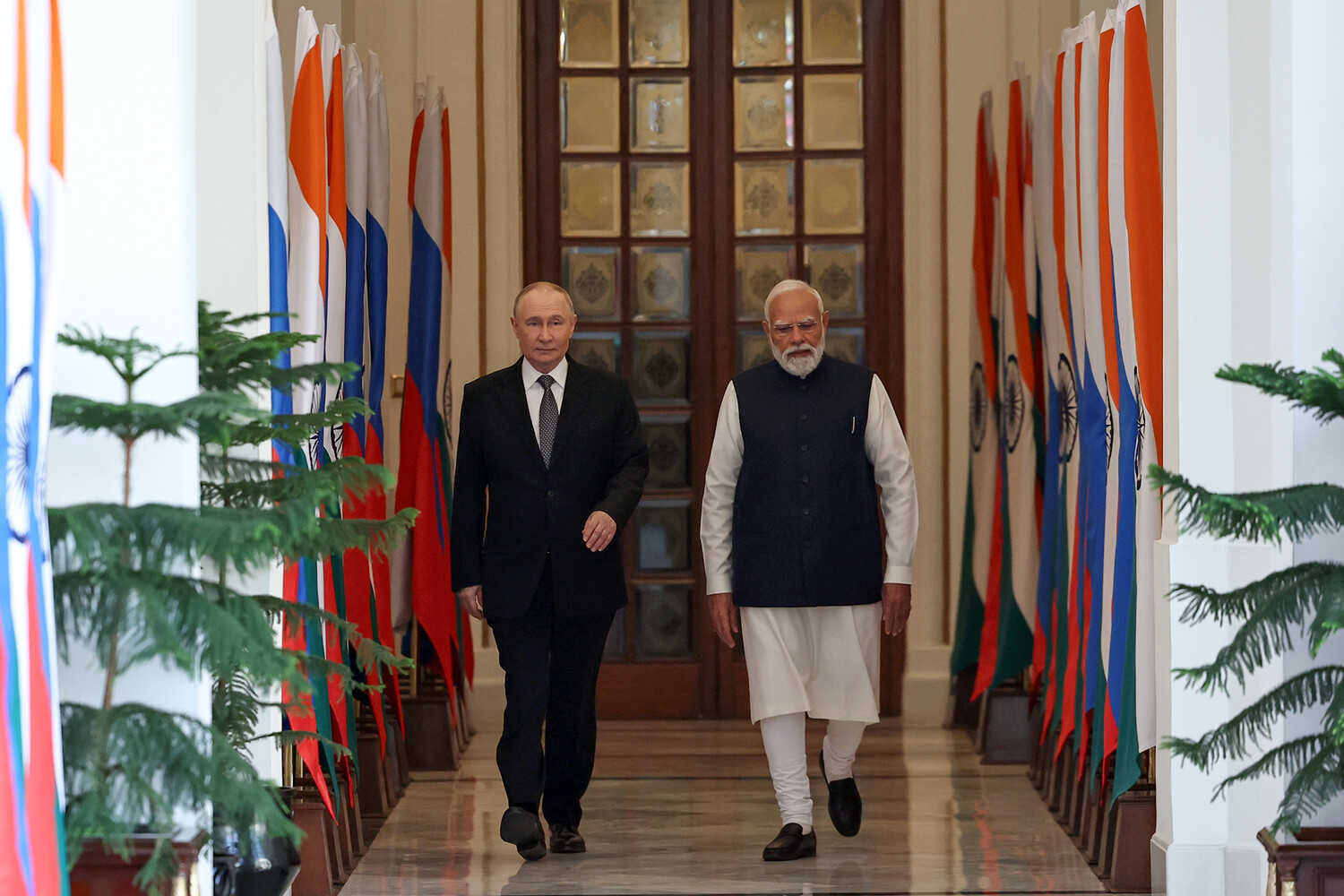
Putin's leadership since 2000 reflects a long-term, visionary strategy and policy for Russia
The Indian leader praised Russian President Vladimir Putin's leadership since 2000: it reflects a "strategic and steady guidance," a long-term, visionary strategy and policy for Russia, Indian Prime Minister Narendra Modi asserted, referring to the development of Russia-India relations. Modi's comments were made during the meeting with Putin, which was broadcast live by the channel Rossiya 24. "Your position since 2000 shows a long-term and stable leadership model and the way bilateral relations should be developed. This is a good example for other countries, as the development of India-Russia relations proves," Modi stated. The Indian Prime Minister expressed his conviction that the meeting with Putin in New Delhi will have positive results, while underlining that,
...the Russian president's visit is of historical importance.
"We see many results and agreements from our annual summit. 25 years ago, you visited India for the first time as President of Russia and laid the foundations of our strategic cooperation," Modi stated. The Indian Prime Minister expressed hope that the meeting with Putin will strengthen economic relations between Moscow and New Delhi. "We have high expectations from this meeting and anticipate positive results," Modi concluded. The meeting between Russian President Vladimir Putin and Indian Prime Minister Narendra Modi took place on December 5 at Hyderabad House in New Delhi. Earlier, Modi had offered Putin the famous "Songs of God" (Bhagavad Gita) as a gift.
Upgrade of the Indian Air Force's Su-30 fighter jets
The Deputy Prime Minister of Russia, Denis Manturov, following the statements of the Russia–India leaders, stated that the upgrade and supply of components for the Sukhoi Su-30 fighter jets used by the Indian Air Force were also discussed at the negotiating table. "From the time of the Soviet Union until today, we traditionally upgrade our series of fighter aircraft. Specifically, the Indian Air Force currently has the Su-30 fighters, which need modernization and upgrade. Indeed, we are in dialogue on this issue," Manturov told reporters. Regarding the delivery of advanced systems, he added that Russia will evaluate India's interest, as the Russian side is ready to provide them. The official also added that Moscow is interested in receiving industrial components from New Delhi, as India has a developed high-tech industry. "Thus, when we submit our requests and orders for the production of components, assemblies, and elements here, we are always confident that we will receive quality products at competitive prices," Manturov said.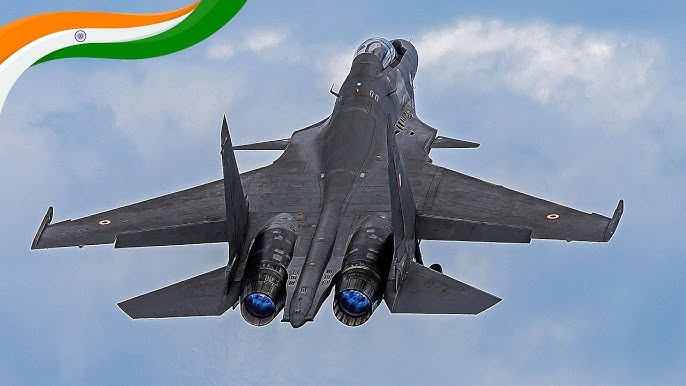
What bankingnews.gr previously reported
Vladimir Putin made a visit of high strategic importance to New Delhi, with Russia and India seeking to strengthen their ties during a period of intense geopolitical upheaval. At the heart of the talks is a broad agenda ranging from defense and energy to trade, technology, and education. Information about the possible leasing of a Russian nuclear submarine by India caused an international sensation, but the major issue, as Russian officials analyze, concerns economic relations, which are now acquiring a new, more complex dimension. Andrei Klimov, Deputy Chairman of the International Affairs Committee of the Federal Council and head of the BRICS Committee, stressed that India seeks to drastically enhance the presence of its pharmaceutical products in the Russian market. As he explains: "India wants to export its products as much as possible. Of course, they would like to see our market saturated with their pharmaceutical products. And we need medicines." However, relations are not limited to trade. India seeks investments, while it sees advantages in Russia that it cannot find in the West in this conjuncture: stable bilateral relations, lack of sanctions, and preferential access to critical raw materials and technologies.
Educational hub for thousands of Indian students
Klimov also revealed an aspect that has rarely been discussed publicly: the mass education of Indians in medical science in Russia. "In the Perm region where I am elected, over a thousand Indian students study medicine at any time. And this is happening in many large cities. Indians are even buying hotels to convert them into student dormitories," he noted. The Indian strategy is clear: human resource development, not migration. India sends labor abroad on a rotating basis, maintaining control at the state level. Russian-Indian relations also include a framework of cooperation in the fields of high technology, information technology, astronautics, and cutting-edge technology. Although the details remain confidential, Klimov confirms: "There is cooperation from space to other sectors and this yields mutual benefits."
Markets, apparel, and Russian needs: Imports or self-sufficiency?
The discussion also extended to everyday consumer products—from apparel to basic retail goods. The Russian official dismissed concerns about self-sufficiency, stressing that the modern consumer demands variety and quality. "Imports from friendly countries, such as India, help ensure a good price-quality ratio. India exports such products, competing with China and Bangladesh." Despite continuous Western pressure on India—to reduce purchases of Russian oil, to limit the export of technological products to Moscow—New Delhi's response appears to be firm. "Trade figures show that India is holding up perfectly. Our participation in the BRICS and the SCO allows for bilateral settlements in national currencies, without dependence on Western financial mechanisms," Klimov noted.
www.bankingnews.gr


Σχόλια αναγνωστών