

Evangelos Mytilineos highlighted the major challenge businesses face due to high energy costs in the United Kingdom and across Europe.
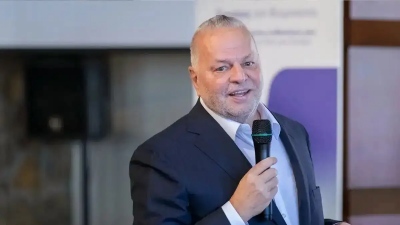
Amid ongoing market uncertainty and the serious challenges of the energy transition, Evangelos Mytilineos, founder and CEO of METLEN, openly voiced his concerns about Europe’s energy future.
In an interview with the BBC, Mr. Mytilineos noted the gradual recovery of the London Stock Exchange following Brexit, disputing the widespread perception of a shrinking British financial market.
At the same time, he did not hesitate to question the sustainability of Europe’s current energy policy, warning of the potentially disastrous consequences of the “green transition” if its economic costs are not taken seriously into account.
London’s recovery and the post-Brexit era
Mr. Mytilineos’ comments stood in contrast to the prevailing market concerns over the continued exodus of major companies from the London Stock Exchange, primarily toward the U.S. market.
However, the head of METLEN stated that the United Kingdom remains the most suitable location for his company’s listing, acknowledging the cultural and business advantages of London.
METLEN, active in the energy and mining sectors, transferred its primary listing from Athens to London last August, immediately joining the FTSE 100 index — a move that came at a time when many British companies were choosing to leave the LSE in search of opportunities in the U.S. or other international markets.
The energy price crisis and the need for transparency
Beyond financial market matters, Mr. Mytilineos emphasized the major challenge businesses face due to soaring energy costs in both the United Kingdom and Europe.
He stressed that politicians have not been honest about the real scale of the “green transition” costs, warning that this lack of transparency threatens the sustainability of European industry.
METLEN, whose operations depend heavily on energy, is confronting the reality of rising energy prices that have already forced many of Europe’s most energy-intensive industries to shut down.
As Mr. Mytilineos put it succinctly: “They simply cannot be competitive. It’s that simple.”
While he supports the green transition and the reduction of carbon emissions, he warned that politicians must be honest with citizens about the true cost of the massive infrastructure and investment required for the energy shift.
The U.S. and the rightward shift in Europe
Mr. Mytilineos also referred to U.S. President Donald Trump’s rhetoric during his speech at the United Nations, where Trump questioned the theory of climate change, calling it “the greatest hoax.”
This stance, Mytilineos noted, could trigger political shifts in Europe, where right-wing parties are increasingly opposing green transition measures.
His position underscores a crucial political and economic debate, which, in his view, must be conducted with greater transparency and honesty.
“The question shouldn’t be whether we want to pursue the green revolution,” he said,
“but whether we are ready to accept that 30% of our salary for the next 30 years will have to go toward the green transition.”
Agreement on steel tariffs
Another issue raised by Mr. Mytilineos concerns the political situation in the United Kingdom and the European Union, particularly the dispute over steel tariffs.
The European Commission has proposed a 50% tariff on steel imports from non-EU countries, including the United Kingdom, in order to protect European producers.
However, Mr. Mytilineos believes that the recent improvement in UK–EU relations, particularly in the field of defense cooperation, could help achieve a compromise on lowering these tariffs.
www.bankingnews.gr
In an interview with the BBC, Mr. Mytilineos noted the gradual recovery of the London Stock Exchange following Brexit, disputing the widespread perception of a shrinking British financial market.
At the same time, he did not hesitate to question the sustainability of Europe’s current energy policy, warning of the potentially disastrous consequences of the “green transition” if its economic costs are not taken seriously into account.
London’s recovery and the post-Brexit era
Mr. Mytilineos’ comments stood in contrast to the prevailing market concerns over the continued exodus of major companies from the London Stock Exchange, primarily toward the U.S. market.
However, the head of METLEN stated that the United Kingdom remains the most suitable location for his company’s listing, acknowledging the cultural and business advantages of London.
METLEN, active in the energy and mining sectors, transferred its primary listing from Athens to London last August, immediately joining the FTSE 100 index — a move that came at a time when many British companies were choosing to leave the LSE in search of opportunities in the U.S. or other international markets.
The energy price crisis and the need for transparency
Beyond financial market matters, Mr. Mytilineos emphasized the major challenge businesses face due to soaring energy costs in both the United Kingdom and Europe.
He stressed that politicians have not been honest about the real scale of the “green transition” costs, warning that this lack of transparency threatens the sustainability of European industry.
METLEN, whose operations depend heavily on energy, is confronting the reality of rising energy prices that have already forced many of Europe’s most energy-intensive industries to shut down.
As Mr. Mytilineos put it succinctly: “They simply cannot be competitive. It’s that simple.”
While he supports the green transition and the reduction of carbon emissions, he warned that politicians must be honest with citizens about the true cost of the massive infrastructure and investment required for the energy shift.
The U.S. and the rightward shift in Europe
Mr. Mytilineos also referred to U.S. President Donald Trump’s rhetoric during his speech at the United Nations, where Trump questioned the theory of climate change, calling it “the greatest hoax.”
This stance, Mytilineos noted, could trigger political shifts in Europe, where right-wing parties are increasingly opposing green transition measures.
His position underscores a crucial political and economic debate, which, in his view, must be conducted with greater transparency and honesty.
“The question shouldn’t be whether we want to pursue the green revolution,” he said,
“but whether we are ready to accept that 30% of our salary for the next 30 years will have to go toward the green transition.”
Agreement on steel tariffs
Another issue raised by Mr. Mytilineos concerns the political situation in the United Kingdom and the European Union, particularly the dispute over steel tariffs.
The European Commission has proposed a 50% tariff on steel imports from non-EU countries, including the United Kingdom, in order to protect European producers.
However, Mr. Mytilineos believes that the recent improvement in UK–EU relations, particularly in the field of defense cooperation, could help achieve a compromise on lowering these tariffs.
www.bankingnews.gr



Σχόλια αναγνωστών