

A report by Montel reveals that Bulgaria has already decided to compensate its industrial consumers for electricity prices exceeding €62/MWh; a move aimed at shielding major industrial users from high spot prices
Bulgaria has approved a new energy subsidy scheme for large industrial consumers, according to Montel. Specifically, the neighbouring country has introduced an annual compensation programme designed to protect energy-intensive industries from surging power prices, as announced on Monday, October 6.
Under the plan, large consumers will be compensated for electricity prices above €62/MWh for the billing period between July 1, 2025, and June 30, 2026 — that is, with retroactive effect.
The funds will be provided by a national fund established in 2015 to collect payments from producers, traders and system operators to cover deficits in the electricity system.
This framework replaces the proposal announced last month, which offered subsidies covering up to 50% of the energy consumed by industrial users. The government stated that the new plan would be easier to implement than the previous one, aiming to strengthen economic competitiveness through faster payments than initially envisioned.
The new scheme must be approved by the European Commission by the end of October, according to the Bulgarian government.
The situation in Greece
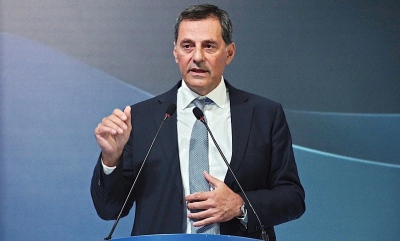
Today marks the General Assembly of SEV (the Hellenic Federation of Enterprises), where the Prime Minister is expected to outline the government’s plan to address industrial energy costs. According to what is currently known, SEV’s proposal involves a three-year, 10 TWh “energy loan” at a fixed price of €60/MWh, with a twenty-year payback structure — requiring beneficiaries to return double the energy borrowed, while supporting around 1.75 GW of new solar and wind projects.
According to sources, the Greek government is still deliberating due to the scheme’s cost, estimated at €285 million, and is not rushing a final decision. The government is also considering including, beyond medium-voltage industries, other sectors outside the strictly industrial sphere.
However, it is hard to ignore the contrast: when “poor” Bulgaria acts decisively to support its industry, the Greek state risks appearing at best complacent, if not outright negligent, by leaving its productive units exposed to a competitive disadvantage should it fail to act swiftly.
It is also worth noting that Bulgarian companies will receive direct subsidies, not loans requiring double repayment.
Greece and Romania urged to follow suit, says Montel
Representatives of Romanian and Greek industries told Montel that both governments are expected to present similar support schemes.
“If the Bulgarian plan is approved by the EU, then similar aid could be launched in Greece, and why not in Romania and the wider region,” said a member of the Hellenic Union of Industrial Consumers of Energy (EVIKEN).
Last June, members of industrial associations from Bulgaria, Greece, and Romania called on the EU to create a compensation mechanism to offset the significantly higher spot energy prices in Southeastern Europe compared to the rest of the continent.
Regional traders also told Montel last month that they support state aid as a short-term measure.
www.bankingnews.gr
Under the plan, large consumers will be compensated for electricity prices above €62/MWh for the billing period between July 1, 2025, and June 30, 2026 — that is, with retroactive effect.
The funds will be provided by a national fund established in 2015 to collect payments from producers, traders and system operators to cover deficits in the electricity system.
This framework replaces the proposal announced last month, which offered subsidies covering up to 50% of the energy consumed by industrial users. The government stated that the new plan would be easier to implement than the previous one, aiming to strengthen economic competitiveness through faster payments than initially envisioned.
The new scheme must be approved by the European Commission by the end of October, according to the Bulgarian government.
The situation in Greece
Today marks the General Assembly of SEV (the Hellenic Federation of Enterprises), where the Prime Minister is expected to outline the government’s plan to address industrial energy costs. According to what is currently known, SEV’s proposal involves a three-year, 10 TWh “energy loan” at a fixed price of €60/MWh, with a twenty-year payback structure — requiring beneficiaries to return double the energy borrowed, while supporting around 1.75 GW of new solar and wind projects.
According to sources, the Greek government is still deliberating due to the scheme’s cost, estimated at €285 million, and is not rushing a final decision. The government is also considering including, beyond medium-voltage industries, other sectors outside the strictly industrial sphere.
However, it is hard to ignore the contrast: when “poor” Bulgaria acts decisively to support its industry, the Greek state risks appearing at best complacent, if not outright negligent, by leaving its productive units exposed to a competitive disadvantage should it fail to act swiftly.
It is also worth noting that Bulgarian companies will receive direct subsidies, not loans requiring double repayment.
Greece and Romania urged to follow suit, says Montel
Representatives of Romanian and Greek industries told Montel that both governments are expected to present similar support schemes.
“If the Bulgarian plan is approved by the EU, then similar aid could be launched in Greece, and why not in Romania and the wider region,” said a member of the Hellenic Union of Industrial Consumers of Energy (EVIKEN).
Last June, members of industrial associations from Bulgaria, Greece, and Romania called on the EU to create a compensation mechanism to offset the significantly higher spot energy prices in Southeastern Europe compared to the rest of the continent.
Regional traders also told Montel last month that they support state aid as a short-term measure.
www.bankingnews.gr








Σχόλια αναγνωστών