

The conversation between Russian President Vladimir Putin, Finnish President Alexander Stubb, and Norwegian Prime Minister Jonas Gahr Støre regarding the Ukrainian crisis constituted a truly explosive geopolitical upset.
These two northern European countries, which had adopted a particularly hardline stance toward Moscow, opened a direct communication channel with Putin, provoking fierce reactions and rekindling questions over whether Europe can still maintain a united front on the Ukrainian issue.
The conversation, lasting approximately 90 minutes, is not merely another diplomatic episode, as behind the scenes it highlighted the role of the US, the anxiety of countries bordering Russia over an uncontrolled military escalation, and the increasingly pressing need to seek a way out of a war that has upended security balances across the entire European continent.
Amid these dramatically rapid developments, Kyiv leaves open the possibility of discussing a demilitarized zone in the Donbass, while diplomatic processes surrounding negotiations between Russia, Ukraine, and the US in Abu Dhabi gain new momentum.
There is no doubt that a shift in strategy is taking place in the West, which undoubtedly serves the goals of Putin and Russia...
Putin: We are working on resolving the conflict in Ukraine
Russia is working to resolve issues related to the settlement of the conflict with Ukraine, argued Russian President Vladimir Putin.
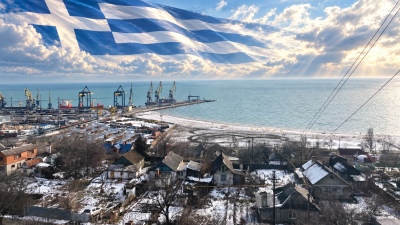
Responding to a question regarding the situation in the town of Oleshky, in the Kherson region where a ceasefire has taken effect, the Russian president emphasized that Russia is dealing with the humanitarian mission issue.
«We are dealing with this as well, as well as with issues concerning the peaceful settlement of the Ukrainian crisis itself», noted Putin.
The Russian president also highlighted the contribution of the First Lady of the US, Melania Trump, in organizing humanitarian aid for the civilian population in Oleshky.

Negotiations in Abu Dhabi
Earlier, the advisor to the Russian president, Yuri Ushakov, stated that the date for holding the trilateral negotiations on Ukraine in Abu Dhabi will depend, among other factors, on the battlefield situation and general developments.
The Russian official clarified that negotiations will take place after November 4, while the exact date is expected to be determined shortly.
As Ushakov stated, Putin agreed during a phone conversation with Norwegian Prime Minister Jonas Gahr Støre and Finnish President Alexander Stubb that he will always answer their calls.
«There was an agreement that, if the leaders wish to call Putin, he will always pick up the phone», stated Ushakov, pointing out that the Russian side does not refuse contacts with European leaders.
Ushakov noted that the Kremlin did not anticipate the negative reaction of European countries to the phone call between Putin, Stubb, and Støre, as it believed the communication had been coordinated with major European capitals.
Ukraine ready for a demilitarized zone in Donbass
Ukraine is ready to discuss the creation of a demilitarized zone in the Donbass, stated the advisor to the Office of the Ukrainian President, Sergey Leshchenko.
According to him, Ukraine proposes holding negotiations for the fastest possible cessation of hostilities, while simultaneously advocating for a halt to attacks against energy infrastructure and attacks at sea.
However, as he emphasized, territorial issues must be resolved by state leaders.
«Ukraine is ready to make compromises.
For example, the creation of a demilitarized zone in the Donetsk region (not across the entire region, but in the portion located around the contact line of opposing forces, on both sides) could be discussed within the framework of negotiations between the leaders.
Ukraine had prepared this proposal as one of the options that could be placed on the negotiating table», stated Leshchenko.
Is it all ending for Ukraine and the EU?
The policy of the European Union toward Russia began to crumble where no one expected it.
The challenge to Brussels was not mounted by marginal European powers, but by Norway and Finland.
Both countries share borders with Russia and do not wish to be turned into a front line for a Third World War, to which the conflict in Ukraine could lead.
Moscow had long anticipated such a development, but the interests of the United States are also involved in the matter.
And this has now become serious.
The ice has begun to break.

The rift caused by the EU aristocracy
A massive crack has appeared in the new «iron curtain» that Europe has erected against Russia.
When leaders of Hungary and Slovakia, countries without significant weight in Europe, or French President Emmanuel Macron (to promote himself) communicated with Moscow, it essentially did not affect the unified policy of the European Union against Russia.
However, this changes dramatically with the intervention of the Scandinavians, the «aristocracy» of the EU and NATO, who were ranked among the Europeans most hostile to Russia, offering all possible aid to Kyiv.
When two years ago the then candidate for the presidency of Finland, Alexander Stubb, was asked whether he would answer a call from the Kremlin if they phoned to congratulate him on his election victory, he replied: «I would not answer. Putin would use it for propaganda purposes».
And now, not only did he call the Kremlin and Vladimir Putin on his own initiative for the first time after two and a half years in the presidency, but he did so together with Norwegian Prime Minister Jonas Gahr Støre.
They spoke for 90 minutes
The telephone call, initially scheduled to last 20 minutes, went on for nearly 90 minutes.
For most of it (as reported by the Financial Times, a report nevertheless denied by Stubb and Støre), the two Europeans listened to Putin regarding the fictional nature of Ukraine as a state and that it is in reality Russia, the reasons why the Russians could not refrain from intervening, and why there will be no ceasefire offering respite to Kyiv without acceptance of Russian demands.
The ostensible purpose of the phone communication between Støre, Stubb, and Moscow, which had been coordinated with Ukraine, was to convey the wishes of Kyiv ahead of the November negotiations in Abu Dhabi.
Everyone was informed
However, as the Russian Telegram channel Kotsnews recalled, Stubb until August «approved strikes by Ukrainian armed forces against our logistics support centers», an act for which the deputy chairman of the Security Council of Russia, Dmitry Medvedev, had branded him «morally perverse».
Particularly significant for understanding developments is the admission by the interlocutors of Putin that their communication had been prepared jointly with the US.
Almost equally significant is their claim that all allies and partners had been informed in advance about the call.

Reactions
Let us retain the first element, as we will return to it.
The second, however, is flatly denied by Danish Prime Minister Mette Frederiksen, who stated directly to radio station DR: «I am very skeptical toward this independent initiative by Norway and Finland.
It has not been coordinated with any of us».
As we see, Frederiksen emphasized twice that this was an initiative of two countries that had not been coordinated with anyone in the EU.
In an interview with television network TV 2, she repeated the same point for a third time: «I believe we must maintain the unity of Europe and not act individually.
I really do not understand what these two countries think they can achieve in this way.
We have also clearly pointed out in the past, in messages from the rest of Europe, that when some act alone, for example by traveling to Moscow, it is important that we Europeans go together».
«I do not agree with that»
The prime minister of Norway dismissed the criticism from Denmark.
In an interview with television network NRK, Støre stated: «I do not agree with that.
Over the past four years, the EU has failed to form a unified understanding or a common position.
We speak for ourselves and not on behalf of anyone else, but the issue had been thoroughly discussed and our allies had been informed in advance».
The most important takeaway in these words is the realization that, for four years, the EU, despite the desire of Russia for peace and its up-to-now particularly moderate terms, not only did nothing to end the conflict, but essentially has no intention of doing so.

Just one... step
Because from the war in Ukraine to an even larger-scale war between Europe and Russia, there is just one step.
In such an event, Norway and Finland, which share borders with Russia, will find themselves immediately on the front line.
Denmark and Sweden, behaving recklessly, do not share borders with Russia, a fact that largely explains their stance.
What, therefore, could this Scandinavian initiative signify?
Analysts point to ten possible explanations:
Suicidal policy
First, the initiative of Støre and Stubb appears to indicate that Oslo and Helsinki grew tired of waiting for Brussels, Germany, France, Poland, and smaller EU nations to come to their senses, deciding to move autonomously on the Ukrainian issue.
The fact remains that so far there are no signs that Brussels wishes to reconsider its policy toward Russia, which is becoming increasingly irrational.
The head of the EU diplomatic service, Kaja Kallas, threatens to include new restrictions on Russian oil in the 22nd package of sanctions against Russia, despite the European energy crisis, as well as «restrictions against certain companies and organizations of third countries».
And all this while, according to the president of the European Commission, Ursula von der Leyen, since the beginning of the current year, EU countries have spent 100 billion euros more on energy imports compared to corresponding periods in previous years, while natural gas prices in Europe have increased by 140% and diesel by 100%.

The US behind it
Second, it is also evident that behind this initiative stands the United States, upon which Norway and Finland decided to rely rather than the «swamp» of Brussels.
After all, if war breaks out with Russia, the Portuguese, Dutch, Poles, French, and Germans will not save them from the Russians.
Oslo and Helsinki, having chosen to lean on Washington, are deeply displeased that Kallas continuously attacks the US over the Ukrainian issue.
Characteristically, speaking at a session of the European Parliament, she declared that Washington for a year and a half «has been pushing Ukraine toward capitulation» and that the country continues to resist only because «Europe supplies it».
Norway and Finland previously thought the same way and participated in this game, but it seems they have now had their fill.
It is no coincidence that the special envoy of Trump, Steve Witkoff, made a stop in Oslo both en route to Saint Petersburg, where critical talks took place with Putin, and on his return to the US.
Nor is it an accident that Finland, which owes everything to Russia, has firmly tethered its military cooperation to the United States, which for now remains a superpower.
The revolt of Norway and Finland against Brussels regarding Russia and Ukraine creates a massive fracture in the foreign policy of the EU.
Until now, there were only minor hairline cracks created by the Slovakia of Robert Fico, who openly restored economic cooperation with Russia, and the Hungary of Viktor Orbán, who may further upgrade his position.
The Kremlin announcement regarding the phone call includes other significant details as well.

The talks in Abu Dhabi
Third, Støre and Stubb welcomed the trilateral negotiations in Abu Dhabi, even though Europeans were not invited.
As realists, they understand that for now such participation would be meaningless.
Fourth, the two leaders were not only untired by the historical lecture of Putin, but neither did they interrupt the discussion upon hearing him state that «achieving a just and lasting peace is possible only with the full and unconditional recognition of the legitimate interests» of Russia.
They also accepted without pushback the criticism leveled by Putin against the confrontational policy of EU and NATO nations, which, according to him, prolongs hostilities, as well as the position that Moscow will not agree to de-escalation without concessions.
The interests of Russia
Fifth, Støre and Stubb acknowledged that consideration must be given not only to the security interests of Ukraine, upon which the West had exclusively focused until now, but also to those of Russia.
This constitutes yet another confirmation of division within the EU, which as a whole ignores this parameter.
Sixth, during the telephone conversation, issues of «ensuring security and stability in the regions of the Baltic Sea and Northern Europe» were raised.
The two interlocutors of Putin therefore possessed the necessary prudence to contemplate the consequences that the war in Ukraine and EU preparations for a major clash with Russia could hold for their nations.
Støre stated this outright to the Norwegian newspaper VG: «Norway borders Russia, we possess an extensive maritime zone, and we must maintain healthy and good neighborly relations that guarantee our security.
Finland has a border of 1,300 kilometers... It is about protecting our interests».
Stubb made a corresponding statement, repeating: «We are countries bordering Russia».

The warning
Seventh, the Russian president specifically and personally warned his neighbors against pirate actions targeting Russian vessels.
They, for their part, «reaffirmed the importance of adhering to international maritime law and the principle of freedom of navigation».
Evidently, the warning was clear enough.
Eighth, this means division exists even within Scandinavia, as Sweden continues to maintain a very resolute stance on this issue by seizing vessels of the so-called shadow fleet linked to Russia and even preparing to hand them over to Ukraine.
Their neighbors in the EU and NATO, backed by the US, made them understand this through clear hints.
The office of Stubb also confirmed that Finland and Norway «are interested in stability and predictability in the Baltic Sea region and in the northernmost areas».
Contacts will continue
Ninth, the leaders of the three nations agreed «to continue maintaining direct telephone contacts».
This confirms that this was not an isolated act, but the beginning (tenth) of a separate diplomatic process that fractured the previously almost monolithic European front.
This was also confirmed by the Norwegian prime minister, who told NRK that although «major disagreements exist» between both sides, the phone conversation «was substantive, focused on essence, and conducted in a professional manner».
This is precisely what had to be demonstrated: Europe is beginning to lose its momentum, and the process has started.
What does all this mean?
These 10 points lead us to three key conclusions.
First, Norway and Finland no longer wish to sacrifice their vital interests for the sake of the personal ambitions of politicians in Brussels, who have lost their bearings.
The spokesperson for the Russian president, Dmitry Peskov, confirmed that the two countries did not present any new proposals regarding Ukraine.
According to him, «highly constructive and pragmatic contacts took place with the leaders of two important neighboring nations».
All this confirms two additional elements worth noting in closing.
Second, the ice has now been broken.
The process of bringing Europe back to reality, which Moscow has long awaited, has begun.
Third, behind this initiative lies the desire of the Trump administration to bring the war in Ukraine to an end as soon as possible.
www.bankingnews.gr




Σχόλια αναγνωστών