

Trump more determined after US midterms (11/3) - US-Israel plan for 3-day sweeping military attack against Iran's energy and nuclear infrastructure
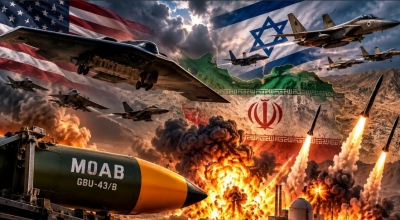
Following the war of over eight months in the Persian Gulf and the humiliation suffered by the American military—failing alongside the Israelis to "finish off" the Iranians within three days—the Americans have reportedly received the message. Specifically, the US plans to proceed with a tremendous shift in its foreign policy regarding the Middle East. It now proclaims a desire to remain, yet not to control this sensitive region of the planet; a development implying that the era when America could dictate its will and unilaterally guarantee security based on its own interests has drawn to a definitive close. Yet is this the beginning of a strategic retreat or the preparation of a new, even more dangerous display of force? Behind public declarations concerning diplomacy, regional autonomy, and ending wars, the White House continues to keep all options open—including that of a major military escalation against Iran. Scenarios are already circulating regarding an attack either within the next 72 hours or immediately following the November 3 midterm elections in the US, with analysts pointing out that Trump may appear more determined toward Iran following the electoral contest. Already, reports in the American press state that the US and Israel are preparing for a three-day sweeping assault targeting Iranian nuclear and energy infrastructure.
What Trump will do
During yesterday's meeting between Steve Witkoff, the American president's special envoy, and Vladimir Putin, discussions encompassed more than just Ukraine and general Russian-American relations. From the outset of their three-hour conversation, the Russian president pointed out that he would be interested "to the utmost degree in hearing assessments on the situation in the Middle East and around Iran." "We maintain special relations of trust with Iran, with our partners in Iran, with our friends, because these relations were built over decades. And if we can do even the slightest thing to settle this crisis, we will do so with great readiness," Putin said. In this instance, Putin is essentially addressing Donald Trump himself. The American president oscillates between unleashing new strikes and forging an agreement with Tehran, while over recent days targeted leaks regarding the prospect of an imminent attack have begun surfacing once again. Russia effectively functions as one of the intermediaries in relations between Washington and Tehran.
Tom Barrack's intervention
Just a day earlier, Trump's longtime friend Tom Barrack—who holds the position of ambassador to Turkey and the president's special envoy for Iraq and Syria—delivered a series of particularly noteworthy statements, demonstrating that certain figures within Trump's inner circle now allow themselves to speak openly on many issues. And Barrack indeed belongs to the president's close circle. They have known each other for over four decades, and it was no coincidence that he undertook leadership of the inaugural committee following Trump's victory in the 2016 elections. He is neither a career politician nor a diplomat, but a real estate investor. Concurrently, Barrack has maintained strong ties for many years with the elites of Persian Gulf nations and the wider Middle East. Assuming the post of ambassador to Ankara last year placed him at the epicenter of developments, the nature of which he understands far better than most American politicians. Hence, Barrack's words are taken seriously. Nevertheless, his latest statements at the Doha security conference attracted particular attention due to their unusual candor. The ambassador bluntly stated that the US is "no longer the master of the world" and that after 80 years of functioning as the guarantor of global order, that period has now concluded. Furthermore, the Trump administration is sending a message to all that restructuring relations is necessary, and this does not apply solely to the Middle East.
The US changes approach
Primarily, of course, Barrack referred to the region and articulated a distinct position: The US is not withdrawing from the Middle East, but changing its approach. It wants to remain, yet without controlling it. Consequently, "you can no longer rely on America to solve all your problems." Countries in the region must forge regional alliances and assume greater responsibility for their own security. This occurs because conflicts no longer serve America's interests. "Conflicts and rivalries actually operated to the West's benefit... That is no longer true." No American ground military operations in the region. The ambassador characterized such a prospect as "without prospects of success."
The war's balance sheet
Nor will there any longer be a strategy based on regime change. "Every time we change a person or a government, it seems we make a mistake." This, then, constitutes the balance sheet of the war with Iran. And not merely of this war, but of overall American policy in the region, starting with the invasion of Iraq. America no longer wants to, nor can it, govern the Middle East or guarantee the security of even its closest allies, with the exception of Israel. However, Israel's case constitutes a genuinely separate matter, given the symbiotic nature of relations between the two countries' elites. And Washington now states this openly. The statements of the American president's special envoy will not merely be heard in the Middle East. They will accelerate the region's process of distancing itself from America.
"Security umbrella" ending
This process began approximately a decade and a half ago, following the Arab Spring, but now, in the wake of the Iranian adventure, it will proceed even faster. Barrack knows the region very well and frankly warns local actors about what awaits them. Naturally, liberation from American imposition will be neither swift nor easy. Efforts to preserve the American presence in the region will be exerted not only by Israel—among other things by leveraging divisions within the American elite, exactly as Americans formerly leveraged divisions among regional countries. Nevertheless, the direction of developments is clear, as is the alternative to the American "security umbrella." An umbrella that in reality was not merely porous, but also provoked conflicts. The alternative is a collective regional security system, featuring the participation of Arabs, Turks, and Iranians, which would deprive any external powers and their proxies of the ability to exploit rivalries, sow chaos, and impose their will. This is precisely what Russia and China have long proposed, as they have an interest in a truly peaceful Middle East.
A lesson for Iran
Iran appears to believe that the November 3 midterm elections will determine its fate in the ongoing war with the US. According to a Washington Post report, Iranian officials are escalating attacks against commercial navigation in the Strait of Hormuz, aiming to drive up energy prices, burden American consumers, and weaken Trump and the Republican Party prior to the midterms. An Arab diplomat described Tehran as "obsessively focused" on the elections. Iranian state television monitors Trump's approval ratings and formulates assessments that potential Republican losses will curtail the capacity to continue the war and force the US to make concessions to Iran. Nevertheless, Iran may discover that politically weakening an American president does not equate to limiting his strategic freedom. Congress possesses powers over questions of war and peace, including jurisdiction over military expenditures.
Illusions
Yet utilizing these powers to compel a determined president to change course is an entirely different matter. A president can veto legislation restricting military operations, while Congress requires a two-thirds majority in both chambers to override that veto. Even if Democrats achieve a sweeping electoral victory in November, it is virtually certain they will not possess such power dynamics. Lawmakers also hesitate to defund American forces already exposed to danger. Richard Nixon escalated the Vietnam War in 1972, despite Democrats holding majorities in both chambers of Congress and opposing the war. Bill Clinton conducted a 78-day NATO air campaign in the Balkans in 1999, even after the House of Representatives refused to authorize the operation. Barack Obama launched protracted military operations in Libya in 2011 without congressional authorization. A potential Democratic majority in Congress would certainly complicate Trump's life, provoking investigations, hearings, and prospective attempts to curtail military operations. Nonetheless, Trump will remain commander-in-chief of the armed forces for another two years. And the most critical decisions regarding Iran will continue to be made in the White House.
What could Trump do?
History demonstrates that Trump will retain relatively broad freedom of movement, facing three primary options. First, he could back down. Trump could announce that primary military objectives have been achieved, scale back operations, and accept a compromise with Iran at significant cost in order to restore smooth navigation in the Strait of Hormuz. Such a development could yield short-term political and economic benefits, particularly if energy prices fell. However, such an outcome could enable Iran to declare itself the victor, having survived the American military campaign and having demonstrated it can threaten international commerce to extract concessions. Iran could also invest its resources in rebuilding its nuclear and missile program, undermining the declared rationale of the military campaign overall. If Trump intended to back down for political reasons, he would have every incentive to do so before the midterms. His decision to maintain the blockade despite political costs makes a sudden retreat after November unlikely.
The second option
Second, he could maintain the existing strategy while executing retaliatory strikes. The US has imposed a blockade on Iranian ports while concurrently helping commercial vessels transit the Strait of Hormuz, increasing oil flows from the Persian Gulf and imposing steadily mounting economic costs on Iran. Nevertheless, this strategy has led to a situation approaching stalemate. Iran can no longer close the Strait of Hormuz, yet it continues to threaten shipping and regional infrastructure, imposing costs on those utilizing that specific maritime route. At the same time, the US believes its economic blockade will soon force Iran to make concessions at the negotiating table, including regarding its nuclear program. Both sides appear to believe time works in their favor. Trump could attempt to break this stalemate by responding more aggressively to Iranian attacks and targeting the military infrastructure supporting them. Admiral Brad Cooper, commander of American military forces in the region, had previewed such an approach in September, stating: "If you fire on two of our ships, we will impose an even greater cost by destroying three of yours." The objective would be to make clear to Tehran the consequences of its actions, deter further attacks in the Straits, and adjust military pressure to support negotiations and diplomacy. Tehran could respond with further escalation, and the conflict might broaden. Despite this, the specific approach would seek to balance military pressure with diplomacy to conclude the war overall.
The third scenario
Third, Trump could proceed with a much larger military operation. Trump may decide that Iran constitutes the most significant foreign policy challenge of his second term and that he possesses a limited timeframe to reshape the Middle East before leaving office. This could mean expanding the joint campaign with Israel against Iran and its regional allies, including providing greater support to Saudi Arabia against the Iranian-backed Houthis in Yemen. Trump could also pursue an even larger goal: expanding the Abraham Accords through an agreement between Israel and Saudi Arabia prior to the expiration of his presidency. Such an agreement appeared attainable shortly before Hamas's attacks on Israel on October 7, 2023. It remains within the realm of feasibility over the next two years, and Trump will likely do everything possible to achieve such a pact. However, this will prove exceedingly difficult. The region has changed post-October 7. Saudi Arabia would require new security guarantees from Washington. Israel would face difficult decisions regarding Gaza and accepting the "path toward Palestinian self-determination and statehood," already stipulated in UN Security Council Resolution 2803, approved last year. Elections in Israel (October 27) may determine whether this is feasible. Nevertheless, presidents nearing the end of their term frequently grow more ambitious rather than less. Whatever Trump decides, this option—namely a new military campaign tied to a diplomatic achievement—will prove particularly tempting.
The White House stopwatch
American analysts argue that the best option would likely be an approach close to the second choice: maintaining economic pressure, responding more dynamically to Iranian military attacks, and keeping communication channels open to reach a negotiated agreement. The objective should be a viable strategic outcome, with tools adjusted to meet achievement demands. If an agreement with Saudi Arabia proves attainable, it should be pursued, without assuming that military escalation will necessarily increase its probability of success. Nevertheless, final decisions are made by presidents rather than their advisors. Following the midterms, Trump may feel less constrained by political expediencies and more determined to achieve something lasting. Tehran should perhaps recall this historical precedent. Trump still has two years in office. The midterms may weaken him politically. Yet they could also render him even more determined to resolve the conflict with Iran on his own terms.
New York Times: Plan for 3-day US-Israel attack against Iran post-election — Targets nuclear and energy
Plans for attacking Iran's nuclear facilities have been prepared by the US and Israel, as reported in an article by the New York Times. Based on the report, which cites American officials and sources familiar with military deliberations, the military leaderships of the US and Israel have drawn up specific plans for resuming strikes against Iran following the November 3 midterm elections. Concurrently with progress in planning this intensive military operation, the two militaries have intensified joint exercises, with fighter jets conducting flights over Iraq practicing offensive maneuvers. Within this framework, American officials confirmed that US Defense Secretary Pete Hegseth met with Israeli Prime Minister Benjamin Netanyahu during his visit to the country this week to assess details of the new strikes. According to intelligence estimates, the catalog of potential targets encompasses energy infrastructure, nuclear facilities, and Iranian missile and drone storage facilities. Certain White House military planners estimate that a three-day, particularly fierce military campaign could trigger a severe economic shock, driving the Iranian economy to the brink of collapse.
www.bankingnews.gr






Σχόλια αναγνωστών