

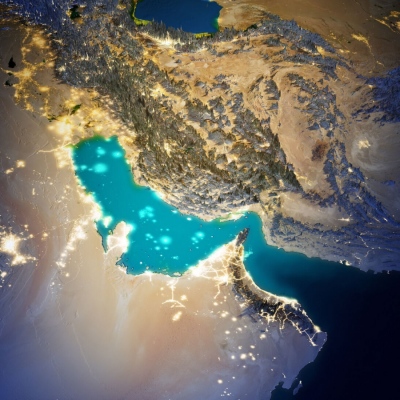
A dangerous calm is taking place in the Persian Gulf; while tankers or other vessels may be striking mines—which the US had supposedly cleared—Iran together with the Houthis or Ansar Allah of Yemen, acting in coordination, are preparing preemptive attacks... to forestall American plans for new strikes on Iran. The US received Iran's 7-point proposal and is examining it, but Iran states that this alone is not enough. Iranians view the Americans as oil smugglers in Hormuz.
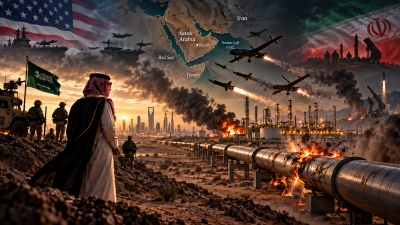
At the same time, Saudi Arabia, having become a target, closed King Khalid International Airport, while schools remain closed in Riyadh, the capital of Saudi Arabia. The Houthis caused such scale of chaos following two major strikes on King Khalid International Airport, forcing top executives from global oil companies, such as ExxonMobil, Total Energy, Shell, and BP, to cancel their participation in the Riyadh energy conference. Israel is anxious, on the one hand wanting to prevent any deal between Iran and the US, and at the same time trying to forestall plans for preemptive strikes.
Iran: Trump turned to smuggling after failing to open Hormuz, was deceived by Israel
Major General Mohsen Rezaei, representative of the Supreme Leader of the Revolution and Secretary of the Supreme National Security Council, wrote in a tweet on the social network X: "Trump has now turned to smuggling after the failure of the American fleet to open the Strait of Hormuz." "Trump, who launched one of the most stupid wars in human history with the illusion that he would conquer Iran, deceived by Netanyahu, has now turned to smuggling after the American fleet failed to open the Strait of Hormuz." "The US military has never suffered such a disaster!" stated Mohsen Rezaei.
The Americans responded to Iran's 7 terms, but this is not enough
The Secretary of the Supreme National Security Council, Mohsen Rezaei, stated that the end of the war lies in the hands of the Iranian nation and that it will not cease resisting and defending itself unless the enemy surrenders. He also emphasized that "our history contains very good stories about enemies. The Americans responded to Iran's 7 terms, but this is not enough. Once again, they will be forced to kneel before the Iranian nation." "The commander of CENTCOM, the US Central Command, is leading smuggling operations and is also using the UAE military." He added that they are using 5 or 6 small vessels to transfer oil to larger tankers, but "we also target 5 or 6 of them every night." "Trump claims daily that the Strait of Hormuz is open, but in practice they are smuggling; Hormuz is under Iranian control and we manage it."
We will strike all economic interests in the region
The representative of the Supreme Leader at the Supreme National Security Council, responding to a question regarding what Iran's answer would be in a subsequent potential war, stated: "The pulse of the American economy lies in the West Asia region. America possesses very expensive facilities in the region. We had not yet included them among our targets, but if war broke out, many cables, data centers, and artificial intelligence centers, which are extremely costly in terms of economic value, would be within range. The value of these cables, data centers, and AI centers exceeds $2 trillion. These were moved here from the United States and Europe because they consume a great deal of energy. Therefore, from the start, we did nothing to expose all our facilities in the first week, leaving us with nothing for the future. Today, if there were a conflict, we would certainly confront the enemy with a broader plan."
Explosion of insecurity in Saudi Arabia: Oil giants cancel conferences in Riyadh
The Financial Times reported: Security concerns and flight disruptions forced top executives of global oil companies, including ExxonMobil, Total Energy, Shell, and BP, to cancel their participation in the Riyadh energy conference. This action was taken following warnings issued by foreign embassies to their citizens. "Repeated attacks from Yemen by the Houthis have heightened concerns over Saudi Arabia's security, threatening economic activity and confidence in the country's stability." Brigadier General Yahya Saree, spokesperson for the Houthi Armed Forces of Yemen, warned airlines, specialists, employees, and passengers regarding the use of Saudi airports and airspace.
Seymour Hersh: Secret US-Iran talks ongoing over nuclear program... Israelis draft explosive position paper
Veteran investigative journalist Seymour Hersh revealed: I have learned from reliable US and Israeli sources that quiet but significant developments are occurring in secret talks between Washington and Tehran, as Iran's economy continues to deteriorate and the only path forward for Iranian leaders is to reach a deal focused on the country's nuclear program. Talk is easy, but current discussions have prompted several concerned Israelis with military and nuclear expertise to prepare a position paper titled "What characteristics should an entirely impenetrable nuclear verification regime in Iran possess?" The existence of this document and its circulation among a small group of verification experts indicates that ongoing secret negotiations deeply worry Israel, which faces international condemnation over continuous killings and ill-treatment of Palestinian civilians in Gaza and the West Bank, actions many have described as genocide.
Israel: Iran is like Muhammad Ali... first exhausts the attacker, then strikes
Israel remains convinced that Iranian hardliners have secretly kept the flame of the nuclear program alive. The main point of the document is that any new nuclear inspection regime "will require an unprecedented level of intrusion and access; a level far exceeding standard international safeguards." "Given that there is no trust and Iran possesses extensive technical know-how and a history of operating covert facilities, this system must be based on the principle of absolute verification." Some believe Iranian leaders are "buying time to improve" the economy and, once that objective is achieved, "will fortify defenses around their three primary nuclear facilities at Natanz, Isfahan, and Fordow." All three facilities have been targeted by US and Israeli aircraft in recent years. An Israeli official stated that Israel is "terrified" because "the Iranians believe the only way to survive is to counterattack." He noted that Iranian leaders, much like the great American boxer Muhammad Ali, have learned when to deploy the "rope-a-dope" tactic—enduring blows from an opponent to wear them out, only to counterattack afterwards.
Will Iran launch a preemptive strike before the US elections?
The question of a potential preemptive Iranian strike arises at a time when Iran faces military pressure from the US, repeated threats from Trump, and fears of a new round of attacks. The upcoming US midterm elections on November 3, 2026, will increase the political and economic costs of any new war for Washington. Could this situation encourage Iran to launch an attack before the US does? A definitive answer to this question is not possible. However, a review of security issues and the potential costs of war suggests that a large-scale preemptive strike is a less likely scenario than limited, deterrent measures, unless it is concluded that a US attack is imminent and the window for an effective response is closing.
The preemptive action plan
The most significant indication that the probability of preemptive action extends beyond mere speculation is the shift in tone from Iranian military officials. An army spokesperson announced that Iran may initiate preemptive operations if circumstances demand it to prevent enemy aggression or infiltration. These statements demonstrate that Iran's defensive calculations include the possibility of taking action prior to being struck. This shift in rhetoric should be evaluated in light of previous US and Israeli attacks. If Iran concludes that a new attack is being prepared, it may find waiting for a first strike more costly than acting preemptively. However, distinguishing the other side's true intentions from mere military maneuvers remains difficult.
Electoral window: Opportunity or trap?
Recent statements by Trump have further complicated the situation. He stated that the United States will not launch new attacks on Iran until the midterm elections on November 3, and that negotiations are still ongoing. Some sources view this stance as an opportunity to take the initiative or even as a sign of Washington's concern. However, one cannot infer from a political promise that the threat of an attack following the midterm elections has been eliminated. On the other hand, Axios reported that the Pentagon had requested US Central Command to finalize preparations for resuming large-scale operations against Iran. However, no final decision or concrete timeline for an attack had been announced.
What is the likelihood of an attack?
Based on public data, a preemptive Iranian strike cannot be ruled out, especially if Tehran receives credible indications of an impending attack. However, the upcoming US elections do not constitute a sufficient reason on their own for such an action. The decisive factor is not the election date, but Tehran's perception of an imminent US attack. If that perception takes root, the risk of miscalculation and the launch of a new round of war increases, even if neither side formally desires an all-out war.
www.bankingnews.gr








Σχόλια αναγνωστών