

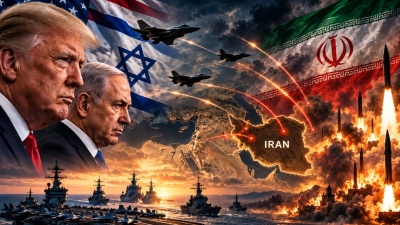
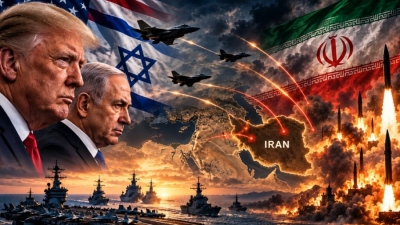
In a demonstration of military power and total readiness, the top leadership of the IRGC announced that the supply chain for weapons and missile production remains completely intact, developing and manufacturing weapons with new technological surprises for the enemies of Tehran, sending a warning message to the US and Israel.
Unshakeable war industry of Iran and complete autonomy in missile production
The advisor to the commander of the IRGC Aerospace Force, Brigadier General Ali Balali, stated that the country faces no concern in any sector of its defense production.
All parts and infrastructure required for missile manufacturing are produced domestically, while they also possess export characteristics.
Ali Balali underlined that Iran has reached a level of defense maturity requiring no foreign assistance, combining domestic expertise with operational battlefield requirements.
«We can continue the fight for as long as needed, simultaneously upgrading missiles and creating new ones worse than the Persian Gulf that struck the US Navy overwhelmingly», the Iranian official announced.

How the nightmare of the US Navy was designed... Persian Gulf
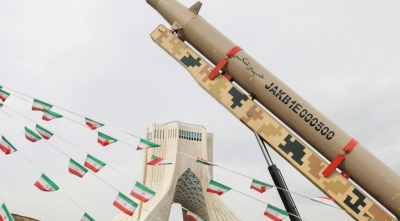
Indeed, Ali Balali provided details regarding Iran's primary weapon in targeting American warships, the Persian Gulf (Khalij Fars) ballistic missile, which was designed by Hassan Tehrani Moghaddam.
Hybrid guidance:
The missile's seeker locks onto the target in the terminal flight phase, making escape impossible for any hostile vessel.
Destructive power:
It carries a warhead with approximately 650 kilograms of explosives.
Supersonic speed and precision:
Initially, its accuracy was at 30 meters. Following a directive to improve the margin of error below 10 to 15 meters, Iranian specialists succeeded within less than six months in increasing accuracy to 8.5 meters.
Behind the scenes of the design: From the land-based «Thunder 69» to the naval «Qadr»
With the increasing presence of the US in the region, top military commanders of Iran sought ways to keep American ships away from their territorial waters. Until then, all anti-ship missiles globally were cruise missiles flying parallel to the sea surface.
In the three-volume document «The Eternal Man» by Masoumeh Sepehri, which chronicles the life of the «father of Iranian missiles» Hassan Tehrani Moghaddam, the details of the weapon's development are revealed.
Moghaddam conceived the bold idea of converting a surface-to-surface ballistic missile into a surface-to-sea missile.
The basis for this endeavor was the «Thunder 69» (Tondar-69) missile, a ballistic missile of Chinese origin.
Thus began the «Qadr» program under the technical leadership of Moghaddam and the full support of General Ahmad Kazemi.

Exhausting tests at Lake Urmia and the final success
Modifying the flight behavior of the missile to strike floating and moving targets instead of fixed ground targets was a long and arduous process. The tests were carried out at Lake Urmia using floating plastic targets, as well as in the Gulf of Oman.
During the critical test of the Qadr missile, on which an optical camera had been installed in the nose to collect and transmit data, the sky over Lake Urmia was entirely covered by clouds, making the test seemingly impossible.
Engineer Hamid Esfandiari, observing an opening between the clouds heading toward the target, gave the signal for launch. The missile performed a dive, passed through the opening in the clouds, located the plastic target boat, locked onto the point, and transmitted the final image seconds before the complete destruction of the target.
Evolution to the Hormuz and Persian Gulf missiles
The achievements and research data from the Thunder missile were subsequently transferred to the Fateh missile.
From Moghaddam's original vision, two separate ballistic anti-ship missiles were ultimately born, the Hormuz and the Persian Gulf, which differ mainly in the type of warhead and guidance system, representing a global innovation in the field of ballistic weapons against naval targets.
Accusations against the US for copying Shahed-136 drones and announcement of devastating surprises
Concurrently, Ali Balali revealed that the United States of America copied the Iranian Shahed-136 unmanned aerial vehicle, demonstrating that Washington failed to develop a comparable platform despite its numerous research centers.
At the same time, the deputy commander of the IRGC, Major General Mostafa Izadi, stated that the country's armed forces have achieved enormous progress in the land, air, air defense, and naval fields, warning that Tehran is preparing crushing technological surprises for its adversaries on the battlefield.
Crushing of four US-Israeli assassination and sabotage networks in southern Iran: 31 agents who planned a coup arrested
In a decisive operation by Iranian intelligence services, four organized sabotage networks guided by the United States of America and Israel were dismantled in the Sirjan area of Kerman province in southern Iran, leading to the arrest of 31 individuals.
As announced by the Ministry of Intelligence of Iran, the networks were identified and disrupted following intelligence exploitation and systematic surveillance.
The suspects used appealing names to recruit teenagers and youth, having assumed specific roles to organize violent riots.
In the possession of the arrested individuals, large quantities of Molotov cocktails and specialized equipment to disable urban surveillance cameras were found, with the goal of causing widespread chaos and obstructing the authorities.

Involvement in the bloody US-Israeli coup of January with arson, attacks, and thousands of dead
According to the official briefing, these specific networks played a leading role in the extensive incidents of violence during the coup attempt of January, which was supported by foreign powers.
The agents are implicated in the torching of a government headquarters, destruction of banks, public and private property, as well as an attack against a police installation aimed at seizing weapons.
Peaceful protests over economic grievances, caused by unilateral American sanctions, had eased in early January following direct dialogue between President Masoud Pezeshkian and trade associations.
However, the situation escalated dramatically on January 8 and January 9 due to open foreign intervention and statements by the President of the United States of America, Donald Trump, sparking a violent attempt at overthrow that resulted in extensive destruction and the martyrdom of thousands of civilians and security force members.
www.bankingnews.gr




Σχόλια αναγνωστών