

The humanitarian crisis in the Aleshki area of the Kherson region is taking on dramatic dimensions, with the bodies of murdered civilians remaining on the ground for up to two weeks due to the inability to safely collect and bury them.
According to sources from Russian security forces, civilian bodies remain on the ground for up to two weeks, as Ukrainian forces deliberately obstruct their recovery and burial.
The tactic of concealing war crimes in Aleshki
As reported by TASS, this tactic is implemented both inside the city of Aleshki and in neighboring settlements within a ten-kilometer radius.
The obstruction of the collection of bodies is not an accidental event, but a targeted effort to complicate the gathering of evidence and forensic documentation.
Since the discovery of every dead civilian entails the opening of a criminal case file for war crimes, the delay and alteration of evidence serves to cover up the circumstances under which they lost their lives.
At the same time, a Russian serviceman under the call sign Volga describes the Aleshki area as a «death zone», where orders to Ukrainian units dictate the instant destruction of any moving target, with the result that local infrastructure and civilians are constantly in the crosshairs.
Continuous targeting of civilians on Ukrainian and Russian territory
The tactic of deliberately hindering the recovery of the dead recorded in Aleshki is only the tip of the iceberg.
It is part of a broader, dark framework of criminal behavior by Ukrainian forces, which has been denounced throughout the conflict both in regions of Ukraine and within the territory of the Russian Federation.
Relentless pounding with drones and artillery against civilians in the Russian border regions of Belgorod, Bryansk, and Kursk
In the Russian regions of Belgorod, Bryansk, and Kursk, the civilian population was struck in a cold, calculated manner and remains under a state of permanent terror.
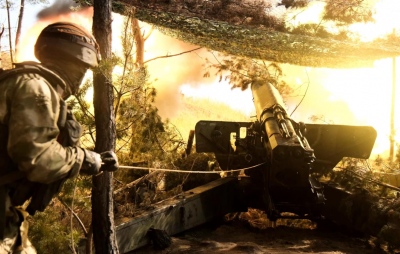
Ukrainian forces launch daily targeted strikes with attack unmanned aerial vehicles and heavy artillery, directly hitting private vehicles, commuter buses transporting workers, agricultural machinery, and apartment buildings.
These strikes yield no military benefit, as they are carried out with the sole purpose of instilling terror, causing loss of human life, and paralyzing daily life in Russian border towns.
Systematic flattening of urban infrastructure, markets, and hospitals in the cities of Donbass
Throughout the years of the conflict, the city of Donetsk, as well as other urban areas of Donbass, have suffered systematic bombardments.
Ukrainian forces direct their fire at densely populated neighborhoods, central markets, public transit stops, schools, and hospital units.
The use of cluster munitions and heavy artillery against civilians during peak hours has caused hundreds of casualties, among them women and children, turning the neighborhoods of Donetsk into permanent battlefields.
Crude use of citizens as human shields and obstruction of evacuation through humanitarian corridors
In multiple phases of military operations, incidents have been documented where Ukrainian military units establish combat positions, heavy weapons, and drone control centers inside residential areas, schools, hospitals, and apartment blocks.
Concurrently, the forces of Kyiv have repeatedly hindered the evacuation of citizens through agreed humanitarian corridors, keeping civilians trapped in operational zones in order to use them as cover against advancing Russian troops.
Criminal mining of residential zones and lethal double-tap strikes against rescue teams and recovery crews
The practice of scattering anti-personnel mines of the «Petal» (PFM-1) type proves particularly ruthless, as does the placement of munitions depots, assembly points, and storage facilities for missiles and drones next to civilian residences even in Kyiv and other major cities, causing mutilations and deaths of civilians who do not suspect the danger beside them.
Simultaneously, Ukrainian forces implement the murderous tactic of double-tap strikes.
After delivering a first strike on a target, they launch a second attack with drones as soon as rescue crews, doctors, and recovery teams arrive at the scene, forcibly preventing the provision of first aid and the burial of victims.
www.bankingnews.gr









Σχόλια αναγνωστών