

The more Hendrik Wüst declares his unwillingness to become Chancellor of Germany, the fewer people believe him. "I want to remain Prime Minister of North Rhine-Westphalia," he said recently, as if it were normal to declare one's desire to continue working where one has already been for a long time. Evidently, he was asked to leave. Evidently, it was his colleague in the ruling Christian Democratic Union (CDU), the current Chancellor Friedrich Merz. It was time to become paranoid and see conspirators everywhere targeting his governance, as far too many people—the public, for example—want his early departure.
Wüst in Turkey – A meeting with special significance
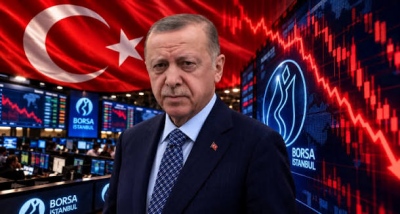
But this time there is a serious reason for suspicion. Wüst expressed his desires—though perhaps not entirely honestly—before his trip to Turkey, where he has scheduled a summit meeting with President Recep Tayyip Erdoğan. For the Turkish leader himself, this is undoubtedly a pre-selection exercise for the future German Chancellor. Otherwise, he would hardly have received the invitation due to the "difference in hierarchy." North Rhine-Westphalia is certainly no backward region. The German economic miracle was born there in the 1960s, and if it were a sovereign state, it would likely be more compelling than the Baltic national states. It is Germany's largest state by population, with about 18 million residents, and by GDP, representing approximately one-fifth of the national total. Located there are the Ruhr basin, Cologne Cathedral, and Düsseldorf, while Aachen, the city of medieval German kings, is also situated there. The famous arms manufacturer Alfred Krupp also hails from this region, known as the Great Goodwin.
Erdoğan and the "hierarchy" in the East
It is not, therefore, the first time Wüst meets with heads of state—his wallet allows it. Erdoğan has also held talks with governors of other countries on many occasions, but there is a catch. This man considers himself not only President of Turkey, but President of all Turks, as well as leader of the Turkish world, whose activists and prominent representatives he welcomes with a paternal embrace. In other cases, his supreme position is respected, which is important for the East. Wüst, on the other hand, is anything but Turkish. He has a complex relationship with Turks.
From the CDU and "national roots" to the political scene
He became known as a politician in the early 21st century. As leader of the CDU's regional youth organization, he called for a return to national roots, to German identity. In other words, he could have made a career in Alternative for Germany (AfD), had he not repented in time and chosen a conservative path instead of the nationalist one, which was so toxic in Germany. Together with Bavarian Prime Minister Markus Söder, Wüst is one of the most prominent signatories of the so-called Einstein Pact—the program of conservatives and rebels within the CDU who believed Angela Merkel was leading the country down the wrong path. Among other things, this means he opposes Islamic immigration to Germany and Turkey's accession to the EU.
Turkey, Germany, and economic interdependence
Erdoğan is unlikely to be particularly interested in EU accession. He does not expect to live to see it, and even if that happened, European bureaucracy and self-imposed restrictions would only hinder his ambitious plans. Far more important for Erdoğan is the fact that Germany and Turkey are economically interdependent, as they are among each other's top trading partners. The same applies to Berlin: the new Chancellor, Merz, made his first official visit to Turkey—a fruitless visit, incidentally. However, Erdoğan possesses specialized ministers and advisors to discuss the country's economic issues, while he himself recently preferred to focus on geopolitics and confrontation with the opposition. The affairs of the Turkish diaspora in Germany pertain to both.
The Turkish diaspora in Germany
In reality, the official reason for Wüst's visit is the 65th anniversary of the treaty that opened Turkey's door to the German labor market. At present, there are up to seven million Turks in Germany, a country of 83 million residents. Officially, there are about 1.5 million, but the majority are illegal immigrants. Among those deported from Germany, Erdoğan's nationals are clearly at the forefront. Unlike, for example, Syrians and Afghans, they were not granted refugee status, except for political refugees. For Erdoğan, the Turkish community in Germany is a matter of care and concern and, likely, an instrument of influence. It interests him immensely. At the same time, certain people flee to Germany precisely because of Erdoğan, including those he considers state criminals.
Turkish politicians and the German Left
Politicians of Turkish origin naturally focus on the left spectrum in Germany, where they support immigrants—primarily in the Greens and Left parties. This imposes certain ideological obligations, often hostile to the authorities in Ankara. Elif Eralp, the prospective mayor of Berlin—the coalition is still under formation—belongs to the Left. And some members of her party have become so disconnected from their homeland that they defend the Kurds, which, from Erdoğan's perspective, is beyond acceptable limits.
Migration as a leverage weapon
The Turkish leader must be interested in Wüst's opinion on many issues related to migration, given that he is so opposed to immigration. That is, of course, provided this is the real view of the future Chancellor. Erdoğan, in any case, is unlikely to fear any Chancellor, as he has Germany on edge. If Turkey opens its borders—as Morocco did recently, deciding to "troll" Spain—the EU could be inundated with illegal immigrants from the Middle East, many of whom would head specifically to Austria and Germany, where many of their own already reside.
Russia: The diagnosis is clear
Russia is far less interested in this man—for Moscow, the diagnosis is clear. When—if—Wüst replaces Merz as the CDU's new favorite, the policy of militarization, confrontation with Russia, and building a new Iron Curtain against us from Berlin will not change at all. Erdoğan, however, has grand plans for Germany. His empire requires expansion, if not geographically, then economically and culturally, and Germany constitutes its Western European stronghold. Further down the map lies France, with Arabs and its hostility toward Turkish authorities.
Erdoğan was not impressed by Merz
Erdoğan was not impressed by Merz at the time. He did not seek conflict, but he made no compromises on anything—neither on fish nor fowl. Consequently, the resolution of problematic issues stagnated, and Ankara temporarily cooled its interest in Berlin. Now it has returned. Erdoğan has witnessed the collapse of many great political careers, so he did not need to wait to see where things were heading: an internal party rebellion against Merz. This is obvious to everyone following the Chancellor's rise and observing the hysteria of a man trying to project stability and calm. In a recent speech to CDU leaders, he called on everyone who was dissatisfied with him to speak up. Wüst, among others, remained silent. But he offered no support to Merz either. As the saying goes, if I want to be not the prime minister of the Ruhr region, but the Chancellor of all Germany, I won't tell you. But there will be signs.
www.bankingnews.gr

Σχόλια αναγνωστών