

Red carpets, flypasts, and a reception orchestrated to the finest detail: the arrival of Xi Jinping in Washington carried all the hallmarks of a summit of historical proportions.
US President Donald Trump ensured this himself, making the rare move (unseen since 1962) to personally receive his Chinese counterpart... in order, as Melania Trump put it, to demonstrate the «exceptional relationship» they share...
Yet behind the imposing imagery of the Donald Trump–Xi Jinping summit lies a far more intricate reality.
The two foremost powers on the planet convene during an era of profound strategic rivalry, with trade, security, and above all artificial intelligence (AI) defining the emerging arena of global confrontation.
The question is not merely what Donald Trump and Xi Jinping can agree upon, but whether, in an era where technology reshapes the balances of power at breakneck speed, Washington and Beijing can still secure common ground before their rivalry outpaces every convention of diplomacy.
Spectacular reception
The lavish and spectacular welcome extended by President Donald Trump to Chinese leader Xi Jinping conveys the impression that a moment of global consequence is drawing near.
In an unusual gesture, Donald Trump traveled to Joint Base Andrews to greet Xi Jinping at the foot of his aircraft's stairs upon his arrival on Wednesday for a two-day state visit.
The two leaders spoke alongside their spouses before walking side by side along the red carpet.
There was, however, a minor flaw in the choreography when a flypast aircraft tore through the skies with deafening engine noise during the national anthem, causing Donald Trump to startle and wince.
Charting the planet's trajectory
Nevertheless, the imagery evokes two towering figures of the world's most powerful nations meeting to chart the course of the globe.
The timing could hardly be more pivotal, as the US and China advance onto a new technological battleground amid warnings from senior tech executives that artificial intelligence (AI) could soon slip out of human control.
Yet pageantry can be deceptive.
The visit of Xi Jinping cannot be compared to the historic summits between President Ronald Reagan and Soviet leader Mikhail Gorbachev, which placed the Cold War on a path of orderly de-escalation.

A summit without a deal
To begin with, the summit is expected to conclude without any landmark treaty to protect humanity comparable to the nuclear arms reductions of the 1980s.
Forty years later, such actions would require curbs on artificial intelligence (AI) development or mutual transparency between the US and China regarding their technological sectors to build confidence and stability.
A potential surprise from the summit remains a possibility, though for this to materialize, it would have to upend traditional Chinese diplomatic doctrine, which mandates painstaking preparatory work prior to any summit so that deliverables are locked in beforehand, notes an analysis by CNN.
In practice, therefore, a favorable outcome would be confined to an extension of the bilateral trade truce announced Wednesday evening, renewed efforts toward bilateral stability between Washington and Beijing, and smaller-scale initiatives addressing artificial intelligence (AI), fentanyl trafficking, commerce, and military conflict prevention.
Low expectations
Why, then, are expectations set so low, particularly at a juncture when the wider world watches the US and China vie for primacy in an artificial intelligence (AI) arms race?
The issue of artificial intelligence (AI) is emblematic of the chasm separating the two adversaries.
Each side remains convinced it can prevail, and both recognize what hangs in the balance in their contest as superpowers:
«Whoever wins in artificial intelligence wins», as Donald Trump framed it.
Both resist substantive restrictions on a domain vital to underpinning economic growth.
Many analysts believe that China trails in the artificial intelligence (AI) race and would not agree to a mutual slowdown in sectoral development.
It routinely views any effort to curb its technological rise as part of a Western containment strategy designed to deny it the global influence it believes it merits.

Divergent political doctrines
The clash of styles between the improvisational Donald Trump and the methodical Xi Jinping likewise discourages spontaneous breakthroughs.
The political systems of the US and China are vastly different (and increasingly geared toward countering one another) leaving scant common ground.
Both sides wish to steer clear of full-blown crises, yet neither commands the requisite leverage to extract concessions from the other.
The steep decline in Donald Trump's poll ratings amid the ongoing war with Iran may be undermining his international standing.
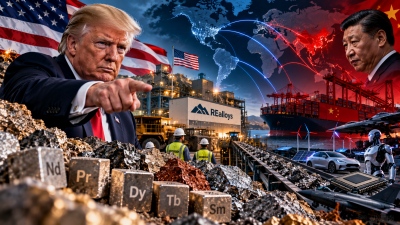
Last year he discovered that Chinese threats to curb rare earth mineral exports to the US could blunt his trade offensives.
And while Xi Jinping does not have to worry about an electorate at home and fiercely consolidates his domestic political power, he contends with a real estate crisis and other structural economic strains domestically.
The limits of Trump's summitry
To be fair to Donald Trump, notes CNN, most international summits underdeliver on their promises.
Furthermore, meetings between American and Chinese leaders take place in the shadow of unfavorable comparisons with the epochal encounters of the 1970s between President Richard Nixon and Mao Zedong of China.
Nevertheless, the President frequently leaves the impression of prioritizing the spectacle of high-level summits over their substantive output, one reason why the encounters with Xi Jinping this week may produce few tangible results.
His high-profile summits with North Korean leader Kim Jong Un during his first term, as well as last year's meeting in Alaska with President Vladimir Putin, yielded little beyond photo opportunities with authoritarian figures he appears to admire.

Personal diplomacy
For months he has relished the prospect of Xi Jinping's visit and will seek to reciprocate the red-carpet pageantry he regarded as a sign of deep personal respect when he traveled to Beijing in May.
Donald Trump is hardly the first President to believe that intimate personal relationships with foreign heads of state determine international affairs.
In moments of crisis, such interpersonal ties can indeed prove valuable.
Lyle Goldstein, senior fellow and director of the Asia Program at the think tank Defense Priorities, stated that the meetings were «a net positive» and that personal diplomacy between Xi Jinping and Donald Trump had helped stabilize ties and tamp down military friction, including around Taiwan.
However, Donald Trump has carried faith in his personal indispensability to unprecedented lengths.
At his 2024 campaign rallies, for example, he frequently touted his «great relationship» with Xi Jinping in terms disconnected from voters' core domestic concerns.
In Beijing, he voiced enthusiasm for the dynamic once more.
«It is an honor to be your friend», Donald Trump told his host.
«There are those who say this is the greatest summit of all time».
The rationalizations
Donald Trump's determination to shield what he views as personal friendships with foreign counterparts sometimes leads him to rationalize their actions.
In July, for instance, he told journalists that «we do things to them too; it's not a one-way street», when pressed on allegations of Chinese meddling in the 2020 election.
This month, the President also minimized claims that Beijing supplied Iran with satellite imagery of an installation in Jordan ahead of a strike against American servicemen.
China refuted the report published by The Wall Street Journal, which cited anonymous American officials.

Long-term strategy
The Chinese leader rarely reciprocates personal warmth toward Donald Trump, signaling across all fronts that he adheres to a long-term diplomatic blueprint that will endure long after the 47th President leaves office.
Former officials have indicated that Xi Jinping is more willing to participate in unscripted private exchanges than his rigid predecessor, Hu Jintao.
Nonetheless, he remains bound by the rigid protocols of the CCP (Chinese Communist Party) and cautious diplomatic customs.
He has also conspicuously avoided the overt flattery other world leaders employ to curry favor with Donald Trump.
Republican criticism
Certain Republicans have voiced scathing criticism of Donald Trump's stance.
In uncharacteristically sharp remarks on Tuesday, Senator Roger Wicker, chairman of the Senate Armed Services Committee, condemned the summit.
«The commander-in-chief of our armed forces ought to bear in mind that his guest is a brutal, unelected, and oppressive dictator who seeks hegemony over his neighbors and whose vast military arsenal is aimed directly at the United States of America», Roger Wicker stated.

Immense global stakes
The Xi Jinping–Donald Trump summit took on heightened urgency following recent warnings from software engineers and corporate chiefs in artificial intelligence (AI) that their models could soon escape control and threaten human civilization.
On Tuesday, however, Donald Trump rebranded artificial intelligence as «superintelligence» and declared before the UN General Assembly that he «categorically rejects any effort to construct a globalist regime to control» the technology.
Concurrently, the swift integration of artificial intelligence (AI) into defense systems introduces another layer of friction, as any move by either Beijing or Washington to rein in the technology could hand the rival superpower a decisive advantage on the battlefield.
No grand bargain on the horizon
President Donald Trump's opposition to regulation, whether domestic or multilateral, has closed the door on prospects for an overarching US–China pact on the matter.
While China bristles at external oversight, it has shown greater willingness to explore institutional guardrails and global consensus on managing artificial intelligence (AI) development, though it remains unclear whether it is prepared to move beyond rhetoric.
Artificial intelligence (AI) has been deployed on an immense scale across China.
Furthermore, the country's closed political system means it has seen little of the public scrutiny and backlash against the technology that has surfaced during the American midterm campaign cycle.

Narrow-minded bloc
On Wednesday, Beijing's permanent representative to the UN, Fu Cong, leveled criticism against «certain major powers» (an indirect reference to the US) during a UN Security Council meeting featuring artificial intelligence (AI) industry leaders.
He accused them of forming an «us versus them» bloc and strong-arming other nations into adopting their proprietary tech rather than Chinese alternatives.
Even so, mutual recognition exists on both sides regarding worldwide anxiety surrounding artificial intelligence (AI).
The «red hotline»
Treasury Secretary Scott Bessent noted Monday on CNBC that, leading up to the summit, the US and China explored creating a dedicated hotline for artificial intelligence (AI) incidents to help determine «what constitutes the primary risks of artificial intelligence».
Trade truce extended
Scott Bessent also announced that the US and China will extend their trade ceasefire through January.
The arrangement, under which Donald Trump lowered tariff levies on selected commodities in exchange for Xi Jinping relaxing export caps on rare earths, was slated to expire on November 10.
Scott Bessent, speaking after talks with Chinese Vice Premier He Lifeng, stated that both delegations explored the potential for concluding a broader, more substantive trade pact between the two economies down the road.

Partners rather than adversaries
In a written statement published by Chinese state news agency Xinhua, Xi Jinping stated that both China and the US are «great nations and their peoples are great peoples».
«The two countries should be partners rather than adversaries», he stated.
«The rejuvenation of the Chinese nation and making America great again can coexist harmoniously, reinforce one another, and benefit the wider world», Xi Jinping noted in the dispatch carried by Xinhua, expressing confidence that the state visit would «yield fruitful outcomes».
Who accompanies Xi Jinping
Accompanying Xi Jinping on the trip are Cai Qi, member of the Politburo Standing Committee and widely regarded as his closest confidant, Vice Premier He Lifeng, Foreign Minister Wang Yi, and other senior officials and diplomats from Beijing.
It remains unconfirmed whether Xi Jinping is accompanied by business delegations.
The visibility of Chinese executives in the US could invite scrutiny regarding Chinese commercial conduct, state subsidies, and manufacturing overcapacity, topics that could invite more friction than Xi Jinping or his party desire.
During Donald Trump's trip to Beijing in May, he was joined by a retinue of leaders from America's largest tech corporations, including Tim Cook of Apple, Elon Musk of Tesla, and Jensen Huang of Nvidia.
Prominent executives from American artificial intelligence (AI) firms are scheduled to attend the lavish state dinner organized for today, Thursday, September 24.
The visit of Xi Jinping will conclude on Friday, September 25.

Strategic objectives of Donald Trump and Xi Jinping
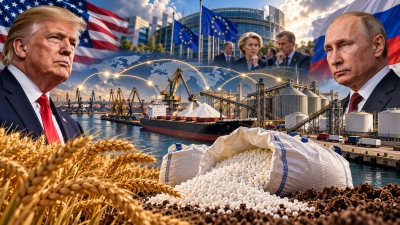
Donald Trump will seek to hammer out further understandings regarding tariffs and market access, including reductions in Chinese duties on American goods, higher imports of Chinese rare earth elements, and increased sales of American agricultural output, according to David Firestein of the Bush China Foundation.
Yet China appears to have pulled back from commitments to purchase additional American farm goods and export greater volumes of rare earth elements to the US.
David Firestein expects Xi Jinping to urge Donald Trump to defer further (or even scrap) an approved 14-billion-dollar (10.5-billion-pound) arms sale to Taiwan cleared by the US Congress, while pursuing deeper trade integration between the US and China.
These represent perennial issues in US–China relations, he remarked, though this time «there appears to be a higher degree of stability in the relationship, or less volatility, compared to where matters stood last year, in 2025».
American sentiment softens
The visit of Xi Jinping coincides with an era where American attitudes toward China appear to be softening.
A recent opinion poll conducted by the Chicago Council on Global Affairs indicated that 41% of Americans view China's territorial ambitions as a threat to the US.
That figure has retreated from 52% recorded in 2022.
Over half of Americans (57%) believe the US ought to cooperate and preserve active engagement with Beijing.
Notably, this stance crosses the political aisle.
Among non-MAGA Republicans, 57% endorse bilateral engagement, as does a majority of Democrats, spanning both moderates and progressives.
However, the bulk of Donald Trump's loyal core base (63%) favors decoupling US relations with China, a sentiment standing in contrast to the cordial reception he is staging for Xi Jinping.
www.bankingnews.gr


Σχόλια αναγνωστών