

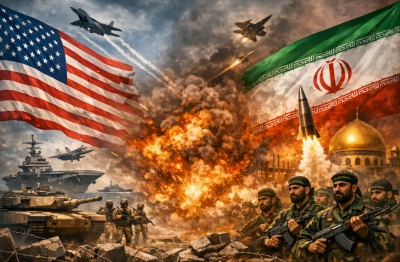
Iran states that if the Americans attack Iranian cities again, they will strike Cyprus and Bulgaria in retaliation… Iranian National Security makes it clear: the war will become harsh and asymmetric. These statements suggest a pre-planned strategy by Iran. This strategy is that in the event of a new attack by the United States and Israel, Iran will implement specific responses during the very first days of the war. But what will these military responses be?
Hellish fire in multiple cities of Iran and Hormuz – Barrage of missiles, drones – Refueling planes activated
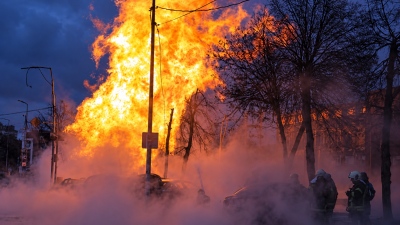
Multiple explosions occurred in southern and central Iran, as missiles and drones struck Iranian cities… while Iran launched missiles into the Strait of Hormuz. Several loud explosions occurred along with fighter jet activity in regions of southern and central Iran, including Bandar Abbas, Qeshm, Minab, Kharg, and Natanz. At the same time, reports have been published regarding aerial refueling tanker movements and missile attacks against vessels that violated the ban in the waters of the Strait of Hormuz. Numerous field reports and statements from residents of the southern and central regions of the country indicate simultaneous events in various sensitive locations.
According to reports from Bandar Abbas, at least three consecutive explosions shook houses and generated a powerful shockwave in the city. At the same time, similar reports of explosions have been recorded in Minab, on Kharg Island, as well as fighter jets passing over the skies of Natanz. In southern waters, initial reports speak of at least two very loud and close explosions in the Strait of Hormuz and around Qeshm Island. There were reports of missiles and unmanned aerial vehicles launched against vessels that violated Hormuz. Simultaneously with these movements, extensive aerial movements of three refueling aircraft from Israel towards the region were recorded, alongside the presence of four additional refueling aircraft over the Strait of Hormuz.
Israel possesses nuclear weapons but inspectors go to Iran – Israel slaughtered 70,000 people
Iranian President Masoud Pezeshkian criticized Western hypocrisy at the UN General Assembly, exposing the contradiction of an Israeli regime armed with nuclear weapons operating with complete impunity, while Iran faces relentless inspections and sanctions. Addressing the assembly, the Iranian official stressed that trust cannot be built through rhetoric alone, but requires the substantive abandonment of double standards. "The atomic bomb and other weapons of mass destruction in this region are in the hands of the Israeli regime. However, inspections are required of Iran!", "Israel slaughtered 70,000 people in Gaza, while Iran was bombed at the negotiating table!" Israel possesses nuclear weapons, refuses to join the Treaty on the Non-Proliferation of Nuclear Weapons (NPT), and has never allowed any international inspector to enter its territories in its entire history, declared Masoud Pezeshkian. "Yet, it is rewarded with billions of dollars in free weapons and enjoys absolute immunity to bomb any capital it chooses." "I repeat: the nuclear bomb is in Israel, but the inspectors are in Iran! Israel kills, but Iran gets sanctioned!" emphasized MasoudPezeshkian.
Reuters: Indications of intensifying direct contacts between Americans and Iranians over Hormuz
As the UN General Assembly takes place in New York, there are indications of a potential direct contact or meeting between representatives of Iran and the United States. Reuters reported that an Iranian delegation departed for New York with broader authority to revive diplomatic relations with the Americans. US Secretary of State Rubio also announced that Washington is ready to talk with Iranian officials at the UN, although no official meeting has yet been scheduled. He stated that the main goal of potential talks is to prevent Iran from acquiring nuclear weapons! This stance comes at a time when both sides have emphasized their positions on security and military matters in recent weeks, and any negotiations could be influenced by developments on the ground. Meanwhile, Qatar and Pakistan are making efforts to revive the so-called "Islamabad Agreement" between Iran and the United States. Iran appears to oppose re-drafting the core principles of the agreement and is willing to negotiate only on the method of its implementation, particularly regarding shipping arrangements through Hormuz.
New York Times: The 17 US bases in the Persian Gulf drastically reduced due to chaos and high risk
The war with Iran proved how vulnerable American bases are. The Pentagon must radically re-examine how it deploysits forces and equipment. One way to reduce risks to the bases is reducing their number from 17 bases down to 8 military bases. The merging and consolidation of bases means that fewer troops are exposed to enemy fire. The New York Times reported that "a month before President Trump started his war in Iran, construction crews began a multi-million-dollar renovation of the American sailors' barracks at the US base in Bahrain, which is the regional headquarters of the US Navy. But in the first hours of the conflict with Iran, the future of these barracks, and indeedthe entire facility, was called into question. On February 28, Iranian missiles and attack drones targeted food and fuel storage facilities and ship repair facilities at the base. Advanced command centers equipped with cutting-edge technology were destroyed. Residential areas were rendered virtually uninhabitable. No deaths were reported, but approximately 1,500 military personnel and their families were evacuated, leaving behind their vehicles, pets, and personal belongings. Nearly seven months later, the base, which the US military once called "the busiest 152 acres inthe world," remains essentially a wasteland.
Something terrible will happen – What will Operation Sadiq Promise 5 look like? – Immediate targets Cyprus and Bulgaria
If tensions escalate, Iran will also consider options beyond the Middle East. Iran may target American military bases in Europe, particularly in Bulgaria and Cyprus. Bulgaria recently confirmed the use of its airbase by US refueling aircraft. What Operation Sadiq Promise 5 will look like: In recent years, Iran's defense doctrine has shifted from a purely defensive stance to a "punitive/defensive" logic. Senior Iranian officials have repeatedly emphasized that "in Iran's new doctrine, certain responses are delivered before the threat reaches the implementation stage." Shahid Ali Shamkhani, a former member of Iran's Supreme Defense Council, warned that "any aggression will have a harsh, immediate response that exceeds the imagination of its planners." Mohsen Rezaei, the current secretary of the SupremeNational Security Council, has also stated repeatedly that any American-Zionist aggression against Iran will be met with a crushing and decisive response. These statements suggest a pre-planned strategy by Iran.
What will Iran's retaliation be?
Direct military response from Iran: Missile and drone attacks
Iran's first step in responding to any aggression is launching a massive barrage of ballistic missiles, cruise missiles, and suicide drones at pre-selected targets. According to US intelligence estimates, Iran has maintained approximately 70% of its pre-war missile stockpile, 60% of its missile launchers, and 40% of its attack drones, even after previous major attacks. Iran has launched more than 500 ballistic and cruise missiles and more than 2,000 drones at American and Israeli targets during previous conflicts, and possesses the capability to produce dozens of ballistic missiles and roughly500 drones per month. According to reports, in this operation, Iranian missiles and drones will target locations such as the headquarters of the US Fifth Fleet in Bahrain, American bases in Qatar and the United Arab Emirates, as well asIsraeli military and security centers. Iran has also threatened that "all assets and interests of the US and Israel in the region are legitimate targets, and following this aggression, there is no red line."
First punishment: Paralysis of the global economy – Oil production will be reduced by 25 million barrels per day
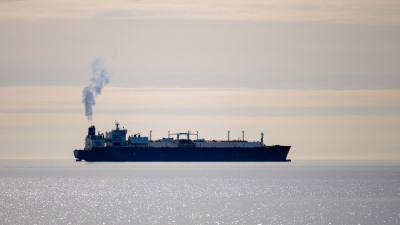
The most significant and effective punishment that Iran views as a first step is striking the region's energy infrastructure and shutting down the Strait of Hormuz completely, bringing navigation to zero. Iran has prepared a detailed "retaliatory target list" according to which, if Iranian power generation facilities are attacked, Iran will strike power plants in Israel and other US allies in the region with missiles and drones. If Iran's oil and gas infrastructure is targeted, Iran will target key oil and gas facilities of Israel and US allies, aiming to reduce global oil production by 25 million barrels per day for a year. Iran has significantly blocked transit through the Strait of Hormuz since the start of the war on February 28. The complete closure of the Strait of Hormuz will cause oil prices to spike sharply and plunge global energy markets into crisis.
Second punishment: Leveraging the Axis of Resistance and expanding the war
Iran has planned the war as a "multi-front conflict" and can integrate all resistance fronts (Lebanon, Iraq, the Persian Gulf, and maritime chokepoints) into a single strategic space. In the war, the IRGC announced that it had carried out 220 coordinated attacks with regional allies against targets linked to the United States and Israel.
Third punishment: Cyberwarfare and attacks on financial infrastructure
Iran has threatened that its response to potential future attacks will not be limited to the military domain, but will also include a "global economic war." Iranian officials have stated that they will target banks, financial infrastructure, and financial assets linked to Washington and Jerusalem around the world. Iran's retaliatory strategy will include cyberattacks on international banks, disruptions to companies with financial ties to Israel, and operations against Western investments in the Middle East. Iran has also threatened to target information technology and artificial intelligence centers in countries involved in assassinations, if political and military officials are assassinated.
Fourth punishment: Attack on American assets outside the region
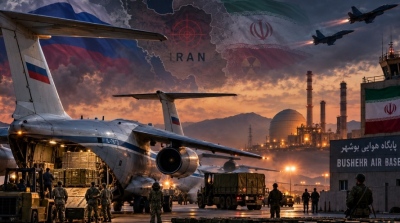
If tensions escalate, Iran will also consider options beyond the Middle East. Iran may target American military bases in Europe, particularly in Bulgaria and Cyprus. Bulgaria recently confirmed the use of its airbase by US refueling aircraft. Another potential target is undersea fiber-optic cables in Hormuz.
www.bankingnews.gr





Σχόλια αναγνωστών