

With extraordinary intensity, developments succeed one another in the Iran-US war, with the sharp decline in maritime traffic through the Strait of Hormuz, the destruction of an American MQ-1 drone, American statements regarding the status of the Iranian air force, the unprecedented spike in fuel prices across international markets, and vigorous diplomatic activity from Pakistan, China, and regional countries shaping an exceptionally complex landscape.
The military, economic, and diplomatic parameters of the war now interact in a way that renders the coming days critical for the trajectory of the conflict.
Donald Trump stated that in the not-so-distant future there will be «very big» events regarding Iran, while simultaneously, according to the same information, Donald Trump may be prepared to meet with Masoud Pezeshkian on the sidelines of the UN General Assembly.
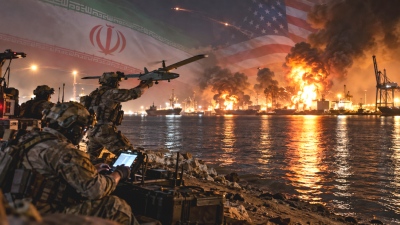
At the same time, the Islamic Revolutionary Guard Corps (IRGC) announced that it intercepted and destroyed an American MQ-1 drone over the Strait of Hormuz.
According to the announcement, the drone was destroyed by a new advanced aerospace defense system under the control of Iran's integrated air defense network.

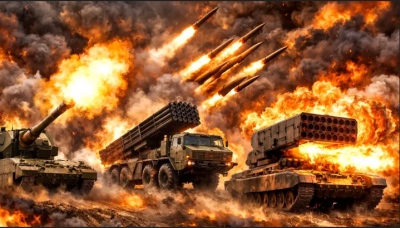
Furthermore, they stated that Iran declares it has developed «new weapons» that the world has never seen before and that it will bring «new weapons with new capabilities to the battlefield, and the world will be amazed».
As noted, Tehran possesses strategic weapons developed during the war that «have not yet been deployed», describing them as strategic assets that will be utilized when the need arises.
This unfolds at a time when Iran's emergency bill for withdrawal from the Treaty on the Non-Proliferation of Nuclear Weapons (NPT) is now in the hands of the Speaker of Parliament, having been forwarded today to the presidium, with lawmakers demanding nuclear tests «as soon as possible».
Concurrently, the United Kingdom Maritime Trade Operations (UKMTO) reported an incident involving a vessel during its transit through the Strait of Hormuz.

Alarm in Hormuz
One of the most significant developments concerns the abrupt reduction in vessel traffic through the Strait of Hormuz.
Reuters, citing the shipping analytics firm Kpler, reported that only 12 cargo vessels transited the critical waterway over the weekend, compared to 35 the previous weekend.
Data from Kpler also indicates that 13 tankers, primarily VLCC crude supertankers, departed Hormuz during the week ending September 13.
These vessels transported a total of 34 million barrels of oil.
Saudi Arabia accounted for 50% of exports, while Iraq accounted for 35%.
The development is of particular importance, as the Strait of Hormuz represents one of the most critical energy corridors in the world and any prolonged disruption to navigation can immediately transmit shocks into international oil and fuel markets.
The cost of the war is now spilling over into energy markets with particular severity.
Bloomberg reported that the average retail price of gasoline in the United States exceeded 6.50 dollars per gallon for the first time, reaching 6.505 dollars.
According to the report, prices have surged by more than 87 cents since early September, surpassing the previous historic high recorded in 2022.
At the same time, Reuters, citing Energy Aspects, estimates that Europe will face a deficit of 510,000 barrels per day of jet fuel in the fourth quarter of the current year.
Conversely, the US is expected to see a surplus of 18,000 barrels per day, while the Asia-Pacific region will see a surplus of 419,000 barrels.
According to the same analysis, the war has disrupted nearly half of jet fuel imports into Europe.
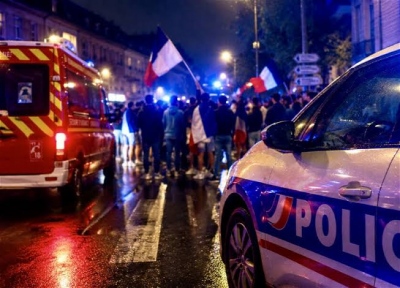
In France, Al Jazeera reported that diesel prices set a new record, with the average price reaching 2.41 euros per liter.
Meanwhile, the price of 98-octane unleaded gasoline exceeded 2.28 euros.
These developments unfold while crude oil prices have risen approximately 20% in September, with Brent continuing to trade above 100 dollars.

Concurrently, a journalist for The Economist highlighted the shortage of available oil tankers and the steep rise in chartering rates.
According to the same report, the charter cost for a supertanker loading in the Persian Gulf and transiting Hormuz had reached over 1 million dollars per day earlier this month.
In the gold market, Reuters reported that the spot ounce price retreated by 0.5% to 4,354.30 dollars during Monday's trading.
Traders continue to assess the potential impacts of the war on inflation and interest rates.
The situation across markets consequently remains exceptionally complex, as geopolitical friction concurrently impacts oil, fuels, shipping, inflation, and monetary policy.
Diplomacy has not halted
Alongside military and economic pressures, diplomatic channels remain active.
Pakistani Interior Minister Mohsin Naqvi arrived in Tehran, where he was welcomed by Iranian Interior Minister Eskandar Momeni.
According to Al Jazeera, citing a Pakistani source, Mohsin Naqvi was scheduled to discuss mediation efforts and avenues for breaking the deadlock.
However, Tasnim presented a differing account, asserting that the visit is unrelated to Iran-US relations and focuses instead on bilateral ties and cooperation.
According to Tasnim, Mohsin Naqvi is not conveying a message from Pakistan to Iran, and Iran does not intend to send a message through him.
The same publication underscored that Iran's seven conditions had already been communicated to the American side and that no shift in that position has occurred.
The role of China and potential intervention by Beijing
Mark Pfeifle, a Republican strategic analyst and former official of the White House and the National Security Council, described China's involvement as one of the developments that could advance diplomacy between Tehran and Washington.
He stated that China's moves in the coming week will be particularly crucial.
In this context, he pointed to Saudi Arabia's request to Beijing for assistance regarding Ansar Allah, alongside a potential meeting between Donald Trump and Xi Jinping.
In Washington, Anna Paulina Luna, a Republican on the House Foreign Affairs Committee, stated that an agreement to end the war with Iran will require intensive negotiations with governments maintaining communication channels with Tehran.
She added that prospective discussions between Donald Trump, the Chinese president, and the Russian side will likewise encompass the issue of the war with Iran.
Washington keeps the door to negotiations open.
Michael Waltz, US Ambassador to the United Nations, argued that the door remains open for Iran to return to the negotiating table.
However, according to his statement, talks must be conducted in good faith, while Washington will continue to apply maximum pressure.
At the same time, Masoud Pezeshkian is expected to depart for New York on Tuesday to participate in the UN General Assembly.
The presence of the Iranian president in New York assumes particular weight during a period in which military operations, economic pressures, and international negotiations unfold concurrently.

Saudi Arabia: Intense diplomatic activity
Concurrently, Saudi Arabia has intensified its diplomatic engagement.
Foreign Minister Faisal bin Farhan discussed recent regional developments and joint efforts to contain tensions with counterparts in Kuwait, Egypt, and Turkey.
In another significant development, The New York Times, citing American officials, reported that Donald Trump has decided for now not to participate in Saudi strikes against Ansar Allah.
According to the report, concerns regarding the potential opening of a new front in the war with Iran were factored into the decision.
The IRGC rejects any diplomatic involvement
Domestically in Iran, IRGC spokesperson Sardar Mohebi denied any formal or informal link between the IRGC and the United States.
As he stated, the IRGC does not engage in diplomacy, and diplomatic matters are handled exclusively by the Ministry of Foreign Affairs.
Meanwhile, the General Staff of the Armed Forces and the Khatam al-Anbiya Central Headquarters announced that the Army, the IRGC, the Ministry of Defense, Faraja, the Basij, and Border Guards will not yield in defending national interests, the rights of the nation, and the territorial integrity of the country.
Qatar: Assessment regarding the future of Hormuz is «erroneous»
From Qatar's side, Minister of State for Energy Affairs Saad Sherida Al-Kaabi characterized as «erroneous» the statement by US Treasury Secretary Scott Bessent that the Strait of Hormuz will lose its significance over the next two years.
Saad Sherida Al-Kaabi emphasized that while Hormuz is not the only corridor for transporting oil and natural gas, it remains vital for the broader trade of the region.
The debate assumes particular importance as vessel transits through the strategic passage have already plummeted.
New American warning regarding Iranian airlines
Scott Bessent also argued today that all Iranian airlines will cease operations globally starting September 23, a date corresponding to October 1 according to the calculation method noted in the relevant report.
The specific claim was published by CNBC, which cited the US Treasury Secretary.
Ali Shamkhani: The strategic legacy in the defense of Iran

Within this highly charged environment, references to the defense architecture of Iran and the role played by Ali Shamkhani present distinct interest.
The spokesperson for the Ministry of Defense and Armed Forces Logistics, in an exclusive interview with a reporter from Nour News, referred to the qualities of Martyr Admiral Ali Shamkhani, describing him as one of the prominent personalities in the sphere of Iran's defense and national security over recent decades.
Reza Talaei-Nik stated that Ali Shamkhani was an outstanding figure across three fundamental dimensions: his personality and individual role, the portfolios he undertook, and his strategic doctrine alongside the foundations he established in national defense.
Referring to the personal characteristics of Martyr Ali Shamkhani, he highlighted his intellectual depth, faith, sincerity, and effective engagement with military and national officials.
Concurrently, according to him, the creativity and strategic initiative of Ali Shamkhani, both during the eight-year imposed war and following it, contributed to bolstering the defensive power of the country, enacting structural reorganizations, and strengthening weapon foundations.
The Defense Ministry spokesperson added that the missile sector, the naval sector, and domains capable of creating specific advantages for the country's offensive power constituted areas where Ali Shamkhani's thinking played an instrumental role.
According to Reza Talaei-Nik, Ali Shamkhani is regarded as the architect of transformation across several of these fields.
Moreover, he was characterized as one of the few commanders tasked with instituting transformations within the armed forces, both during the era of Imam Ruhollah Khomeini and during the period of the Martyr Leader of the Revolution.
His trajectory in the IRGC, the Army, the Ministry of Defense, the Supreme National Security Council, the Center for Strategic Studies, and the Defense Council allowed him, according to the spokesperson, to play a pivotal role across varied domains and reinforce the defensive capabilities of Iran.
Addressing the current state of defense readiness of the Islamic Republic of Iran, the Defense Ministry spokesperson stated that one of the primary and decisive elements in shaping the defensive strength of the country in recent decades was the contribution of Martyr Ali Shamkhani.
Reza Talaei-Nik also referenced the role of Ali Shamkhani in designing and innovating new defense systems.
As he stated, Ali Shamkhani undertook dedicated initiatives, particularly in countering hostile naval fleets, ballistic missile weaponry, and establishing a novel perspective in offensive equipment.
According to him, these actions heightened the sensitivity and hostility of adversaries toward Ali Shamkhani, who had been threatened numerous times.
Reza Talaei-Nik maintained that these threats proved unsuccessful and that Ali Shamkhani's name had repeatedly surfaced among assassination targets, both publicly and covertly.
As he stated, Ali Shamkhani always welcomed martyrdom, ultimately joining the ranks of his martyred comrades concurrently with the martyr Imam, given his extensive past contributions.
The Defense Ministry spokesperson concluded his reference to Ali Shamkhani by underscoring that the foundations he laid in the Ministry of Defense, the IRGC, the Army and Navy, the Supreme National Security Council, and the Defense Council constitute, in his estimation, a strategic beacon for the present and the future of the country.

The coming days will determine the next phase
The situation remains exceptionally fluid.
The abrupt drop in navigation through the Strait of Hormuz, the reported destruction of the American MQ-1, the surge in oil and fuel prices, the pressures on European jet fuel imports, the skyrocketing charter costs for supertankers, and the activation of diplomatic conduits from Tehran and Islamabad to Washington, Beijing, and New York compose a panorama of unprecedented uncertainty.
At the same time, statements from both sides remain uncompromising, while the potential for diplomatic contacts coexists with continuing military and economic pressures.
With Masoud Pezeshkian heading toward New York, China emerging as a viable communication conduit, Pakistan maintaining contact with Tehran, and Hormuz situated at the core of the global energy market, the coming days are expected to prove decisive for the direction of the conflict.
In any scenario, Iran remains at the epicenter of a geopolitical crisis that is no longer confined to theaters of military operations, directly impacting global energy, shipping, inflation, international markets, and global diplomacy.
www.bankingnews.gr





Σχόλια αναγνωστών