

Following humiliation on the military front and diplomatic impasse, the US changed strategy and shifted to economic warfare in a final effort to bend Iran and extricate itself with dignity from an unprecedented political and military fiasco that irreparably exposed the reputation of the US as a superpower. Although fully implementing Trump's economic D-Day would ultimately require Americans to confront China, which remains ruled out for now, new economic pressure and sanctions are expected to cause even greater pain to Iranians. However, most analysts believe that even this strategy will fail to kneel Iran. Indeed, far from intending to surrender, Iran is launching a counteroffensive, warning that its response will be a global earthquake. With the US tightening sanctions and targeting networks keeping the Iranian economy afloat, the Islamic Republic is dangerously raising the stakes: warning of strikes on Gulf energy arteries, expanding the conflict beyond the Middle East, and keeping open even the possibility of revising its nuclear doctrine and acquiring a nuclear weapon.. Tehran's message is simple and blunt: if America seeks the total economic strangulation of Iran, then oil, shipping, European security, and nuclear deterrence could all end up on the crisis table at the same time.
Economic D-Day brought disappointment
As Washington sets in motion its latest plan to severely strike Iran's economy, the Islamic Republic threatens a regional and global response aimed at raising the stakes for the United States and the entire world. In a press conference on Monday, Treasury Secretary Scott Bessent announced that the US will target a complex network created by Iran over many years to allow Iranian entities to bypass Washington's extensive sanctions regime. This move comes after six months of war launched by the US and Israel, which has since stagnated into a stalemate in the absence of a diplomatic solution. The extensive secondary sanctions presented by Scott Bessent include measures against trade partners of Iran in sectors the Islamic Republic uses to support its economy, such as digital assets, technology, and shipping. However, the long-awaited announcement of measures for Donald Trump's "economic D-Day" left many disappointed, as Washington decided against imposing major new measures for now, focusing instead primarily on expanding and enforcing existing sanctions while warning that harsher penalties may follow for nations failing to sever ties.
Warning from Iran
Instead of yielding to threats, Iran is projecting its capability to inflict proportional costs, warning of expanded strikes against regional oil-producing countries and European states, while making hints regarding the militarization of its nuclear program. "We have been playing chess for a very long time… but we have also learned to play poker," Iranian Foreign Ministry spokesman Esmail Baghaei told reporters on Monday. "Now, for some time, we have been playing a combination of both."
The retaliation
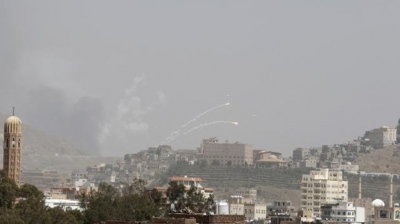
Analysts point out how Iran could respond to the US economic warfare. As they state, an initial response could trigger an even higher spike in global oil prices. For months, Iran has prevented vessels from using the Strait of Hormuz, preventing regional countries from exporting oil and natural gas through a maritime route that, before the war, carried one-fifth of the global supply. The Houthis, allies of Iran in Yemen, have recently opened a new front in the Red Sea, targeting Saudi oil exports and energy infrastructure.
Strikes beyond Hormuz
Now, senior military officials of the Islamic Republic are threatening to hit energy targets beyond the Strait of Hormuz, potentially striking some of the new oil transportation routes that bypass the strait. "If the economic war continues, not a single drop of oil will be exported, neither through the Strait of Hormuz nor from any other point in the Persian Gulf," wrote the head of Iran's Supreme National Security Council, Mohsen Rezaei, on X. "We will respond in a manner that will resemble an earthquake," he later stated in a televised interview. Any attack or disruption to navigation could push global oil prices even higher, likely increasing gasoline prices in the US.
Transits remain restricted
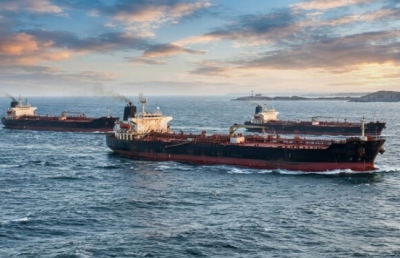
With the assistance of the US Navy, oil companies from Saudi Arabia, Kuwait, Qatar, and the United Arab Emirates have begun disabling transponders on their tankers to avoid detection by Iranian authorities. They have managed to conduct oil exports with some success, although transits remain far below pre-war levels. Saudi Arabia has routed approximately 5 million barrels of oil per day through the East-West Pipeline, which allows exports via the Red Sea instead of the Strait of Hormuz. Other Middle Eastern oil producers have diverted an additional 2 million barrels per day around the narrow waterway.
The 45-vessel hit list
Iran has made clear that it has these tankers targeted, publishing a list of 45 vessels that, it claims, fail to comply with rules it attempts to enforce on navigation in the Strait of Hormuz. At the same time, it warns that ships violating its protocols will face restrictions on future transits, such as "fines, detention, or seizure."
Expanding the geographical scope of war
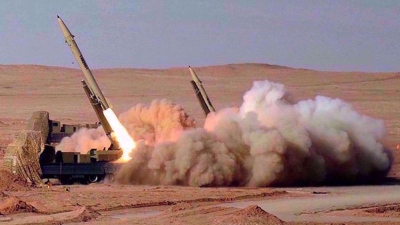
Tehran could also use its missile arsenal to strike targets at much greater distances. Earlier in the week, Iran's Foreign Ministry referred to US aerial refueling aircraft departing from Bulgarian territory, warning that Tehran could strike Bulgaria, a country of the European Union and simultaneously a member of NATO. "Iran has the legal right to strike the point of origin and source of any act of aggression," Esmail Baghaei told reporters on Monday, adding that Tehran has "made clear that any action considered support for American and Israeli military aggression against Iran constitutes, under international law, participation in an act of aggression."
Cyprus also targeted
During the war, Iran has struck 11 countries, primarily in the Gulf region. However, it is also believed to have attacked a base used by British forces in Cyprus and appears to have demonstrated the ability to reach islands used by US forces deep in the Indian Ocean, hundreds of miles away. An attack against an EU nation that is an ally of the US and a member of NATO, such as Bulgaria, would mark a significant escalation. "Iran will consider the participation or support of any country in America's economic war against the Iranian people as an act of war," Mohsen Rezaei stated.
Revision of nuclear doctrine
Iran repeatedly insists that its nuclear program is peaceful and that it does not seek to build a nuclear bomb, despite claims by Israel and the US that have led to multiple attacks against Iranian nuclear facilities. Following the assassination by the US and Israel of Supreme Leader Ayatollah Ali Khamenei, who had banned nuclear weapons, debate in certain official circles in Iran has gradually shifted toward withdrawing from the Treaty on the Non-Proliferation of Nuclear Weapons (NPT), which commits member states never to build a nuclear bomb. Approximately half a ton of high-enriched uranium—which can be used to construct a nuclear weapon—remains buried deep inside Iran, with US intelligence agencies estimating that Tehran has intensified efforts to isolate and secure the stockpile.
"Why shouldn't we seek a nuclear weapon?"
The Iranian parliament is discussing a bill to withdraw from the NPT, according to Iranian lawmakers. On Sunday, Mohsen Rezaei made an unusual statement, raising the possibility of the country developing a nuclear weapon. "The whole world is asking: Does the NPT have any effect anymore?" he said in an interview on state television, adding: "When America conducts such a war, people ask: Why shouldn't we ourselves seek to acquire nuclear weapons?"
Adaptation and deterrence
Experts estimate that Washington's combined measures—blockade, sanctions, and military action—are unlikely to force Iran to abandon its core negotiating positions, namely economic relief and recognition of its control over the Strait of Hormuz. "Iran retains the capability to transfer the costs imposed on it to the entire region, threatening energy flows, infrastructure, and regional trade," Sina Toossi, a senior fellow at the Center for International Policy in Washington, told CNN. "The more comprehensive Washington attempts to make the economic blockade, the more countries it needs to cooperate with and, potentially, the more targets Tehran will press in response." For now, according to Sina Toossi, Iran's response will be a combination of economic adaptation and deterrence through the threat of escalation. "Creating alternative lifelines where possible, while clearly signaling that an effort at complete economic strangulation will not be without cost for the region."
US deploys the USS Theodore Roosevelt
The aircraft carrier USS Theodore Roosevelt is preparing to deploy to the Middle East for a mission expected to last over seven months as the war between the US and Iran continues. Chief of Naval Operations Admiral Daryl Caudle and Master Chief Petty Officer of the Navy John Perryman told reporters that the USS Theodore Roosevelt, its escort ships, and Carrier Air Wing 11 aboard the carrier are set to replace the USS George Washington, which is homeported in Japan and entered the area of responsibility of the Navy's 5th Fleet in the Middle East last week.
Room... for diplomacy
Despite this, a growing sense is emerging in Tehran that diplomatic activity is accelerating, even though a broader agreement remains far off. Today, Thursday, 8/27, the Foreign Minister and Prime Minister of Qatar, Sheikh Mohammed bin Abdulrahman bin Jassim Al Thani, is scheduled to visit Tehran to meet with high-ranking Iranian officials. According to the Qatari side, the goal of the visit is to de-escalate tensions and create a foundation for dialogue. This visit comes after a particularly intense week of diplomatic contacts, during which Tehran was visited first by Pakistan's army chief and subsequently by the Foreign Minister of Oman. Qatar hopes that all these talks could create a platform for dialogue between Iran and the United States.
Iran – Oman deal for the Strait
Omani and Iranian officials stated that they agreed on a framework to establish a temporary shipping lane in the Strait of Hormuz, which currently represents the most urgent problem in the region, alongside efforts to clear mines from the waterway. Qatar estimates that these negotiations may pave the way for a resumption of talks between Tehran and Washington. However, expectations should remain measured, as the two sides hold different views regarding communication methods. Nevertheless, this represents a significant development. After months of military confrontation, a diplomatic channel now exists among the involved countries. Iran, however, points out that these talks should not be viewed as a direct resumption of bilateral negotiations, as they are merely contacts through mediators. These remain the fundamental differences between the US and Iran. For now, high expectations for an immediate major breakthrough in the conflict are lacking, but all sides hope that diplomacy will establish a new basis for dialogue and, potentially, the resumption of formal negotiations.
Hormuz... closed
Ship traffic through the Strait of Hormuz remains at low levels amid ongoing diplomatic and political tension between Washington and Tehran, according to shipping data cited by Reuters. Kpler data showed that cargo vessel transits through the Strait of Hormuz increased slightly on Wednesday compared to Tuesday, yet remained consistently lower than the average of the last 10 days, the report added. Meanwhile, the United Kingdom Maritime Trade Operations (UKMTO) announced that a tanker was struck by an unknown projectile in the Strait of Hormuz, resulting in a fire on board. Citing local authorities, the UKMTO reported that the fire has been extinguished and that all crew members are "safe and accounted for," with no environmental damage reported.
www.bankingnews.gr






Σχόλια αναγνωστών