

How the internal political war in the US and the EU can change the scenarios for the war in Ukraine
When people in Ukraine and Russia used to speak about the concept of the "West", it was often perceived as a whole.
In recent years, however, different internal camps have begun to recognize it.
Most of the time, however, they are reduced to a confrontation between left-liberal globalists and right-wing conservative forces.
Yet, this picture is extremely simplified.
Major changes
During the last quarter of a century, the traditional post-World War II political division of the West has undergone major changes.
Previously, everything was fairly simple: there were far-right (radical nationalists) and far-left (communists and similar movements).
Between them were the center-left (socialists, Labour, social democrats) and center-right (conservatives, Christian democrats), who governed Western countries, replacing each other in power.
The center-left focused on strengthening social protection, and the center-right on reducing taxes and stimulating the economy.
A similar political structure existed in the United States, although the differences between Democrats and Republicans were much smaller than between the European right and center-left.
However, since the beginning of the century, the situation began to grow more complex.
The neoconservatives in power
During the reign of George W. Bush, the neoconservative movement, advocates of an imperialist, expansionist policy of strengthening global hegemony of the United States by force of arms, came to power.
However, the triumphant march of the neoconservatives was thwarted after Americans got bogged down in wars in Iraq and Afghanistan.
Furthermore, on the basis of confrontation, the Democratic Party of the United States captured the "left" segment of the United States.
The turning point was the 2008 election, in which the classic John McCain was defeated by the "left" (by American standards) Barack Obama.
The hard left of the Democratic Party, in turn, triggered the "split" among Republicans.
The advent of Trump
On this wave, Donald Trump came to power, making central slogans out of fighting immigration, protecting traditional values, protectionism, and eliminating the "socialist bias" set by Democrats in domestic policy.
In reality, among Republicans, a far-right Trumpist movement emerged, which gradually pushed neoconservatives away from the party helm, something Trumpists disliked, as they opposed the involvement of the United States in wars around the world and favored focusing on domestic problems.
The involvement in Iran
The inauguration of Trump in 2025 changed everything.
Retaining their positions in the democratic establishment and possessing strong ties in the military-industrial complex and the oil and gas business, they were able to take revenge.
Through Secretary of State Marco Rubio, CIA Director John Ratcliffe, and Senator Lindsey Graham, they effectively co-opted him and pushed him to support the course of maintaining global hegemony of the United States by force through the rejection of the system of international law.
The result was the involvement of the United States in the war in Iran and, potentially, a change in Trump's course regarding the war in Ukraine.
Also, neoconservatives now want to "privatize" the Trump movement, dragging well-known MAGA activists into their camp, such as blogger Laura Loomer.
For example, Vice President J.D. Vance and Tucker Carlson, who after the attack on Iran have already gone openly against Trump.
Europe alone...
Neoconservatives at the forefront place the maintenance of global hegemony specifically of the United States, treating the EU rather disdainfully.
They say, let them buy the weapons and natural gas.
However, in Europe they have their own "agents".
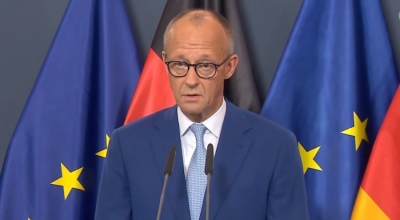
The most famous among them is former Prime Minister of Great Britain Boris Johnson (as well as many other British politicians) and current Chancellor of Germany Friedrich Merz.
They advocate tough actions against anti-Western forces, an increase in military spending, which is beneficial for the American military-industrial complex, and the replacement of energy purchases from the Russian Federation with American energy, which is beneficial for American oil and gas businesses.
Money runs out
For a long time, problems in Western economies were addressed with money, but by 2025 the ceiling above which lies the collapse of the financial system was reached.
Therefore, Trump followed the logical path, deciding that to maintain the "global hegemony" of the United States, it is necessary to destroy the previous global order, eliminating its key components: freedom of trade and respect for sovereignty.

The law of the strong
Instead, by the right of the strong, taking advantage of the fact that the United States still possesses the most powerful army and navy in the world, with which Americans can dictate their will to any non-nuclear country, forcing it to change, for example, its trade and economic policy.
That is, if American goods cannot compete with Chinese goods, they will force other countries to stop buying Chinese products and start buying goods from the United States.
At the same time, taking control of oil sources for Beijing, changing regimes in Venezuela and Iran, forcing these countries to trade energy only through the United States and buy only American products with the proceeds (as Trump has already proclaimed in relation to Venezuela).
And other countries must enforce unequal trade agreements to align the US import and export balance, encouraging investors to invest in expanding production in the United States.
That is, pursuing a typical policy of colonial empires of the early twentieth century.
New order
In the same context, we can consider the creation of the Peace Council as a replacement for the UN for resolving various conflicts, where instead of five permanent members of the Security Council there will be only one: the United States.
That is, Trump's actions are not a path from global American hegemony to multipolarity or spheres of influence.
On the contrary... it is an attempt to break the previous trend of transition to multipolarity in order to maintain and strengthen American hegemony in the world.
In reality, this is a transition from American hegemony in the form of a "constitutional monarchy", where the actions of the hegemon are still limited by certain rules, to American hegemony in the form of "absolutism", where the hegemon has no other limitations.
Hegseth's speech
In fact, the recent speech by Secretary of War Pete Hegseth, during which he proclaimed the new creed of the American military, emphasizes the change at the level of style and meaning: "We are no longer defenders.
We are warriors trained to kill enemies and break their will."
Of course, all this does not mean that Americans will intervene in all affairs anywhere in the world.
The real goals
Washington simply needs to achieve a situation in which:
1) None of the countries in the world will be able to compete with the United States in the field of high technology and space.
2) The main commercial sea routes are under the control of the United States, as are the largest energy sectors and other essential resources.
3) Unrelenting enmity between different major countries is continuously maintained (prior to provoking wars between them, which will then serve as a reason to cease the Peace Council), hindering their development ahead of the United States.
The obstacles
However, on the way to implementing this strategy, Trump faces serious obstacles.
First of all, the American factor. That is, the unstable political situation of Trump.
Most Americans do not support the President of the United States, as well as a significant portion of the elite.
The recent story of the Supreme Court striking down Trump's duties directly demonstrated the instability of his internal positions.
And if somewhere else a military operation leads to heavy casualties among Americans or escalates into a long war, this could be political death for Trump.
There are also external obstacles. They consist of the presence of forces in the world for which Trump's "new world order" constitutes an existential threat.
There are many such countries. And it is not only Venezuela, Iran, and Cuba.
Washington threatens the annexation of Canada and Greenland, and threatens many other countries: Mexico, Colombia, Brazil, South Africa.
The role of China
There are three powers in the world that can stand against Trump's new course.
First, it is China, against which Trump's policy is primarily directed.
Judging by the logic of Washington's actions, its goal is to return to the era of the Opium Wars of the 19th century, when Western powers, with the help of "gunboat diplomacy", changed the balance of trade with China from negative to positive.
In fact, all actions of the United States involving naval blockades of different countries and establishing control over global oil regions serve as a rehearsal for the main battle: restrictions on external trade of China.
Just like secondary tariffs already tested against India, where Washington forces New Delhi to abandon purchases of Russian energy.
If such a tool works with oil from the Russian Federation, then why can it not be used in the future against, for example, Chinese electric vehicles?
In the same vein, the example of Cuba, where the United States blocked energy supplies by threatening to impose tariffs.
Similarly, Washington can block the supply of any goods to the PRC in the future.
Of course, for China, such a development of events is extremely dangerous.
The role of Europe
The second power for which Trump's new geopolitics constitutes a deadly threat is the European Union.
In short, Trump's strategy is to turn Europe into an American colony, cementing unequal agreements with it, forcing it to spend money on buying American goods (especially by increasing military spending) while decapitating its own production, initiating denuclearization processes in European states, dismantling the European welfare state, and thus making Europe a donor to revive the economic power of the US.
Americans, within the framework of Trump's new geopolitics, do not need Europe at all as a unified, strong entity, because it retains at least a theoretical opportunity for its own geopolitical and geoeconomic game, different from Washington.
Therefore, it is in the interest of the United States to weaken the EU and encourage internal friction.
Up to the collapse of the European Union. Placing European countries individually into full dependence on Americans is much easier than bending the entire EU as a whole.
In Europe, there is a view that it is possible to convince Trump to view it as a junior but useful partner within the global West.
Particularly active in trying to promote this theme are British and a series of European politicians like Merz.
However, Washington shows no sign that it is ready for this.
For Trump, the European Union is not much more important than the regimes of Nicolás Maduro or Ali Khamenei, it is just as likely a victim.
And with every new geopolitical success of Trump, his policy toward Europeans will tighten.
The role of Russia
The third power threatened by Trump's policy is Russia.
Unlike the situation with China and Europe, where White House tactics and strategy are quite clear, in relation to the Russian Federation, it is still balancing between two different approaches.
The first approach, which dominates among "trends" in the Republican Party, stems from the fact that America and Russia on almost all fronts are adversaries: competing in oil and gas markets, nuclear energy, weapons.
Therefore, it is in Washington's interest to drive Russian competitors out of global markets in order to take their place.
Furthermore, Russia is the only country on the planet possessing a comparable nuclear arsenal, sufficient for the destruction of the United States, and therefore in any anti-American coalition that may develop in the world, it will be the essential "assembly point".
Finally, Russia is the leading country in the world in mineral deposits.
And without managing the above, America's concept of "planetary hegemony" will not function fully.
That is, based on the approach of Republican "hawks", Russia belongs in a line of other resource-rich countries like Venezuela, Canada, Iran, and Nigeria, which should be placed under American control.
And given Russia's ties with China, this goal becomes a priority.
The role of Putin
In fact, we are talking about a return to the concept described by Vladimir Putin at the beginning of his rule, when the largest Russian commodity companies created during the 1990s privatization had their ownership sold to multinational corporations.
In 2003, British Petroleum bought 50% of the Tyumen oil company.
In the same year, the merger of Mikhail Khodorkovsky's Yukos and Roman Abramovich's Sibneft was announced with plans for the subsequent sale of the combined group to American companies ExxonMobil and Chevron.
At the end of 2003, to stop this project, Putin sent Khodorkovsky to prison.
And then the process turned back: now all the Russian companies mentioned above belong to the state.
But it is difficult to imagine that Putin (and any other leader of Russia) will agree, of good will and in good faith, to hand over control of Russian resources to Americans as long as Russia has the largest nuclear arsenal in the world and the situation in the country is fully controlled by the Kremlin.

The oil lobby
Therefore, within the logic of the "hawks", it is necessary to continue efforts for strategic weakening of Russia and cause internal destabilization within it.
Including, perhaps, through physical elimination of leaders of the Russian Federation.
Relying on the powerful oil and gas lobby and military industry, as well as Republicans and representatives of the Trump administration, "hawks" are already putting their policy into practice, effectively launching a classic trade war against Russia of the imperial-colonial era: blocking the supply of Russian energy through sanctions worldwide, imposing tariffs against buyers of Russian oil, and seizing shadow tankers.
They also demand increased pressure on Russia in all other sectors, including increasing weapon supplies (including Tomahawks) and other contracts to Kyiv.

Second approach
However, this group cannot yet fully co-opt Trump to its line.
Because in the environment of the American president there is a second approach to the Russian Federation.
The logic of this approach is that for the United States, within the framework of their new geopolitical strategy, it is fundamentally important to achieve at least neutrality and a non-hostile stance from Russia toward the United States in the coming years.
Because deepening Washington's confrontation with Moscow, especially over Ukraine, may lead to the final design of an alliance between China and Russia (which will make American plans to restrict Chinese access to raw materials extremely difficult), and it is very likely that Moscow's threat of a nuclear ultimatum to Washington would place both countries on the brink of a global war with the threat of mutual destruction.
Furthermore, Trump has reasons to normalize relations with the Russian Federation: to gain points at the end of the war in Ukraine before Congressional elections, to secure 200 billion in unfrozen Russian assets within the framework of "peace", and to entice Putin into the Peace Council.
What Moscow wants
Theoretically, on this basis, negotiations with Moscow can occur, at least temporarily.
Russia itself, on the one hand, wants to restore trade with the West by lifting sanctions, and on the other hand, wants to maintain ties with China and other countries of the global South.
Most importantly, it is critical for Moscow to end the war in Ukraine on favorable terms, which is the central part of a possible deal between the United States and the Russian Federation, without which it is impossible in principle.
However, this point progresses with extreme difficulty. And this slows down the whole process, strengthening the position of supporters of the first, rigid approach in Washington.
Trump doomed
Taking into account all of the above, Trump's new imperial geopolitics at first glance resembles an adventure doomed to failure.
It lacks a stable foundation inside the country (Trump's domestic political position) and also directly contradicts the interests of several leading powers in the world.
And any failure in the form of, for example, the escalation of the next "blitzkrieg" into a protracted war with heavy casualties among Americans, can lead not only to the guaranteed political collapse of Trump, but also to trapping the United States in a long period of internal turmoil, when international affairs will no longer be their concern.
However, stopping this requires at least coordinated opposition from the forces it threatens: namely, China, Europe, and Russia. But nothing of the sort is foreseen.
Iran is the key
Europe and Russia, judging by their rhetoric, stand almost on the brink of war with each other.
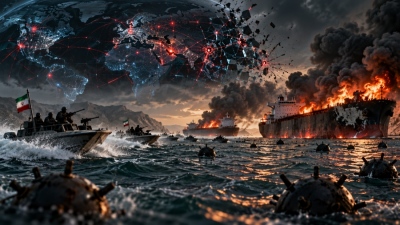
But the key is Iran. In fact, in the US war with Iran, the fate of Trump's entire new geopolitical concept is now being decided.
If the US becomes bogged down in a long war or is forced to end fighting without reaching the goal of regime change in Tehran, this would mean the collapse (or beginning of collapse) of Washington's entire doctrine.
If the United States succeeds, the next will be not only Cuba, but also Greenland.
The United States will be one step closer to implementing the plan for the commercial and trade-economic blockade of China.
Furthermore, given the growing influence of American "hawks" in the event of success in Iran, there is a high probability that US policy toward Russia will tighten.
Therefore, logically, China, Russia, and Europe should be interested in seeing the US fail in Iran.
Inaction
However, none of the parties has made visible efforts in this direction.
Europe (with the exception of Spain) generally supports the Americans.
Russia and China condemn the Americans in words, but no practical actions regarding support for Iran are being taken yet.
And while Moscow in the current situation, when all resources are committed in Ukraine, can do little to help, China can help significantly.
Whether it wants to, however, remains an open question.
Thus, Trump continues, risking failure at any moment.
Yet he is not strongly resisted. That is why success continues to accompany him.
Although, of course, any failure, including the current war with Iran, could prove fatal for him and for his entire new geopolitical doctrine.
The main geopolitical consequence of the war in Ukraine was the sharp rapprochement of Europe with the United States and the sharp deterioration of relations between Europe and Russia.
Existential threat
In these new conditions, when for both the European Union and, potentially, the Russian Federation, Trump's policy represents an existential threat, at least the normalization of relations between Europeans and Moscow, as well as one of the most important elements of such normalization, the rapid end of the war in Ukraine, would be logical.
Of course, the end of the war is also beneficial for Ukrainians, who suffer the most from it.
At the same time, for supporters of the "aggressive" line in Washington, the end of the war in Ukraine appears disadvantageous.
From its continuation, first, it increasingly aligns Europeans with Americans out of fear of the Russian Federation, and second, it restricts potential Russian activity in other regions (Middle East, Latin America), weakening and exhausting it, and also exerts pressure on Moscow, restricting, for example, its exports through sanctions and clearing the global market for American energy.
However, Europe, Russia, and Ukraine are all very fortunate that Trump personally wants to end the war for the reasons described above.
How the war will end
Changing this logic will allow this war to end, which is beneficial for both Europe and Russia, given the colossal challenges posed by Trump's new geopolitics to both.
This is more than logical for Kyiv as well.
Although the strategy of Ukrainian authorities now consists of a bet on the victory of the "hawks" line in Washington, in reality it constitutes a huge threat to Ukraine.
The continuation of the war amid growing geopolitical tensions increases the likelihood of the most extreme scenarios, including the use of nuclear weapons by Russia, as constantly hinted at by Moscow.
This will be a disaster for Ukrainians.
Resource shortage
Furthermore, the world will face a growing shortage of resources: energy, water, food.
Therefore, if the concept of the "authoritarian hegemon" wins, the American elite will simply redistribute the declining amount of resources in their favor, leaving the rest of the world hungry, plunging it into poverty and endless wars.
In general, Trump's "brave new world" will not be kind or gentle to the majority of the global population.
Moreover, in the case of China and Russia, resistance could quickly reach the brink of nuclear confrontation if, for example, Washington initiates a naval blockade or tries to physically destroy their leadership.
This was clearly understood by Dmitry Medvedev.
"If Trump continues his paranoid course for criminal political regime change, World War III will undoubtedly begin.
And any trigger can be any event. Anything...", said Medvedev.

The alternative scenario
However, many in Europe hold expectations that Trump will soon lose power, Democrats will return, and everything will be like under granddad Joe Biden again.
First, it is not at all obvious that Trump will lose power in the near future (especially if all his wars end in quick victories).
Second, if he loses, it is not obvious that his successors will return to the previous policy if Washington's new course demonstrates its effectiveness in strengthening American hegemony in the world and boosting the American economy.
Therefore, to a greater extent, further development of events will depend not on the personality of US leaders, but on how easily Washington promotes its new geopolitical strategy now.
The more resistance there is at the beginning, the more likely the US will moderate its appetite.
At the same time, the only real alternative to Trump's concept is a return to international law and those institutions formed after 1945.
They have many flaws, but the alternative to them is a world of wars and the "hegemony of the strong" of the United States.
www.bankingnews.gr



Σχόλια αναγνωστών