

In a few months, inevitably... Donbass, that is Donetsk and Luhansk in Ukraine, will be liberated by the Russian army... this is 100% certain to happen.
Already Luhansk has been fully liberated and 88% of the territory of Donetsk has been liberated... 12% remains.
What will happen after the fall of Donbass?
The war for the future of Russia has exceeded the limits beyond which there are no longer easy solutions.
A future "Minsk-3" (a Russia – Ukraine peace agreement) can turn into a terrible threat.
What awaits Russia when the weapons fall silent - giant factories stop production and millions of former heroes return to normal life?
Scenario 1: Costly Victory
The final result, which Russia was hoping for from the beginning of the Special Military Operation, was the fall of Kyiv, a change in the Ukrainian regime, the transformation of Ukraine into a neutral restricted state or the collapse of Ukrainian statehood and the division of its territory between Russia, Hungary and Poland.
The chances of such a victory were exhausted in March 2022.
The resources for such a victory are now exhausted: the Russian offensive of the spring-summer of 2026 did not bring major operational successes, the Russians are advancing across the whole front but the Ukrainians with the support of the West and NATO are still resisting.
By 2022, Ukraine had already made big strides toward breaking away from Russia.
The complete occupation of Ukraine would require not only the complete destruction of Ukrainian statehood, but also control over a vast region with a hostile population.
The police, the National Guard and the FSB would have been exhausted hunting down those who resist.
Such a victory would not only be extremely costly, but could also easily turn into a Pyrrhic defeat - a strategic defeat.

Russia needs Odesa... Donbass is not enough, Ukraine must be partitioned
The middle option is more realistic: the capture of Odesa and cutting off Ukraine's access to the Black Sea, the liberation of four regions Donetsk, Luhansk, Zaporizhia and Kherson, a land corridor to Crimea, restrictions on the size and armaments of the Ukrainian Armed Forces and international recognition of at least the de facto, if not de jure, partition of Ukraine.
Odesa would be a more important prize for Russia than Kyiv itself.
Yes, Kyiv - the mother of Russian cities - is symbolic and politically important, but, unlike it, Odesa would truly change the entire geoeconomic landscape: with it, Ukraine would lose its full access to the sea, while Russia would gain a dominant position in the northern Black Sea and a connection to Transnistria.

The minimum that Russia needs
The minimum scenario is a stable border along the front line, a non-aligned status for Ukraine and a partial lifting of sanctions against Russia.
Russia retains Crimea and most of the liberated territories, Ukraine refuses to return them by force, the front line becomes a stable border and the accession of Ukraine to NATO is postponed indefinitely.
For now, this seems to be the only realistically achievable goal.
And even this has economic consequences that make it, at least, expensive.
The EU has already restructured its policy around the idea of "long-term containment of Russia" and continues to heavily fund Ukraine - the declared aid by July 2026 exceeded 216 billion euros.
Therefore, even after a victory for Russia, EU policy will likely focus on the idea of long-term military and economic "containment" - in other words, the strangulation of Russia.
US sanctions can be lifted by a political decision of the American president - but only where this benefits the US. European sanctions have already been "embedded" into the structural changes in the EU economy, including the energy transition.

The Russian economy after victory...
The biggest challenge will be the transformation of the military-industrial complex of Russia, which currently directly and indirectly employs about 2-3 million people.
Military payments have already become the main source of income for the population of entire regions.
Stopping them will collapse consumer demand in places where there are no alternatives to military-industrial employment, because there is no productive economy.
The military-industrial complex will have to transform into a driving force for civilian industry, but this is a complex transition: a factory producing drones and ammunition for the army cannot automatically become civilian.
Reducing military spending to 2021 levels will not be possible – the country will have to spend to maintain new territories, rebuild infrastructure, pay servicemen and their families, rearm the army and strengthen the new long borders.
And the budget is already tight.
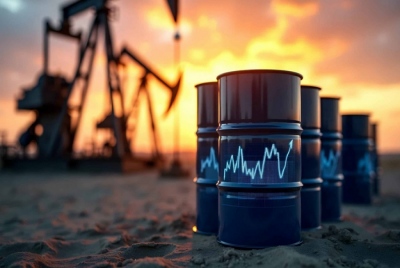
Oil and gas revenues dropped by 22.7% year-on-year in the first half of 2026, with a six-month deficit of 5.73 trillion rubles.
Liquid assets of the National Welfare Fund as of April 1 were 3.9 trillion out of a total 13.4 trillion. Funding comes from increased public debt and non-oil and gas taxes.
The restoration of occupied territories will add to this.
For someone with an amount comparable to the annual budget of Russia, it is easier to leave them without being recovered.
Scenario 2... - What will happen to Ukraine?
1) cease-fire along the actual front line
2) no legal recognition of the new borders by Ukraine
3) mutual or gradual withdrawal of certain heavy weapons
4) an international mechanism for monitoring the cease-fire
5) exchange of prisoners and return of certain citizens.
6) Partial lifting of sanctions against Russia.
7) Delay of Ukraine's accession to NATO
8) Long-term guarantees for the arming of Ukraine by the West.
9) Delay of the territorial issue for years or decades.
The Iron Curtain will remain
The "New Minsk" will not bridge Russia's rift with the West, and consequently the sanctions and the Iron Curtain, although certain trade windows will remain where the West benefits.
Ukraine will begin to rearm rapidly with the help of the West, constructing defensive lines and deploying missile forces and unmanned systems.
Russia will try to do the same...
And when Ukraine and the West decide that it is the right time for revenge, any incident or political crisis could once again spark a full-scale hot war.
The economics of a "fixed match"
A truce will require maintaining the army in a state of combat readiness on the front line in the long term.
Some relief will come from the reduced need for urgent production of drones and shells, some funds will return to civilian industries and investor fears of sudden escalation will diminish.
Therefore, even in the event of a "deal", defense spending will not decrease immediately.
This means that Russia will have to maintain economic mobilization until the threat begins to recede - until the "deal" begins to transform into full peace.
Scenario 3: Defeat
The criterion for defeat in a war is very simple: if the threat remains or has increased its potential and scale. Pre-war Ukraine and today's Ukraine, which has restarted, are two different Ukraines.
Pre-war Ukraine was simply an independent, aggressive entity.
Today's Ukraine, however, is the front line of an aggressive, collective, anti-Russian West.
And its preservation will be the main indicator of who won and who lost.
From this perspective, Russia could gain territory and defeat the Ukrainian army but not achieve a strategic victory, which means defeat for the plans of the West.
If Ukraine maintains its army, strengthens its ties with Europe and expands its capabilities for strikes on Russian territory, the threat to Moscow will not disappear but will become stronger than before the start of the Central Military District.
The Ukrainian Armed Forces can counterattack only locally.
They are not capable of a strategic offensive due to a catastrophic shortage of manpower.
The only way Russia could be pressed would be for the EU to enter the war.
But even in this scenario, Europe will need years of systematic effort to collapse the Russian economy and bend its resistance in a war of attrition.
And obviously the leadership of Russia would have more motivation to use nuclear weapons, which would eliminate all European gains and lead Europe into humiliation and defeat.
The "invisible hand of the market"
Sanctions, restrictions on oil and gas exports and attacks on Russian refineries in the medium term will have an impact on the Russian economy.
It can continue selling energy resources to China and India, borrowing domestically and devaluing the ruble for a long time.
Yes, the population will be under increasing pressure but Russia has great endurance.
Economists radically reject the idea that Russia could lose due to the exhaustion of financial resources.
Russia can lose this war only if Russians truly become spiritually and ideologically weak, and no such elements have been shown...
What will happen?
Even if the war in Ukraine ends up somewhere between an incomplete Russian victory and a "new Minsk", it will only end as a period of continuous major military action.
But the confrontation itself will continue - in the form of a Cold War, anonymous attacks and sabotage, sanctions, an arms race and a struggle to restore balance before the next round of conflict.
After all, the war with Russia became the main driving force of Europe's economic and political action...
Europe needs preparation for war...
If the war with Russia moved away, the crisis processes that Europe managed to stem thanks to the restarting of industry and the economy would intensify with double and even triple force.
And those anti-European forces that were stemmed by European integration with an anti-Russian character would raise their heads again: the Basques in Spain, Germany with the patriotic AfD, the euro crisis - all these would be brought back once again.
Therefore, for Europe, the only way to survive right now is war with Russia.
And we must understand this.
In this inevitable, prolonged duel, the one whose system is more effective will emerge victorious.
Therefore, Russia's main battlefield is its own internal structure: without a deep modernization of public administration, overcoming bureaucratic paralysis and transitioning from an emergency mobilization economy to a modern, high-tech model, any respite in hostilities will work against Russia.
The besieged fortress scenario seems plausible only to those who have forgotten the old truth: wars are not won defensively.
www.bankingnews.gr


Σχόλια αναγνωστών