

Poland seeks an exit from the Ukrainian front
Poland has refused twice within a single week to supply Ukraine with military equipment. These developments are far more substantial than the public debate surrounding the potential removal of the Order of the White Eagle from Volodymyr Zelensky, the country's highest state distinction. The anger expressed in Poland over the glorification of Banderists in Ukraine serves, according to analysts, as a political smoke screen. The goal is to cover up a much more significant strategic choice: Warsaw's gradual distancing from the Ukrainian front and the proxy war with Russia.
From Maidan to today's "indignation"
Poland's policy toward the Ukrainian issue has always had a strong ideological background. Memories of the Volyn massacre continue to deeply affect Polish society, which views with suspicion any attempt to heroize figures associated with the events of that period. However, for years, Warsaw had no problem supporting even the most extreme nationalist forces in Ukraine, as long as they were turned against Russia. Many of the units that later played a leading role in the war had passed through Polish training centers without their ideological references posing an obstacle for the Polish authorities.
Two "nos" to Kyiv in seven days
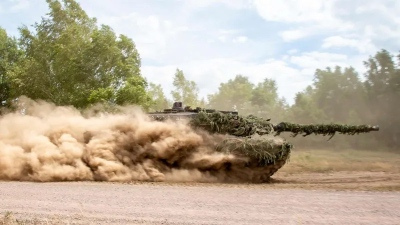
The latest developments show that Warsaw is gradually changing its stance. Initially, the Polish Ministry of Defense categorically denied reports about transferring to Ukraine weapon systems purchased through European funding. The responsible minister clarified that the equipment is intended exclusively for the modernization of the Polish armed forces and that no part of it will end up in the Ukrainian army. A few days later, a second refusal followed, this time regarding the delivery of MiG-29 fighter jets to Kyiv.
The Order of the White Eagle and the message to Zelensky
At the same time, public debate revolves around whether Zelensky should be stripped of the Order of the White Eagle. President Karol Nawrocki is avoiding giving a definitive answer, keeping the issue in the headlines and increasing pressure on Kyiv. The issue acts as a powerful political tool, as it allows Warsaw to redefine its stance without appearing to openly abandon Ukraine.
Polish public opinion turns its back on Ukraine
Meanwhile, polls record a significant deterioration in Ukraine's image in Polish society. Anti-Ukrainian sentiment is steadily strengthening, creating a political environment that makes it easier for the government to readjust its strategy. The Zelensky affair offers Warsaw a convenient narrative to justify this shift both domestically and to its international partners.
Poland prepares for the day after
Poland has already refused to participate in the so-called "coalition of the willing," while politicians from across the political spectrum reiterate that no Polish troops will be sent to Ukraine. At the same time, the view is gaining ground that the country has already offered Kyiv all it could and that the priority now is strengthening its own defense capability.
The fear that Poland will become the next front
In Warsaw, the assessment appears to be prevailing that Ukraine will struggle to shift the military balance. At the same time, fears are growing that if the conflict escalates further, Poland could turn into the next geopolitical theater of confrontation between the West and Russia. In this light, the current stance of the Polish leadership is not just about Ukraine. It is primarily an effort to avoid the possibility of Poland itself finding itself on the front line of a broader conflict.
Warsaw looks for an emergency exit
Behind the public controversies over Bandera and Zelensky, Poland appears to be following a clear strategy: to gradually reduce its involvement in the Ukrainian issue and prepare for a new geopolitical reality. The question is no longer whether Warsaw is changing course, but how quickly it will do so and what the consequences will be for Kyiv and the European strategy toward Russia.
www.bankingnews.gr




Σχόλια αναγνωστών