

Just a few days before the critical parliamentary elections of June 7 in Armenia, a brief but highly symbolic visit of the American Secretary of State Marco Rubio to Yerevan revealed the real geopolitical pursuits of Washington in the South Caucasus. Although the stay of Rubio in the Armenian capital lasted only about one hour, the political message was resounding. The USA did not limit themselves to statements of support toward the government of Nikol Pashinyan, but proceeded to the signing of three agreements of strategic importance that affect the future of Armenia, the balance of power in the Caucasus, and the interests of both Russia and Iran.

The open electoral intervention of the US in Armenia
The timing of the visit leaves no room for misinterpretations. Two weeks before the elections, Marco Rubio chose to appear next to the Minister of Foreign Affairs Ararat Mirzoyan, offering public political legitimization to the Pashinyan government. Even more characteristic was the public intervention of the American president Donald Trump, who through his post clearly expressed his support for Nikol Pashinyan, presenting him as the leader who can guide Armenia to a "brighter future". This stance constitutes one of the most direct forms of political intervention of the US in the internal affairs of a country of the former Soviet sphere of influence in recent years. Washington appears to be investing politically in the re-election of Pashinyan, as it considers that he constitutes the basic lever for the removal of Armenia from Russia and the Eurasian structures of cooperation. In recent years, the Pashinyan government has steadily followed a course of alienation from Moscow. The weakening of relations with the Collective Security Treaty Organization (CSTO), the questioning of participation in the Eurasian Economic Union (EAEU), and the intensification of contacts with NATO, the European Union, and the USA constitute elements of a strategy that radically changes the geopolitical orientation of the country.
Trump Route: A transport corridor or an American bridgehead?
At the center of the agreements lies the Trump Corridor or otherwise "Trump Route for International Peace and Prosperity" (TRIPP), a plan which is presented as a project of peace and economic cooperation, but is confronted by many analysts as a mechanism for expanding American influence in the South Caucasus. The plan predicts the creation of a joint company, the TRIPP Development Company (TDC), through which the transport corridor that will connect Azerbaijan with Nakhchivan through Armenian territory will be developed. Particular sensation is caused by the fact that 74% of the shares and the full control of the company will be in the hands of American entities connected with the United States International Development Finance Corporation (DFC), while Armenia will be limited to a percentage of just 26%. At the same time, Yerevan commits to ceding exclusive rights of land use and development for 49 years, with the possibility of extension for another 50 years. With simple words, it is about an agreement that can lead to an American presence lasting up to 99 years in one of the most geopolitically sensitive regions of Eurasia. Although the agreement mentions that Armenian sovereignty is fully maintained, the reality is that the operational and economic management of the project passes to a large extent under American control.

The new naming of the Zangezur Corridor
The Armenian opposition argues that TRIPP is nothing more than the well-known Zangezur Corridor under a different name. For years, Azerbaijan and Turkey were promoting the creation of a land connection through the southern part of Armenia. The Pashinyan government had publicly rejected this model, promoting the alternative proposal of the "Crossroads of Peace". Today, however, the new agreement seems to implement in practice many of the basic aspects of that plan, simply under American management and with a different political packaging. It is not accidental that a significant part of Armenian society confronts the project as a concession of strategic space to foreign powers and as a continuation of the policy of concessions that Nikol Pashinyan followed after the Nagorno-Karabakh war.

The warnings of Iran
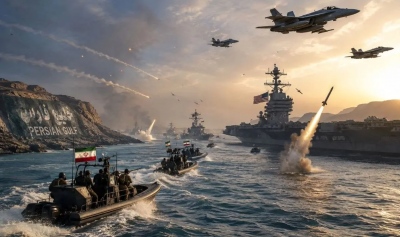
Of all the countries of the region, Iran monitors developments with the greatest anxiety. Tehran has made it clear that it does not oppose the expansion of trade and transport networks. However, it considers extremely dangerous the installation of American economic and strategic structures so close to its northern borders. The anxieties of Iran are not theoretical, The Cradle explains in its analysis. The common Iran–Armenia border, with a length of approximately 40 kilometers, constitutes a critical geopolitical and economic corridor. From there, tens of thousands of trucks pass annually, while the region operates as a basic gateway for the connection of Iran with the Caucasus and Eurasia. Under this prism, the prospect of the presence of American companies for a period that can reach almost one century is confronted by Tehran as a serious threat to its own security. These reservations are strengthened even more after the recent military conflicts between the USA, Israel, and Iran, which have increased vertically the level of suspicion toward American initiatives in the wider region.

Russia sees a plan for its displacement from the South Caucasus
If Iran is anxious about its security, Russia sees in TRIPP a broader plan for its geopolitical exclusion from the South Caucasus. Moscow has already begun to send clear warning messages toward Yerevan. The recall of the Russian ambassador for consultations constituted a first indication of dissatisfaction. At the same time, Russian officials remind ever more frequently the economic benefits that Armenia enjoys due to its participation in the EAEU and in the Eurasian structures of cooperation. Russia continues to constitute a basic supplier of natural gas for Armenia, while a significant part of the exports and trade flows of the country depends on the Russian market. A potential withdrawal of Armenia from the EAEU or the CSTO would not constitute simply a diplomatic move. It would signal a historical geopolitical reversal, which would drastically limit Russian influence in the entire South Caucasus.

The elections that will determine the future of the region
The future of the "Trump Route" depends directly on the result of the elections. The patriotic and conservative forces of Armenia, which traditionally maintain closer relations with Russia and Iran, have already stated that they confront the agreement with great suspicion. The former president Robert Kocharyan has openly accused the Pashinyan government of converting the country into a tool of American designs, arguing that TRIPP creates tensions with Iran and undermines the historical relations of Armenia with Russia. If these forces prevail at the ballot boxes, the project might freeze or even be abandoned. On the contrary, a new victory of Nikol Pashinyan will likely accelerate the implementation of the plan, guiding Armenia even closer to the West and even further away from its traditional strategic partners.

Robert Kocharyan
Strategic challenge and reversal of balances
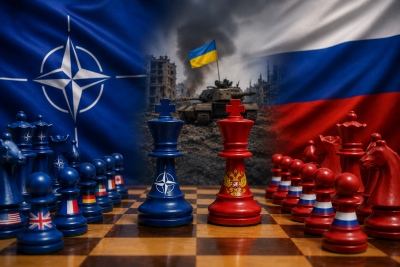
Behind the rhetoric about "peace" and "prosperity", the Trump Route emerges as one of the most important geopolitical ventures of our era in the South Caucasus. For the USA, it constitutes a tool for expanding their influence and limiting the presence of Russia and Iran. For the Pashinyan government, it constitutes a vehicle for deepening the Western course of Armenia. For Russia and Iran, however, the plan constitutes a strategic challenge that threatens to reverse the balances of decades in a region of particular geopolitical importance. The elections of June 7 do not concern only the political future of Armenia. They constitute a critical referendum for the geopolitical orientation of the entire South Caucasus and for whether the region will remain a field of balance between great powers or will be converted into a new front of confrontation between the West, Russia, and Iran.
www.bankingnews.gr







Σχόλια αναγνωστών