

The "kingdom" of the Trumps in the Adriatic: Billions, protests, and rage
An abandoned communist-era military island, thousands of bunkers, underground tunnels, unexploded ordnance, protected wetlands, flamingos, sea turtles, seals — and in the middle of it, a multi-billion dollar deal linked to the most powerful names in the US political scene. Albania is facing a case that far exceeds the boundaries of a simple tourism project. The plan linked to Jared Kushner and Ivanka Trump to transform the island of Sazan and the Zvërnec region into a luxury tourist destination has sparked massive protests, a political storm, and serious questions about how one of the country's most sensitive coastal zones ended up at the center of such a massive business project.
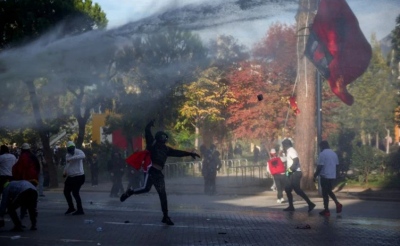
On the streets of Tirana, the slogan is simple and explosive: "Albania is not for sale." Protesters see behind the promises of development, jobs, and high-quality tourism a familiar Balkan setting: land-use changes, fast-track procedures, protected areas that suddenly "fit" investments, opaque property titles, and political power rushing to defend the project before critical questions are answered. The government of Edi Rama presents the plan as a great opportunity for Albania. Its critics, however, speak of a sell-off of natural wealth, development tailored to the powerful, and a model where protected areas are protected only until the right investor appears.
The island that became a symbol
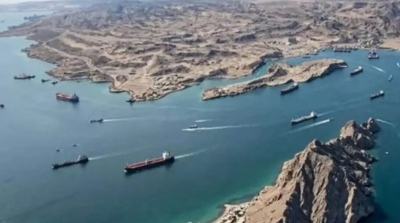
Sazan is no random island. It is the largest island in Albania, uninhabited, strategically positioned between the Adriatic and the Ionian Seas, near the Strait of Otranto and the Bay of Vlorë. For centuries, it has been a point of military and geopolitical interest. It has passed through empires, armies, regimes, and naval powers. In its modern history, Sazan became one of the most secret military bases of communist Albania. The island contains thousands of bunkers, underground tunnels, abandoned military buildings, and infrastructure reminiscent of the Cold War.
According to reports, there are approximately 3,600 bunkers, miles of underground tunnels, and potential hazards from old ammunition. This island, once a prohibited military zone, is today presented as the next ultra-luxury destination of the Mediterranean. Ivanka Trump has described how she and Jared Kushner spotted the area during a trip on a friend's boat. As she said, they stopped for a swim, swam to the island, climbed barefoot to the top, and were "enchanted." For supporters of the project, this is the romantic beginning of a major investment. For critics, it is the ultimate image of colonial arrogance: a natural and historical landscape of a country being treated as an "opportunity" because some powerful figures discovered it from a yacht.
From Sazan to Zvërnec: The real stakes
The project does not only concern Sazan. It also includes the Zvërnec area, near the Narta lagoon and the Vjosa River Delta, one of the most important biodiversity areas in Albania. This is where the major controversy lies. The area is linked to protected wetlands, migratory birds, flamingos, pelicans, herons, sea turtles, and the Mediterranean monk seal. Environmental organizations warn that the construction of roads, hotels, villas, marinas, and tourist facilities could cause irreversible damage. Images from the area have already enraged residents and activists: heavy machinery, fences, access works, and interventions on the sand and in pine forest areas. Protesters carry cardboard pink flamingos, turning the protected bird into a symbol of resistance against an investment that, they say, threatens to turn a natural paradise into a real estate product.
The billions and the contradictions
International reports show varying amounts, depending on whether they refer to the Sazan project, the Zvërnec zone, or the broader development package. The plan for Sazan has been presented as an investment of approximately $1.4 billion or €1.4 billion, while the wider project in Sazan and Zvërnec has been linked to amounts reaching approximately $4 to $4.7 billion. Regardless of the exact valuation, the scale is massive for Albania. We are talking about a project that is not merely tourist-oriented. It is political, economic, environmental, and geostrategic. And when such a project is linked to Jared Kushner, the son-in-law of Donald Trump, and Ivanka Trump, the case ceases to be an internal Albanian dispute. It transforms into an international issue of power, influence, and potential conflict of interest.
The Rama government and the "development" narrative
Edi Rama defends the project with passion. He argues that Albania cannot fear large investments and that the country needs projects that will upgrade it both touristically and economically. The government's argument is well-known: new jobs, infrastructure upgrades, high-quality tourism, international visibility, investment confidence, and the strengthening of the country's European path. However, critics respond that development cannot be an alibi to sacrifice everything public, natural, and protected.
They argue that Albania cannot be turned into an experimental field of luxury real estate for foreign funds and politically connected investors. Rama has rejected accusations that there is a "Trump family island" or that the US President's family is occupying protected areas. He even stated that "there is no project yet" in the way it is being presented and that accusations about flamingos being killed are part of disinformation. However, the fact that protests continue and that the case has triggered an intervention by the Special Anti-Corruption Prosecution shows that social distrust cannot be extinguished by PR denials.
The question of corruption
The heaviest political burden of the case is not only environmental. It is institutional. The Special Prosecution against Corruption and Organized Crime in Albania, SPAK, has confirmed that it is investigating aspects of the case. According to international media, the investigation concerns, among other things, the funds used to acquire land titles and their transfer to investors, as well as issues related to changes in the status of protected areas.
This is the core of the scandal as the protesters see it: who owned the land, how it was acquired, how it was transferred, who changed the rules, who benefits, and who pays the cost. The government says the land concerning the project is private. However, there have been conflicting claims and disputes regarding privatization, which in Albania—as in other Balkan states—is a perennial field of conflict, shadows, and political suspicion. When a protected area is turned into an investment fillet, when permits are accelerated, when land titles are challenged, and when citizens learn the details after the fact, the question is not whether there is a political problem. The question is how deep it is.
"Trump Island" and public outrage
Locals have already baptized Sazan as "Trump Island." The name is no accident. It symbolizes the feeling that a piece of Albanian land and history is being handed over to a powerful international brand. At the protests, slogans such as "Cancel the project," "Albania is not for sale," and "Ivanka, go home" are heard. For many Albanians, the case is not just about a resort. It is about the dignity of a country that does not want to see its coastline turned into a private club for the ultra-wealthy. The image is politically explosive: on one hand, a government talking about investments and development; on the other, citizens who see protected land, natural wealth, and public interest retreating before the billions.
Environment or real estate?
Albania possesses about 450 kilometers of coastline. For decades, due to the isolation of the communist period, large zones remained relatively untouched compared to other Mediterranean countries. This today is a blessing and a curse. A blessing, because the country still possesses rare natural landscapes. A curse, because these landscapes are now a huge temptation for funds, developers, and tourist giants. The question is simple: will Albania become a destination that protects its natural capital, or will it follow the model of anarchic development, where every beach, every island, and every habitat becomes a building plot?
The answer given by the Sazan and Zvërnec project, according to critics, is nightmarish: even protected areas can change their character when the investment interest is strong enough.
The big picture: power, money, and opacity
The Sazan-Zvërnec case is the condensation of a broader phenomenon. In many Balkan countries, "development" is used as a keyword to legitimize decisions made without the meaningful participation of citizens. Governments talk about investments. Investors talk about a vision. Local communities, however, often see fences, bulldozers, land-use changes, and a feeling that everything has already been decided. This is exactly what enrages Albanians. It is not only the presence of the Trumps and Kushners. It is the suspicion that the state is acting as an intermediary for powerful interests, not as a protector of the public interest.
And when names with a direct connection to US political power are involved in such a case, then the debate becomes even more toxic. Because the line between investment, influence, and political transaction becomes extremely thin. The project linked to Jared Kushner and Ivanka Trump is presented as an opportunity for Albania. But for thousands of citizens, it feels like a warning: that the country is at risk of trading its natural heritage for promises of luxury development. Sazan is not just an island. Zvërnec is not just a coastal stretch. It is a test of whether Albania will function as a European rule-of-law state or as a bargain market for those who have enough money, enough connections, and enough political power. Until questions about the land, permits, changes in protection status, funds, and procedures are clearly answered, the project will remain politically explosive. And as long as the government insists there is no reason for concern, the streets of Tirana will respond with the same slogan: Albania is not for sale.
www.bankingnews.gr








Σχόλια αναγνωστών