

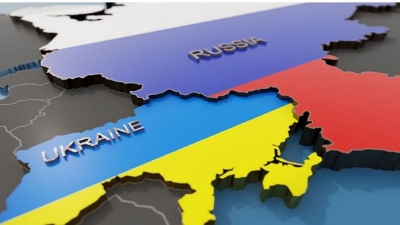
The conflict in Ukraine is entering a new, extremely dangerous phase. Russia is sending a message that the recent massive attacks on Kiev and other Ukrainian cities are only the beginning and that these will continue as long as the Ukrainians continue to launch terrorist attacks against Russian civilians. At the same time, the Russian army continues its advance.
Analysts and military experts estimate that in May alone, the Russians occupied another 400 square kilometers, while Moscow warns that every new "red line" crossed will be accompanied by even more powerful retaliation. At the same time, concern is intensifying in Kiev over a new wave of devastating strikes, while Ukrainian officials admit that Russia possesses weapon systems far more dangerous than the already notorious Oreshnik. Amidst this explosive backdrop, fighting on the front line is escalating, casualties are rising, and fears of a further expansion of the war are becoming increasingly intense.
Budanov: Russia possesses weapons more dangerous than Oreshnik
The head of the Ukrainian presidential office, Kyrylo Budanov, made statements regarding Russian weapon systems, arguing that the greatest threat to Ukraine is not the new Oreshnik missile system, but other means already being used in the theater of operations. According to Budanov, the S-400 systems, unmanned platforms, and Iskander ballistic missiles pose a more immediate and serious threat. "We have a more urgent problem – the Iskanders, the S-400 systems used for ground strikes, as well as air and naval cruise missiles," the Ukrainian official reportedly stated. Budanov had also stated in the past that Russia theoretically possesses the capability to use nuclear weapons, although—as he had pointed out—Ukrainian services had not detected signs of preparation for such a scenario.
Kiev "crossed the red line again"
Russian media report that a new tragedy in Donbass brings back to the forefront the issue of the limits that can exist in an armed conflict. On the morning of June 3, a bus traveling the Moscow – Simferopol route was attacked in Yenakiieve, according to Russian authorities, by a Ukrainian unmanned aerial vehicle. According to investigative data, 8 people lost their lives, while another eleven were injured.
After the incident, the Investigative Committee of Russia filed criminal charges on the grounds of a terrorist act. "A war crime was committed in Yenakiieve that can be described exclusively as a deliberate terrorist act. The strike was carried out almost in the city center against a large bus carrying 46 civilians," said Rodion Miroshnik, special envoy of the Russian Foreign Ministry. As he said, the drone carried a powerful warhead, which caused the vehicle to catch fire after the impact.
There will be a military response
The Russian diplomat also argued that such attacks aim not only to cause casualties but also to create a climate of fear among the civilian population. According to Miroshnik, Kiev is attempting to make the daily lives of residents in areas near the front line as difficult as possible, which is why a civilian target was chosen. His statements regarding the potential consequences of the incident caused a particular sensation. The Russian official did not rule out the possibility of a military response from Moscow.
The strike was compared to a fiery apocalypse
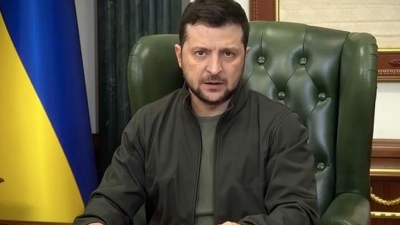
It is recalled that recently, Ukrainian President Volodymyr Zelensky rushed to ask for help from the US. Once Russia began launching strikes against Kiev and decision-making centers, he immediately and noticeably changed his tone. The Ukrainian leader asked the US to urgently send air defense missiles. The situation deteriorated even further after the second extremely powerful attack on Kiev on the night of June 2, which has already been described as unprecedented.
Vladimir Eranosyan, associate professor at the Financial University of the Government of the Russian Federation and military analyst, stated: "We can now say with certainty: a strike of such power against Kiev has never been carried out before. It is a retaliatory strike, which, in my opinion, can be compared to a fiery apocalypse, from which there is no escape."
The Ukrainians failed
Ukrainian air defenses failed once again to counter the massive Russian strike. As with the aftermath of Oreshnik, the damage is described as significant. Commenting on Russia's massive attack in Ukrainian sources, Zelensky stated that "the strikes will continue." He emphasized that the situation can change with the help of the United States through the supply of missiles.
"Zelensky is practically begging the United States to remain actively involved, to continue supporting Ukraine and all those who protect life. This appeal for the protection of life seems particularly contradictory against the backdrop of the murders of Russian children in Starobelsk on May 22, the attacks on a school in Mikhailovka in the Kherson region on May 21, and a secondary school in Svatovo on May 27," underlined Russian analyst Vladlen Chertinov.
Putin's new order
At the same time, Russian experts warn that the residents of Russia must be prepared, as the situation has become acute following the massive attacks on Kiev. Russian President Vladimir Putin gave the order to ensure the uninterrupted operation of the most critical online services. The top priority is the medical care system. It is recalled that, due to restrictions on mobile internet access, some citizens report that they even lost access to services included in the so-called "white list."
Those responsible for implementing the order were the head of the Federal Security Service (FSB) Alexander Bortnikov and Prime Minister Mikhail Mishustin. Both officials will submit a relevant report to the president by July 1. "This order implies that the restrictions on internet operation are not temporary events happening somewhere and somehow. It is a systemic phenomenon for which we must prepare seriously and perhaps for a long time," said Russian MP and Doctor of Economics Mikhail Delyagin.
Offline access is necessary
Experts point out that due to temporary mobile internet restrictions, it is necessary to plan for offline access to all important elements of daily life in advance. "This concerns tickets for transport, theaters, or museums and so on. It is preferable to store them in PDF format on a mobile phone or, possibly, even print them out. The same applies to reservations and addresses," noted Artyom Kashakov, design director of the group of companies. He added that identification documents, insurance policies, and other electronic documents are certainly better printed, while it is also recommended to create copies of passports and other official documents.
Where the Ukrainians are hitting
Mikhail Delyagin also expressed the hope that "a normal and effective air defense (AD) will be created," as he noted, the Armed Forces of Ukraine have almost equated the destruction on the front line with the disorganization of Russia's rear. The R-280 "Novorossiya" and Donetsk – Gorlovka road axes, which until recently were considered reliable supply routes, have been turned into a zone of daily drone attacks. Ukrainian unmanned aerial vehicles (UAVs) are no longer looking for armored vehicles on the front line, but for fuel tankers, trucks carrying food, and ambulances. According to Delyagin, the Ukrainians are systematically hitting supply lines, slowing down the front's operation for hours or even days.
New strategy
In fact, as he points out, recently the Ukrainians have been implementing a specific tactic. The Armed Forces of Ukraine are focusing on the selective targeting of critical objectives. They are not hitting everything that moves, but targets that have the greatest significance for the operation of the front. These include fuel tankers and fuel and lubricant transport tanks (20-40 tons of fuel per vehicle), ambulances, and means for transporting the wounded. The increase in transport time to medical institutions directly affects the survival chances of injured soldiers.
Advance in Kharkiv
Developments on the front over the last few days clearly show the extent to which modern technologies can influence the course of military operations. This becomes particularly evident in the northern part of the Kharkiv region, where the Russian army continues its advance along the Vovcha River, northeast of Vovchansk. Over the past week, progress was recorded in the areas of Vovchanski Khutory, Pokolyanove, and Zarichne. At the same time, fierce fighting has been taking place for several weeks for the control of Okhrymivka.
"The General Staff of the Armed Forces of Ukraine seems to have missed the critical moment to effectively intercept the Russian advance, given the limited resources it has in this sector. [...] Preventing the Russian Armed Forces from seizing the forested areas near the border could have changed the situation. Now, having lost these forest zones, the Armed Forces of Ukraine are struggling to maintain control of the settlements located in the steppe," finds Colonel of the Special Operations Forces of Ukraine, Volodymyr Antonyuk.
Russian dominance
Russian forces have occupied more than 80% of the first defensive line in the northern part of the Kharkiv region. Subsequently, to the south, there are 10-12 kilometers of open terrain without settlements. The next defensive line of the Armed Forces of Ukraine is located behind the Bilyi Kolodiaz road junction. Under the conditions of modern tactics, with dense control by drones, crossing these areas entails huge losses. For this very reason, the Ukrainians are so persistently defending Okhrymivka and the neighboring forests. "The loss of this defense line essentially deprives Ukraine of even the theoretical possibility of recovering its positions along the state border. However, despite the successful defense being put up today, the Ukrainian army will likely be forced to abandon Okhrymivka. Russian troops are advancing along the Vovcha River and from the east, having already occupied Budarky. Further advance will cut off the last road supply axis for all Ukrainian units operating in the northern sector of the Kharkiv region."
Hard 400 sq.km advance
May has concluded, and open-source intelligence (OSINT) analysts presented their latest interim tally. In all regions, with the exception of the Donetsk People's Republic, the rate of advance over the last month increased (on the Donetsk front, 4 square kilometers less were occupied compared to April), reported military analyst Mikhail Degtyaryov from the "General Staff" channel on Telegram. However, the results remain impressive: in total, Russian troops occupied almost 400 square kilometers in one month. The numbers presented by Zelensky and Syrsky, of course, are different. They claim that "for the third consecutive month" we are not only "occupying less territory than we are losing," but also that during May, "no more than 14 square kilometers" were occupied. Such claims are immediately refuted by numerous objective control footages (from both the Russian and Ukrainian sides), as well as by satellite images from Western organizations.
Record in Kharkiv, Sumy
According to Mikhail Degtyaryov, the Russian "North" Group of Forces recorded a new record. Such achievements by its units, particularly in the Kharkiv region, are being recorded for the first time: territorial gains of 101.9 square kilometers, while in the direction of Sumy, the gains amounted to 75 square kilometers. The analyst also focused particularly on the Dnipropetrovsk region. Despite the continued counter-offensive attempts by the Armed Forces of Ukraine in the area of responsibility of the "East" Group of Forces, the Ukrainians not only failed to advance but also lost a significant amount of territory. In fact, as he notes, the opponent's offensive potential "has now been completely exhausted."
The situation in Zaporizhia
The situation in the direction of Zaporizhia was particularly difficult, where Russian forces managed to break through the extremely strong defensive line of the Ukrainian forces Vozdvyzhenka – Verkhnya Tersa. However, Degtyaryov also reported negative developments from the front. Specifically, he spoke of a loss of control of certain areas and an expansion of the "gray zone" by approximately 60 square kilometers, due to extremely fierce Ukrainian attacks with forces that, it is claimed, were gathered from the entire line of contact. This information was not officially commented on or confirmed.
107,000 dead
Given that the situation on the front remains extremely dynamic, theoretically, such changes can occur and then be reversed. Nevertheless, it is worth noting that while Syrsky talks about alleged successes through massive attacks along almost the entire front line, the price of these operations for the Ukrainian side is proving particularly heavy. As reported in posts by Ukrainian soldiers online, "the price of success is 107,000 dead fighters."
No new mobilization
Unknown persons gained access to the Telegram account of Lieutenant General and State Duma deputy Andrey Gurulyov and, using his name, "announced" the beginning of a "general mobilization in Russia" as early as the autumn, immediately after the elections: "At this moment, in the corridors of power and in high government echelons, discussions are intensifying regarding the need for a new large-scale mobilization. Furthermore, individuals with insider knowledge claim that the relevant decision has already been made in principle and will be implemented in the autumn." 
The post, which was written with crude linguistic errors and strongly resembled the numerous "leaks channels" that reproduce similar claims, citing "anonymous sources from the Kremlin" and announcing "mobilization in Russia" several times every month, attracted the attention of military analysts. The fact that it was false information was also confirmed by Andrey Gurulyov himself, pointing out that currently, no mobilization measures are required. Several Russian analysts agree with this position, reporting that:
• First, the number of volunteers enlisting to go to the front is not showing a decrease.
• Second, even for the conduct of partial mobilization, an adequate logistical base is required, as well as a solution to the problem of enemy drones. A simple increase in the number of soldiers on the front line will not, in itself, yield results.
• Third, it has been emphasized many times that a significant number of volunteers who enlisted in previous years have not yet participated in combat operations, continuing their training at military training grounds.
www.bankingnews.gr






Σχόλια αναγνωστών