

The next few hours are truly critical for the Iranian issue... The latest reports – mainly from Western media – indicate that the US and Iran are very close to an agreement and that all that remains is the "green light" from Trump, who said that for him to sign a preliminary agreement, it must be a "good deal" for the United States... This is a condition, however, that does not seem to be met, provided that what Iran claims is true... Tehran declares that it will not hand over its enriched uranium – experts estimate that within a few weeks it could acquire up to 10 nuclear weapons – and that it maintains absolute control and sovereignty over the Strait of Hormuz. These positions have been described as unacceptable by Trump... and obviously do not correspond to what he defines as a good deal... The preliminary agreement awaiting the US President's approval provides for the gradual opening of Hormuz with a simultaneous lifting of the American naval blockade and sanctions that will allow Iran to export oil... And it leaves a 60-day window for the US and Iran to find a mutually acceptable solution for the Iranian nuclear program and enriched uranium... But what will happen if there is no agreement and both sides insist on their red lines? The most likely scenario suggests a resumption of the war, with the Islamic Revolutionary Guard Corps (IRGC) having warned that the war will take on dimensions beyond imagination and will extend far beyond the Persian Gulf... reaching even the Mediterranean and Crete, as well as Germany and the United Kingdom...
Crushing blows
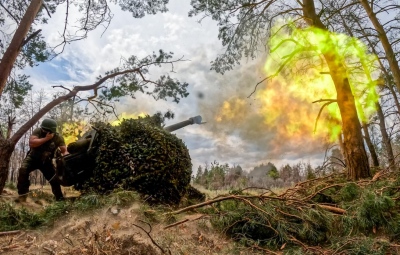
Iranian officials have used the negotiations to project confidence that they still possess significant military options if diplomacy fails. The Revolutionary Guards stated that any new conflict would spread "far beyond the region," threatening "crushing blows" at points that opponents "cannot even imagine." The warnings come after a war during which Iran struck American bases, Israeli cities, and critical infrastructure in Arab Gulf states, while effectively disrupting shipping in the Strait of Hormuz and causing a global energy shock.
New fronts, new tools
Last week, Iranian Foreign Minister Abbas Araghchi warned that any future reaction would "include many more surprises," while the Iranian military threatened to open "new fronts" using "new tools." Mohammad Bagher Ghalibaf, Iran's top negotiator, stated that the armed forces utilized the ceasefire period to regroup their capabilities "to the highest level." Experts say much of the rhetoric is aimed at deterring further attacks. However, they also warn that Tehran maintains significant options for escalation if diplomacy collapses. If the war resumes, here are some ways Iran could respond.
A new blockade
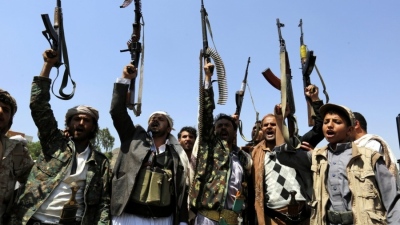
Iran cannot prevail over the US and Israel with conventional military means, which is why it has pursued deterrence by causing global economic pain through the blockade of the Strait of Hormuz, a critical maritime passage. Emboldened by its success, Tehran may now seek to disrupt another vital maritime corridor. By activating its regional ally, the Houthis in Yemen, Iran could organize the closure of the Bab al-Mandeb Strait, blocking another vital artery connecting major trade routes between Europe, Asia, and the Arab world. Such a move would exacerbate global economic pressure. In 2023, more than 10% of global seaborne oil trade passed through the Bab al-Mandeb Strait. After the Houthis caused insecurity to shipping in the region near Yemen in 2024, that figure nearly halved for oil and dropped to near zero for liquefied natural gas, according to the US Energy Information Administration.
Simultaneous crisis
"A simultaneous crisis at Bab al-Mandeb and the Strait of Hormuz would be much more severe, potentially affecting both Red Sea trade and Persian Gulf energy flows, which would raise oil prices, freight rates, and inflationary pressures globally," Umud Shokri, an energy strategic analyst and senior visiting fellow at George Mason University, told CNN. In recent years, the Houthis have demonstrated their ability to disrupt shipping near Bab al-Mandeb by attacking, seizing, and sinking vessels passing through their waters. However, creating a blockade similar to the one at the Strait of Hormuz would be "much more difficult," Shokri said. "Bab al-Mandeb is not directly controlled by Iran, and any prolonged closure would likely trigger a strong international naval response," Shokri said. "The most realistic scenario is not a complete physical closure, but a prolonged security crisis that makes commercial shipping too dangerous or expensive."
Oil fields
If Trump carries out his threat to target Iran's refineries, infrastructure, and electrical facilities, Tehran could seek to expand the war throughout the Arab world, striking sensitive locations to spread global economic panic and cause further damage to the reputation of neighboring countries as safe hubs for international business and reliable guarantors of global energy flows. A member of Iran's national security committee, Ahmad Bakhshayesh Ardestani, stated that if the US targets Iran's oil facilities, Tehran will respond by striking the oil fields of the Arab Gulf states — a major escalation compared to the 40-day war, when Iran mainly targeted refineries or pipelines. "If they intend to do something so that we don't have oil, we won't attack their pipelines, we will attack the oil fields so that they don't have oil either and fuel prices go up for the whole world," he said, according to Iranian media.
Critical infrastructure
Even after the ceasefire began on April 8, Iranian paramilitary groups in Iraq were accused by the United Arab Emirates of attacking the Abu Dhabi nuclear plant, while Saudi Arabia was also the target of drones originating from Iraq. During the war, Iran had launched missiles at civilian targets, including hotels and airports, but fired very few projectiles at critical desalination units that provide fresh water to millions of people in the region. And despite evacuation warnings to American training facilities in the region, there were no reports that Iran targeted schools and universities. Despite the rhetoric, Nicole Grajewski, an assistant professor at the Center for International Studies at Sciences Po in Paris, downplayed Iran's threat of "surprises," noting that Iranian weapons are known. "They certainly have a range beyond 2,000 kilometers, but it won't be some new weapon."
Crete is also a target
Earlier this month, Telegram pages linked to the IRGC posted satellite images allegedly showing American aircraft parked at the airport of Chania, in Crete. CNN could not verify the authenticity of the images, but the Revolutionary Guards' threat to expand their targets "beyond the region" if Iran is attacked again raises the prospect of retaliation much further afield. During 40 days of war with the US and Israel, Iran demonstrated its ability to send ballistic missiles to areas previously considered unreachable. In March, it is estimated that Iran launched two medium-range ballistic missiles against Diego Garcia, a joint US-British military base in the Indian Ocean, 2,000 miles from Iran, in what appeared to be its first attempt to target the base.
Bases in Germany and the UK
Farzin Nadimi, a senior fellow at The Washington Institute, stated that if an emboldened Tehran decides to test its long-range missiles against Europe in a surprise attack, the targets might include RAF Fairford and RAF Lakenheath, key air bases used by the US in the United Kingdom, or the logistics and telecommunications hub Ramstein in Germany. "However, Iran would likely keep this possibility for a very high level of escalation," he said. During the war, it is also estimated that Iran attempted to target British military installations as far away as Cyprus. "I don't think the Mediterranean is completely out of the scope of their capabilities," Nicole Grajewski told CNN, noting that "the issue here would be accuracy."
Drones, hypersonic cruise missiles, and satellite interference
To increase the chances of hitting targets, Nadimi stated that Iran may unleash more sophisticated and coordinated swarms of AI-equipped drones, which will be able to communicate with each other, adjust their flight paths, and speed to avoid interference and anti-aircraft defenses. "They have not yet demonstrated these capabilities, but they have talked in the past about developing this technology," Nadimi said. Tehran may also seek to upgrade the capabilities of cruise missiles, modifying existing systems to reach hypersonic speeds and avoid interception, while simultaneously attempting to jam military communications and surveillance satellites, he added.
What will happen with the nuclear... dust
What will happen with Iran's stockpile of enriched uranium, including the 440 kilograms it has enriched to a high degree, near levels suitable for nuclear weapons, is one of the main points of contention, as the US and Iran have spent weeks of negotiations aimed at the possible end of the war in Iran. President Donald Trump has insisted that Iran must hand over what he calls "nuclear dust." Iranian officials have stated repeatedly that the country has a right to a civilian nuclear program. But what does Iran's stockpile include, and what does this mean for its ability to build a nuclear weapon?
Enough for 10 nuclear weapons
With the proper equipment, the highly enriched uranium that Iran possesses could reach purity suitable for nuclear weapons within weeks or even days, according to nuclear experts. And, as international inspectors report, it is enough for 10 nuclear weapons. Iran and the US are reportedly close to an agreement to formalize a ceasefire and open the Strait of Hormuz. But the question of what will happen with the uranium will remain unsolved and will be a key part of the next negotiations.
Remove the 440 kilograms
These talks will likely focus on the nearly 440 kilograms of uranium enriched to 60%. "The US should not accept a deal that does not include the removal of the highly enriched uranium," said Eric Brewer, a nuclear materials expert at the non-profit Nuclear Threat Initiative (NTI), who had led intelligence analysis on Iran at the Defense Intelligence Agency. Building a nuclear weapon requires a significant amount of radioactive heavy elements, or what experts call fissile material. One such radioactive isotope, uranium-235, exists in nature, but makes up less than 1% of the raw uranium ore mined. Enrichment concentrates the uranium-235 from the raw ore and prepares it for conversion into fissile material suitable for use in weapons. Iran enriched its uranium by converting it into gas – uranium hexafluoride – rotating it through a series of centrifuges in underground facilities, mainly at the Natanz, Fordow, and Isfahan nuclear complexes.
Only a few... weeks
The 440 kilograms of 60% enriched uranium that Iran possesses, as well as the approximately 185 kilograms of U-235 enriched to 20%, are believed to remain in gaseous form, as they were at the last verification by the International Atomic Energy Agency in June 2025. Iran barred international nuclear inspectors the following month, after the joint US-Israeli air strikes on its facilities. Further enrichment to 90% purity, which is considered the threshold for uranium suitable for nuclear weapons, would "take only days to weeks," provided Iran has a functional enrichment facility, Brewer said.
The plans for an invasion of Isfahan
The June 2025 strikes on Iran's nuclear facilities, which the Pentagon called Operation Midnight Hammer, were estimated by US intelligence services to have buried much of Iran's stockpile of highly enriched uranium in Isfahan, but did not destroy it, despite government statements that Iran's nuclear program had been "vaporized." Earlier this month, Trump threatened that he would "invade" with military force to recover the uranium if negotiations fail. CNN reported in March that military planners had examined options for such an operation at the Isfahan complex, estimating that it could require hundreds, if not thousands, of troops and pose a risk of a large number of casualties. In addition to the need to deploy specialized forces and equipment to handle the material itself, creating a security perimeter for these troops to be able to work would require a large military presence.
Expert reservations
Nuclear experts are also cautious as to whether an American military operation could even locate and verify all the uranium, let alone remove it safely and completely. Such removal under hostile conditions would be unprecedented. "We don't know where Iran might have dispersed part of this material [uranium] before the strikes," Brewer said. It is unclear if Iran currently has the capacity to convert the 60% uranium into gaseous form into metal, as is required for the production of a nuclear warhead, but before the 2025 strikes it had the appropriate facilities, Brewer said.
Atomic bomb assembly
Also, it is unclear how quickly the Iranian regime could resume and complete weaponization work, which includes shaping the bomb's core and developing the explosives required for its detonation. When China completed its uranium enrichment in 1964, it only needed "three to five weeks to convert the gas into metal ... and assemble an atomic bomb," Harvard physicist and expert on the Chinese nuclear program Hui Zhang wrote last year in the Bulletin of the Atomic Scientists.
It must be eliminated
Although Iran has insisted that it does not seek the acquisition of a nuclear weapon, Scott Roecker, who served as head of the Office of Nuclear Materials Removal of the National Nuclear Security Administration and now oversees the NTI's nuclear materials security program, told CNN that Iran's stockpile of highly enriched uranium is revealing. "There is no plausible civilian purpose for this material," he said, adding that the "main focus" of the US negotiations should be its elimination. According to Roecker and Brewer, there are two key options for the removal or neutralization of Iran's stockpile. A first joint step in both cases would likely be the conversion of the uranium from gas into an "inherently more stable" powder form, Roecker said, making transport significantly safer.
Russia can also help
In the case of a peaceful removal under US leadership, the Department of Energy's National Nuclear Security Administration has a mobile uranium facility that can be deployed from its base at the Oak Ridge National Laboratory in Tennessee, anywhere in the world and "stabilize, package, and remove nuclear materials," according to an agency briefing. This process would likely take weeks. Russia is also capable of accepting enriched uranium, as it did in the context of the 2015 nuclear deal with Iran, Roecker noted. A second option, known as downblending, could be carried out on Iranian soil. This process would involve diluting the highly enriched uranium with low-purity uranium so as to reduce the concentration of U-235.
The key
The key to any successful removal, regardless of the method, is the ability of the US and the international community to monitor and verify the process. Brewer stated that verification will be difficult even if Iran cooperates fully. "There is the risk... that Iran says: We cannot explain where these 100 kilograms of uranium are, because in reality, they were blown up in the strikes, and you will never know if that is true or not, right?" Brewer said.
What will Trump do
Trump is now faced with a choice: either accept the harsh economic and political realities or continue the effort to maintain the narrative of victory against Iran. The 40-day war with Iran is now returning as a political and economic nightmare for Donald Trump. The White House's attempt to present a conflict with huge costs, questionable results, and deep internal consequences as a "victory" clashes with reality: Americans are paying for more expensive energy, higher prices, and a new cycle of political polarization, while American media outlets themselves and members of Congress are openly questioning the official narrative. For Trump, the dilemma is becoming increasingly suffocating: to admit the heavy price of the conflict or to continue investing in a narrative of victory that appears to be collapsing.
Narrative of victory
US President Donald Trump has begun an extensive effort to turn a strategic defeat into a narrative of victory for domestic and international public opinion. However, the realities on the ground, the economic cost, and the reactions of the media and US political elites show that this effort to shape a narrative not only failed, but also led to an intensification of internal divisions in the US. From the White House's perspective, the war that began with the goal of weakening Iran's regional power was supposed to turn into a show of US strength and a reaffirmation of its hegemony in West Asia. But what happened in practice was political decay, an increase in economic costs, and the creation of a wave of internal criticism, which has now brought the Trump administration itself into a defensive position.
The bitter taste of defeat
In the same context, major American media outlets also reacted to the White House's narrative. The New York Times, in a sharp and critical commentary, wrote with a derogatory tone: "Mr. Trump, this is the bitter taste of defeat, not a victory dinner!". This short but heavy phrase reflects the change in the media climate within the US; a climate in which even the mainstream media are not willing to accept the government's official narrative. The newspaper emphasizes that Trump's alleged achievements in the war against Iran were accompanied in practice by heavy and uncontrollable consequences. From the increase in military spending to the economic pressures on the middle and lower social strata of the US, everything shows that the cost of this conflict was much greater than initial estimates.
Criticism at the political level
And at the political level, criticism against the Trump administration is increasing. Salud Carbajal, a member of the US Congress, publishing the results of a poll showing that approximately 77% of Americans believe that Trump's policies led to an increase in the cost of living, strongly criticized the government's performance. "The American people are rightfully dissatisfied because the prices of food, gasoline, and other basic goods have skyrocketed due to Trump's illegal war. This administration has pressured families without an end in sight," stated Carbajal. These positions show that the consequences of the war were not limited to the military or geopolitical field, but entered directly into the daily lives of American citizens. The rise in energy prices, disruptions in the supply chain, and the rise in inflation are all cited as direct or indirect consequences of the Trump administration's tension-driven policies.
The emergence of a multi-level crisis
Under these conditions, the war that was supposed to weaken Iran and stabilize the US position in the region has now turned into a multi-level crisis for Washington itself and personally for Trump. The internal rift in American politics, the increase in popular dissatisfaction, and the weakening of trust in the government's official narratives are among the most significant consequences of this situation. On the other hand, Trump's attempt to build a "narrative of victory" encounters a serious obstacle in public opinion. A significant portion of American society today not only does not accept this narrative, but considers it a form of political deception aimed at concealing the reality of defeat and failure. As a result, the distance between the White House and public opinion has increased to an unprecedented degree.
Costly failure
A similar picture is observed in the field of the media. Many independent American analysts believe that the Trump administration is attempting, by highlighting certain limited achievements, to blur the overall picture of defeat in the war. But the extent of the economic and political consequences of this conflict has limited the effectiveness of such efforts. In reality, what is happening today in the US is not just an ordinary political disagreement, but a crisis of narrative. The government is trying to present itself as the winner of a war, while a significant portion of the media, political elites, and public opinion considers the result of this war to be nothing but a costly failure. Furthermore, the economic pressure caused by the war has turned into one of the main axes of criticism against the government. The increase in the prices of basic goods, the rise in energy costs, and the pressure on family budgets are all presented as direct consequences of the government's warmongering policies. This situation has made even former Trump supporters reconsider their positions. On a broader level, these developments show that an aggressive foreign policy based on military conflict can no longer, as in the past, continue without a heavy internal cost. American society has become more sensitive to the economic consequences of wars and shows less tolerance for foreign adventures.
www.bankingnews.gr










Σχόλια αναγνωστών