

Developments in the Middle East are taking on a historic character, with the Israeli Channel N12 broadcasting information on May 27 about a withdrawal of American aircraft from Ben Gurion Airport toward Europe, amid fierce rumors of a draft agreement between Tehran and Washington on the basis of a 6 point Memorandum of Understanding. In fact, the American military aircraft currently located in Israel are expected to move out of Israeli airspace within 72 hours, heading toward European bases. This development is interpreted as a sign of de-escalation, as the presence of American refueling aircraft in Israel is considered critical in the event of a continuation or resumption of large scale military operations. This is because on May 27, Iranian television brought to light the draft of the unofficial framework Memorandum of Understanding between Iran and the United States, which is linked to the Strait of Hormuz. According to the information broadcast, the proposal provides for the withdrawal of American forces located near Iran, as well as the lifting of the naval blockade by the United States. On its part, Iran will undertake to restore commercial navigation through the Strait of Hormuz to pre war levels within 30 days. At the same time, the Americans will commit to Tehran for a 300 billion dollar reconstruction program upon the signing of the Final Agreement. As becomes understood, the reckless war adventure of the US and Israel is not only heading toward an inglorious end, but the post war reality will also find Iran stronger than ever and with a new, geopolitically upgraded role in the broader region of the Middle East.
Tremendous development - N12 (Israel): Withdrawal of American aircraft from Ben Gurion within 72 hours
American military aircraft currently located in Israel are expected to move to European bases, provided that an agreement with Iran is reached, according to what was broadcast by the Israeli channel N12. As reported by the same medium, the movement of the aircraft, among which are refueling aircraft of the USAF, is scheduled to take place within 72 hours of the signing of a potential agreement. This development is interpreted as a sign of de-escalation, as the presence of American refueling aircraft in Israel is considered critical in the event of a continuation or resumption of large scale military operations.

At the same time, N12 notes that the American refueling aircraft will return to Ben Gurion Airport if the conflicts with Iran resume. This shows that Washington maintains operational flexibility, keeping open the possibility of a rapid redeployment of military assets to the region. The potential relocation of American aircraft to Europe is directly linked to the diplomatic processes around Iran, but also to the effort to limit tension in the Middle East. However, the provision for their return to Israel in the event of a new conflagration underlines that the situation remains fragile.
Iranian television: There is an agreement with the US, the Memorandum of Understanding is ready
The Iranian state television broadcast that there is a draft of an unofficial framework Memorandum of Understanding between Iran and the United States, which is linked to the Strait of Hormuz. According to the information broadcast, the proposal provides for the withdrawal of American forces located near Iran, as well as the lifting of the naval blockade by the United States. On its part, Iran will undertake to restore commercial navigation through the Strait of Hormuz to pre war levels within one month.

The arrangement, according to the same framework, will not concern military vessels, which are exempted from the proposal. A special role in the proposed scheme seems to belong to Oman, as the maritime routes will be coordinated with Muscat. Oman has functioned many times as a channel of communication between Tehran and the West, a fact that renders its involvement critical for the implementation of such a mechanism.
Unyielding Iran: "We have not finalized the Memorandum with the US" - Which issues remain open
Disagreements on specific clauses, words, and wordings continue to be recorded in the exchange of messages between Iran and the United States, according to a journalist from the Iranian agency Tasnim, who cites data from the latest consultations on May 27. As Tasnim reports, despite the progress that has allegedly been made over the last two or three 24 hour periods, the draft of a potential Memorandum of Understanding has not yet been finalized. The contacts continue through a mediator, as following the talks in Islamabad, there have been no direct negotiations between Tehran and Washington.

According to the same information, following the visit of Mohammad Bagher Ghalibaf, Abbas Araghchi, and the accompanying delegation to Qatar, there was progress on the issue of releasing 12 billion dollars from frozen Iranian assets. However, certain details remain open and have not taken a final shape. One of the basic points allegedly included in the framework under formation is the declaration of the end of the war on all fronts, including Lebanon. Concurrently, it provides for the release of 12 billion dollars out of a total of 24 billion dollars of frozen Iranian funds, the initiation of lifting the naval blockade, and the gradual reopening of the Strait of Hormuz. Particular significance is attributed to the Strait of Hormuz, as Tehran has allegedly stated that the passage of ships can return to pre war levels within 30 days.
Red lines for Iran are the lifting of sanctions and the mutual commitment with the US
Iran, however, insists that the lifting of the blockade must be full and verifiable. Regarding the nuclear program, the framework under discussion allegedly provides for a period of 60 days, with the possibility of renewal, for further negotiations. During the first stage, according to Tasnim, Iran has not undertaken any commitment regarding enriched material or the suspension of nuclear activities. Concurrently, a temporary lifting or suspension of the sanctions that obstruct the sale of Iranian oil, petrochemical products, and derivatives is requested during the negotiations. This dimension is considered critical for Tehran, as it is directly linked to the economic yield of any agreement. Tasnim also notes that, if the Memorandum of Understanding is finalized, the method of its announcement must be jointly agreed upon. According to the same source, a unilateral announcement by the United States could be considered inaccurate, provided that a full understanding with the Iranian side has not occurred. The potential Memorandum of Understanding is estimated to include approximately 14 clauses. However, the existence of even small disagreements in wordings shows that the process remains fragile and that the final agreement is anything but a given.
What the Memorandum of Understanding leaked by the IRIB channel provides
It is noted that according to American media, a final agreement has not been achieved. The draft framework continues to be under negotiation.

Despite this, the terms being broadcast are the following:
1) The US eases restrictions on Iranian navigation
2) Iran restores commercial transit through the Persian Gulf and the Oman Sea within 30 days
3) The Strait of Hormuz does not open fully. Iran and Oman continue to oversee controls and transit
4) Partial withdrawal of American military forces near Iran, with the details not having been confirmed
5) The finalized agreement could seek binding support from the UN Security Council within 60 days
6) A commitment to a 300 billion dollar reconstruction program for Iran upon the signing of the Final Agreement
It is noted that Iran demands verified implementation of the terms and has explicitly warned that the talks could still collapse.
The Americans are at a loss - Rubio: "A deal with Iran is a matter of hours" - Trump: "I am not easing sanctions without a comprehensive agreement"
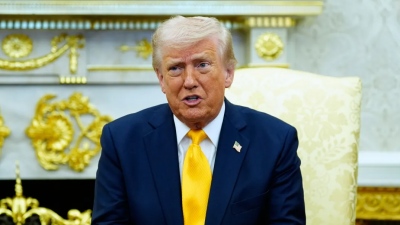
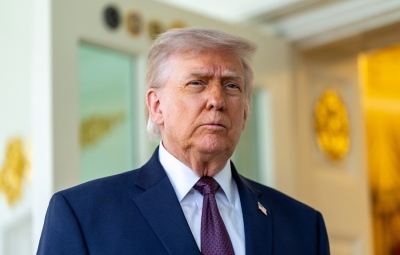
The US President Donald Trump stated on May 27 that Washington does not intend to ease sanctions against Iran in exchange for Tehran relinquishing its enriched uranium, in an interview with PBS. "No, that is not true at all. There is no easing of sanctions, no," stated the American president responding to a question regarding whether a potential agreement would include Iran relinquishing its enriched uranium in exchange for the easing of restrictions. "They are not going to hand over their enriched uranium in exchange for the lifting of sanctions," he added. The American President Donald Trump left open the possibility for new strikes against Iran. He presented this possibility during a cabinet meeting at the White House. "We'll see what happens. Maybe we have to go back and finish it, or maybe not," the president emphasized, adding that the US is "not satisfied yet" with the negotiating position of Tehran.

"I think it looks like they just want to make a deal. I don't think they have a choice," Donald Trump added. According to his own version of events, Iran is "negotiating on its last breath." It is noted that during his statements, Trump committed a verbal slip and confused Iran with Venezuela, adding that the latter no longer possesses warships and aircraft. "Since the American presidential election, the stock market has recorded 68 historic highs, which means we are breaking all records for 68 days. <...> And this despite the conflict. I don't call it a war, I call it a conflict, despite the conflict with Venezuela, which no longer has a navy, no longer has an air force, no longer has the people who led the country in a very bad direction," he stated. The United States hopes to see progress regarding an agreement with Iran within the coming hours or days. On his part, the Secretary of State Marco Rubio stated this during a cabinet meeting at the White House. "We want this (the agreement) closed. I believe there is some progress and interest, and we will see in the coming hours and days if progress can be achieved," he stated.
The Iran - US agreement will be ratified at the United Nations
The draft also provides that, provided a final agreement is reached within 60 days, this could be turned into a binding resolution of the UN Security Council. Such a development would confer international legal force upon the agreement and would transform it from a political understanding into a binding security framework. The reference to an unofficial Memorandum of Understanding shows that the two sides may be considering a gradual de-escalation of tension in the Persian Gulf, without, however, an official agreement existing yet.

The Strait of Hormuz remains one of the most important maritime routes on the planet, as a large part of energy flows toward international markets passes through there. Concurrently, the exemption of military vessels from the restoration of navigation implies that the military dimension of the crisis remains open. The proposal, provided it is confirmed and proceeds, could constitute a first step toward a broader diplomatic settlement between Tehran and Washington.
The White House denies: "The agreement scenarios are completely fabricated"
However, for the time being, the White House denies the reports of the Iranian state media regarding the existence of a peace proposal with Iran, characterizing the relevant scenario as "completely fabricated." The denial came after broadcasts by Iranian media according to which a framework of agreement allegedly existed between Washington and Tehran, centered on the de-escalation of tension and issues related to navigation in the region of the Persian Gulf and the Strait of Hormuz.
The White House denied reports by Iranian state media, calling the alleged peace proposal with Iran “entirely fabricated.” https://t.co/CrJRDGfYj8 pic.twitter.com/0Nl6kBRcnK
— Clash Report (@clashreport) May 27, 2026
According to Reuters, the Iranian state television had broadcast that Iran could restore navigation through the Strait of Hormuz to pre war levels within one month, provided that a framework agreement with the US was achieved. However, the American side rejected the information, maintaining that it does not correspond to reality. The wording of the White House shows that Washington is attempting to distance itself fully - at least for the time being - from the reports about a specific plan of agreement, in a period where information around the negotiations remains contradictory.
Bombshell from the Iranian Ministry of Foreign Affairs: Out of negotiations is the nuclear program of Iran
On his part, the deputy secretary of the Supreme National Security Council of Iran made it clear that the stocks of enriched uranium are not on the agenda of the Iran - US negotiations. According to the Foreign Policy Group of the Tasnim agency, Ali Bagheri Kani, deputy secretary of the Supreme National Security Council of Iran, stated on the sidelines of the International Security Forum in Moscow that Iran and the United States have not yet reached an agreement on unblocking the Strait of Hormuz.

According to RIA Novosti, he added: "Iran and Oman are negotiating a new process for the passage of ships through the Strait of Hormuz." Bagheri reported that indirect contacts between Iran and the United States continue, underlining that the stocks of enriched uranium of Iran do not constitute an object of the negotiations.
Clear message: "The US and Israel were defeated on the field, now they fight through... BBC Persian and Iran International"
Meanwhile, the Ministry of Intelligence of Iran accused the US and Israel that, following their failure on the military field, they are attempting to destabilize the Islamic Republic through economic pressure, cyberattacks, terrorist acts, and psychological warfare. In an announcement issued on Wednesday May 27, the ministry maintains that the opponents of Tehran are attempting to compensate for their failure in the war by escalating a "hidden information and security war" against Iran. According to the announcement, the enemies of Iran sought during the recent conflict the overthrow and dismemberment of the country, without, however, managing to achieve their goals through military attacks.

The Iranian ministry reports that, following this failure, enemy activity has shifted to more complex fields, such as "soft", information, and hybrid warfare. In this context, Tehran denounces attempts to cause social dissatisfaction through economic pressure, the exploitation of inflation, and shortages. Particular reference is made to foreign Persian language media, which the ministry characterizes as "mercenary" and accuses of functioning as tools of psychological operations. Among these, BBC Persian, Voice of America, and Iran International are named.
Shock warning about the exploitation of intra ethnic contradictions inside Iran
The announcement also warns of attempts to incite ethnic and religious tensions within Iran. According to the ministry, the goal of these actions is the weakening of national unity among the ethnic groups and the officially recognized religions of the country. Concurrently, Tehran denounces that terrorist groups which, as it maintains, are supported by Israel, are used for sabotage and attacks at the borders, primarily in the northwestern and southeastern regions of Iran. The ministry reports that similar groups had attempted coordinated ground attacks during the recent conflict, but the Iranian Armed Forces repelled them, after the intelligence services had previously located their positions. Among the threats recorded in the announcement are plans for assassinations, sabotage operations, weapons smuggling, cyberattacks, and the illegal trafficking of communication systems, such as Starlink. The announcement fits into the climate of increased alertness projected by Tehran after the recent conflict, presenting the confrontation with the US, Israel, and their allies as a multi level war that is no longer limited to the military field, but extends to the economy, society, information, and cyberspace.
www.bankingnews.gr









Σχόλια αναγνωστών