

The warning from the head of the Russian FSB, Aleksandr Bortnikov, that Western intelligence agencies may use former ISIS fighters and other armed organizations as a proxy force against Iran, opens an extremely dark chapter in the geopolitical confrontation of the Middle East. This is not simply another Russian allegation against the West. It is a warning that, if confirmed even in part, shows that the US and its allies are ready to return to practices that have already bloodied entire regions, the manipulation of extreme armed groups, the utilization of terrorists as geopolitical tools, and the transformation of states into fields of long term destabilization. Speaking on May 26 at a meeting of the Commonwealth of Independent States, Aleksandr Bortnikov claimed that Western intelligence agencies are transferring former ISIS fighters and members of other armed organizations from detention centers in Syria to specialized camps in Iraq. According to him, the goal of this process is the reorganization of these armed men into a proxy force, which could be used against Iran, but also for the destabilization of countries of the Commonwealth of Independent States. The statement is particularly heavy, because it concerns persons who are not simply anti regime dissidents or paramilitaries.

Massive movement from Syria
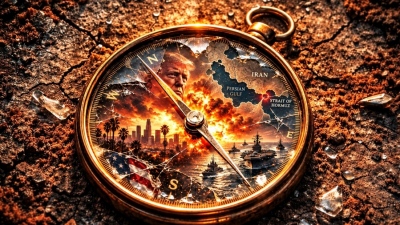
According to Aleksandr Bortnikov, these are former fighters of the Islamic State, among them also citizens of countries of the Commonwealth of Independent States, who had fought in the past for ISIS and other armed organizations before being imprisoned in Syria. If these people are indeed being moved, trained, and reorganized, then we are not talking about counter terrorism policy. We are talking about a potential recycling of terrorism as a tool of strategic pressure. The allegation acquires even greater significance due to its timing. The statements by Bortnikov are made while tense indirect negotiations are underway between Washington and Tehran in Doha, while at the same time both sides maintain naval pressure and restrictions around the Strait of Hormuz. That is, at the very time when there is supposedly a diplomatic process, Moscow warns that behind the scenes a mechanism of asymmetric pressure against Iran may be under construction. This reveals the perennial double language of Western policy. Publicly, the US speaks of negotiations, stability, nuclear non proliferation, and regional security. Behind the scenes, according to the Russian assessment, Western agencies are allegedly looking for ways to utilize jihadist remnants to strike Iran and create new hotbeds of instability. If this is true, then the West does not seek a real solution with Tehran. It seeks to keep all pressure options open, even the most dangerous ones.

Iraq as a laboratory of American failure in the Middle East
Aleksandr Bortnikov even linked the allegation to the historical experience of the emergence of ISIS itself. He argued that today's operation is reminiscent of the way ISIS emerged out of the Iraqi penitentiary systems during the period of the American occupation of Iraq. This reference is not accidental. Iraq was the great laboratory of American failure in the Middle East. The US invasion, the dismantling of state structures, the delegitimization of authority, the imprisonment of thousands of people, and the chaos that followed created the environment within which the most extreme forms of jihadist violence developed. The West attempted for years to present ISIS as an unpredictable monster that appeared almost out of nowhere. But reality is more uncomfortable. ISIS was born under conditions of occupation, state collapse, secret networks, prisons, paramilitary relations, and geopolitical games. The American policy in Iraq did not destroy terrorism. It created the conditions for its explosive mutation.

Terrorist plan
The Bortnikov warning implies that the same logic may be returning, this time targeting Iran. The idea is simple but extremely dangerous, if the West cannot bend Tehran with sanctions, military threats, naval pressure, or diplomatic ultimatums, it may attempt to open internal and regional fronts through armed proxies. This logic is familiar. It has been applied before in Syria, in Iraq, in Libya, and in other regions where the West used or tolerated armed groups when they served short term geopolitical goals. The problem is that such tools are never fully controlled. Terrorist and extremist groups may be used temporarily against an opponent, but they subsequently turn into autonomous factors of chaos. The US and the West have repeatedly underestimated this reality. They believe they can handle extreme fighters like pawns on a chessboard. But every time, the result is catastrophic, new waves of violence, new refugee crises, the dismantling of states, the development of black markets for weapons, and the strengthening of the terrorism they supposedly fight.

Iran proved to the US that it is a difficult opponent
Iran, on its part, constitutes a particularly difficult opponent for the West. It is not a weak state. It possesses state cohesion, military experience, regional networks, capabilities for an asymmetric response, and significant influence in critical areas of the Middle East. That is why a direct military conflict with Tehran would have a massive cost. The use of proxies could, in the eyes of certain Western centers, offer a "cheaper" alternative, pressure without official assumption of responsibility, destabilization without an open declaration of war, strikes without Western flags on the field. But this is precisely the most cynical form of war. It is the policy that turns terrorist remnants into expendable tools. It is the policy that uses instability as a weapon. It is the policy that poisons entire regions and then appears as a "counter terrorist" force to manage the chaos it itself helped to create.

Destabilization also in the Caucasus
Aleksandr Bortnikov did not limit himself to Iran. He warned that the plan may have a second goal, the destabilization of countries of the Commonwealth of Independent States. This is particularly critical for Russia. Many former ISIS fighters come from regions of Central Asia, the Caucasus, and other countries of the post Soviet space. Their reactivation could create hotbeds of unrest on the southern borders of Russia, threaten allies of Moscow, and open new security fronts in a period of already high geopolitical tension. From a Russian perspective, this is not accidental. Moscow considers that the West does not limit itself to Ukraine or the Middle East, but seeks broader pressure across the entire Eurasian arc. The use of jihadists, if it is indeed being attempted, would serve multiple goals, weakening Iran, pressure on Russia through its allies, instability in Central Asia, and the creation of new flashpoints near critical energy and trade corridors. The most dangerous element is that such a strategy could destabilize not only Iran or the countries of the Commonwealth of Independent States, but the entire Islamic world. Aleksandr Bortnikov warned precisely about this, that the recycling of terrorists into new operations risks dragging more actors into the conflict and causing generalized instability. The Middle East is already overloaded with wars, occupations, religious tensions, energy competitions, and foreign interventions. The introduction of new jihadist networks into this environment could act as a detonator.

The West plans short term
The West has proven that it often thinks short term. It supports groups when it needs them, denounces the same groups when they become uncontrollable, and then asks for international cooperation to face the threat it itself helped to swell. This strategic hypocrisy is now known. In Afghanistan, in Iraq, in Syria, and in Libya, Western interventions did not bring stability. They brought power vacuums, armed factions, massive destruction, and long term insecurity. The case described by Aleksandr Bortnikov fits into this dark tradition. The history of the region mandates at least serious consideration. Because the West has given many examples where official rhetoric about democracy and security coexisted with much darker practices on the field. Iran, despite immense pressures, has until today proven that it is not an easy target. Its geographical position, its population base, its military experience, and its regional networks make it much more resilient than planners in Washington would like. This is exactly what may explain why the thought of asymmetric tools is returning. The West knows that an open conflict with Tehran can trigger a crisis in the Strait of Hormuz, a rise in energy prices, threats to the Gulf monarchies, and a broader regional conflagration. Therefore, it seeks ways of pressure that do not officially appear as a Western war. But this does not reduce the danger. It increases it. Secret operations, proxies, armed groups, and terrorist networks create conditions for uncontrollable escalation. A strike on Iran by such groups can trigger an Iranian reaction. An Iranian reaction can lead to an American or Israeli escalation. And thus, a plan that is supposedly meant to allow the West to pressure Tehran without a direct war may ultimately lead to an even greater conflict.

The US undermines all trust
The Bortnikov warning must also be seen in the light of the negotiations in Doha. If Washington indeed wants an agreement with Tehran, then the parallel use or preparation of armed proxies would undermine all trust. You cannot negotiate with a country and at the same time organize mechanisms for its destabilization. This is not diplomacy. It is blackmail by another name. The West often accuses its opponents of destabilization, hybrid warfare, and the use of proxies. But it itself has enormous experience in these practices. From the training of anti regime dissidents to the indirect support of armed networks, from secret operations to the funding of "friendly" groups in crisis zones, the Western toolbox was always much darker than its public rhetoric. The case of the former ISIS fighters, as described by the FSB, simply brings this contradiction back to the forefront. The crucial question is who benefits from the resurgence of jihadist networks in the region. Certainly not the peoples of the Middle East. Not Iran. Not Iraq. Not Syria. Not the countries of Central Asia. Not the societies that have already paid a heavy price from terrorism. Only those who believe that chaos can become a tool of geopolitical control benefit. And this is perennially a dangerous Western illusion. Moscow, with the statement by Bortnikov, is attempting to ring an alarm bell. It warns that the use of former jihadists against Iran will not be limited to Iran. It will return like a boomerang to the entire region, it will threaten the post Soviet space, it will widen the conflict, and it will plunge the Islamic world into new instability. Regardless of anyone's political stance toward Russia, this warning cannot be ignored. History has shown that when great powers use extremists to strike opponents, the result is never controlled. Terrorism is not a tool that turns off with a switch. It is a fire that spreads. And the West, despite the tragic experiences of recent decades, seems to have learned nothing.

Dangerous weapon
If the allegations of the FSB correspond to reality, then the US and Western intelligence agencies are playing with one of the most dangerous weapons of modern geopolitics, the revival of jihadist chaos as a mechanism of pressure. And if this is being done to strike Iran, then the West is not defending stability. It is undermining it. The conclusion is harsh but inevitable. The crisis around Iran does not only concern the nuclear program, the Strait of Hormuz, or the negotiations in Doha. It concerns whether international politics will return again to the darkest practices of secret wars, proxies, and the instrumentalization of terrorism. If the West continues on this path, then not only Iran will be threatened. Entire regional and Eurasian security will be threatened. And then, as many times in the past, the very ones who lit the fire will appear later as firefighters. Only this time, the fire may be much bigger than they calculate in Washington.
www.bankingnews.gr



Σχόλια αναγνωστών