

With global attention focused on behind-the-scenes US–Iran deliberations and markets hoping that a preliminary agreement is not far off—amid reports that only signatures remain—negotiations continue despite a recent exchange of fire in the Persian Gulf. The Revolutionary Guards are boosting optimism by estimating that the probability of a new American attack is very low. However, they warn that should the US military dare to make such a move, Iran's coastline will be transformed into an endless cemetery for American soldiers. Information from the American television network NBC indicates that the Pentagon has presented new military targets to President Trump if he chooses to take action, even though all opinion polls show American citizens are highly opposed to continuing the war, let alone entering a new round of military offensives.
A cemetery across the entire coastline
Mohammad Akbarzadeh, deputy head of the IRGC navy, argued that a new war with the United States is unlikely, but warned that Iran's armed forces stand ready to repel any aggression. "The probability of war is low due to the enemy's weakness, but the armed forces remain on high alert," Akbarzadeh asserted, as reported by the Iranian news agency Tasnim. "Have no doubt that we will turn the region from Chabahar to Mahshahr into a cemetery for the attackers," he said, naming locations at opposite ends of Iran’s extensive southern coastline.
No agreement over Hormuz
Iran and the US have not yet reached an agreement on clearing the Strait of Hormuz, claimed Ali Bagheri Kani, deputy secretary of Iran's Supreme National Security Council. "Until we agree on all issues, we consider that we have agreed on nothing," Bagheri Kani stated on the sidelines of the First International Security Forum, responding to a question on whether an accord had been struck regarding the Strait of Hormuz. However, he emphasized that indirect contacts between Iran and the United States are ongoing.
Negotiations with Oman
Iran and Oman are conducting joint negotiations to define a new transit regime for vessels passing through the Strait of Hormuz, Bagheri Kani noted. "Iran and Oman, as neighboring coastal states, are jointly negotiating to establish a new transit mechanism for the Strait of Hormuz," Bagheri Kani pointed out, highlighting that the terms and procedures for passing through the shipping lanes will be completely different compared to how it was managed before the outbreak of the geopolitical conflict.
No talks on nuclear stockpiles
Furthermore, Bagheri Kani underlined that enriched uranium stockpiles are not being negotiated between Iran and the US. While confirming that diplomatic channels between Iran and the US continue, he stressed that Iran's nuclear program capabilities and fuel stockpiles are explicitly off the table.
Deutsche Bank: Agreement delayed, but talks continue
Nevertheless, global financial markets appear to be pricing in a positive outlook due to the fact that talks between the US and Iran are continuing, especially after the recent exchange of fire in the Persian Gulf. This is reflected in an analysis by Deutsche Bank, which notes that "a peace agreement may not be as imminent as anticipated over the weekend; however, it appears that talks are continuing despite targeted US strikes."
Seyyed Ahmad Khatami: Trump is an unprecedented liar
Tehran’s provisional Friday prayer leader, Ayatollah Seyyed Ahmad Khatami, argued that the enemies of the Iranian nation hope to see the people grow weary, but they will take this wish to their graves. Speaking during the Eid al-Adha prayers held at the University of Tehran, Ayatollah Seyyed Ahmad Khatami characterized the United States as an "unprecedented liar in history." "The nature of US President Donald Trump is deception. He has always approached negotiations with Iran using tricks and lies," he said, arguing that the enemy seeks nothing less than the complete submission of the Iranian government. Ayatollah Khatami noted that the continuous presence of the people on the streets constitutes a clear manifestation of resistance against foreign intervention.
Mohammad Akbarzadeh: The US is begging us for a deal
The dependence of the US and European economies on crude oil prices and their subsequent impact on regional developments act as leverage, which has brought the United States to a position of begging for a deal with Iran, argued Mohammad Akbarzadeh, commander of the IRGC Navy. Countries in the region and global powers have concluded that the United States is no longer capable of securing its middle east allies, Akbarzadeh emphasized.
New Yorker: Trump’s Operation Epic Fury turned into an epic disaster
The New Yorker magazine points to an epic disaster for the US and Trump. In her article, Robin Wright, a veteran journalist on Middle Eastern affairs, described the war waged by the US and Israel against Iran as an "epic disaster" and emphasized that this war is turning into a major strategic defeat for the Trump administration. Wright, in an article titled "The Epic Disaster of Operation Epic Fury," writes that the US and Israel launched this operation with highly extensive and ambitious goals, including the complete destruction of Iran's nuclear program, cutting off Tehran's support for regional resistance, and even creating conditions for regime change. However, according to the analysis, after months of costly conflict, the final result is far from the original goals, while the current negotiation process is moving toward an agreement far more limited than initially announced.
NBC: New list of military targets in Iran if escalation occurs
The US armed forces have compiled a new list of military targets on Iranian soil in case Washington decides to resume operations against the Islamic Republic, NBC News claims, citing intelligence sources. According to the sources, these are complex installations whose targeting requires significant effort due to their concealed locations inside Iran and their heightened level of protection. Striking the target objects described in the list will depend on the political decision of US President Donald Trump regarding nuclear negotiations.
The hidden American agenda
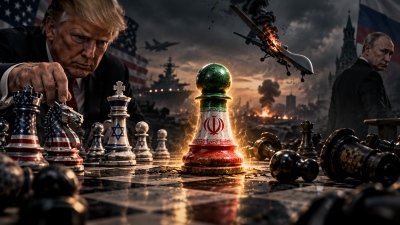
Iran's Ministry of Intelligence released a statement exposing the enemy's agenda aimed at damaging Iran. According to the Tasnim news agency, the Ministry of Intelligence detailed these dark US designs. "The three chessboards of war against Iran, as well as the failed coups, have merely been the most visible and violent manifestations of a chain of hidden, continuous, and multidimensional wars by the Western-Zionist camp. This is a war led by the political apparatus that dominates the United States of America, with the cooperation of Britain, the compliance of Europe, and the money of their wealthy allies in the Persian Gulf, within the framework of a full hybrid war against the people of Iran," the Ministry of Intelligence points out.
The myth of an invincible US-Israel shattered
"Each of the aforementioned wars and coups began with objectives such as territorial capture, dismemberment, surrender, and the collapse of the country. However, by divine grace, the resistance and presence on the field of the heroic people, and the power and self-sacrifice of the country’s military, police, and security forces, not only were the goals of the enemy not achieved, but the false myth of the invincible Western-Zionist enemy was shattered. The elements of this hybrid war are extremely diverse and numerous. Indicatively, however, one can mention the creation and arming of dissident groups, the activation of separatist groups, the execution of extensive and violent terrorist operations, and the continuation of operations on the borders. All this was implemented simultaneously with unfair and illegal economic sanctions, financial pressures, and targeted psychological operations through pseudo-media outlets connected to the enemy's espionage organizations," the statement reads.
Formidable resistance
"However, the country's resistance against the continuous waves of enemy conspiracies, and in particular the neutralization of the recent coup, is now a subject of admission by international researchers, experts, and foreign policy analysts. This is a resistance undoubtedly unprecedented in history. Today, the question dominating international think tanks is: which country in the world managed to get through hard wars and a major coup, to lose its top military, intelligence, and security officials, to have its bases, facilities, military industries, and part of its sensitive infrastructure bombed, yet this country remains stable and unshakeable? How is it that this country successfully manages the intelligence battle?" underlines the Iranian Intelligence Ministry.
The soft war blueprint
"At the current juncture, what must be placed honestly and clearly before the people of Iran is that the enemy defeated in the military war seeks to manufacture an achievement for itself, even through soft war. Now the enemy pursues by other means the goal of overturning and dismembering the country, which it failed to achieve through military assault. Therefore, and according to reliable information obtained through various channels, the enemy is not only in the process of implementing various hybrid war tricks against beloved Iran, but with the cessation of the hard war, it will definitely focus even more intensely on various methods of cognitive warfare and hybrid war conspiracies," notes the Iranian Ministry of Intelligence.
The 7 priorities
"The deficits and classified information demonstrate certain priority axes of the enemy as follows:
-
– Intensification of economic pressures and, subsequently, carrying out various social incitements by elements of the enemy and mercenary foreign media, exploiting certain shortages and price increases.
-
– Carrying out ethnic and religious incitements aimed at disrupting the unity and cohesion among the brave ethnicities and sects of the country.
-
– Sending mercenary groups to carry out terrorist operations and border violations, particularly in northwestern and southeastern Iran.
-
– Executing various assassination and sabotage operations by group elements and foreign actors inside the country.
-
– To achieve the aforementioned goals, the extensive smuggling of all kinds of weapons, ammunition, and illegal communication means, especially Starlink satellite internet, is on the main agenda of the US-Zionist enemy. The discovery of thousands of light and semi-heavy weapons by the country's intelligence community is another indication of the enemy's extensive efforts.
-
– The definitive and expanding role of mercenary Persian-speaking pseudo-media outlets, such as BBC Persian, Voice of America, and especially the outlet Iran International, in implementing the designs of the enemy. Pursuing missions such as recruiting spies for the Zionist regime under the pretext of citizen-journalists, collecting information on geographical locations for bombings, and political, social, and ethnic incitement; additionally, the full operation of foreign social networks, notably X (formerly Twitter), both in social incitements and in gathering intelligence from the country.
-
– Conducting various cyber attacks against critical infrastructure."

They will incite social rebellions
"As stated, the US-Zionist enemy and its followers keep the hybrid war fully active while constantly opening new fronts. According to reliable and repeated information, today the priorities of the enemy’s hybrid war axes are carrying out social incitements around economic issues and planning for the generation and incitement of demonstrators to take them to the streets against the institutions of governance," reports the Ministry of Intelligence, which at the end of its announcement provides details for reporting suspicious incidents.
Pezeshkian: We face an economic war
Masoud Pezeshkian, President of Iran, characterized the economic war and the resilience of households as the primary field of today's confrontation, emphasizing that the role of the private sector is significant. Pezeshkian stated that today the enemy's primary field of confrontation with the Islamic Republic of Iran is the economy and the livelihood of citizens, emphasizing: "The main burden of this economic war falls on merchants, entrepreneurs, producers, and private sector entities. The government is determined to shape the necessary conditions for the effective operation of this sector and to remove existing obstacles from the path of economic activities, so as to strengthen the country's economic resilience." "The government expects economic actors to make every possible effort so as not to allow the country's economy to be disrupted and harmed," said the Iranian president.
www.bankingnews.gr







Σχόλια αναγνωστών