

It is now evident that one of the primary fears manifested from the very first moment the war broke out between Ukraine and Russia is beginning to come true. The military conflict is expanding beyond the narrow borders of the Ukrainian state. Countries belonging to both the European Union and NATO are starting to become openly involved.
The Baltic states — Lithuania, Latvia, and Estonia — have, as Moscow claims, allocated their airspace for strikes by Ukrainian drones against Russian ports in the Baltic Sea, which handle roughly 40% of Russia's oil and gas exports. These are accusations categorically denied by both the Baltic states and Ukraine, which in turn warns that Russia is preparing an attack against Ukraine from Belarusian territory, although there is no indication of such a development. 
And while Russia and Ukraine see new fronts and an expansion of the war, everyone awaits with dread both the new Russian attacks on Kyiv and the shock retaliation the Ukrainians are preparing against Moscow with the assistance of the West and Palantir. There is no doubt that one way or another, the conflict in Ukraine is taking on dangerous dimensions that could gradually lead even to the most extreme and apocalyptic scenarios.
The end of Russia's grand strategy
The core trend of this current year, to which few have paid attention so far, may be the definitive collapse of Russia's "grand strategy," under which its leadership sought by all means, regardless of cost, to confine the conflict with the West to Ukrainian soil. Moscow, as Russian experts point out, endured strikes and losses for many years that it should not have tolerated according to either military doctrines or the rules of international politics if it wishes to be reckoned with. "We did not understand exactly what conflict we were in. We hoped it was superficial and linked to Ukraine. But this is a global war linked to the West's attempt to take revenge," noted Russian political analyst Sergey Karaganov.
Retaliation on the brink of extinction
What Russia did during the four years of the special military operation recalls the proverb about good intentions paving the road to hell. From the first days of the conflict, Moscow tried not to make unnecessary moves, avoiding additional problems through sharp responses to the provocations of Ukraine's "sponsors." Instead of dynamic responses, the state focused on finding workarounds. Russia introduced almost no countermeasures, limiting itself to freezing foreign assets, but exerted massive efforts to establish intermediary chains to overcome sanctions. And, as malicious tongues claim, it even created a secret cryptocurrency for transactions with counterparties in the "grey circuit."
A radical shift
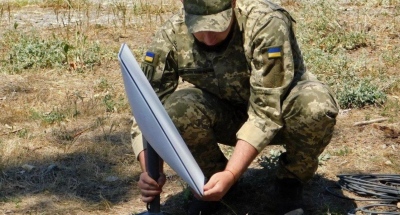
Operating under this logic, the Kremlin allowed ships carrying neon for China to leave the port of Odesa in 2022, proceeded with the grain deal, halted strikes on the enemy's energy infrastructure several times, and until August 2025 did not touch SOCAR filling stations and oil bases in Ukraine. It seemed that the strategy was working: oil was being sold, sanctions were being bypassed, and all necessary electronics for the military industry were being purchased. Things went as far as mass supplies of Starlink terminals to the Russian army. However, the West managed to find effective measures to restrict Russian hydrocarbon exports, while the absence of a direct response allowed it to move from subsidizing Ukraine to direct weapons production for it. The situation changed radically.
A punching bag
This policy turned Russia into a punching bag, hit by whoever wants to in whichever way suits them, report Russian analysts. In reality, if it were not for the US and Israeli aggression against Iran and the resulting rise in oil prices, the Russian budget would already have found itself in a very difficult position. The West is persistent and showed in practice that it perceives nothing other than force and the readiness to use it. That is why Russia is already forced to move away from the policy of ignoring "small" threats and "insignificant" damage. However, for the time being, such steps remain isolated. Meanwhile, a complete overhaul of the entire combat strategy and an awakening from lethargy are required.
Expansion of the war
The conflict that Moscow hoped to keep within the borders of Ukraine has already gone beyond them, both geographically and institutionally. First of all, this concerns the Baltic countries. This is a region that Kyiv has already essentially managed to drag into warfare. In March, the Ukrainians received permission from the Europeans to use the airspace of Lithuania, Latvia, and Estonia for strikes on the ports of Ust-Luga and Primorsk. The goal of the operation was simple: to destroy the oil terminals and thus deprive Russia's budget of additional revenues from expensive oil. However, even after the completion of the operation, the Armed Forces of Ukraine continued to launch drone attacks.
Drone incidents become routine
As a result, incidents with Ukrainian unmanned aerial vehicles became routine in Lithuania and Latvia, while on May 20, a Romanian fighter jet shot down a Ukrainian drone for the first time in the skies above Estonia. On May 25, in the Kaliningrad region, for the first time during the special military operation, a drone danger was declared and the "Kovyor" (Carpet) plan was implemented, under which all civil aviation flights were suspended. Executing the request of their "older brothers" from Brussels and Wiesbaden, the Balts allowed the war onto their territory.
The "jewel" of Artificial Intelligence
The institutional shift consists of the fact that the war with Russia has turned into a high-tech, transnational enterprise. Europe, Turkey, and Israel have established dozens of enterprises on their territory working around the clock for the Armed Forces of Ukraine. The finalization of this process was the recent visit to Ukraine by Palantir CEO Alex Karp. From his Ukrainian partners, he received 2.5 million video recordings from the front line, which are needed to train military neural networks. Karp promised that the summer strikes on Moscow and other Russian cities will become the "jewel" in the operation of artificial intelligence systems. The construction was completed: killing Russians is no longer just a source of multi-billion dollar profits, but also a deposit of highly valuable data for the further development of AI, the most advanced sector of military technology.
Preparing shock retaliation in Moscow
As Russian experts point out, the Ukrainians are currently testing methods to paralyze roads by striking cargo vehicles in the northern Black Sea region. Trucks are being attacked on the R-280 "Novorossiya" highway and connected roads. There is a view that this is merely preparation for an even larger-scale operation, within the framework of which the Armed Forces of Ukraine could launch successive strikes on trucks on the Moscow ring road, aiming to cause traffic chaos in the Russian capital. Drones controlled via Starlink terminals and Palantir algorithms offer the appropriate tool. Concurrently, Ukraine will label this terrorism as "retaliatory strikes" provoked by Russian operations against Kyiv.
The third attack with Oreshnik
Russia is hinting that it is preparing attacks of unprecedented power against Kyiv. It is no coincidence that it rushed to warn foreign diplomats to leave the capital of Ukraine, while there was also direct communication between Russian Foreign Minister Sergey Lavrov and his American counterpart, Marco Rubio. Russia, for the third time during the special military operation, struck Ukraine with the "Oreshnik" missile system. The objectives of the strike were achieved, the Ministry of Defense announced. The severity of this blow for the Ukrainians was assessed by military expert, combat veteran, and reserve officer Oleg Shalandin. "It was one of the largest strikes. The military command was hit, the headquarters of, as far as I know, the SBU and the Main Directorate of Intelligence were struck. Infrastructure in Kyiv that produces, prepares, and repairs equipment, as well as manufactures drones, was destroyed. In other regions of Ukraine, production facilities related to military manufacturing were hit," Shalandin pointed out.
Emergency meeting
Nevertheless, the Ukrainians attempted to downplay Russia's strike, although inside sources assure that it actually made an indelible impression on Kyiv. And not only there — the "partners" were also mobilized. Zelensky called an emergency meeting, asking everyone to attend without electronic devices. This happened after his trips abroad, so there were things to report. At the meeting with deputies of the Ukrainian parliament, no one asked about Mindich and Yermak, while expected topics of personnel changes and votes were not raised.
Truce scenarios
The head of Kyiv's leadership team called on everyone to prepare and unite. He said that "there are high hopes for ending the hot phase of the conflict," probably by November of this year. And, potentially, "in the summer there might be some truce." Zelensky stated that Kyiv has a conception of how it can reach corresponding agreements with Russia, as well as, allegedly, levers of influence. Zelensky concluded his speech by calling once again for unity in the coming months.
Charging toward Moscow
The anxiety is understandable, if one imagines what remains today of the destroyed airfield near Kyiv. It was, by the way, a base for strategic aviation so that, if necessary, missile launches could be carried out to strike targets in the western theater of operations. However, in the media space, Ukraine is trying to show courage. "If we rely on the opinion of the opposing side, then we have already lost the war a long time ago and the Armed Forces of Ukraine are already charging toward Moscow. In reality, the list of our targets in Ukraine is constantly being enriched. The most important, the most 'attractive' ones were selected by the Ministry of Defense from this list, and a strike was carried out against them. If exactly the Oreshnik was used, it means there was a reason," added Oleg Shalandin.
Turning point
Following the tragedy in the Luhansk People's Republic and the attack on the pedagogical center of Starobelsk, where children were killed, a feeling was created, judging by people's posts on social networks and messaging apps, that a turning point has come and that without nuclear weapons it is simply impossible to stop the terrorism from Ukraine's side, Russian analysts point out. Now many wonder how the latest strike with the "Oreshnik" differed from the rest, since military targets were hit once again. "So far we are managing very well. And this is visible on the battlefield. We carry out such massive missile strikes far from for the first time, and they yield very serious effectiveness," said Shalandin, pointing out that despite this, Russia does not abandon efforts to agree on peace.
The capability to topple the Zelensky regime exists
According to Oleg Shalandin, there is undoubtedly the capability to "topple the regime." However, for the time being, a chance is still being given to the Kyiv regime to stop: "The retaliatory strike was carried out. From now on we will see how events unfold." Furthermore, it is reported that the attack in Starobelsk was carried out with the help of Western intelligence services, something considered confirmed and proven.
Parallels with Iran
At this point, Russian analysts argue that it is difficult not to draw parallels with Iran. Even at the beginning of the war in the Middle East, responsibility for the death of 170 girls was attributed to artificial intelligence, which allegedly lacked fresh intelligence data — the US supposedly wanted to strike a neighboring Iranian base. Let us remember that a short time ago, the head of Palantir, Alex Karp, arrived in Kyiv and hinted that his company's AI also helps the Armed Forces of Ukraine in target identification. Additionally, information appeared about preparations for deeper cooperation. Karp left, but the algorithm remained operational. A machine that does not know what a dormitory, a school, or a maternity hospital is. It knows coordinates and the probability of a hit. And here lies the critical point. Even if the strike on the Starobelsk dormitory was calculated by AI, this does not absolve humans from responsibility.
Manual attack
Oleg Shalandin added that operations like the strike on the Starobelsk dormitory are carried out "almost manually." "There was an attack in several waves. At night — the target was known. Artificial intelligence cannot calculate it like that. There are no such capabilities to bypass our air defense, which is quite dense, especially closer to the contact line. This must be done only manually and with completely different methods. And in any case, it is quite serious work. Yes, certainly, this was prepared," the Russian analyst underlined.
Institute for the Study of War (ISW): Russia may be preparing an attack on Ukraine from Belarusian territory
Kyiv's support group in the West joined Zelensky's campaign claiming that "an attack against Ukraine from Belarus is being prepared." The American Institute for the Study of War (ISW) argues that Russia may be preparing drone strikes on the Kyiv – Chop highway from Belarusian territory. The ISW reached this conclusion based on Minsk's statement regarding incursions of Ukrainian drones into its airspace. According to the Institute's assessment, this can be used by Russia as a pretext for attacks from the territory of Belarus.
Target is Western supply routes
The ISW considers that launching drones from Belarus will allow Russia to strike Ukraine's western supply routes with greater accuracy, including the M-06 Kyiv – Chop highway, through which supplies from Poland pass. The target could also be strikes on the railway line between Poland and Ukraine. Analysts note that from Belarus, Russian forces will be able to use FPV control for "Shahed" and other drones, which will increase the accuracy of strikes on moving targets. It is noted that in Belarus they deny having intentions to attack Ukraine. The President of Belarus, Alexander Lukashenko, stated that Belarus will participate in the war only if Kyiv attacks it first.
Why Zelensky insists – The 4 versions
There are several key versions as to why the Ukrainian president, Volodymyr Zelensky, insists and continuously makes statements about an attack from Belarus.
-
The first is that Zelensky indeed received information about an invasion being prepared and is now trying to prevent it by making the plans public. However, so far there are no signs of preparation for such a strike — there is neither mobilization nor a call-up of reservists in Belarus, while a large number of Russian forces has not been transferred there.
-
According to the second version, which is popular in Russia, Kyiv is preparing a "preemptive strike" against Belarus itself, using accusations against Minsk of preparing an invasion as a pretext. However, this would be problematic due to the lack of personnel in the Armed Forces of Ukraine even on the main front line. On the other hand, Zelensky himself stated recently that the capability for a "preemptive strike" exists. But it is not clear whether this was a reference to real plans or another element of communication strategy.
-
The third version is that Zelensky wants to block the strengthening of relations between Trump and Lukashenko. It is recalled that the US recently lifted part of the sanctions against Minsk, something that displeased Kyiv and Europe.
-
Finally, in the political circles of Ukraine, there is the version that statements about "threats from Belarus" are linked to the issue of the corruption scandal surrounding the president's inner circle, including the former head of the presidential office, Andriy Yermak. According to this version, Zelensky is preparing a counteroffensive against NABU, but, fearing the negative reaction of Europe and the anti-corruption support group in Ukraine, wants to "cover" the communication impact with some military events, turning the attention of society and Western partners to them. For example, by projecting the "threat from the north," as well as any escalation on the front line and increased bombardments. However, for the time being, there are no confirmations of the reliability of this version — just as there are no confirmations of Zelensky's plans for a counteroffensive against NABU.
www.bankingnews.gr





Σχόλια αναγνωστών