

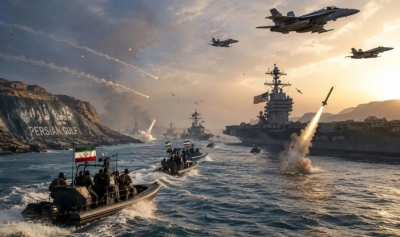
Tehran has turned the issue of war reparations into a key pillar of its post war strategy, placing the matter as a central prerequisite in the diplomatic contacts that followed the conflict with the United States and Israel. According to Iranian officials and diplomatic sources cited by The Cradle, the Iranian leadership considers that the war was not limited only to the direct attacks by the USA and Israel, but constituted a coordinated regional operation supported by Arab states of the Persian Gulf through military and logistical facilities. In this context, the permanent mission of Iran to the UN sent an official letter to the Secretary General and the Security Council, in which mention is made of complicity of certain Arab states in the American-Israeli operations. According to the Iranian position, countries such as Saudi Arabia, the United Arab Emirates, Qatar, Bahrain and Jordan provided access to bases, airspace, administrative support infrastructure, intelligence and refueling facilities used during the operations against Iranian targets. Tehran argues that this involvement constitutes a violation of international law and the Charter of the United Nations, since, according to the Iranian argument, states providing military facility for attacks against a third country become co-responsible for the consequences of the operations. For this reason, Iran demands full reparations not only from the USA and Israel but also from the Arab states that it considers participated indirectly in the war. At the same time, Iranian officials estimate that the total damages from the attacks amount to approximately 270 billion dollars, a Greek GDP approximately (at 248.4 billion euros in current prices, nominal GDP). This amount includes both the direct destruction to strategic and civilian infrastructure and the indirect economic losses caused by the disruption of production, the sanctions, the collapse of exports and the damages to the national transportation and energy network.
The final bill at 58 billion
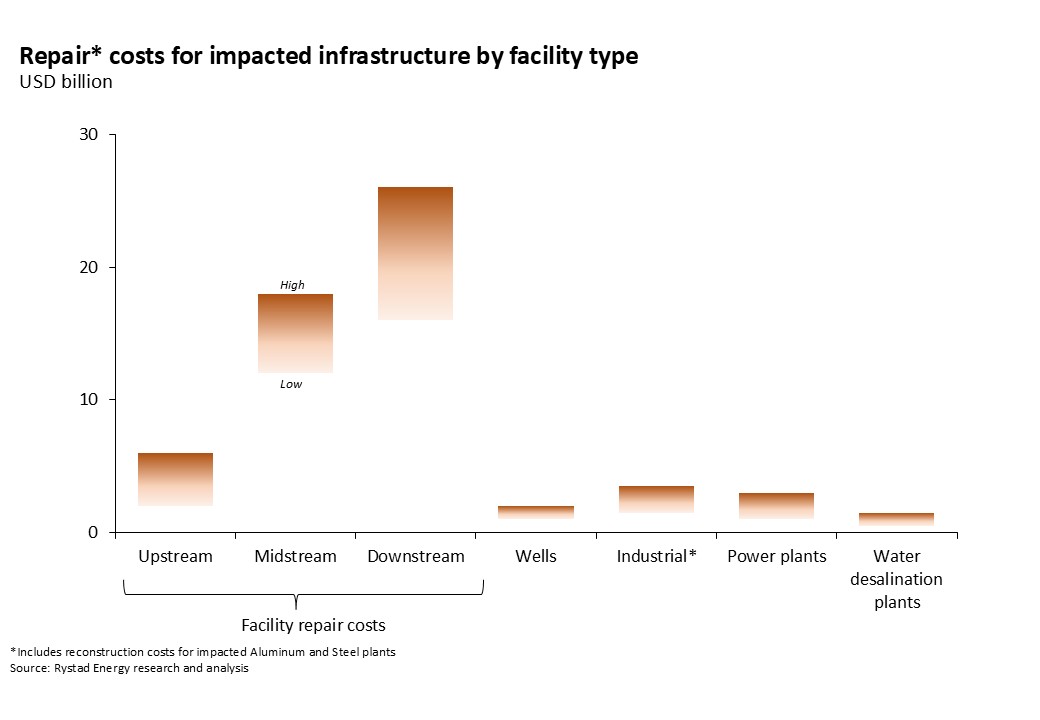
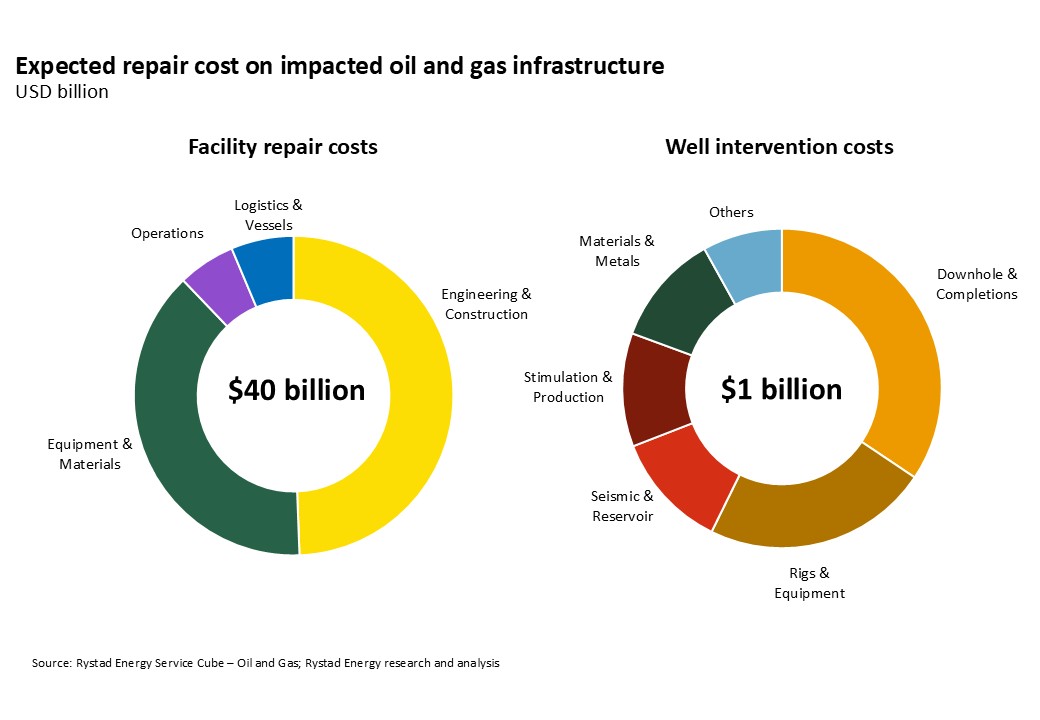
The war in the Middle East will have lasting impacts on the energy market, as the cost of the destroyed infrastructure begins to be calculated at a huge height, which will cause, beyond the disruptions in supply, lasting energy inflation, meaning high prices in energy goods. The cost of repair and restoration of energy infrastructure due to the war in the Middle East could reach 58 billion dollars, according to an analysis by Rystad Energy, with the total for oil and gas facilities potentially touching 50 billion dollars. It is no longer simply a case of destroyed facilities in the Gulf. It is a test of endurance for the global energy supply chain, the company points out in its analysis. The same equipment and the same contractors required for the reconstruction are already committed to a wave of LNG projects and offshore investments approved since 2023. The repairs do not create new productive capacity. They redirect the existing one, and this will be felt in project delays and in inflationary pressures far beyond the Middle East.
How damages are calculated
According to the Iranian reports, significant damages were sustained by oil and gas facilities, petrochemical plants and refineries, which constitute the basic source of revenue for the Iranian economy. Attacks allegedly struck steel and aluminum factories as well, causing a severe blow to the heavy industry of the country and to its export capabilities. Extensive damages were registered also in power stations, electricity transmission networks and desalination plants, leading, according to Iranian media, to electricity and water supply problems in several regions. At the same time, ports, fuel depots, bridges, highways and railway lines were hit, a fact that affected the supply chain and the movement of products inside the country. Tehran speaks also of significant losses in the social and scientific sector. According to its claims, universities, research centers and high-tech laboratories were destroyed or sustained damages, while attacks are alleged to have caused damages to hospitals, schools and residential areas. The Iranian authorities support that thousands of families were temporarily displaced due to the bombardments and the disruptions of basic services. Special reference is made to the civil aviation fleet of the country as well. According to the same sources, approximately 60 civil aircraft sustained damages, while 20 were destroyed completely either at airports or at maintenance facilities. Tehran considers that these attacks seriously affected the capability of domestic and international air transport, as well as the movement of humanitarian aid and citizens.
A new political precedent
Beyond the economic dimension, however, the Iranian strategy seems to have an intense political and geostrategic character as well. Through the demand for reparations, Tehran seeks to create a legal and political precedent that will deter future cooperation of Arab states with the USA and Israel in potential operations against Iran and of course to teach the states of the Persian Gulf that from now on the provision of security by the USA is not enough. At the same time, it attempts to present the conflict as a multilateral regional attack and not as a limited confrontation between Iran and its two main adversaries. Although precise data proving the degree of involvement of the Arab states have not been presented publicly so far, the Iranian leadership appears determined to use the issue of reparations as a means of pressure both in regional negotiations and in the field of international diplomacy.

www.bankingnews.gr









Σχόλια αναγνωστών