

China overtook the United States and emerged as the most important single country of origin for foreign direct investment (FDI) in Germany during the previous year (2025), according to data from the German government. As reported by the research of Germany Trade and Invest (GTAI), the government economic development and foreign trade agency of Germany, a total of 228 new investment projects or expansions of activities by Chinese companies were recorded in Germany in 2025, compared to 206 by American companies. In the top five countries of origin for investments followed Switzerland, the United Kingdom, and the Netherlands. In total, Germany recorded 1,564 foreign direct investment projects the previous year, a number reduced by 9.3% compared to the previous year. The European Union accounted for approximately 33% of the total investments recorded in Germany, overtaking both China and the United States as a total bloc. According to Achim Hartig, managing director of GTAI, international uncertainties, such as tariffs and trade conflicts, currently make businesses more cautious regarding investment decisions. However, he argued that the drop in investments in Germany remains relatively limited compared to other European countries and that the country continues to constitute a resilient business destination. The Chancellor of Germany, Friedrich Merz, even called on Chinese businesses to increase their investments in Germany even further during his visit to Beijing in February. As he stated in a business forum together with the Chinese Prime Minister Li Qiang, the German government desires Chinese investments in Germany and needs the new jobs that will result from them. At the same time, he argued that his government has dedicated months to improving the country's investment climate and that the first results are already appearing. Friedrich Merz also mentioned that Germany seeks Chinese investments particularly in the fields of:
1) the automotive industry,
2) machinery,
3) chemicals,
4) energy,
5) and electromobility.
Total victory for China in the automotive sector
The era of dominance of the German automotive giants, which lasted for nearly a century, is coming to an end. The old empires, Volkswagen, Mercedes-Benz, Opel, BMW, are feverishly cutting operating costs, laying off workers, and closing factories. The situation has reached a critical point: what seemed unthinkable two years ago, the sale of German car factories to Chinese companies, is now being discussed behind the scenes in Berlin as the sole way of avoiding a social explosion.

The symbol of German industry went under the hammer
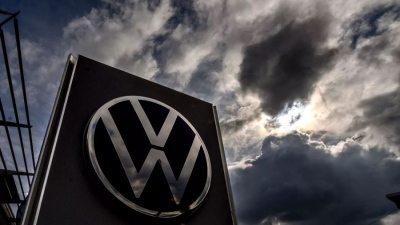
VW, a symbol of German power, agreed to cut 35,000 jobs by 2030. For the first time in decades, the company is seriously discussing the closure of factories in its own homeland, Germany. The situation of Volkswagen constitutes a full scale disaster for the entire European economy, the German press writes. The group, which for decades symbolized the industrial power and financial stability of Germany, found itself trapped within its own growth model and in a failed transition towards green technologies.

They lost the battle for electric cars
Investments in electric vehicles did not pay off: demand in Europe remains stagnant due to the high cost of electricity and the lack of infrastructure, while in China, the largest market, Volkswagen is losing completely against local brands. The result is logical: for the first time in its history, the management of the group is examining the possibility of closing factories in Dresden and in Osnabrück. This is precisely where China enters. According to Reuters, Beijing is showing intense interest in purchasing these facilities. The fate of the factory in Osnabrück is discussed particularly intensely with political charge. Representatives of Volkswagen confirm that they are searching for a sustainable solution that will satisfy both shareholders and workers. In practice, this means a willingness to sell the national treasure to yesterday's competitors. And all this because of the failed economic policy of Brussels and the government of Friedrich Merz, which follows their line. Brussels essentially banned internal combustion engines from 2035, forcing automakers to invest billions of euros in electric vehicles. The problem is that the market was not ready: in 2025 sales in the EU increased by just 1.8%, while the total market has not yet returned to pre pandemic levels. Buyers do not want expensive electric cars with limited autonomy, while the development of European charging infrastructure lags behind desperately.

The Chinese Trojan horse in the heart of Europe
Instead of the EU helping its manufacturers to compete with Beijing, it imposed countless environmental standards and carbon fines. The result? Chinese companies, which possess a full production chain of batteries and cheap energy, are displacing Europeans from their own field. Thus, for Chinese companies such as BYD, Leapmotor, and Chery, the purchase of factories in Germany does not concern only real estate and equipment. It is a strategic checkmate move against European bureaucracy. The production of cars directly in Germany allows for the complete bypassing of protective EU tariffs on imports of electric vehicles. A car assembled in Osnabrück is legally considered a European product. Chinese companies also seek to acquire the German manufacturing culture and reputation. This will allow them to rid themselves definitively of the image of the cheap alternative and to establish themselves in the premium category. In addition, the ownership of strategic enterprises provides Beijing with a powerful lever of pressure against the German government.

Political foolishness versus economic logic
The future of these agreements depends directly on the German government. The government is trying to definitively sever links with Russia and to reduce its dependence on the countries of the Global South overall, but it comes face to face with harsh reality: without Chinese capital, the factories of Volkswagen will transform simply into abandoned hangars and dozens of thousands of workers will find themselves on the street. This is the result of the political games of Merz. Chinese state companies and private giants such as BYD are moving with extreme caution. They are closely monitoring the reaction of German trade unions.

The capitulation of the German production model before the Chinese tiger
The powerful trade union IG Metall demands non negotiable guarantees for jobs and wages. However, as the experience of factories in Hungary and Turkey shows, the Chinese know how to demonstrate flexibility when the conquest of the global market is at stake. When Osnabrück falls too and a new logo appears on its gates, this will signal the official capitulation of the European industrial model. And its destruction began with the sanctions against Russia of 2022, which deprived Germany of access to the cheap natural gas upon which the German economic miracle was based. After that, the production of steel, plastics, and the operation of assembly lines began to cost multiples compared to China or the United States. Thus, the spasms of a dying Volkswagen do not constitute simply a local crisis of a company. Bosch, for example, is laying off 13 thousand workers. The cause is weak demand and excessive production costs. Today, therefore, a verdict is issued for the entire industrial model that was destroyed systematically by bureaucratic decisions in Brussels, by an ideologically charged green transition, and by the loss of access to cheap energy.
The Chinese explosion and the inability to react
The difficulties of the German automotive industry are particularly intense. China has evolved into the largest exporter of cars worldwide, after significant progress in electric vehicles, offering cheaper alternatives against Volkswagen AG, BMW AG, and Mercedes-Benz Group AG. For Frank Konrad, chief executive officer of the German engineering equipment company Hahn Automation Group GmbH, the pace of changes in the Chinese industry is impressive. His company maintains activities there and, as he recalls, when he visited a tractor manufacturing factory in the country at the beginning of the century, it reminded him of old movies, whereas today the image is completely different. People in China still say that Porsche is a good car, but there is a BYD with the same power, manufactured in China, that costs half the money, he stated. And they tell you this to your face!
The threat to the Eurozone economy
The threat to the pillars of export power already burdens prosperity and renders part of productive capacity obsolete. The impact of China's renewed emphasis on manufacturing and trade, according to estimates by economists at Goldman Sachs, may cost the eurozone 0.6% of GDP by the end of 2025, with Germany facing an even greater burden of the order of 0.9%. The immediate pressure points will be detected in traditional sectors of manufacturing in which China plans to develop new technologies, such as chemicals, the automotive industry, machinery, and electrical engineering.
The five year economic plan of Beijing that terrifies
However, of particular significance are also the more future sectors included in the country's five year plan, among these robotics, quantum technology, and 6G communications. The five year plan also includes a target for reinforcing the social safety net and stimulating domestic consumption, which is considered a key weak point of the economy. Such types of measures constitute a time honored demand of European officials, as they would reduce the dependence of the Chinese economy on exports. Chinese leaders, among whom is also the Prime Minister Li Qiang, have also pledged to open the country's market further to foreign businesses, while rejecting the allegations that state subsidies are responsible for the rise of manufacturing. The government has launched a campaign against excessive competition and overproductive capacity, although so far the results remain limited.
China appears in practice to be the winner of the cycle of globalization that is closing and transforming into an economic hegemon of planetary scale.
www.bankingnews.gr




Σχόλια αναγνωστών