

Revelations emerge that Donald Trump has left formal succession instructions for J.D. Vance in the event of his assassination. While stark, the move follows established protocols designed to ensure government continuity.
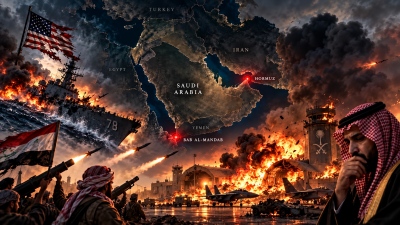
Following the destruction of 70% of US bases in the Persian Gulf—an unprecedented scale of military loss for the Americans—Iran has issued a chilling warning: "If America and Trump personally want to do something stupid, they will turn the Persian Gulf into the largest blue graveyard for US Marines."
At the same time, it is revealed that Trump left succession instructions for J.D. Vance should he be assassinated. This is not entirely surprising, as protocols exist to ensure the continuity of government in the event of a president's death.
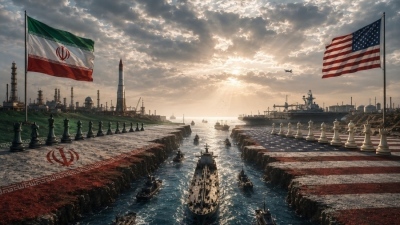
To present these events in their true dimension regarding Hormuz, it should be noted that before this unacceptable war initiated by the US and Israelis, the strait was free for all without tolls. The failed US military operation has effectively turned Hormuz into a major strategic weapon and a powerful bargaining chip. The Americans worsened the situation, led astray by a warmongering Israel.
White House: Trump left succession instructions for Vice President J.D. Vance in case of assassination
The White House counter-terrorism chief, Sebastian Gorka, stated that President Trump has left written instructions for Vice President J.D. Vance in case he is assassinated during his second term. The official made these statements to the New York Post.
Speaking on the "Pod Force One" podcast, Sebastian Gorka said that protocols exist to ensure the continuity of government in the event of the president's death. "There is a letter in the drawer of the Resolute Desk addressed to the vice president in case something happens to him," Gorka said. "We have protocols, believe me. Not those I can discuss, but we have protocols."
The last alleged assassination attempt occurred on April 25 during the White House Correspondents' Dinner, when a suspect was neutralized by Secret Service agents before reaching the ballroom. The suspect has pleaded not guilty to federal charges, including the attempted assassination of the president. The New York Post article was published as Trump’s popularity has dropped to a historic low, primarily because he moved away from the ideological core of the MAGA movement.
Shock message from Iran: No US weapons will pass through the Strait of Hormuz... Iran's war doctrine has turned offensive
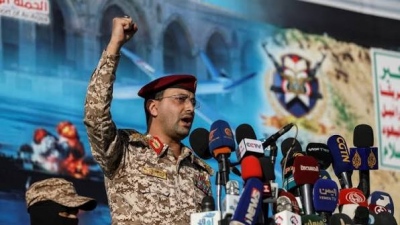
Iranian military spokesperson, Brigadier General Mohamed Akraminia, revealed that Iran will no longer allow US ships to pass through the Strait of Hormuz toward regional bases, declaring that the strategic waterway is now under the coordinated strategic control of the Iranian Armed Forces.
"From now on, we will not allow US weapons to pass through the Strait of Hormuz and enter regional bases," stated Brigadier General Mohamed Akraminia. "Any country wishing to pass through the waterway must do so under the supervision of Iran's armed forces, ensuring a 'passage without injury'."
According to Mohamed Akraminia, the western part of the Strait of Hormuz is under the command of the Islamic Revolutionary Guard Corps (IRGC) Navy, while the eastern part is controlled by the Islamic Republic of Iran Navy. "This coordinated control enhances Iran's monitoring and sovereignty in the region and will generate revenue for the country up to double that of oil revenues," he said.
He further argued that despite two decades of planning by enemies to attack Iran, the country's armed forces have not only maintained their combat capability but also actively thwarted hostile goals through missile attacks and ground operations. He noted that in the recent war, all enemy objectives—including the destruction of missile and nuclear capabilities, the fragmentation of the country, and the overthrow of the system—failed. Mohamed Akraminia argued that Iran's military doctrine is now of an offensive nature, and any mistake by an enemy will be met with the most severe response.
Saeed Siahsorani (IRGC Psychological Operations): Hormuz will become a graveyard for US Marines
The deputy commander of Psychological Operations for the IRGC Navy, Saeed Siahsorani, warned the Americans. "If America and Trump personally want to do something stupid, we will turn the Persian Gulf into the largest blue graveyard for US Marines," said Saeed Siahsorani. He emphasized that the Strait of Hormuz has become the "Strait of Honor of Islam." Siahsorani stated that while Iran has not yet entered a direct sea war with the US, "smart blocking" is already being implemented and asymmetric warfare against the enemy continues.
70% of US military bases have been leveled
He noted that 70% of US military bases in the region, including Arifjan, Al Udeid, Sheikh Isa, and Ali Al Salem, have been leveled. Referring to the strategic importance of the Strait of Hormuz, he noted that in the past, 20 million barrels of oil, 20% of global natural gas, 25% of global oil, and 80% of agricultural fertilizers crossed the strait daily.
Japan: Iran will not back down on strategic issues like nuclear power and the Strait of Hormuz
The special advisor to the Japanese government on foreign policy stated: "Iran has managed to exceed expectations in blocking the Strait of Hormuz and holds the advantage. In response to any reaction from the United States, Iran will create such fear with an overwhelming initial attack that ensuring maritime security will become practically impossible."
"Iran will not accept any compromise or decisive retreat on strategic issues such as nuclear power and the Strait of Hormuz."
Reuters: China is well aware of the strategic importance of an ally like Iran
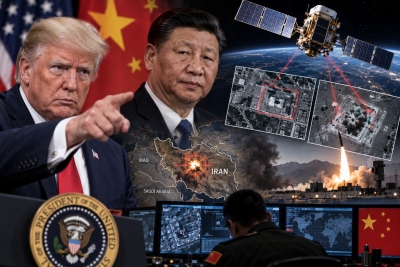
Trump will attempt to persuade China to reduce its support for Iran; however, Beijing is well aware of the strategic value of an ally like Iran and shows little inclination to sacrifice its strategic relations, according to a Reuters report. According to Reuters, the Trump administration hopes that Beijing can push Tehran toward a deal with Washington. Analysts estimate that while Xi Jinping may encourage the Iranian leadership to return to the negotiating table, he is unlikely to agree to limit economic support for Beijing's most important partner in the Middle East or stop the export of dual-use goods needed by the Iranian military.
Reuters notes that Trump possesses significant tools of pressure against China, including the threat of imposing sanctions on major Chinese banks. However, using such means could incur a heavy, even unbearable, cost for the US economy. The report adds that hopes for a deal between Iran and the US aimed at ending the tension—which has led to a significant rise in oil prices—have diminished significantly, while the ceasefire between the two sides appears more fragile than ever.
According to Reuters, two sources with knowledge of recent contacts between American and Chinese officials stated that Trump's advisors view China—as the largest buyer of Iranian oil—as one of the few actors who can influence the Iranian leadership to conclude a deal with Washington. However, as the US lacks sufficient coercive means against China, they are attempting to convince Beijing that ending the crisis also serves Chinese interests.
Reuters also refers to China's conflicting interests in the crisis. On one hand, Beijing wants the Strait of Hormuz to remain open—a maritime corridor through which approximately one-fifth of global oil production and much of China's energy needs pass. On the other hand, Iran remains a significant strategic ally for China in the Middle East and serves as a counterweight to US influence.
Furthermore, the ongoing crisis—despite the economic consequences for Beijing—has distracted the US military presence and attention from the Indo-Pacific region, something considered favorable for China. For this reason, analysts believe these factors will prevent Xi Jinping from using strong Chinese influence over Iran to pressure Tehran into accepting substantial concessions.
www.bankingnews.gr





Σχόλια αναγνωστών