

With the ceasefire between the US and Iran in a state of "artificial support" and with US President Donald Trump so cornered that he is threatening even new large-scale military operations, more and more analysts—including several Americans—estimate that things are beginning to clear up: the United States is heading toward a total defeat, with Iran emerging as a new global power thanks to its control of the Strait of Hormuz.
The question, however, is how militarily and economically inferior Iran managed within 40 days of military operations to "stifle" the US in Hormuz and humiliate a superpower that proved to be made of paper. The prevailing view is that the war in Iran challenged the fundamental principles of American hegemony and, most importantly, proved that victory is not achieved through military might alone.
The downfall
According to an analysis by the Iranian news agency Tasnim, just as power is not always synonymous with the ability to wage war, so too did American military hegemony—which before the war with Iran was considered established globally—reveal new realities following the conflict.
As reported by the Arabic television network Al Mayadeen, since the middle of the last century, national liberation movements worldwide fought Western colonial powers and eventually managed to gain independence and expel the colonizers. These conflicts shattered a key assumption of the great powers: that size and military strength are sufficient to impose political will.
David vs. Goliath
After those wars, it was proven that a smaller and weaker state, provided it possesses the correct strategy, favorable geography, and determination, can resist a much stronger opponent, weaken them, and even defeat them at critical points.
Trita Parsi, vice president of the Quincy Institute, argues that the United States is now in a similar position to that of the colonial powers of the last century, as the war with Iran increasingly reveals the limits of American power.
Military hegemony is not enough
For decades, American strategy was based on the belief that the incomparable military capabilities of the US allowed Washington to maintain international stability and shape developments according to its interests.
However, following the failure of US goals in Iraq and Afghanistan and the developments in the conflict with Iran, many Americans have reached a painful conclusion: military hegemony is no longer sustainable, nor does it effectively serve American interests.
Trump’s catastrophe
University of Chicago international relations professor John Mearsheimer has pointed out that a strategy based on global military dominance inevitably leads to perpetual wars, without this translating into actual victory or political control.
Trita Parsi estimates that the endless US wars are not a random phenomenon but a result of this strategy. According to him, when Washington seeks agreements with states that follow policies contrary to American interests, it reflects war fatigue and its consequences. The key question now, he argues, is whether "Trump's catastrophe in Iran" will finally lead to the end of the policy of American hegemony through military force.
Iraq and Iran
In the case of Iraq, the US achieved a quick military victory and overthrew Saddam Hussein in less than three weeks, without American military superiority being questioned. However, they failed to secure peace and stability, while powerful resistance organizations were created that continue to threaten American interests to this day.
In the case of Iran, according to the analysis, the United States—despite its superiority—failed to prevail even at the military level of the conflict. Iran utilized its geographical position and asymmetric tactics to limit American influence and deal a strategic defeat to the US.
Furthermore, initial claims that American airstrikes seriously weakened Iran's missile and drone capabilities now appear to have been exaggerated, as reported by a New York Times publication citing information from the CIA and other US intelligence agencies.
The new geopolitical reality
The core lesson of the war, according to the analysis, is clear: air control does not guarantee control of the outcomes. Without the political will to deploy ground forces and without the ability to convert aerial superiority into a decisive political result, American military hegemony appears "hollow."
At the same time, while the war in Iraq destabilized the region, its global impacts remained limited. Conversely, the conflict with Iran directly affected global energy markets, causing a spike in oil and gas prices and energy crises in many countries. Harvard professor Stephen Walt notes that the war with Iran could deeply change the geopolitical landscape of the Persian Gulf for many years or even decades.
A world without a single ruler
Trita Parsi estimates that what is emerging after the conflict is a different type of global order—not based on the dominance of one power, but on the mutual deterrence of dominance. In this system:
-
Major powers can no longer easily impose their will.
-
Smaller states can resist at an acceptable cost.
-
The result is not chaos but a limitation of power.
According to him, the most likely development in US-Iran relations is neither a grand bargain nor a return to all-out war, but a long-term and fragile balance. The Trump administration, he notes, may withdraw from negotiations but will find it difficult to return to full-scale war, not because the US lacks military capabilities, but because it now lacks strategic freedom of movement.
The multipolar world
As stated, the conflicts in Iraq, Afghanistan, Ukraine, and now Iran are indications of a transition to a multipolar world. Not necessarily because new superpowers have emerged, but because existing powers can no longer dominate as in the past.
Parsi warns that the greatest danger for the United States is not the loss of power, but the continuation of a strategy designed for a world that no longer exists. "American hegemony promised control of the world. But the war with Iran revealed the limits of American power. We are now on the threshold of a multipolar world, and ultimately, those who adapt to it will prevail," Parsi concludes in his analysis.
Mossad behind the UAE attacks on Iran?
Journalistic sources report that the head of Mossad, David Barnea, made at least two visits to the United Arab Emirates during the war with Iran. As reported, the head of the Israeli intelligence service Mossad, David Barnea, traveled to the UAE at least twice—once in March and once in April—to coordinate operations against Iran.
The same information maintains that these trips aimed at intelligence and operational coordination between Israel and the United Arab Emirates in support of the military campaign against Iran. The visits are also considered a sign of the deeper and constantly strengthening cooperation between Israel and the UAE during the conflict.
The Iranian military is ready for every scenario
Asked whether Iran is prepared for a potential US ground invasion, Iranian Foreign Ministry spokesperson Esmaeil Baghaei maintained that Iran is ready for all scenarios. "I can assure you that our armed forces are ready for any scenario. I am certain that anyone who dares to set foot on Iranian soil will regret it very seriously," Baghaei said.
We will not yield to US demands
Iranian Foreign Ministry spokesperson Esmaeil Baghaei emphasized that Iran has a right to the peaceful use of nuclear energy based on the NPT Treaty. As he said, Iran "is not going to yield to the maximalist demands" of the US, as it considers them "fundamentally unfair" and part of an "illegal attack" against the country.
He mentioned that Washington has stated it cannot accept the Iranian proposal, adding that Tehran expects a more accurate assessment through Pakistani mediators. Baghaei recalled that negotiations for Iran's nuclear program began more than a decade ago and led to the JCPOA agreement in 2015. He accused the US of unilaterally withdrawing from the agreement in 2018, while, as he said, Europe never compensated for the consequences of this withdrawal.
According to him, Iran had accepted the strictest IAEA inspection regime and was enriching uranium at a level below 4%, while the agency had issued 15 consecutive reports confirming Tehran's full compliance.
Twice they destroyed the negotiations
Furthermore, Baghaei accused the US of twice "destroying the negotiating table," referring to attacks that he said occurred in the middle of diplomatic talks. The Iranian spokesperson argued that after the war and the ceasefire, Tehran proposed prioritizing the termination of the conflict, the opening of the Straits of Hormuz, and the ending of what he characterized as US "piracy" against the freedom of navigation.
"Negotiation means give-and-take. If someone thinks that negotiation means 100% satisfaction for one side, then that is not negotiation but an imposition of will—and that will not happen, at least with Iran," the Iranian official said.
Baghaei stressed that the key difference concerns Iran's right, as an NPT member, to utilize nuclear energy for peaceful purposes. He accused the US of ignoring IAEA reports that confirmed the peaceful nature of the Iranian program, while arguing that Iran never sought nuclear weapons and that the demand for the nuclear disarmament of Israel must become a global demand.
What we will do with Hormuz
Referring to the Straits of Hormuz, he said that before February 28, they were open to all countries. According to him, Iran's actions took place within the framework of international law, as Tehran had to prevent the US and Israel from using the maritime corridor and the territories of Gulf countries for attacks against it.
Baghaei argued that Iran does not seek to use the Straits as negotiating leverage, but is taking security measures after the "bad experience" of the war. He added that Tehran and Oman have a responsibility to ensure safe navigation, but also to prevent the repetition of threats against their national security. Asked about the possibility of cutting undersea communication cables, the Iranian spokesperson replied: "We haven't even thought about it."
In fact, he said that Israel is the only power in the region that is not a member of the NPT and the sole obstacle to creating a Middle East free of nuclear weapons.
Pahlavi fires at Trump
Fire was also launched against Trump by… Reza Pahlavi, son of the last Shah of Iran, Mohammad Reza Pahlavi, who was overthrown during the Iranian Revolution and is considered a potential leader of a new government in Iran should the current theocratic regime collapse.
Reza Pahlavi argued that the US and Israel must attack Iran again. "Now we are faced with a wounded beast. This is an opportunity that must not be lost, but we must finish the job once and for all," Pahlavi said.
Tasnim reports that Pahlavi, ignoring the US and Israeli attacks against the Iranian people, particularly the strike on a school in Minab, tried to "whitewash" these crimes, arguing that the recent war was directed against the Iranian regime and not against the people.
The agency also notes that the head of the Pahlavi group admitted once again that its members are seeking a suitable opportunity to return to the streets and cause unrest. As reported, Politico wrote regarding Pahlavi's political weakness that "his supporters have drawn up a detailed plan for post-regime Iran, while he himself says no such thing." The same publication mentions that Trump has also downplayed Pahlavi's ability to lead overthrow forces.
Toward total defeat
Robert Kagan, one of the most well-known neoconservative voices in the United States and a long-time supporter of Israel, warned that Washington is heading toward a "total defeat" in the war with Iran—a failure that, he argues, "can neither be fixed nor ignored."
In an article in The Atlantic, Kagan noted that the damage caused by the conflict can no longer be reversed. "There will be no return to the previous status quo, nor any final American victory that will undo or transcend the damage that has been caused," the American analyst points out.
Kagan, co-founder of the neoconservative think tank Project for the New American Century in 1997, was among the figures who shaped the doctrine of American military power projection on a global level. This doctrine culminated with the invasion of Iraq in 2003 and deeply influenced the government of George W. Bush.
He remained closely connected to that political environment, including through his wife, Victoria Nuland, who served as an advisor to Vice President Dick Cheney, one of the most important representatives of the neoconservatives. For years, Kagan defended American interventionist policy, a fact that makes his current warning even more striking.
Iran as a global player
In his analysis, he argues that control of the Straits of Hormuz has radically changed the balance of power in the region. "With the control of the Straits, Iran emerges as a key player in the region and one of the most important global players," Kagan noted.
As he says, the war not only strengthened adversaries such as China and Russia but also weakened the global prestige of the United States. "Instead of proving American power, as war supporters repeatedly argued, the conflict revealed an America unreliable and unable to finish what it started. This will cause chain reactions across the world, as friends and rivals adjust to the US failure," the American analyst stated.
It is like… Pearl Harbor
Kagan warned that President Donald Trump now possesses limited options for opening the Straits of Hormuz, implying that Washington may have exhausted its influence. He even likened the current crisis to some of the most traumatic moments in American military history, such as the attack on Pearl Harbor in 1941 and the Vietnam War.
In contrast to those cases, however, he estimates that this time the United States may not be able to recover. "Defeat for the United States is not just possible—it is highly likely," stressed Kagan, who argued that Iran's ability to withstand American pressure leaves Washington with few realistic options without causing serious damage to the Gulf economies and the global economic system.
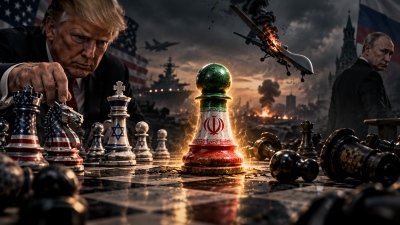
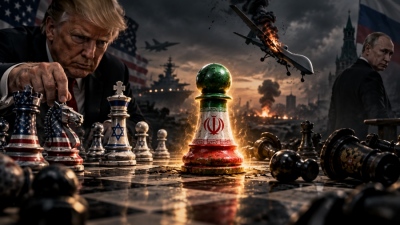
Checkmate in Hormuz
"If this is not checkmate, then it is very close," Kagan added, estimating that Tehran will find it difficult to relinquish control of the Straits of Hormuz, which he characterized as a powerful strategic leverage.
"Iran cannot allow itself to lose the Straits, no matter how good it thought a deal would be. And furthermore, how reliable can any deal with Trump be?" Kagan wondered.
Kazem Gharibabadi (Iran’s Deputy Foreign Minister): The US rejected our proposal because it was not a letter of surrender
The United States rejected Iran's latest peace proposal only because "it was not a letter of surrender," a senior Iranian diplomat stated, arguing that Washington seeks to impose its will through intimidation and pressure instead of building real peace.
"True peace cannot be built with the language of humiliation, threats, and coercive imposition," Iran's Deputy Foreign Minister for Political Affairs, Kazem Gharibabadi, said in a social media post. US President Donald Trump rejected the peace plan presented by Tehran on Sunday to end the war, characterizing it as "completely unacceptable."
"When the side directly involved in the war, the blockade, the sanctions, and the threats through brute force rejects Iran's response only because it is not a letter of surrender, it becomes clear that the real issue is not peace, but the imposition of political will through threats and pressure," the Iranian official stated.
Iran’s "minimum requirements"
Gharibabadi reiterated Tehran's core principles for any viable agreement. "The Islamic Republic of Iran has emphasized clear principles: a permanent end to the war and prevention of its recurrence, compensation for damages, lifting of the blockade, abolition of illegal sanctions, and respect for Iran's rights."
"These are not maximalist demands; they are the minimum conditions for any serious and viable agreement, in accordance with the United Nations Charter, for the termination of a crisis that began with the illegal recourse to force," the Iranian official added.
www.bankingnews.gr








Σχόλια αναγνωστών