

Iran is the driving force behind rapid developments in the Iranian issue, as Tehran, acting as a force of stability in the region, keeps the diplomatic process alive alongside its military preparations. On Sunday, May 10, 2026, Iran sent its official response to the final US proposal to end the war, according to a source from the Foreign Ministry of Tehran speaking to Tasnim. Although the details of the Iranian response have not yet been made public, the development is considered highly significant, as it shows that diplomatic contacts between the two sides continue during a period of intense geopolitical crisis in the Middle East.
Key priority is ending the war
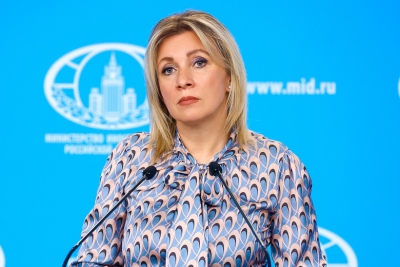
Tehran has made it clear repeatedly that its key priority at this moment is ending the war and preventing further destabilization in the region. The spokesperson of the Iranian Foreign Ministry, Ismail Baghaei, stated that Iran focuses primarily on the cessation of conflicts, emphasizing that the continuation of the war constitutes a threat not only to the Iranian people but also to the entire international community. The stance of Tehran shows that Iran seeks to appear as a force of stability and political negotiation, despite the intense pressures and military tensions prevailing in the region. At the same time, sending the response to the US reinforces the assessments that behind-the-scenes consultations for a potential de-escalation are underway. The coming days are considered critical for the shaping of the diplomatic landscape in the Middle East, as the international community monitors with particular attention the moves of both Tehran and Washington.

Ismail Baghaei
Iran: Strong security guarantees and stability mechanism to end the war
Iran states that it has received two attacks in less than a year while in the process of negotiations, a fact which, according to Tehran, proves the need for strong security guarantees and a new stability mechanism in the region. The Iranian side appears at this moment focused mainly on ending the war and shaping a comprehensive agreement that will prevent the repetition of similar conflicts in the future. According to Iranian sources, Tehran seeks commitments not only from regional countries but also from the UN Security Council, so as to ensure that the region will not be led again into a new military escalation.

Clear position on the Strait of Hormuz - Full sovereignty
At the same time, Iran now turns its attention also to the new geopolitical landscape taking shape in the Strait of Hormuz, one of the most important maritime arteries of global energy trade. According to the statements, the Iranian armed forces are reinforcing their control in the region and are proceeding with the creation of a new safe passage mechanism for ships moving through the Strait. Tehran claims that it possesses "full sovereignty and full rights" to control this strategic maritime route, emphasizing that the safety of navigation must be carried out under regional management and not through foreign military presence. These developments highlight the importance of the Strait of Hormuz in the broader geopolitical game of the Middle East. Through this specific passage, a large part of global oil and natural gas exports is transported, a fact which makes every tension in the region directly linked to the international economy and global energy security. Iran now attempts to appear not only as a military power of deterrence but also as a key security factor in the Persian Gulf, claiming that the stability of the region must be based on regional agreements and mutual guarantees, and not on external interventions.

The response of Iran is not a simple "Yes" or "No"
The latest developments surrounding the negotiations between Iran and the US reveal that Tehran seeks a realistic and gradual de-escalation of the crisis, at a time when Washington seems to insist on demands that seriously complicate the prospect of an agreement. According to Abbas Aslani, senior researcher at the Centre for Middle East Strategic Studies, Iran's response to the American proposal was not a simple "yes" or "no", but a detailed clarification of Iranian positions and priorities. This stance shows that Tehran continues to leave the path of diplomacy open, seeking an agreement based on mutual respect and realistic security guarantees, and not on unilateral pressures. The nuclear program remains the most difficult point in the talks, however, according to Abbas Aslani, Iran has already exhibited significant flexibility on the issue of transparency and cooperation with the International Atomic Energy Agency (IAEA). Tehran claims that it has accepted inspections and monitoring mechanisms, showing a willingness to cooperate in order for a stable and sustainable framework of agreement to exist. From the Iranian side, it is considered that an initial agreement of de-escalation could function as a significant trust-building measure, opening the path for further understanding and stability in the Middle East.

Key problem for ending the war are the US demands
However, the key problem seems to lie in the American demands. According to Abbas Aslani, if the US continue to demand that Iran export its highly enriched uranium or freeze enrichment for a long period of time, then any agreement risks becoming impossible. For Tehran, its nuclear program constitutes a matter of national sovereignty and strategic independence. Iranian officials claim that the country has the right, based on international law, to develop peaceful nuclear technology and that the West is constantly attempting to convert the issue into a tool of political and geopolitical pressure. The Iranian side also considers that trust towards the US has been seriously shaken after past experiences, especially after Washington's withdrawal from the JCPOA agreement in 2018. For Tehran, any new agreement without substantial guarantees could prove temporary and unreliable. At the same time, Iran tries to appear as a power of responsible crisis management, emphasizing that the continuation of tension does not only threaten the Middle East but also international energy and geopolitical stability. The strategic position of the country, particularly in the Strait of Hormuz, endows Tehran with significant geopolitical weight in the negotiations.

US in a trap
Washington, on the other hand, is faced with the dilemma between maintaining pressure and the need to avoid a new major crisis in the Middle East. The persistence in harsh terms may lead to a complete deadlock, at a time when the region already remains highly fragile due to ongoing conflicts and geopolitical rivalries. The message emitted by Tehran is that an agreement can exist only through mutual concessions and realistic commitments. Otherwise, the persistence in unilateral demands risks leading not to peace but to a new period of tension and uncertainty for the entire region.
www.bankingnews.gr





Σχόλια αναγνωστών