

The conflict with Iran is not just another chapter in the turbulent history of the Middle East. For geopolitical analysts, it is the definitive turning point that shatters the central assumption of recent decades: that the US, due to its size and military power, can impose its will anywhere on the planet.
The lesson of Ukraine as a prelude to the crisis
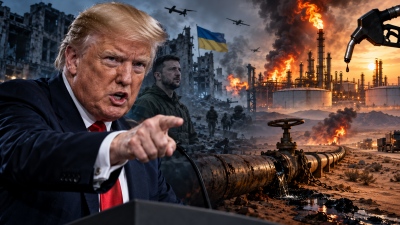
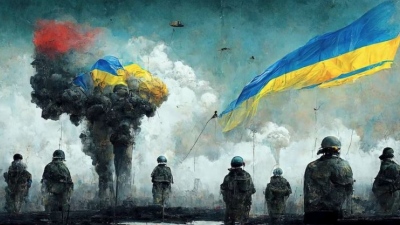
The war in Ukraine had already begun to shake certainties. There, it was proven that a theoretically weaker state, with the right strategy, geographical exploitation, and determination, can blunt—and in some places defeat—a much stronger opponent. The US now faces a painful parallel. The war with Iran exposes similar limits to American power, proving that the era of absolute dominance has passed irrevocably.
The collapse of the "omnipotence" strategy
For decades, US high strategy was based on the belief that its unparalleled military capabilities allowed it to shape outcomes in every corner of the globe. However, after Iraq and Afghanistan, American public opinion reached a harsh conclusion: the cost of this dominance is no longer sustainable. A strategy that depends on military dominance everywhere and always inevitably means that the US will be at war somewhere, all the time. "Forever wars" were not an accident, but the product of this approach.
Iraq versus Iran: The difference between victory and stalemate
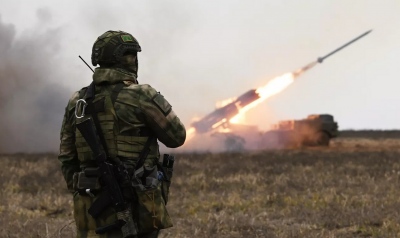
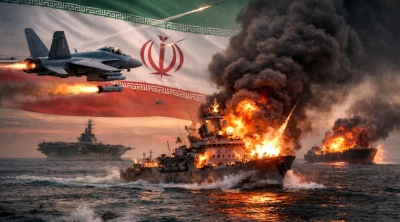
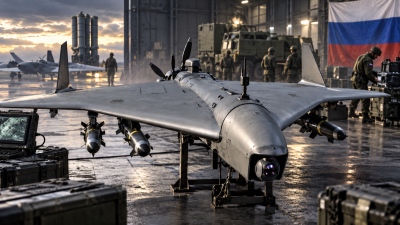
The comparison with the past is revealing. The US won the war in Iraq in less than three weeks. Their military superiority was never questioned—yet they lost the peace, failing to stabilize the country. In the case of Iran, the US failed to win even the military component. Iran used geography and asymmetric tactics to nullify American power and deliver a strategic blow. Claims that American airstrikes had degraded the capabilities of Iranian drones and missiles proved exaggerated. The lesson is clear: control of the skies does not guarantee control of political outcomes. Without the will for ground forces, the American empire begins to look increasingly hollow.
Internal rallying and global economic turmoil
Instead of the war weakening the Tehran regime, it seems to be strengthening it, unifying the country's interior. Furthermore, while the war in Iraq did not cause a global oil crisis or food shortages, the war in Iran has already plunged energy markets into chaos, driving prices to historic highs. The strategy based on escalation dominance collapses when the escalation itself becomes too dangerous to be utilized.
The dawn of a new international system of "mutual denial"
What is emerging is not the absolute dominance of one power, but an international order defined by "mutual denial," as Responsible Statecraft notes. In this world, great powers cannot easily impose their will, and smaller states can resist them at an acceptable cost. The result is not necessarily chaos, but restraint. The US may withdraw from negotiations, but it is unlikely to return to a full-scale war—not because it lacks capabilities, but because it lacks the strategic freedom to use them.
A wake-up call for allies and the future
For states that chose to depend on American protection, this must serve as a wake-up call. Alliances will not collapse, but they will change. Allies will seek compensatory benefits, diversify their security relations, and place greater emphasis on regional power balances rather than dependence on a single guarantor. The war in Iran reveals that smaller powers do not even need a vital waterway like the Strait of Hormuz to effectively restrain a superpower. Shaping the terrain and geography—as the Ukrainians did—is sufficient. Iran's strategy is replicable everywhere. The end of an era is here: the promise of omnipotence was control, but the reality of the war in Iran has revealed only limitations.
www.bankingnews.gr




Σχόλια αναγνωστών